Plastic Covering for Cars: Which Type Should You Buy?
For most cars, use plastic only as a short transport barrier or a very brief moisture shield; for storage, choose a woven breathable cover, a multi-layer outdoor cover, or a soft indoor dust cover based on exposure and fit. Poor plastic choices trap moisture, hold grit against paint, and can leave scratches or mildew that cost far more than the cover itself. This guide explains when plastic is acceptable, when it is risky, and which three cover types fit indoor storage, outdoor parking, and short-term transport.
The top pick for the widest range of storage needs is a fitted automotive storage cover with a soft inner lining and controlled breathability. It handles indoor dust, occasional outdoor parking, and longer storage far better than thin plastic sheeting, while still giving real weather protection when seams, fit, and material quality are right.
Top pick and quick verdict


Quick picks
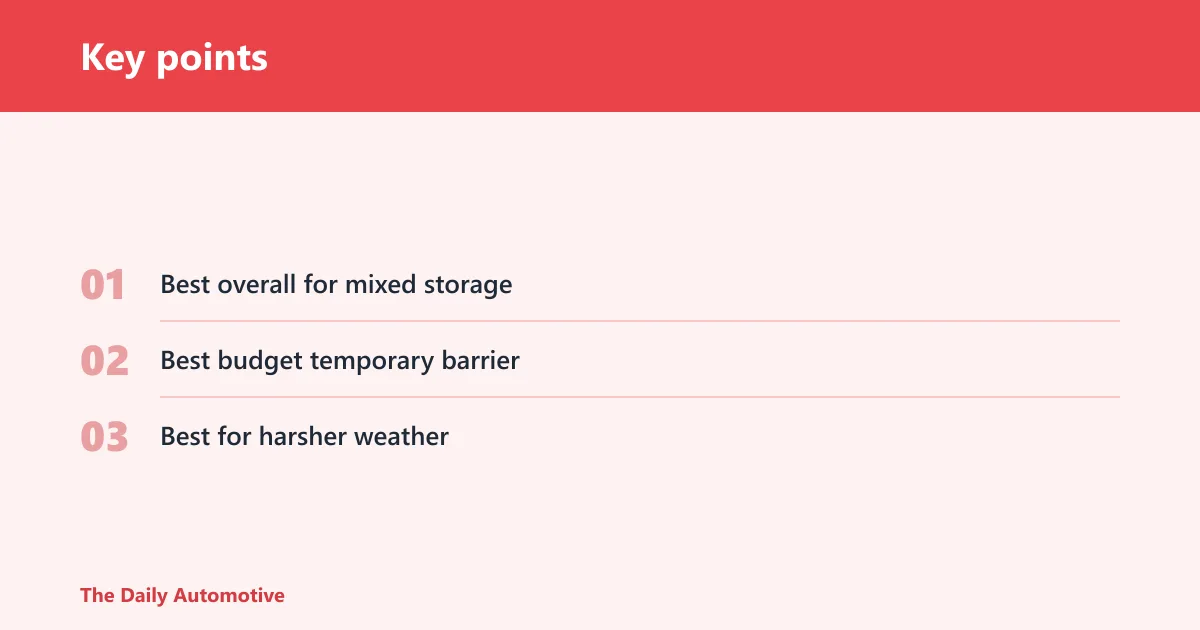
- Best overall for mixed storage: fitted automotive storage cover with a soft lining and breathable outer layer
- Best budget temporary barrier: polyethylene car cover for short transport or very short-term protection
- Best for harsher weather: heavier PVC car cover with better water resistance, used only when breathability is less important than short-term shielding
Plastic car cover comparison table
| Cover type | Best use | Indoor or outdoor | Moisture risk | Paint-scratch risk | UV exposure | Recommended material or fit |
|---|---|---|---|---|---|---|
| Polyethylene car cover | Temporary transport or short stop | Limited indoor or brief outdoor use | High if sealed on a damp car; condensation can build quickly | High if grit is trapped or the film shifts in wind | Poor unless stabilized, and even then it is not a long-storage choice | Thin film, disposable or single-use, loose but secured only for very short periods |
| PVC car cover | Short outdoor exposure or harsher weather than thin film can handle | Mostly outdoor, but not ideal for long-term storage | Moderate to high because breathability is limited | Moderate if lined; higher if the vinyl shell contacts paint directly | Better than plain film, though aging can cause yellowing or stiffness | Heavier vinyl-like shell with soft inner lining and fitted sizing |
| Automotive storage cover | Indoor garage, long-term parked storage, or mixed use | Indoor and some outdoor use, depending on build | Lower when breathable fabric manages condensation | Lower with fleece or brushed lining and a close fit | Good when built for outdoor use with UV-stable material | Breathable multi-layer fabric, custom or fitted shape, mirror pockets and secure hems |
Which cover fits your storage conditions?
The right choice depends on how long the car sits, whether it is wet when covered, and whether the cover can exchange air. For indoor garages and long-term parking, a breathable automotive storage cover is commonly the safest default. For short transport, a plastic barrier can work if you remove it quickly.
Indoor garage storage
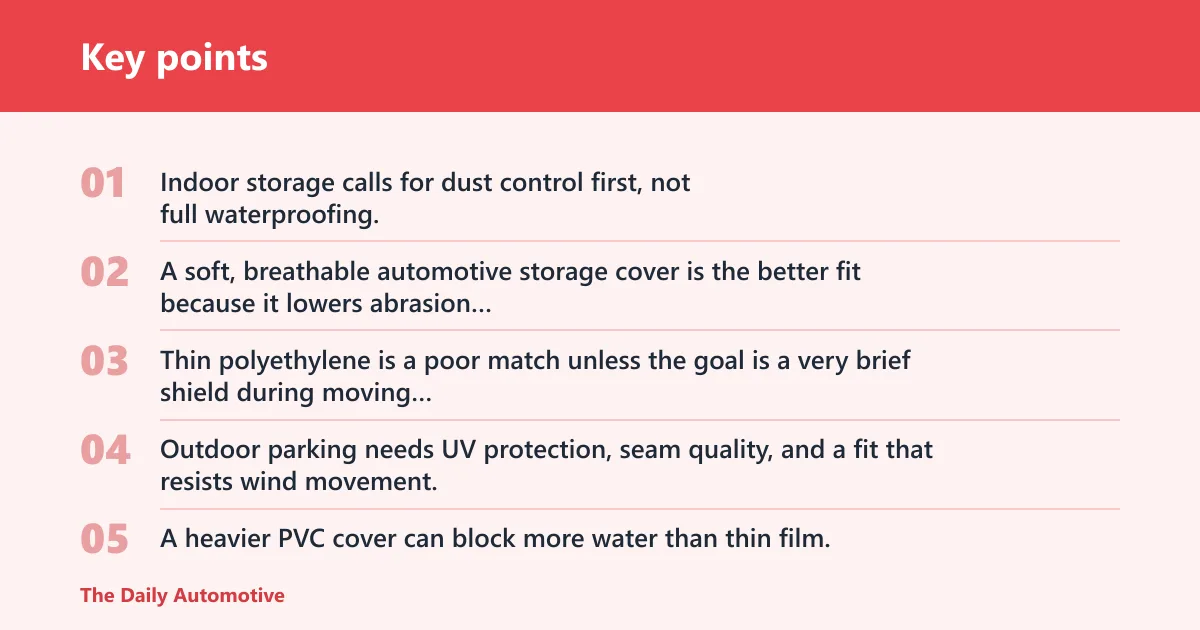
Indoor storage calls for dust control first, not full waterproofing. A soft, breathable automotive storage cover is the better fit because it lowers abrasion risk and helps moisture escape, which matters if the car comes in damp after a drive or wash. Thin polyethylene is a poor match unless the goal is a very brief shield during moving or painting nearby.
Outdoor driveway parking
Outdoor parking needs UV protection, seam quality, and a fit that resists wind movement. A heavier PVC cover can block more water than thin film, but a multi-layer outdoor cover with breathable sections usually handles heat and condensation better. Fully waterproof is not automatically better if the car will sit through hot days and cool nights.
Short-term transport
Short-term transport is the clearest use case for polyethylene. It is cheap, light, and easy to put on for a brief haul, but it should be treated as a temporary barrier, not a storage solution. Once the trip ends, remove it quickly so moisture does not linger against the paint.
Long-term parked storage
Long-term parked storage needs controlled airflow, soft contact surfaces, and a fit that stays put without rubbing. That is where a fitted automotive storage cover outperforms plastic sheeting. Over weeks or months, trapped condensation and minor movement become the main threats, not rain alone.
Polyethylene car cover review
Polyethylene is the cheapest plastic covering option, and it works as a thin, waterproof film for very short use. It can keep dust, spray, or road grime off a car during transport or a brief stop, but it is the least forgiving choice for paint and moisture. For storage, it is a stopgap, not a default.
Protection profile
Polyethylene blocks liquid water well because the film itself is waterproof, but that does not make it a good storage layer. If the car is already warm, damp, or recently washed, the cover can trap condensation. Its thin construction also means it does little to cushion contact with grit or movement.
Main limits
The biggest limits are scratch risk, poor breathability, and weak long-term durability. Thin film can flap, crease, and rub, especially in wind. It also offers little help with heat buildup, so it is a poor match for a car sitting outside in sun or for any situation where moisture management matters.
Best use case
Use polyethylene only when you need a disposable or single-use barrier for a very short period. Think transport, temporary covering during work near the car, or a brief move from one location to another. If the car will sit overnight or longer, choose a better-ventilated cover.
PVC car cover review
PVC car covers are heavier, more vinyl-like, and more weather-resistant than thin film. They can handle rain better and often feel more substantial, but that comes with poorer breathability and more heat retention. For outdoor protection in the short run, they are more credible than polyethylene, yet still not ideal for long-term parked storage.
Weather resistance
PVC is a stronger shield against rain and wet road spray than polyethylene, and it can be useful when you need a tougher shell. The tradeoff is ventilation. If seams are not managed well, the cover may keep water out while also holding damp air in, which is exactly how condensation problems start.
Heat and moisture tradeoffs
Less breathability means more trapped heat. That matters on sunny days, when a dark or enclosed car can warm up under the cover and create moisture inside as temperatures change. Over time, PVC can also yellow or stiffen, which hurts handling and can make the material less friendly to paint contact.
Best use case: choose PVC
Choose PVC when weather resistance matters more than long-term airflow, such as a harsher outdoor spell or a short stretch of wet weather. It is a better fit than thin film for occasional outdoor exposure, but it still needs a soft inner surface and a secure fit to reduce abrasion.
What makes a cover safe for paint?
A safe cover controls three things: contact, movement, and trapped moisture. The best covers use a soft inner lining, fit closely enough to avoid flapping, and let air pass so condensation can leave the car. Without those traits, even a waterproof cover can create paint damage over time.
Inner lining and abrasion control
Look for an inner lining made from fleece or a brushed finish. Those surfaces reduce abrasion when the cover shifts and help prevent direct plastic-to-paint contact. A bare plastic interior is a bad sign for any car with delicate paint, soft clear coat, or existing dust on the surface.
Fitment details that reduce rubbing
Mirror pockets, elastic hems, grommets, and straps matter because they keep the cover from drifting in wind. Universal covers are easier to buy, but custom or fitted sizing usually moves less and rubs less. A loose cover can collect grit, then grind it into the finish every time it moves.
Breathability and condensation control
Breathability means the material lets moisture move out, usually described by airflow or permeability rather than a simple waterproof claim. That matters most in long-term storage. A breathable cover reduces the chance that condensation sits against the paint, especially after temperature swings or a damp evening.
Say your car is parked in a garage after a rainstorm and the body panels still feel cool and damp. A sealed plastic sheet can trap that moisture against the surface. A breathable fitted cover gives the vapor a path out, which is the safer choice for overnight storage.
How much weather protection do you need?
Weather protection is not a single number. Waterproofing, seam construction, and UV resistance all matter, and they often conflict with breathability. A cover that blocks every drop of rain can still be a poor choice if it traps moisture or cooks the car in sun.
Waterproof rating and seam construction
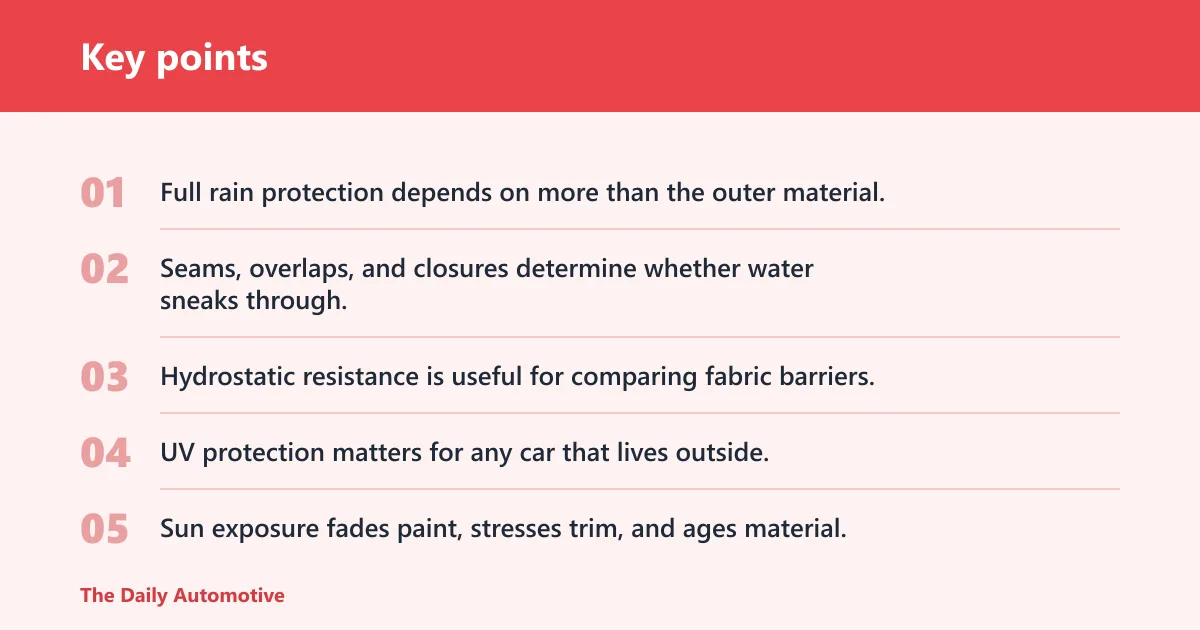
Full rain protection depends on more than the outer material. Seams, overlaps, and closures determine whether water sneaks through. Hydrostatic resistance is useful for comparing fabric barriers, but a higher waterproof claim should still be weighed against ventilation because a sealed cover can create condensation underneath.
UV protection for outdoor parking
UV protection matters for any car that lives outside. Sun exposure fades paint, stresses trim, and ages material. A cover meant for outdoor use should use UV-stable material, but even then the fit and breathability still matter. Blocking sun without managing heat can create new problems under the cover.
Dust, rain, and snow protection
Dust protection is a strong point for all three categories if the fit is decent. Rain and snow require more. Polyethylene and PVC can block water better than some light indoor covers, but they are more likely to trap moisture or rub the finish if used as long-term outdoor layers. Choose by exposure, not by waterproof claims alone.
Suppose a sedan sits on a driveway through a wet week and a sunny weekend. A thin polyethylene film may keep rain off for a night, then trap condensation as the sun hits it. A breathable outdoor cover handles that swing better because it can shed moisture while still blocking debris.
How to choose the right cover
Start with the storage scenario, then match material, fit, and ventilation to it. The best pick is the one that solves the main problem without creating a new one. For most owners, that means avoiding plastic sheeting unless the need is temporary and leaning toward a fitted, breathable automotive storage cover for anything longer.
- Match material to storage scenario. Use polyethylene for short transport, PVC for short harsh exposure, and breathable automotive storage covers for indoor or long-term parking.
- Choose universal or fitted sizing carefully. Universal covers are easier to find, but fitted covers usually move less and reduce rubbing.
- Check installation and removal ease. A cover that is hard to place or remove is more likely to get dragged across paint.
- Balance price against protection. Disposable plastic is cheap up front, but repeated moisture or paint damage costs much more.
- Look for soft contact surfaces. Inner lining matters as much as the outer shell.
A common first-timer mistake is buying the thickest plastic covering and assuming thickness solves everything. Thickness helps with durability, but it does not fix poor fit, low breathability, or a rough inner surface. Those three factors decide whether the cover protects the car or slowly harms it.
Frequently asked questions
What is the best plastic covering for cars?
The best choice for most cars is not plain plastic film but a fitted automotive storage cover with a soft lining and breathable construction. If you need a true plastic option, PVC is the stronger short-term choice, while polyethylene works only as a temporary barrier for transport or very brief exposure.
Are plastic car covers waterproof or breathable?
They can be one or the other, but rarely both in equal measure. Polyethylene and PVC are generally more waterproof than breathable. That helps with rain, yet it raises condensation risk. For storage, a breathable cover usually protects paint better than a fully sealed plastic layer.
Will a plastic cover scratch my car paint?
It can, especially if dust, grit, or wind movement is involved. Thin plastic can rub directly on the clear coat, and loose fit makes that worse. A soft inner lining, secure hems, and a clean car surface reduce the risk, but plain film is still the least paint-friendly option.
Can I use a plastic cover for outdoor storage?
Yes, but only with caution and only for short periods. Thin polyethylene is a poor outdoor storage choice, and even PVC can trap heat and moisture. For regular outdoor parking, a cover made for weather exposure, UV resistance, and better airflow is the safer route.
What thickness should a plastic car cover be?
Thickness alone is not a reliable guide. A thicker plastic cover may resist tearing better, but it can still trap moisture, hold heat, and scratch paint if the fit is loose or the inner surface is rough. Material type, lining, and breathability matter more than thickness by itself.
How do I keep a plastic car cover from trapping moisture?
Do not place it over a wet car if you can avoid it, and remove it quickly after use. Ventilation openings help, but the bigger fix is choosing a breathable cover instead of sealed film for storage. If the car will sit for more than a short period, plastic is the wrong tool.
Are disposable plastic car covers worth it?
They are worth it only as a stopgap for transport or very brief protection. Disposable covers are cheap and convenient, but they bring high scratch risk and poor moisture control. For anything beyond a short move or emergency shield, a reusable fitted cover is the better value.
What is the difference between a plastic cover and a fabric car cover?
Plastic covers usually block water better on paper, while fabric covers usually handle moisture and paint contact better in real storage use. Fabric is generally more breathable, less likely to trap condensation, and safer for long-term parking. Plastic makes more sense for short, temporary shielding than for storage.
Products related to this article
Sponsored / affiliate links. As an Amazon Associate I earn from qualifying purchases. I may earn additional commission from eligible campaigns.