What Is a Pace Car? Rolling Start vs. Caution Speed Rules
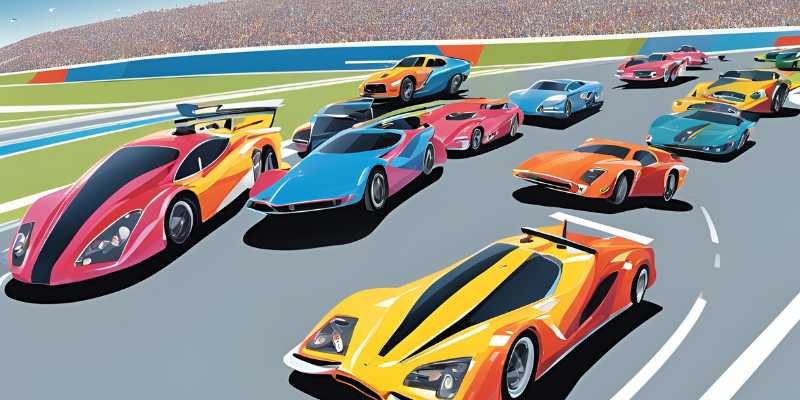
A pace car leads the racing field at a controlled, reduced speed — during rolling starts before the green flag, and caution periods after a crash. NASCAR treats hitting or passing the pace car as a rules violation, since restarting into an unsafe track risks a bigger wreck. This guide covers real pace car speeds, rolling starts vs. caution laps, and cars — from a 1911 Stoddard-Dayton to a 1,250-hp Corvette ZR1X — that have led the field.
Quick Answer
A pace car is a modified road car used to control the speed of a race field — leading cars around the track during the rolling start before the green flag, and again during caution periods when a hazard forces the race to slow down. Drivers must stay in line behind it and cannot pass until it exits the track ahead of a restart.
What Does a Pace Car Actually Do?
A pace car’s job is to control the speed and order of the field whenever the race isn’t at full green-flag speed. It leads the grid before the start, and it comes back out any time a caution flag flies for a crash, debris, or rain — bunching the cars up at a safe, predictable pace so track workers can clean up without a car flying past at 180 mph.
The idea is older than most fans realize. According to the Indianapolis Motor Speedway’s own history of the race, track founder Carl Fisher personally drove a Stoddard-Dayton passenger car for one unscored lap ahead of the field at the very first Indianapolis 500 in 1911, releasing the 40-car grid to the starter at roughly 40 mph. IMS calls it possibly the first-ever use of a pace car at a major event — and very likely the first mass rolling start in motorsports history.
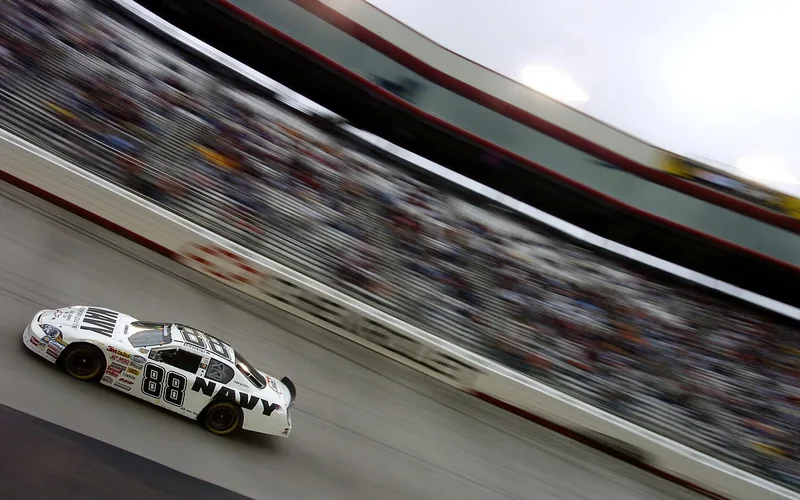
All cars must fall in line behind the pace car once it enters the track, and no one — not even the leader — is allowed to pass it. Once officials clear the track and the pace car pulls off, the field gets the signal (usually the green flag) to go back to racing speed.
Rolling Start vs. Caution Laps: What’s the Difference?
A rolling start and a caution period both put the pace car on track, but they happen at different points in the race and for different reasons.
- Rolling start: Used to begin the race itself. The pace car leads the assembled grid around the track for a set number of unscored warm-up (parade) laps — three is typical in NASCAR — then peels off into the pits just before the start/finish line, and the field takes the green flag at full speed.
- Caution period: Used mid-race after a crash, debris, or a weather hazard. The pace car enters the track, picks up the leader, and bunches the whole field up at a reduced, controlled speed while the track is cleared. It doesn’t leave until officials confirm the track is safe for a restart.
NASCAR uses a rolling start for every one of its races, regardless of track type — there’s no standing start like in Formula 1 or IndyCar’s road courses. The same pace car procedure also governs mid-race restarts: cars line back up single or double file behind the pace car, hold position, and can’t pass until the leader takes the green flag.
Famous Pace Cars: From the 1911 Stoddard-Dayton to the 2026 Corvette ZR1X
The Indianapolis 500’s pace car has become a tradition of its own, with an honorary celebrity driver behind the wheel most years. A few that stand out:
- 1964 Ford Mustang — paced the 48th Indy 500 just weeks after the Mustang’s public debut, giving most fans their first look at the car. Because a stock Mustang couldn’t safely hold pace-car speed, Ford fitted the pace cars with a detuned engine borrowed from the Ford GT40 race program.
- 1978 Chevrolet Corvette — the first time a Corvette ever paced the Indy 500 (the 62nd running), timed to the model’s 25th anniversary. It kicked off a run that has continued almost every year since.
- 2025 Chevrolet Corvette ZR1 — paced the 109th Indy 500 with 1,064 hp from a 5.5L twin-turbo V8 and a 233-mph top speed, driven by Pro Football Hall of Famer Michael Strahan.
- 2026 Chevrolet Corvette ZR1X — the pace car for the 110th Indy 500, combining that same twin-turbo V8 with a 186-hp electric front-axle motor for 1,250 hp total (0-60 mph in under 2 seconds, 233 mph top speed). Indiana University head football coach Curt Cignetti served as honorary driver, marking the 10th straight year a Corvette has paced the race.
If you’d rather own a piece of that history than just read about it, official Indy 500 pace car replicas are a genuine (and surprisingly affordable) corner of the diecast hobby.
Best Indy 500 Pace Car Diecast Pick
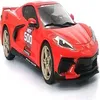
Greenlight 2020 Chevy Corvette C8 — 104th Indy 500 Official Pace Car (1/43 Scale)
An officially licensed 1/43 replica of the C8 Corvette that paced the 104th Indianapolis 500.
- Best for: fans who want a display-ready pace car without the cost of a full 1:18 model
- Why we picked it: larger 1/43 scale shows off the pace car livery better than most 1:64 options, at a similar price
- Main drawback: not motorized or opening — display piece only, no interior detail
Compare more official pace car diecast options
 Option 1 1973 Cadillac Eldorado — 57th Indy 500 Pace Car (1:64)
|
 Option 2 1982 Chevy Corvette — Nazareth Speedway Pace Car (1:64)
|
 Option 3 1971 Dodge Challenger — 55th Indy 500 Pace Car (1:64)
|
As an Amazon Associate we earn from qualifying purchases.
How Fast Does a Pace Car Go?
There’s no single pace car speed — NASCAR sets it relative to each track’s pit road speed limit, running roughly 5 to 15 mph faster than pit road. Faster tracks get a bigger gap so tires and brakes stay in their working temperature range for the eventual restart.
| Track Type | Example | Pit Road Speed Limit | Typical Pace Car Speed |
|---|---|---|---|
| Superspeedway | Daytona | 55 mph | ~70 mph (15 mph above pit road) |
| Short track | Martinsville | 30 mph | ~35 mph (5 mph above pit road) |
📊 NASCAR sets pace car speed 5 to 15 mph above the track’s pit road speed limit — about 70 mph at Daytona versus roughly 35 mph at Martinsville. Source: FLOW RACERS
During a caution, the racing cars themselves are expected to hold roughly that same pace-car speed in single file — NASCAR officials can and do penalize drivers who run noticeably faster than the pace car, or who pass it, under caution.
Pace Car vs. Safety Car: What’s the Difference?
“Pace car” and “safety car” describe the same job, just in different racing series. American oval racing — NASCAR, IndyCar — uses “pace car.” International road-course series, most notably Formula 1, use “safety car” instead. For the full breakdown of how that role works internationally, see our guide to what a safety car is.
The cars themselves are different too. Starting in the 2026 season, Mercedes became Formula 1’s sole safety car supplier after Aston Martin ended its safety-car deal — F1’s safety car is now a Mercedes-AMG GT Black Series, capable of 202 mph. We cover the full speed breakdown, including how that compares lap to lap, in how fast the F1 safety car really goes.
Who Drives the Pace Car?
Two different people typically fill this role. Race day usually opens with an honorary celebrity driver — an athlete, coach, or public figure — steering the pace car for the ceremonial parade laps before handing off. For the actual racing, NASCAR and IndyCar use a dedicated, experienced professional pace car driver for the rest of the event, including every caution period, since that job requires real racecraft: reading track conditions, judging when it’s safe to bring the field back to speed, and communicating hazards to race control.
Brett Bodine, a former NASCAR Cup Series driver who became NASCAR’s full-time pace car driver, has described just how much responsibility that job carries once the ceremonial laps are over.
“It’s our call from the pace car if the track is ready to go back racing after an on-track incident.”
Frequently Asked Questions
What is the purpose of a pace car?
A pace car controls the speed and order of the field whenever the race isn’t at full racing speed — leading cars through the rolling start before the green flag, and again during caution periods after a crash, debris, or bad weather, so track crews can work safely.
How fast does a pace car go?
It depends on the track. NASCAR generally sets pace car speed 5 to 15 mph above that track’s pit road speed limit — around 70 mph at a superspeedway like Daytona, but closer to 35 mph at a short track like Martinsville.
What happens if you hit or pass the pace car?
Passing or striking the pace car is a rules violation. Drivers are required to hold position behind it once it’s on track, and officials can penalize a car that passes it — including sending that driver to the tail of the field or issuing a stop-and-go penalty, depending on the series and severity.
Who drives the pace car?
An honorary celebrity driver — often an athlete or coach — usually handles the ceremonial parade laps before the race starts. A dedicated professional pace car driver, typically a former racer, then runs the car for the rest of the event, including every caution period.
What’s the difference between a pace car and a safety car?
They do the same job under different names. American oval-racing series like NASCAR and IndyCar call it a pace car; international road-racing series like Formula 1 call the same role a safety car.
What was the first pace car in racing history?
The first known pace car led the field at the inaugural 1911 Indianapolis 500. Track founder Carl Fisher personally drove a Stoddard-Dayton for one unscored lap before releasing the 40-car grid to the starter at roughly 40 mph.
Conclusion
A pace car’s job comes down to one thing: controlling speed when the race can’t safely run at full pace, whether that’s the rolling start before the green flag or a caution period after a hazard. The exact speed changes by track, the car changes every year, but the rule never does — stay behind it, don’t pass it, and the race stays safe until it’s ready to go green again.
Products related to this article
Sponsored / affiliate links. As an Amazon Associate I earn from qualifying purchases. I may earn additional commission from eligible campaigns.