What Is a Safety Car? Rules, Speed and the 2026 Model
A safety car is a road-based performance car that race control sends onto the track to slow the field down after a crash, debris, or dangerous weather — cutting pace by roughly 30% while marshals clear the hazard, with overtaking banned until it pulls back into the pits.
The stakes are higher than they look: a single late-race safety car restart decided the 2021 Formula 1 World Championship, and the rule written in direct response to that race is still what governs every deployment today. Going into the 2026 season, the job is done by a 612-horsepower Mercedes-AMG GT 63 PRO 4MATIC+ — the first FIA Safety Car with fully variable all-wheel drive — driven by Bernd Mayländer, who passed 500 Grand Prix starts behind the wheel at the 2026 Australian Grand Prix.
This guide covers what a safety car actually does on track, how it differs from a Virtual Safety Car, the overtaking and pit-stop rules drivers have to follow, who drives it and what car it is in 2026, and the incidents — from 1973 to 2021 — that shaped the rulebook in place today.
What Is a Safety Car?
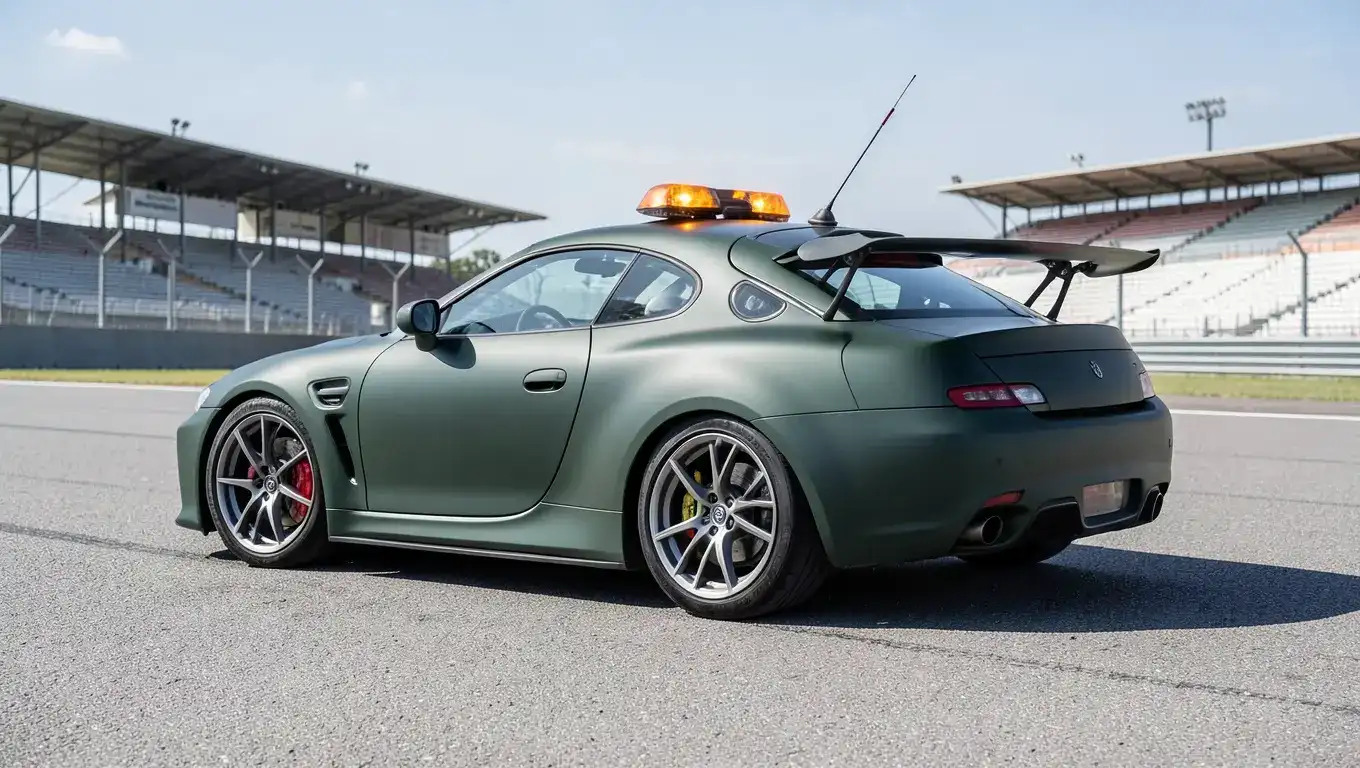
A safety car (capitalized as “Safety Car” in F1’s official rulebook) is a road car, not a purpose-built racer, that race control deploys onto a closed circuit to control the pace of every competing car at once. It is used whenever a hazard makes full racing speed unsafe but the situation does not require stopping the session entirely with a red flag — typically a crash, stray debris, standing water, or an animal or marshal working trackside.
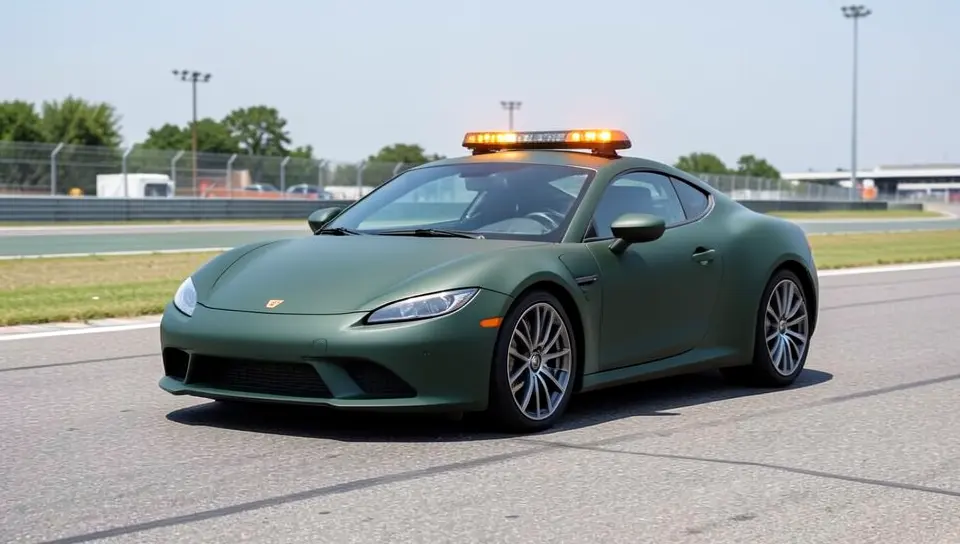
Once deployed, the safety car exits the pit lane with its amber lights flashing, picks up the current race leader, and every other car falls in behind in single file, in the order they were running. No one is allowed to overtake. The field holds that reduced pace, roughly 30% below full racing speed, until the hazard is cleared and race control judges it safe to go racing again.
The first safety car in Formula 1 history appeared at the 1973 Canadian Grand Prix — a yellow Porsche 914 driven by former F1 privateer Eppie Wietzes, sent out after a multi-car pile-up in the wet. The deployment was a mess: the car picked up the wrong lead driver, most of the field ended up a lap down, and it took officials hours after the race to confirm Peter Revson had actually won. The idea was shelved for two decades and only became an official, standardized part of F1 in 1993, first used at the Brazilian and British Grands Prix that year.
SAME PLATFORM AS THE REAL CAR
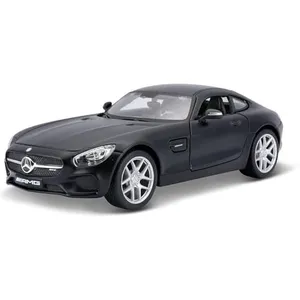 |
Maisto 1:24 Mercedes-AMG GT Diecast – $24.24 The 2026 F1 Safety Car is a Mercedes-AMG GT 63 PRO 4MATIC+ — this is a 1:24 scale model of the same GT platform it is built on (not a licensed FIA livery replica).
|
How the Safety Car Works During a Race
Deployment is race control’s call, not a team’s. When officials decide the track needs to be neutralized, the safety car pulls out of the pit lane and joins the circuit ahead of whichever car is currently leading. Every other driver has to close up into a single line behind the car in front of them, holding position — the running order at the moment of deployment is locked in, and nobody can pass.
If any car has been lapped by the leader, current rules require race control to wave past all of the lapped cars, not just some of them, before the safety car returns to the pits. That wording — “all” rather than “any” — was written into the regulations for the 2022 season specifically because of what happened at the end of the 2021 Abu Dhabi Grand Prix, covered in more detail further down this guide.
Once the hazard is cleared, the safety car turns its lights off, leads the field around for one final lap, and then peels into the pit lane. Racing resumes the moment the leader crosses the designated safety car line at the start/finish straight — drivers cannot begin racing each other before that line, even if the car ahead of them is visibly slowing down first.
Full Safety Car vs. Virtual Safety Car (VSC)
Formula 1 actually has two separate tools for slowing the field, and they work very differently. The Virtual Safety Car (VSC) was introduced in 2015, directly in response to Jules Bianchi’s fatal accident at the 2014 Japanese Grand Prix, as a faster, lower-disruption alternative for hazards that do not need a physical car on track.
| Full Safety Car | Virtual Safety Car | |
|---|---|---|
| Used for | Serious incidents, cars or marshals physically on track | Lower-risk hazards, e.g. a stopped car in a safe spot |
| How speed is controlled | Field follows a real car at a set pace | Cars follow a time delta shown on the steering wheel, updated roughly every 50 meters |
| Does the field bunch up? | Yes — cars form a single line | No — drivers keep their existing gaps to the car ahead |
| Pace reduction | Roughly 30% below racing speed | Roughly 30% below racing speed |
| Pit stops allowed? | Yes | Yes, if the pit lane itself is not closed |
| Overtaking | Banned | Banned |
| Introduced | First used 1973, official since 1993 | 2015 |
Because a Virtual Safety Car does not bunch the field together, it tends to preserve the gaps between cars, whereas a full safety car compresses the whole field into a tight train — which is exactly why teams treat the two very differently when it comes to strategy, covered below.
Safety Car Rules: Overtaking, Pit Stops and Restarts
Overtaking is prohibited from the moment the safety car boards are shown until the leader crosses the safety car line at the restart — this applies under both a full safety car and a VSC. Cars caught passing another car (outside the specific lapped-car un-lapping process) face penalties from race control after the session.
Pit stops are allowed while the safety car is out, and teams frequently use the window to pit for a smaller net time loss than they would at full racing speed. Inside the pit lane itself, a strict speed limit applies at all times, not just under a safety car: for the 2026 season the standard limit is 80 km/h (about 50 mph) at most circuits, dropping to 60 km/h at tighter venues like Monaco and Melbourne’s Albert Park. That limit exists because of the sport’s own history — F1 introduced pit lane speed limits at the 1994 Monaco Grand Prix, directly following a run of serious incidents during that year’s San Marino Grand Prix weekend, including Ayrton Senna’s fatal crash.
At the restart, drivers must not accelerate or brake erratically to disrupt the car behind them before the safety car line — race control monitors this closely, since a poorly timed restart can trigger a multi-car incident of its own.
What Car Is the F1 Safety Car and Who Drives It?
Going into the 2026 season, the official FIA Formula 1 Safety Car is a Mercedes-AMG GT 63 PRO 4MATIC+, which made its debut at the Hungarian Grand Prix. It produces 450 kW (612 hp) and 850 Nm of torque, and it is the first Official FIA Safety Car ever built with fully variable all-wheel drive. It replaces the Mercedes-AMG GT Black Series that had done the job since 2022.
Mercedes-AMG is now the sole official supplier of both the Safety Car and the Medical Car for every round of the 2026 championship — Aston Martin, which had provided a Vantage-based safety car alongside Mercedes since 2021, stepped away from the role at the end of 2025.
Behind the wheel is Bernd Mayländer, who has driven the F1 Safety Car since 2000 and passed his 500th Grand Prix in the role at the 2026 Australian Grand Prix. On track, the car does not run anywhere near its outright top speed — it typically holds a controlled pace well below what an F1 car can manage on the same stretch of tarmac, with the exact figures depending heavily on the circuit and conditions. For a full breakdown of how fast the safety car actually runs lap by lap, see our companion guide, How Fast Does the F1 Safety Car Go?
How the Safety Car Changes Race Strategy
A safety car period is one of the biggest strategic swings a team can face mid-race. Because every car on track is running at the same reduced pace, the time a driver loses by ducking into the pits for fresh tires is much smaller than it would be at full racing speed — so teams that were already planning a stop will often bring their driver in immediately once the safety car is deployed, sometimes catching rivals off guard.
The safety car also erases whatever gap a leading driver had built up through the race. A five-second lead built over twenty laps of hard racing disappears the moment the field bunches up in a single line, handing the cars behind a free run at the restart. That single fact is why safety car timing is so often decisive — a driver who was cruising to an easy win can suddenly find themselves fighting on equal terms with cars that never earned the pace to catch up on their own.
Notable Safety Car Moments in F1 History
A handful of safety car deployments have gone on to reshape the sport’s rulebook or decide championships outright.
1973 Canadian Grand Prix: The First Deployment
As described above, F1’s first-ever safety car deployment was chaotic enough that it took hours to sort out the actual finishing order. It would be another twenty years before the safety car became a standard, properly regulated part of the sport.
1994: The Season That Changed Safety Forever
The 1994 San Marino Grand Prix weekend, which included Ayrton Senna’s fatal crash, triggered the most sweeping safety overhaul in the sport’s history. Among the direct results was the introduction of pit lane speed limits later that season at the Monaco Grand Prix — a rule that is still in force, in updated form, today.
2008 Singapore Grand Prix: “Crashgate”
Nelson Piquet Jr. deliberately crashed his Renault under instructions from his own team, triggering a safety car at a point in the race that handed his teammate Fernando Alonso the win. The scandal only came to light in 2009, when Piquet Jr. gave evidence to the FIA after being dropped by the team, resulting in bans for two senior Renault figures. It remains the clearest example of a safety car deployment being deliberately manufactured rather than caused by a genuine accident.
2021 Abu Dhabi Grand Prix: A Title Decided on the Restart
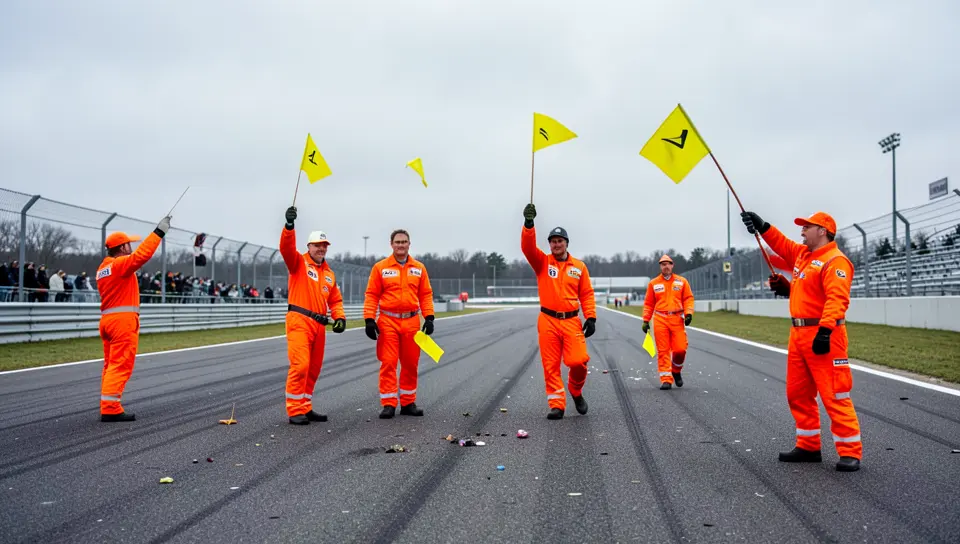
With six laps remaining and Lewis Hamilton comfortably leading Max Verstappen in the championship-deciding finale, Nicholas Latifi crashed and brought out the safety car. Race director Michael Masi initially said no lapped cars would be allowed to un-lap themselves, then reversed course and let only the five cars separating Hamilton and Verstappen pass — not the rest of the lapped field. The safety car came in on the final lap, and Verstappen, on fresher tires, passed Hamilton to win both the race and the title. An FIA review later found Masi had made a “human error” acting in good faith, and the sport rewrote its safety car regulations for 2022 so that all lapped cars, not just some, must be waved past before any restart.
Where Safety Car Technology Is Headed
The 2026 Mercedes-AMG GT 63 PRO 4MATIC+ points to where the role is headed: more electrified powertrains, more variable all-wheel-drive systems for consistent grip in changing conditions, and richer telemetry sharing between the safety car and race control so hazards can be assessed and cleared faster. Full autonomy is not on the sport’s near-term roadmap — a human driver reading live track conditions is still considered essential to the job — but the underlying hardware keeps getting closer to what F1’s own grid is running.
Frequently Asked Questions
What does a safety car do in a race?
A safety car is deployed by race control to slow every car down at once after a crash, debris, or dangerous conditions. It leads the field in a single line at a controlled pace, roughly 30% below racing speed, while marshals clear the hazard, and no overtaking is allowed until it returns to the pits.
How fast does the F1 safety car go?
The pace varies by circuit and conditions rather than following one fixed number — race control sets it to keep tires and brakes in a safe working range while the hazard is cleared. See our full breakdown at How Fast Does the F1 Safety Car Go? for exact figures.
Can you overtake during a safety car period?
No. Overtaking is banned from the moment the safety car boards are shown until the leader crosses the safety car line at the restart, under both a full safety car and a Virtual Safety Car. The only exception is the formal process of un-lapping cars that have been waved past by race control.
What is the difference between a safety car and a virtual safety car?
A full safety car is a real car that the field follows in a bunched-up single line. A Virtual Safety Car (VSC) uses a time-delta system on each driver’s steering wheel instead, so cars keep their existing gaps rather than closing up. Both cut pace by roughly 30% and both ban overtaking.
Who drives the F1 safety car?
Bernd Mayländer has driven the official F1 Safety Car since 2000. He passed his 500th Grand Prix in the role at the 2026 Australian Grand Prix.
What car is the F1 safety car in 2026?
For the 2026 season it is a Mercedes-AMG GT 63 PRO 4MATIC+, producing 612 hp and 850 Nm of torque. It is the first Official FIA Safety Car with fully variable all-wheel drive, and Mercedes-AMG is now the sole official supplier of the role after Aston Martin stepped away at the end of 2025.
Conclusion
A safety car exists for one reason: to let a race keep going, safely, instead of stopping outright every time something goes wrong on track. It controls pace, protects marshals working trackside, and keeps tires and brakes in a workable range until the hazard is cleared — and as the 2021 Abu Dhabi Grand Prix showed, exactly how it is deployed and withdrawn can be enough to decide a championship.
Next time a safety car comes out, you will know exactly what is happening on track and why — from the moment race control makes the call to the restart line that lets the race go racing again.
Products related to this article
Sponsored / affiliate links. As an Amazon Associate I earn from qualifying purchases. I may earn additional commission from eligible campaigns.