Collision Coverage vs Comprehensive Coverage: Keep or Cut
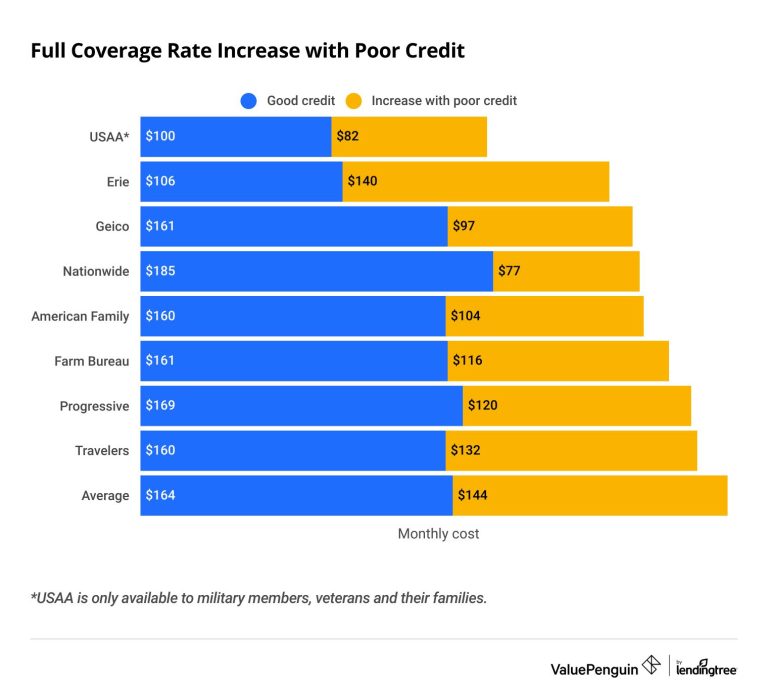
Keep collision on any financed or leased car, and keep comprehensive if the annual premium is under about 10% of the car’s value and you could cover the deductible; drop coverage that costs more than the likely payout. Skip that blindly, and you can end up paying for a totaled car, hail damage, theft, or a loan balance the insurer will not fully cover. This guide compares collision coverage vs comprehensive coverage and gives a simple keep-or-drop rule based on car value, loan status, and deductible size.
| Decision factor | Collision Coverage | Comprehensive Coverage | Winner |
|---|---|---|---|
| Loss type covered | Crash damage from another vehicle or an object | Non-crash damage like theft, vandalism, fire, hail, animals, and weather | Tie |
| Fit for financed or leased cars | Often required by a lender or lessor | Often required by a lender or lessor | Tie |
| Value on an older paid-off car | Often weak if ACV is low and the premium is not | Often stronger in theft- or weather-heavy areas | Comprehensive Coverage |
| Best for single-car accidents | Usually covers rollovers, hit-and-runs, and fixed-object crashes | Does not pay for crash damage | Collision Coverage |
| Deductible decision pressure | Worth keeping when you can absorb the deductible after a crash | Worth keeping when you can absorb the deductible after theft or weather loss | Tie |
What collision coverage pays for
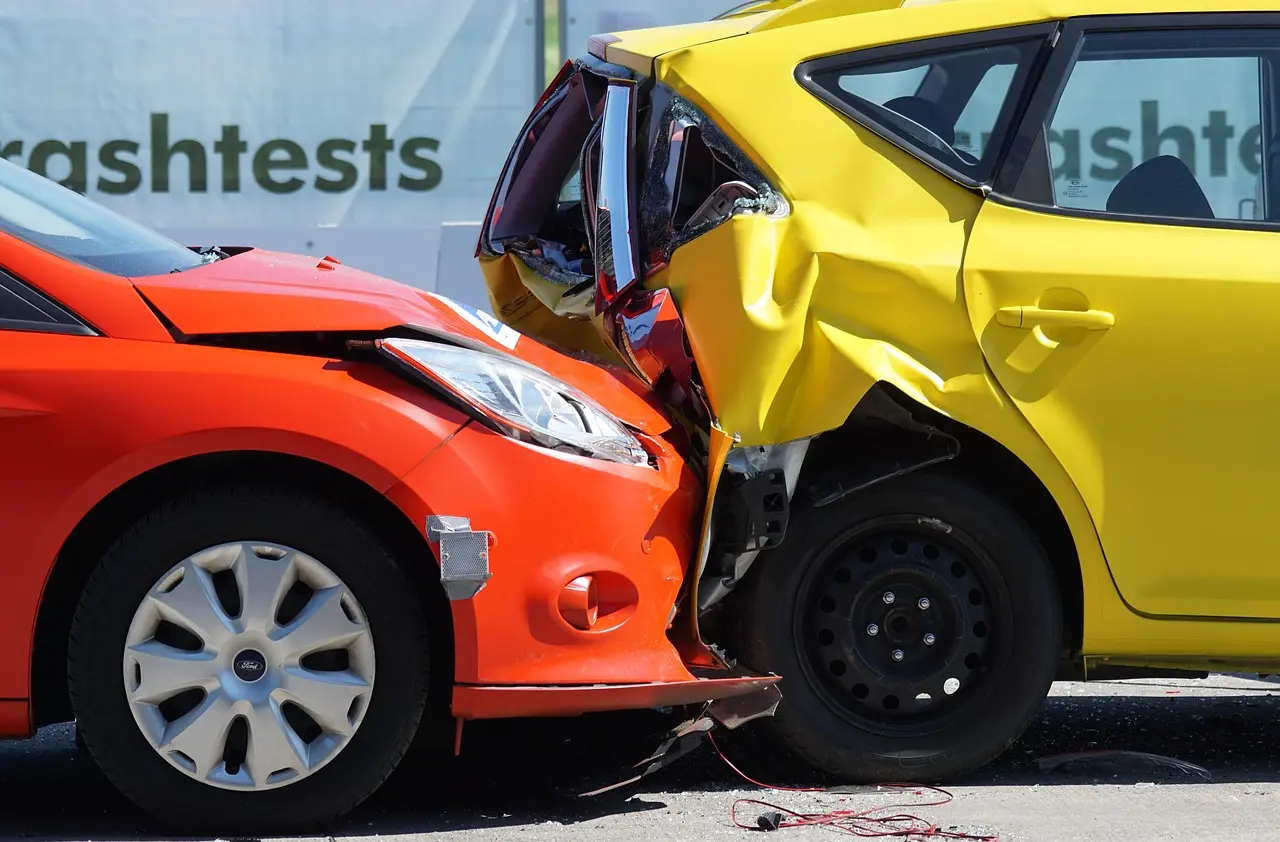
Collision coverage pays for damage to your own vehicle from crashes with another vehicle or an object. That includes fixed objects such as guardrails, poles, road signs, and similar single-car impacts. It usually pays up to the car’s actual cash value, minus the deductible.
Crashes, rollovers, and hit-and-run damage
Collision is the bucket for a car that strikes something, gets struck, or rolls over in a crash. It can still apply when there is no other driver to collect from, which is why hit-and-run damage and many single-car wrecks fall here. The policy is about the loss type, not fault.
How the deductible and actual cash value limit the payout
Collision claims are reduced by two limits: the deductible you chose and the vehicle’s actual cash value. If the car is totaled, the carrier generally values the car at the time of loss, then subtracts the deductible. A low-value car can hit the payout ceiling fast.
What comprehensive coverage pays for
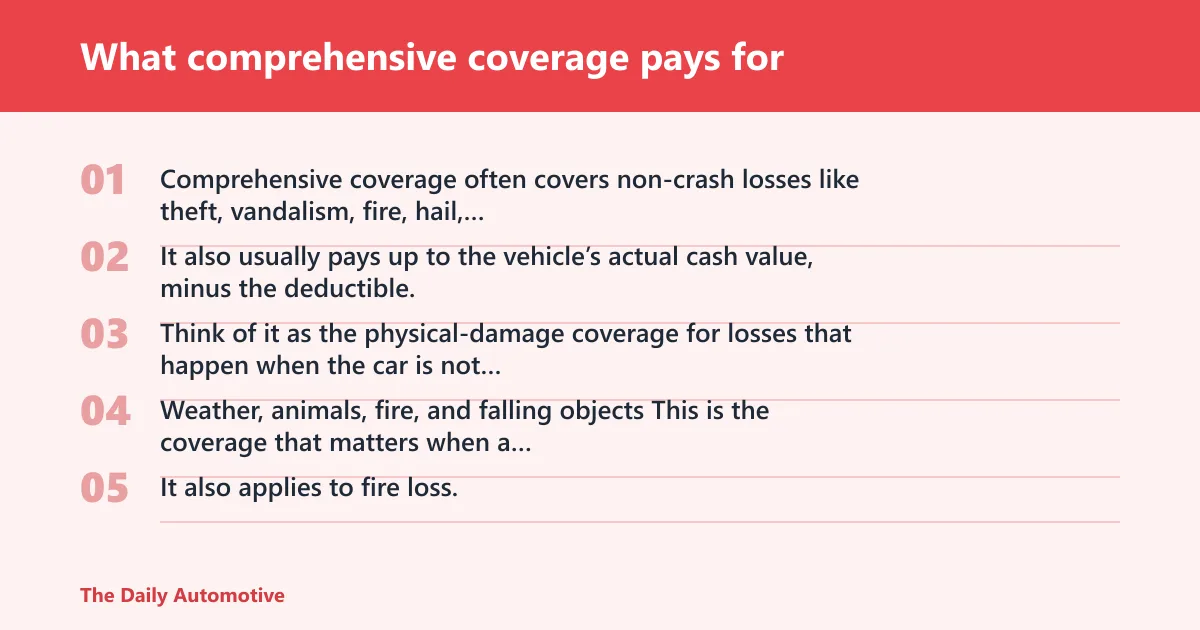
Comprehensive coverage often covers non-crash losses like theft, vandalism, fire, hail, flooding, falling objects, and animal strikes. It also usually pays up to the vehicle’s actual cash value, minus the deductible. Think of it as the physical-damage coverage for losses that happen when the car is not crashing into something.
Weather, animals, fire, and falling objects
This is the coverage that matters when a tree limb falls on the hood, hail dents the roof, or a deer takes out the front end. It also applies to fire loss. Those events can total an older car just as fast as a crash can.
Why pothole damage is a gray area
Pothole damage is where policy wording matters. Some carriers treat the resulting damage as collision because the car hit an object or surface irregularity; others may handle specific underbody or tire claims differently. The safe rule is simple: check whether the damage came from impact with a road object or from a non-collision peril before assuming comprehensive will pay.

What’s the difference between collision and comprehensive coverage?
Collision covers crash damage; comprehensive covers non-crash damage. That split is the cleanest way to think about it. If the car hit something, collision is the first bucket to check. If the car was stolen, vandalized, struck by hail, or damaged by an animal, comprehensive is the one to check.
Claim examples people mix up
A guardrail scrape is collision. A fallen tree limb is comprehensive. A rollover in a single-car crash is collision, while a tree falling onto a parked car is comprehensive. Those examples sound similar when you are dealing with the damage, but the cause decides the coverage.
Where uninsured property damage does and does not fit
Uninsured motorist property damage is not the same thing as collision coverage. It may apply when an uninsured driver damages your car, depending on the policy and state setup, but collision is the more direct physical-damage bucket. Do not assume one replaces the other.
Collision coverage vs full coverage: are they the same thing?
“Full coverage” is an informal term that usually means liability plus collision plus comprehensive. People use it loosely, so the phrase can hide missing coverage instead of confirming it.
Why the term causes confusion
A driver may say “full coverage” and mean only that the car has crash and theft protection. Another person may use it to mean every protection they can remember. Since it is not an official policy type, the label by itself tells you very little.
Why the label can hide gaps
The danger is assuming the car is fully protected when one of the physical-damage coverages has been dropped, or the deductible is so high that the payout is thin. If the policy does not spell out collision and comprehensive separately, the phrase is too vague to trust.
Does comprehensive coverage mean full coverage?
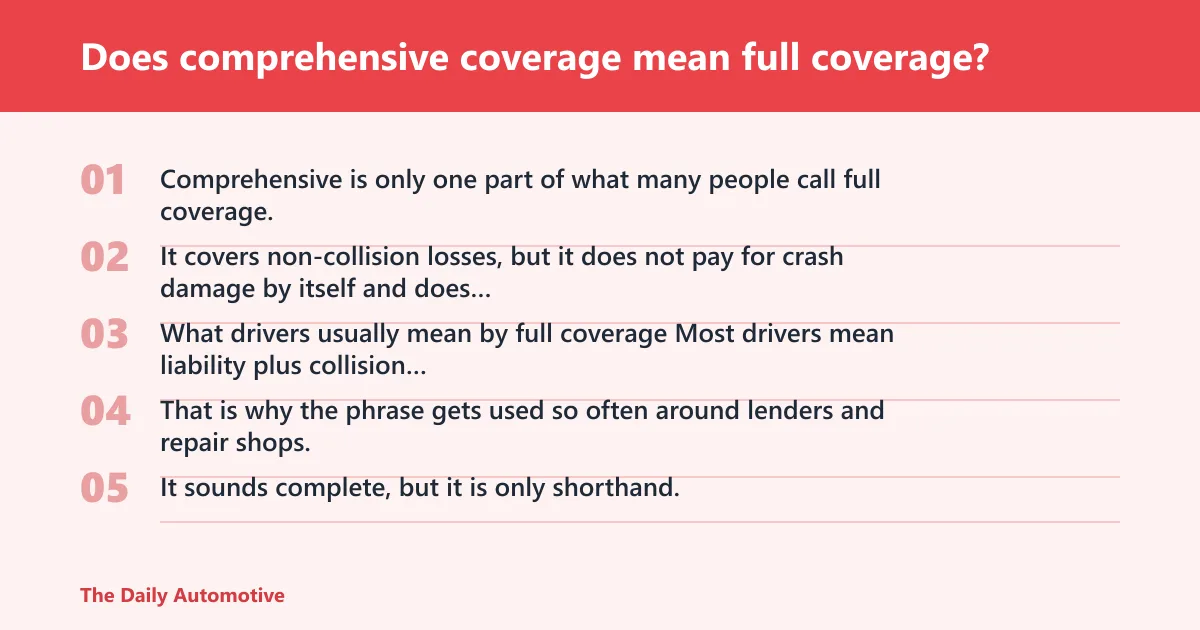
Comprehensive is only one part of what many people call full coverage. It covers non-collision losses, but it does not pay for crash damage by itself and does not replace liability or collision coverage.
What drivers usually mean by full coverage
Most drivers mean liability plus collision plus comprehensive. That is why the phrase gets used so often around lenders and repair shops. It sounds complete, but it is only shorthand.
Why insurers and lenders may use the term differently
Insurers write separate coverages and separate deductibles. Lenders care whether their collateral is protected, not whether the policy sounds complete in casual conversation. That is why a contract can require specific coverages while a driver still thinks the car has “full coverage.”
What does comprehensive coverage cover?
Comprehensive coverage covers theft, vandalism, fire, hail, animal damage, falling objects, and other non-collision losses. It does not cover every kind of loss, and it does not pay for crash damage. The key question is whether the event happened outside a collision with something.
Common real-world claims
A stolen catalytic converter, a broken window from vandalism, hail dents, a garage fire, and deer strikes all belong here. So do tree limbs and similar falling-object losses. Those are the claims that make comprehensive valuable even on older cars in the right area.
Is comprehensive coverage worth it?
Comprehensive is worth keeping when the car is exposed to theft, hail, wildfire, vandalism, or animal strikes and the premium is small compared with the car’s value. It is usually easier to justify than collision on an older paid-off car because weather and theft can total a vehicle with no warning.
High-theft areas and weather risk
If the car lives on the street in a theft-prone area or sits in a hail-prone region, comprehensive can pay for a loss that would otherwise come out of pocket. That matters even when the car is older, because one bad event can wipe out a meaningful share of its value.
When low value changes the answer
If the car’s actual cash value is already low, comprehensive can still make sense when the exposure is high. But if the annual premium is close to the likely payout after the deductible, the math gets thin. At that point, the coverage is buying peace of mind more than a strong financial return.
What’s covered by collision coverage?
Collision coverage is for damage from crashes with another vehicle or an object. It usually covers fixed-object impacts such as poles and guardrails, plus many single-car accidents. If the car rolled, hit a curb hard enough to cause major damage, or was struck in a parking-lot collision, collision is the right place to look.
Why it matters on newer cars
Repair bills on newer cars add up quickly, and total losses can happen with surprisingly moderate damage if the vehicle value is high. That makes collision more useful when the car still has meaningful ACV or a lender still has a stake in the loan balance.
Hit-and-run and single-car crash questions
A hit-and-run often falls under collision if the other driver cannot be identified and the car was damaged in a crash. A rollover from loss of control is also collision. The important split is crash versus non-crash, not whether another insurer is available.
Do lenders require collision and comprehensive coverage?
Yes, lenders and lessors often require both on financed or leased cars. It is not a state-law rule; it comes from the contract. The lender wants the vehicle protected while there is still a loan or lease balance tied to it.
What happens when the contract requires one or both
If the contract requires collision, dropping it can violate the agreement. If it requires both coverages, dropping either can create a problem at the next audit or renewal check. That is why financed and leased cars are treated differently from paid-off cars.
Why paid-off cars are different
Once the loan is gone, the lender’s demand disappears with it. Then the decision becomes purely economic: what is the car worth, what does the coverage cost, and how likely is the loss you are guarding against? That is where older-car judgment matters most.
How do collision and comprehensive deductibles work?
Each coverage has its own deductible, and the deductible is paid out of pocket before the insurer pays the rest of the claim. Both coverages usually let you choose deductibles between $100 and $2,000. A higher deductible usually lowers the premium, but it also raises the amount you must absorb after a loss.
Deductible selection worksheet
- Write down your vehicle’s actual cash value.
- Write down your emergency fund that is truly available for a car loss.
- Pick a deductible you could pay today without borrowing.
- Check whether the deductible is small enough to matter against the car’s value.
- Repeat the test separately for collision and comprehensive.
Simple rule: if the deductible is more than the amount you can comfortably pay from savings, it is too high for that coverage. If the annual premium savings from raising the deductible are tiny compared with the extra out-of-pocket risk, keep the lower deductible.
Which is more important for my car, collision or comprehensive?
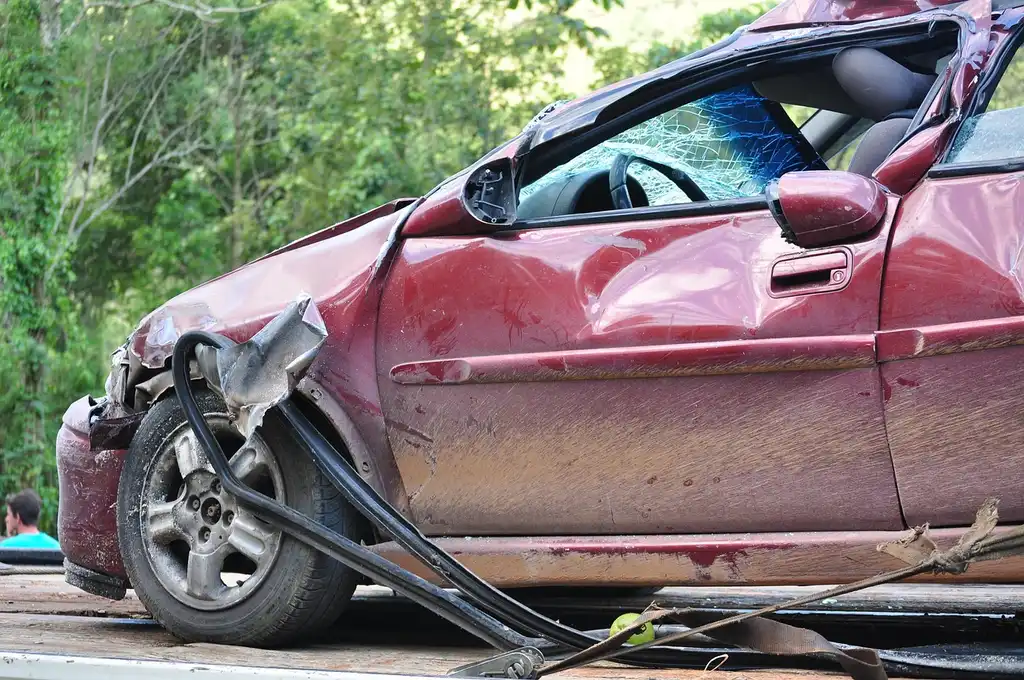
The more important coverage is the one that matches your biggest realistic loss. If you are financing the car or drive a newer vehicle in traffic, collision often matters more. If the car is parked outside in a hail-prone or theft-prone area, comprehensive can matter more, even on an older vehicle.
Decision matrix
| Situation | Recommended coverage choice | Why |
|---|---|---|
| Financed new car | Keep both collision and comprehensive | Lender or lease terms often require both, and the car’s ACV is usually high enough to justify repair or total-loss protection |
| Paid-off older car | Keep comprehensive first; collision only if the car still has meaningful value | Weather, theft, and animal losses can still be costly, while low ACV can make collision weak on price alone |
| High-theft area | Keep comprehensive | Theft and vandalism are non-collision losses that collision will not pay for |
| Hail-prone region | Keep comprehensive | Hail is a classic comprehensive claim and can total a low-value car fast |
| Low savings | Keep the coverage with the deductible you can actually pay; do not choose a high deductible you cannot absorb | A cheap premium is not useful if one claim creates a cash-flow problem |
| High annual mileage | Keep collision, and keep comprehensive if the car is exposed to weather or theft | More miles usually mean more crash exposure, especially in traffic-heavy driving |
How to compare annual premium savings against a deductible
Here is the rule that keeps the math honest: if raising a deductible saves less in a year than the extra deductible amount you are taking on, the higher deductible is weak unless you almost never claim. For example, if the premium drop is small and the deductible jumps a long way, the extra savings may not justify the added risk.
Use the coverage when the likely loss is bigger than the annual cost plus your deductible tolerance. Drop it when the premium savings are worth more than the protection you would probably collect after a claim.
collision coverage vs full coverage
Collision coverage is only the crash piece, while full coverage usually means liability plus collision plus comprehensive. So collision is not the same as full coverage. If a policy is missing comprehensive, theft or hail can still leave you paying the bill yourself.
collision insurance vs comprehensive insurance
Collision insurance and comprehensive insurance are different because they respond to different causes of loss. Collision is for crashes with cars or objects; comprehensive is for theft, vandalism, fire, hail, animals, and weather. The better choice is the one that matches how your car is most likely to be damaged.
Verdict: Collision Coverage or Comprehensive Coverage?
Choose Collision Coverage if you need protection for a crash with another vehicle or an object, like a guardrail scrape, a rollover, a fixed-object impact, or hit-and-run damage on a financed or leased car.
Choose Comprehensive Coverage if you need protection for non-crash losses like theft, vandalism, fire, hail, animal strikes, or a fallen tree limb, especially on an older paid-off car in a theft- or weather-heavy area when the annual premium is small compared with the car’s value.
Frequently asked questions
What’s the difference between collision and comprehensive coverage?
Collision pays for damage from crashes with another vehicle or an object. Comprehensive pays for non-crash losses such as theft, vandalism, fire, hail, animals, and weather damage. If the loss came from impact, look at collision first; if it came from something else, look at comprehensive.
Collision coverage vs full coverage: are they the same thing?
No. Collision coverage is one part of what people call full coverage. The informal phrase usually means liability plus collision plus comprehensive, but it is not an official policy type. A car can have collision and still lack comprehensive, or vice versa.
Does comprehensive coverage mean full coverage?
No. Comprehensive only covers non-collision losses. Full coverage is casual shorthand that usually includes liability plus collision plus comprehensive. A policy with comprehensive alone still leaves crash damage uncovered, so the term can be misleading if you do not check the actual coverages.
What does comprehensive coverage cover?
Comprehensive coverage covers theft, vandalism, fire, hail, animal strikes, falling objects, and weather damage. It does not pay for crash damage. That means a broken window from vandalism or a tree limb on the roof is usually comprehensive, while a guardrail hit is not.
Do lenders require collision and comprehensive coverage?
Often yes, especially on financed or leased cars. The requirement comes from the contract, not state law. If the lender wants the car protected, it may require both coverages, and dropping one can violate the agreement while the loan or lease is still open.
How do collision and comprehensive deductibles work?
Each coverage has its own deductible, and you choose them separately. A claim payout starts after you pay that deductible, and both coverages usually let you choose between $100 and $2,000. Higher deductibles usually lower the premium, but they also increase what you pay after a loss.
Products related to this article
Sponsored / affiliate links. As an Amazon Associate I earn from qualifying purchases. I may earn additional commission from eligible campaigns.