
What Is Heat Soak in a Car? Explained Simply
If you’ve heard the phrase, What Is Heat Soak in a Car? Explained, and felt a bit lost, you’re not alone! It’s a common term that can sound tricky. Don’t worry, it’s really not as hard to grasp as it might seem. This guide is made to break down what heat soak is, how it happens, and what you can do about it. We’ll explore it step-by-step so you can easily get a grasp of it all. Next, we’ll look at the causes and effects in greater detail.
What Exactly Is Heat Soak in a Car?
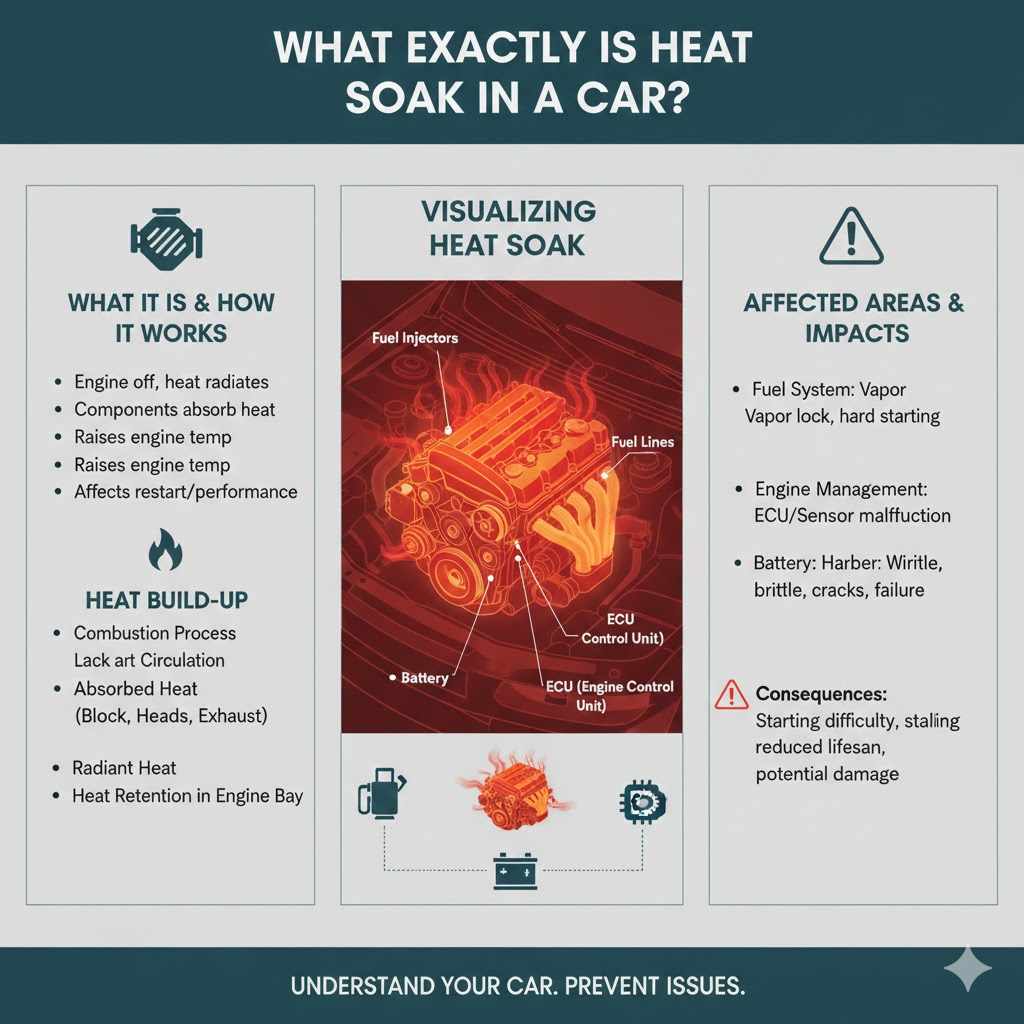
Heat soak is a specific phenomenon that occurs in internal combustion engine vehicles, and understanding it is important for anyone who wants to learn how their car works. It happens when the engine is turned off, and the heat that builds up inside the engine bay is then absorbed by various components.
Even after the engine has stopped running, the engine’s residual heat continues to radiate throughout the engine compartment. This absorbed heat gradually raises the temperature of the engine and other related parts. This process can have notable consequences for the engine’s performance, especially when attempting to restart the vehicle after it has been sitting for a period.
Let’s unpack what occurs. The engine produces a significant amount of heat during operation. When you turn the engine off, the coolant stops circulating, and the fan may not be running (unless set to do so). This means the usual methods of heat dissipation are disabled. The engine components, which have reached high temperatures, will still emit heat. This heat radiates and is absorbed by parts near the engine. This is where “soak” comes into play; the heat is being “soaked” into these components, raising their temperature even higher. This can create issues with the car’s ability to start or run properly.
How Heat Builds Up in the Engine
The build-up of heat in an engine is a natural byproduct of the combustion process. The burning of fuel and air inside the cylinders generates intense heat, with temperatures soaring. The heat produced can reach thousands of degrees Fahrenheit. This is why the engine needs a cooling system. The engine’s cooling system, which includes a water pump, radiator, coolant, and a thermostat, works to manage this extreme heat. It circulates coolant throughout the engine block to absorb excess heat, and the radiator dissipates this heat into the atmosphere. The engine’s metal components, like the engine block, cylinder heads, and exhaust manifolds, also absorb and retain significant heat during operation.
- Combustion Process: The core of heat generation is the combustion process itself, where fuel and air ignite within the engine’s cylinders.
- Lack of Coolant Circulation: When the engine is turned off, the water pump stops circulating coolant. This disrupts the cooling system’s ability to remove heat from the engine.
- Absorbed Heat: Metal components in the engine (block, heads, exhaust) absorb heat, which then dissipates.
- Radiant Heat: The engine, still very hot after being shut down, radiates heat.
- Heat Retention: The engine compartment, designed to protect the engine, also retains heat.
During the combustion cycle, heat is generated by the rapid expansion of gases in the cylinders. This heat is what drives the pistons and, in turn, powers the car. Much of this energy is converted into mechanical work, but a substantial amount remains as heat. This process causes engine components, such as the cylinder head and engine block, to reach extremely high temperatures. Even after the engine is turned off, this heat is still present and needs somewhere to go, so the parts nearby absorb it.
Areas of the Car Affected by Heat Soak
The impacts of heat soak are broad, affecting several areas of the car. The areas near the engine, especially those made of metal, are affected first. The longer the engine sits idle after being turned off, the more intense the heat soak can become. This leads to problems ranging from starting difficulties to potential damage to electronic components.
- Fuel System: The fuel system, including the fuel injectors, fuel pump, and fuel lines, can be affected.
- Engine Management System: The Engine Control Unit (ECU) and sensors, which oversee the engine’s functions, can be affected.
- Cooling System: While the engine is off, the cooling system is not actively cooling the engine.
- Battery: The heat can cause the battery to work harder.
- Wiring and Rubber Components: Wiring harnesses and rubber hoses can become brittle and crack.
The fuel system can experience vapor lock. The heat from the engine can cause the fuel in the fuel lines to vaporize, forming bubbles that disrupt the fuel flow. This makes the engine difficult to start or causes it to stall. In addition, the Engine Control Unit (ECU) and various sensors, such as the crankshaft position sensor and the camshaft position sensor, can be impacted. They are vital for engine operation. Intense heat can also degrade the wiring and rubber components in the engine compartment. Over time, heat soak can cause these components to become brittle, which can lead to cracks and failures.
Why Does Heat Soak Matter? The Effects Explained
Heat soak’s effects can be felt when trying to restart the engine after it has been sitting. It can cause a variety of problems, ranging from minor inconveniences to more serious issues that can affect how the car runs. When a hot engine is turned off, the gasoline can vaporize, leading to starting difficulties. This effect is especially common on hot days or when an engine has been running for a long time. The vapor can interrupt the smooth flow of fuel to the engine, causing it to crank but not start, or to start roughly and stall quickly.
Heat soak can degrade an engine’s performance. The high temperatures can affect the engine’s timing and fuel mixture, reducing power. This is because the ECU may not be able to adjust these settings as effectively in a high-temperature environment. The heat can also cause components to break down faster than they should, leading to the need for repair.
Starting Difficulties
One of the most common signs of heat soak is trouble starting the car. This issue usually arises after the engine has been turned off for a while and the components have had a chance to absorb heat. The fuel system can be particularly susceptible to heat soak. The heat can cause the fuel in the fuel lines to vaporize, which leads to vapor lock. Vapor lock prevents the fuel from flowing correctly into the engine. This makes it challenging for the engine to ignite and start. You might hear the engine crank, but it will not fire up.
- Vapor Lock: Heat causes fuel to vaporize in fuel lines, obstructing flow.
- Flooding: Excessive fuel injection due to sensor malfunctions can flood the engine.
- Sensor Malfunctions: Heat affects sensors, sending wrong signals to the ECU.
- Battery Strain: The starter motor needs to work harder in hot conditions.
- Difficulty Restarting: Can be frustrating, especially in hot weather.
In addition to vapor lock, other factors can make starting difficult. The ECU, which controls the fuel and ignition timing, may receive incorrect signals from heat-affected sensors. This can lead to issues with the fuel mixture. The ECU also manages how much fuel goes into the engine. If the sensors are sending the wrong signals, the engine may become flooded. The starter motor also has to work harder in hot conditions, as it needs to overcome the increased resistance caused by the heat. This can put additional strain on the battery. All of these factors combine to make restarting a hot engine a real challenge.
Potential Engine Damage
Prolonged or severe heat soak can potentially lead to engine damage over time. The high temperatures inside the engine compartment and the engine itself can accelerate the wear and tear on various components. This can shorten the lifespan of parts like rubber hoses, plastic connectors, and electronic sensors. Extreme heat can also affect the engine’s internal components, such as the pistons, cylinder walls, and valve seals.
- Accelerated Component Wear: Rubber and plastic parts degrade faster in high heat.
- Oil Degradation: Heat can cause engine oil to break down, reducing its ability to lubricate.
- Sensor Failure: Heat can damage sensitive electronic sensors.
- Increased Risk of Knock: High temperatures increase the risk of engine knock or detonation.
- Reduced Lifespan: Heat soak shortens the lifespan of various engine components.
The high temperatures from heat soak can cause the engine oil to break down. When this happens, it reduces the oil’s ability to lubricate the moving parts of the engine. This can cause increased friction and wear, which can reduce the engine’s life. The high temperatures can also affect the electronic sensors within the engine. When the sensors become damaged, the engine’s management system receives incorrect data, which affects the engine’s performance. Heat soak can also increase the risk of engine knock or detonation. This happens when the air-fuel mixture ignites unevenly in the cylinders. Over time, it can cause significant damage to the engine. It’s a key reason why understanding and handling heat soak can help keep your engine healthy.
Solutions and Prevention Tips to Combat Heat Soak
Fortunately, there are several things you can do to address the effects of heat soak. The solutions range from simple adjustments to the way you drive to more involved modifications. These solutions are intended to minimize the amount of heat absorbed by the engine’s components. They can also improve the engine’s ability to start and operate in hot conditions.
These strategies are effective. They can help reduce the effects of heat soak and keep your car running smoothly. The goal is to lower the temperature of the engine and the components near it. Consider these methods to provide the best defense against heat soak.
Practical Steps and Driver Habits
There are simple habits you can implement to decrease the effects of heat soak. These are easy to adopt and often make a significant difference. You can help prevent many issues simply by changing a few driving habits and vehicle care routines.
- Allow Cool-Down Time: Let the engine idle for a minute or two before turning it off. This helps dissipate some of the heat.
- Hood Ventilation: Park in the shade when possible.
- Use High-Quality Fuel: Higher-octane fuel can reduce vapor lock.
- Regular Maintenance: Maintain the cooling system to ensure it functions effectively.
- Inspect Components: Check for wear and tear, and replace worn parts.
Allowing the engine to idle for a minute or two before turning it off can allow some of the heat to dissipate. This can be especially useful after driving at high speeds or in hot weather. Parking in the shade can also help. This minimizes the amount of radiant heat. High-quality fuel may reduce the likelihood of vapor lock. The high-quality fuel has additives that may help to control vapor formation. Keeping up with regular maintenance, such as changing the coolant and checking the cooling system, ensures that it operates properly. Regular inspections of the components, such as hoses and sensors, are essential. This helps to catch any potential problems early. By making these small adjustments to your driving habits, you can take control of heat soak.
Modifications and Upgrades
In addition to changing your driving habits, you can make specific modifications to your car to help manage heat soak. These changes can improve heat dissipation. These changes can also improve the car’s ability to start and run, especially in hot conditions. You can reduce heat absorption by altering engine components and modifying the engine bay.
- Hood Vents: Install hood vents to release heat from the engine bay.
- Heat Shields: Add heat shields around the fuel lines and fuel pump.
- Coolant System Upgrades: Consider a more efficient cooling system.
- Fuel Pump Upgrade: Install a higher-flow fuel pump to combat vapor lock.
- ECU Tuning: Have the ECU tuned to optimize fuel and ignition timing.
Installing hood vents can help to remove hot air from the engine compartment. This allows heat to dissipate more quickly. Heat shields can also be installed to help reflect heat away from sensitive components like the fuel lines and fuel pump. Consider upgrading the cooling system with a high-performance radiator or a more efficient water pump. A higher-flow fuel pump can improve fuel delivery. This is especially helpful in preventing vapor lock. Finally, consider ECU tuning. A good tune optimizes the fuel and ignition timing to match driving conditions.
Advanced Insights on Heat Soak
Beyond the basics, there are aspects of heat soak that advanced drivers and mechanics explore. The more you know, the better prepared you’ll be to manage and mitigate heat soak. This involves a deeper dive into the science behind the problem and the impact of various factors on the process.
The concepts discussed can help drivers and mechanics take control of the problem. You can explore how the materials used in the engine and its components affect heat soak. This will allow you to adopt the best strategies to maintain your vehicle and make it operate optimally.
Material Science and Engine Design
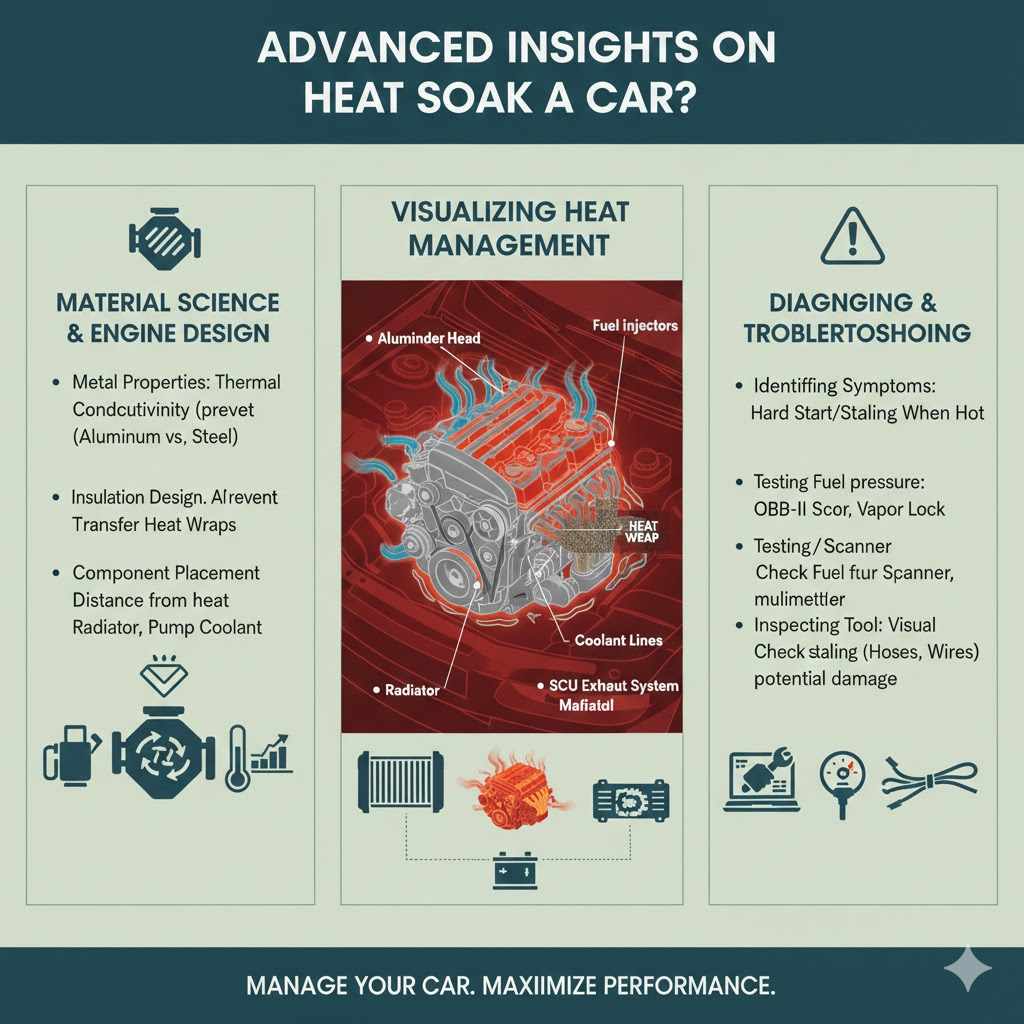
The materials that engine parts are made from have a large impact on how heat soak affects a car. Different materials absorb and release heat at different rates. The design of the engine and how it directs air flow also play a significant role. Choosing materials that resist heat and designing for good heat management are crucial for minimizing heat soak.
- Metal Properties: Different metals have different thermal conductivity properties.
- Insulation Materials: Insulating materials prevent heat transfer.
- Engine Design: Design elements like air flow management.
- Component Placement: How parts are placed relative to the heat source.
- Cooling System Efficiency: Radiator size, pump design and coolant type.
The type of metal used in engine components, like the cylinder head or exhaust manifold, affects how quickly it absorbs and radiates heat. For example, aluminum has a higher thermal conductivity than steel. This means it can absorb and release heat more quickly. Using insulation materials, such as heat wraps on exhaust manifolds, can limit heat transfer to nearby components. The design of the engine itself also plays a role.
Features such as how air flows through the engine compartment can aid in dissipating heat. The positioning of components is another key factor. Placing heat-sensitive parts away from heat sources is a good approach. The cooling system’s efficiency is also key. A larger radiator or a more efficient water pump can help remove heat from the engine more effectively.
Diagnosing and Troubleshooting Heat Soak
Knowing how to identify and solve heat soak problems involves a systematic approach. This includes understanding the specific symptoms that may arise and using various diagnostic methods to pinpoint the causes. Proper testing and troubleshooting can ensure that problems are addressed quickly and efficiently.
- Identifying Symptoms: Recognizing common signs of heat soak.
- Using Diagnostic Tools: Using OBD-II scanners and multimeters.
- Testing Fuel Pressure: Checking for fuel flow issues.
- Inspecting Components: Visually checking parts for damage.
- Performing a Cold Start Test: Assessing starting performance after cooling down.
Start by identifying the symptoms. These often include difficulty starting the engine when hot or running poorly. The engine might stall after starting. Use an OBD-II scanner to read any stored error codes. This can help to identify issues related to the fuel system, sensors, or ignition. Testing the fuel pressure can determine whether there is a problem with the fuel delivery.
Inspect the components, such as the fuel lines, sensors, and wiring harnesses, for any signs of damage or wear. Finally, perform a cold start test to gauge performance after the engine has cooled down completely. Performing a good diagnostic analysis can isolate the cause of the problem.
Frequently Asked Questions
Question: What are the main signs of heat soak in a car?
Answer: The most common signs are difficulty starting a hot engine, stalling after starting, and reduced engine performance after the engine has been turned off and sits for a while.
Question: Can heat soak damage my engine?
Answer: Yes, prolonged and severe heat soak can lead to engine damage. High temperatures can cause accelerated wear on components like rubber hoses and sensors and potentially affect internal engine parts like pistons and seals.
Question: How can I prevent heat soak in my car?
Answer: You can minimize heat soak by allowing your engine to cool down before shutting it off, parking in the shade, using quality fuel, ensuring your cooling system is in good condition, and considering modifications like hood vents or heat shields.
Question: What is vapor lock, and how does it relate to heat soak?
Answer: Vapor lock is when the fuel in the fuel lines vaporizes due to high heat, creating bubbles that disrupt the fuel flow. Heat soak contributes to vapor lock by raising the temperature of the fuel lines and the fuel pump, which can make it hard to start the engine after the car has been turned off.
Question: What should I do if my car won’t start after sitting in the sun?
Answer: If your car won’t start, wait a few minutes for the engine to cool, then try again. You might also try holding the accelerator down slightly while cranking the engine to clear any vapor lock. If the problem persists, take the car to a mechanic for a proper diagnosis.
Final Thoughts
What Is Heat Soak in a Car? Explained means you now understand a common engine issue. We’ve covered its causes, effects, and ways to combat it. Heat soak can cause starting issues and potentially affect performance, but with the right knowledge and habits, you can reduce its impact. Remember to allow your engine time to cool down before shutting it off. You can also explore maintenance and system upgrades to help. With simple steps, you can help your vehicle remain healthy. The next time your car acts up after a hot day, you’ll be ready to take action. This ensures your car runs smoothly, even in the heat!