What Is the Biggest Engine in a Car? (Bugatti’s 8.3L V16)
Bugatti’s Tourbillon has the biggest engine in a new car today — an 8.3-liter naturally aspirated V16 built with Cosworth, producing 1,775 hp combined with its hybrid system. But the discontinued Dodge Viper’s 8.4-liter V10 was technically larger by displacement, and it’s still the biggest V10 ever sold in a road car. This guide breaks down the real record-holders by category, why displacement doesn’t always mean more power, and why massive engines are vanishing from showrooms.
Insert your Affiliate Disclosure reusable block here.
How Is Engine Size Measured? (Displacement Explained)
Engine displacement is the total volume swept by all of an engine’s pistons in one full cycle, measured in liters or cubic centimeters (cc). It’s calculated from the cylinder bore (diameter) and stroke (piston travel distance), multiplied by the number of cylinders. A larger displacement generally means more air and fuel can be burned per cycle — which is one way to make more power, though far from the only way.
Horsepower measures how much work an engine can do over time — it’s what determines top speed. Torque measures the engine’s rotational twisting force — it’s what determines how hard a car accelerates off the line. A large, low-revving engine (like an old V8) often makes torque at low RPM; a smaller, high-revving or turbocharged engine can match or beat it on horsepower while using less displacement.
The Biggest Engine in a New Car Today: Bugatti’s 8.3-Liter V16
The Bugatti Tourbillon is currently the answer. It replaces the quad-turbocharged 8.0-liter W16 used in the Veyron and Chiron with an all-new 8.3-liter naturally aspirated V16, co-developed with British engine builder Cosworth. On its own, the combustion engine makes 1,000 PS (986 hp) and 900 Nm (664 lb-ft) of torque. Add in three electric motors — one on the front axle, two integrated with the rear gearbox — and total system output climbs to 1,800 PS (1,775 hp).
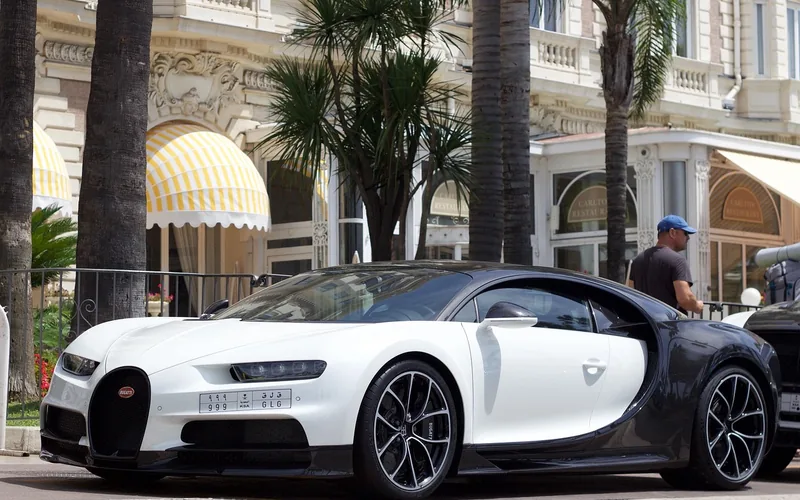
Unlike the Chiron, the Tourbillon’s engine has no turbochargers at all. Bugatti built it to rev to 9,000 rpm — nearly double what the old W16 could safely spin to — using a crossplane crank, a 90-degree bank angle, and dry-sump lubrication. The engine alone weighs 252 kg (556 lb), and the electric motors are there specifically to cover the low-end torque a turbo would normally supply.
📊 The Tourbillon’s V16 is the first 16-cylinder engine in a series-production car in 84 years — the last was Cadillac’s original V16, which ended production in 1940. Source: Bugatti, official Tourbillon page
“I said, ‘Mate, why not use a V12? You can have the same power with a V12.'”
— Emilio Scervo, Bugatti Chief Technical Officer, describing internal debate before the V16 was chosen over a smaller engine
Biggest Car Engines by Category (Comparison Table)
“Biggest” depends on what you’re measuring — cylinder count, raw displacement, or whether the car is still in production. Here’s how the real record-holders stack up against each other.
| Engine Type | Car | Displacement | Power | Status |
|---|---|---|---|---|
| Naturally aspirated V16 | Bugatti Tourbillon | 8.3L | 1,775 hp combined | In production |
| V10 | Dodge Viper SRT-10 / ACR | 8.4L | Up to ~645 hp | Discontinued 2017 |
| Naturally aspirated V12 | Ferrari 812 Superfast | 6.5L | 789 hp | Limited production |
| V8 you can buy new today | Jeep Wrangler Rubicon 392 | 6.4L | 470 hp | In production |
| Straight-8 (all-time record) | Bugatti Type 41 Royale | 12.7L | ~300 hp | 1927–1933, only 6 built |
Notice the discontinued Dodge Viper’s 8.4-liter V10 still edges out the Tourbillon’s 8.3-liter V16 on raw displacement — it just isn’t sold new anymore. That distinction between “biggest currently available” and “biggest ever” matters more than most lists admit. For a deeper dive into what displacement numbers actually mean on a spec sheet, see our guide on what CC means in a car engine.
Best Monster Engine Diecast Pick
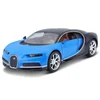
Maisto 1:24 Special Edition Bugatti Chiron
A detailed diecast replica of the quad-turbo W16 hypercar that held the “biggest engine” title before the Tourbillon.
- Best for: fans of Bugatti’s record-holding W16 hypercar lineage
- Why we picked it: opening doors and engine cover reveal a scale replica of the W16 engine bay this article covers
- Main drawback: it’s the older Chiron, not the newer Tourbillon — no Tourbillon diecast exists yet
Compare more big-engine collectibles
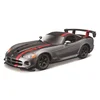 Option 1 Dodge Viper SRT10 ACR 1:24 (Bburago)
|
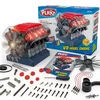 Option 2 Playz Large V8 Engine Model Kit
|
 Option 3 Technic Gearbox with V16 Engine Model Kit
|
As an Amazon Associate we earn from qualifying purchases.
Iconic Monster Engines Worth Knowing
Before the Tourbillon, the Bugatti Veyron and Chiron held the “biggest engine” conversation for nearly two decades with their 8.0-liter, quad-turbocharged W16 — effectively two narrow-angle V8s sharing a crankshaft. The Chiron’s version made up to 1,479 hp; the track-only Chiron Super Sport 300+ pushed past 1,577 hp.
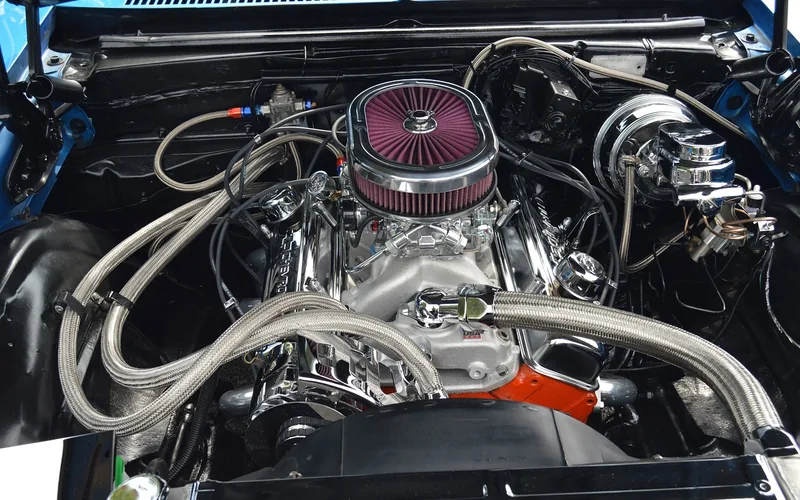
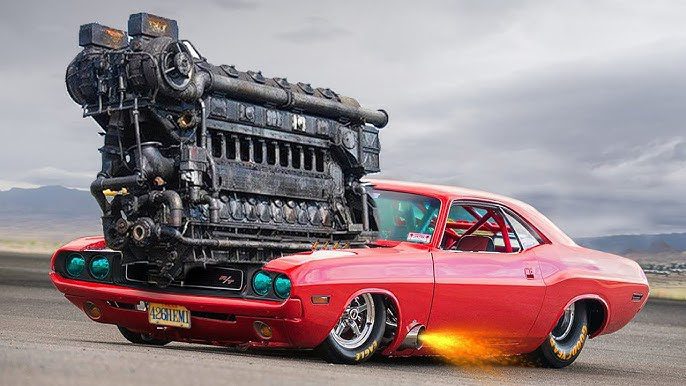
The Dodge Challenger SRT Demon 170 takes a different approach: a supercharged 6.2-liter HEMI V8 that, running on E85 race fuel, produces up to 1,025 hp — more power from a smaller, more affordable engine than the Tourbillon’s V16, just with forced induction doing the heavy lifting instead of raw displacement. Ferrari’s 812 Superfast represents the other end of the spectrum: a naturally aspirated 6.5-liter V12 making 789 hp with no turbo or supercharger at all, relying purely on high revs (redlining near 8,900 rpm) for its output.
Displacement vs. Horsepower: Why a Bigger Engine Isn’t Always More Powerful
A bigger engine used to be the only reliable way to make more power. That’s no longer true. The Jeep Wrangler Rubicon 392’s naturally aspirated 6.4-liter V8 makes 470 hp from 392 cubic inches — while a modern turbocharged 2.0-liter four-cylinder in something like a Honda Civic Type R makes over 300 hp from roughly a quarter of the displacement. Forced induction (turbos and superchargers), direct fuel injection, and lighter internal components let small engines do what only big ones could do a generation ago.
That’s exactly why the Bugatti Tourbillon’s engineers had to add three electric motors to a 1,775-hp naturally aspirated V16 rather than simply bolting on a turbo: a turbocharged engine builds torque instantly at low RPM, but a big naturally aspirated engine needs to spin up first. The hybrid system exists to close that specific gap, not to add extra horsepower for its own sake.
Why Are Big Engines Disappearing From Car Showrooms?
Large-displacement engines burn more fuel and produce more emissions per mile, and federal fuel-economy and emissions standards have pushed automakers toward smaller, turbocharged, hybrid, and fully electric powertrains instead. Big V8s and V10s haven’t disappeared because engineers can’t build them anymore — they’ve disappeared because meeting fleet-wide efficiency rules with them has become far more expensive than switching to smaller, boosted engines or electrification.
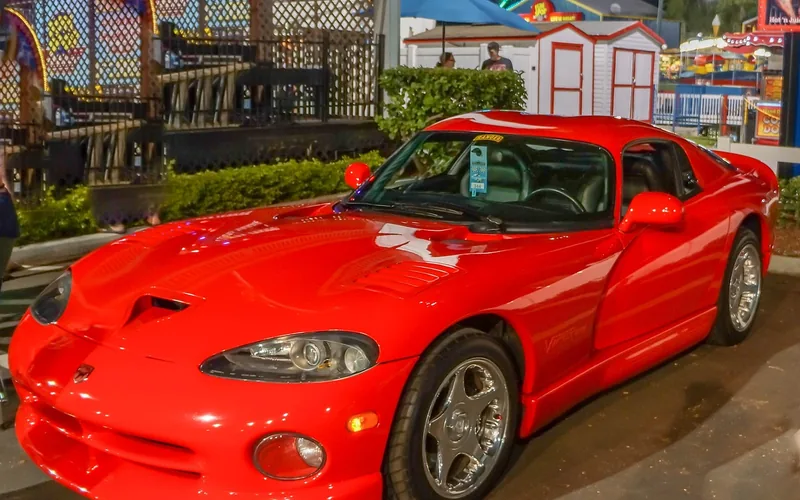
This is exactly why the Dodge Viper’s naturally aspirated 8.4-liter V10 was discontinued in 2017 rather than updated, and why the Jeep Wrangler’s 6.4-liter V8 is one of the last naturally aspirated big-block engines still sold new. Hybrid systems, like the one in the Tourbillon, are becoming the workaround: they let automakers keep a large combustion engine for character and sound while using electric power to hit efficiency targets the engine alone couldn’t meet.
A Quick History: The Largest Engine Ever Built for a Car
Nothing modern comes close to the Bugatti Type 41 Royale. Built between 1927 and 1933, it used a 12.7-liter (12,763cc) straight-8 engine — about twice the displacement of the largest V8s Detroit would build four decades later — producing roughly 300 hp. Only six were ever made, and the Royale remains the largest engine ever fitted to a series-production car of any kind.
The V16 layout has its own history, too. Cadillac’s original V16, launched in January 1930, was the first V16 built from scratch for a production car — an earlier Bugatti 16-cylinder engine had simply bolted two straight-8 blocks together. Cadillac’s 7.4-liter (452 cubic inch) V16 made a modest 165 hp and stayed in production until 1940, with 4,076 built. When Bugatti unveiled the Tourbillon’s V16 in 2024, it marked the first time any automaker had put a V16 into series production since that Cadillac ended its run 84 years earlier. For more on how engine identification and displacement figures are read on a spec sheet, see our guide to checking engine size by VIN.
Frequently Asked Questions
What is the largest car engine size?
The largest engine in a new production car today is the Bugatti Tourbillon’s 8.3-liter naturally aspirated V16, which produces 1,775 hp combined with its hybrid system. By pure displacement, the discontinued Dodge Viper’s 8.4-liter V10 was slightly larger, making it the biggest engine ever fitted to a modern road car that’s no longer in production.
Is there a car with a V24 engine?
No production car has ever had a V24 engine. Engines with 24 cylinders exist only in industrial, marine, and locomotive applications, where size and weight aren’t limited by a vehicle chassis.
What car has a V16 engine?
The Bugatti Tourbillon is the only current production car with a V16 engine — the first time a V16 has appeared in a series-production car since Cadillac’s original V16 ended production in 1940. The Cadillac Sixteen from 2003 was a concept car and never reached production.
Can a car have 5,000 horsepower?
Street-legal production cars top out well below 5,000 hp — the most powerful currently available is around 1,800 hp. Purpose-built drag racing cars, like Top Fuel dragsters, can exceed 10,000 hp, but those aren’t street-legal or road-driven cars.
What’s the biggest V8 engine you can buy in a new car?
The 2026 Jeep Wrangler Rubicon 392 uses a 6.4-liter (392 cubic inch) naturally aspirated HEMI V8 producing 470 hp — the largest V8 available as a factory option in a new car today.
Why did Bugatti choose a V16 instead of a smaller turbocharged engine for the Tourbillon?
Bugatti wanted a more emotional, higher-revving engine after years of quiet, turbocharged W16 power. The naturally aspirated V16 revs to 9,000 rpm, and three electric motors make up for the low-end torque a turbo would normally provide.
Is a bigger engine always faster or more powerful?
No. A modern turbocharged 2.0-liter engine can outperform many older naturally aspirated V8s. Displacement affects how an engine builds power, but forced induction, materials, and engineering now matter more than raw cylinder volume.
Conclusion
The “biggest engine in a car” answer keeps changing because the definition keeps shifting between displacement, cylinder count, and what’s actually for sale. Right now, the Bugatti Tourbillon’s 8.3-liter V16 is the biggest engine in any new car — but the discontinued Viper’s 8.4-liter V10 was technically bigger, and nothing has ever topped the Bugatti Royale’s 12.7-liter straight-8 from the 1920s. What hasn’t changed is the direction: as emissions rules tighten, hybridization and forced induction — not raw displacement — are what keep these engines relevant.
Products related to this article
Sponsored / affiliate links. As an Amazon Associate I earn from qualifying purchases. I may earn additional commission from eligible campaigns.