What Is the Longest-Lasting Car? Top Rankings
Some of the longest-lasting vehicles are full-size trucks, body-on-frame SUVs, and well-kept sedans with proven powertrains, and they can often reach roughly 200,000 to 300,000 miles. Pick the wrong one, and repair bills, downtime, and depreciation can erase any bargain price. This guide ranks the safest high-mileage used picks by powertrain durability, maintenance history, and use case.
There is no single longest-lasting car for every buyer. That is true here as well: the answer changes with the yardstick. A commuter, a towing buyer, and a winter driver do not need the same survivor.
What does longest-lasting car mean?

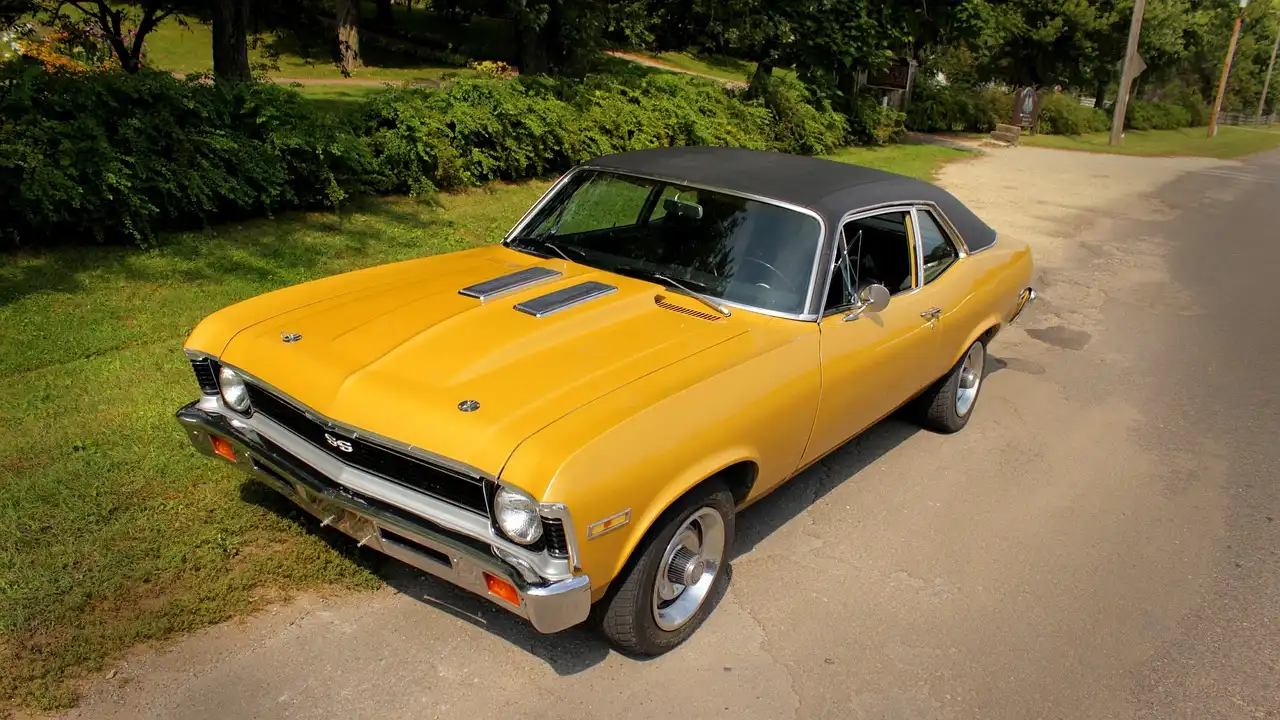
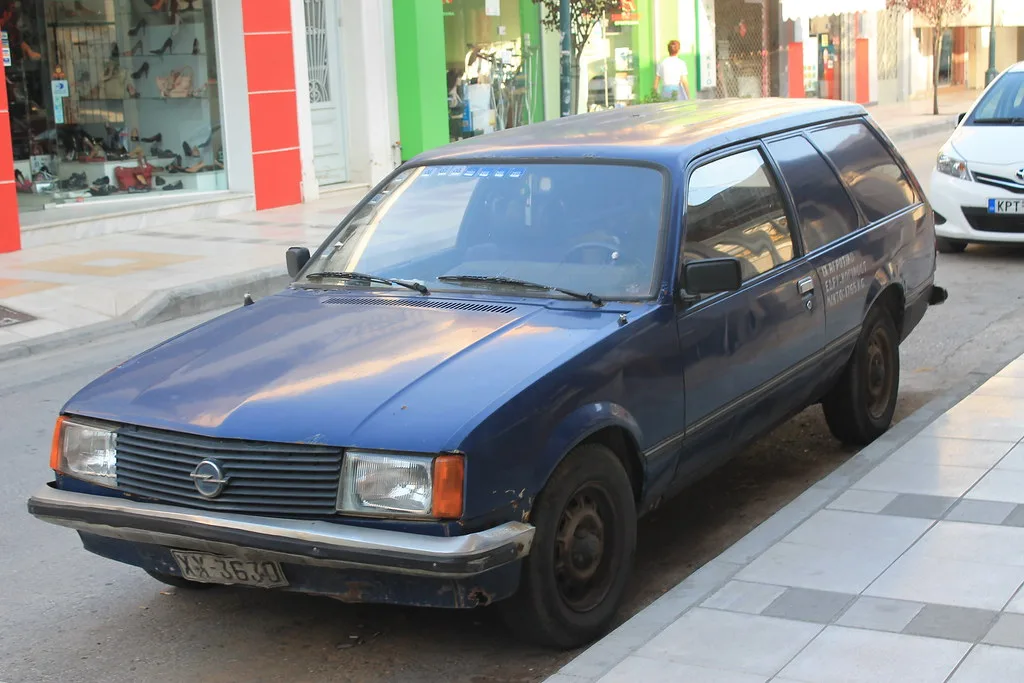
“Longest-lasting” can mean different things: the car that reaches the highest mileage, the one that stays on the road the longest by age, or the one most likely to survive in large numbers. For shoppers, mileage is the most useful yardstick, because it connects directly to repair exposure and ownership cost.
Why 200,000 and 300,000 miles matter
The 200,000-mile mark is a practical durability threshold because many ordinary cars start to face major wear there if maintenance has been uneven. Getting to roughly 300,000 miles is a stronger sign that the drivetrain, cooling system, suspension, and body have held together under real use. That does not happen by luck.
Service history matters as much as the badge on the grille. Oil change intervals, transmission service, brake-fluid changes, timing belt or timing chain service, and coolant replacement all change the odds. A neglected Toyota can die early. A well-kept non-Japanese car can outlast a careless one.
How maintenance history changes the answer
Two identical model-year vehicles can age very differently. One may have clean transmission service, regular oil changes, and documented timing-belt replacement; the other may have stretched intervals and skipped coolant service. The first one is usually the smarter used-car bet, even if both wear the same nameplate.
Picture a 10-year-old sedan with 180,000 miles and a stack of service invoices. Now picture the same car with no records and a delayed fluid change history. The first car is often the safer purchase, because longevity depends on what has already been maintained, not just what the brochure promised.
📊 Merriam-Webster’s longest word there is electroencephalographically at 27 letters. Source: Longest word in English.
Which car brands last the longest?
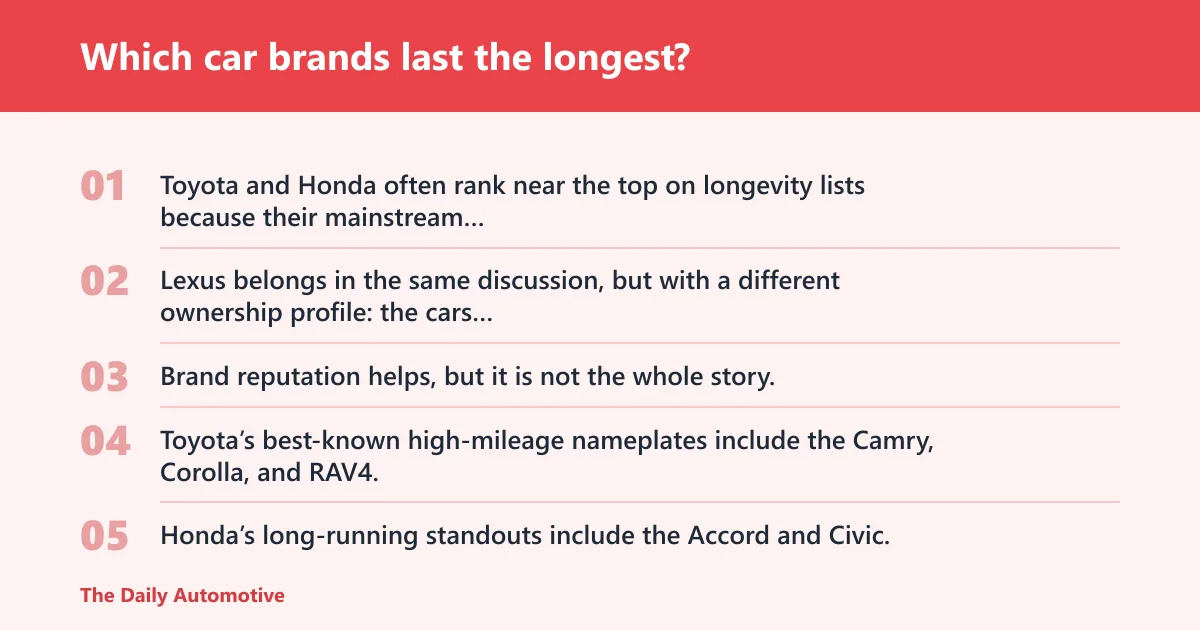
Toyota and Honda often rank near the top on longevity lists because their mainstream engines and transmissions are generally built for predictable, low-drama service. Lexus belongs in the same discussion, but with a different ownership profile: the cars are durable, yet the parts, labor, and systems complexity can raise upkeep costs. Brand reputation helps, but it is not the whole story.
Toyota and Honda: the usual durability leaders
Toyota’s best-known high-mileage nameplates include the Camry, Corolla, and RAV4. Honda’s long-running standouts include the Accord and Civic. These models have a long record of surviving well beyond 200,000 miles when they receive regular oil changes and transmission service. They also retain used-car value better than many rivals, which reflects buyer trust in that durability.
Lexus: luxury durability with higher upkeep costs
Lexus often acts as the luxury durability benchmark because many models borrow conservative Toyota engineering. The Lexus ES and RX are common high-mileage examples. Still, luxury trim can mean more electronics, more expensive parts, and higher labor bills. A durable Lexus can still cost more to keep on the road than a Camry or Corolla.
Why brand reputation still needs model-by-model checks
Not every Toyota, Honda, or Lexus is equal. Engine family, transmission type, drive layout, and body style matter. A model with a timing belt needs different planning than one with a timing chain. A car used mostly for short winter trips wears differently than the same model used for long highway commutes.
Another useful clue comes from the word-length trap around “longest.” In dictionary work, the longest word in major dictionaries is listed as 45 letters, while Merriam-Webster’s Collegiate Dictionary excludes antidisestablishmentarianism and lists electroencephalographically at 27 letters. The phrase “longest words in English” often includes scientific or medical terms. Car longevity works the same way: the result changes once you define the category.
What are the longest-lasting used cars?
The safest used-car bets are the models with durable powertrains, easy service history verification, and lower repair burden. Toyota Camry, Corolla, and RAV4 are usually the default choices. Honda Accord and Civic are close behind. Lexus ES and RX are strong if you accept higher maintenance costs in exchange for a quieter, more upscale cabin.
Toyota Camry, Corolla, and RAV4
The Camry is the classic commuter answer because it balances engine durability, transmission durability, and manageable maintenance. The Corolla is smaller and often cheaper to buy and insure. The RAV4 adds family utility and available all-wheel drive, which makes it attractive for mixed weather and light-duty family use.
Honda Accord and Civic
The Accord is one of the better answers for a midsize commuter sedan, especially when it has a clean service history and no overheating or transmission complaints in its past. The Civic is often the lower-cost route into long-term ownership. Honda’s reputation rests on engines and transmissions that tend to age well when fluids are changed on schedule.
Lexus RX and ES
The ES is a strong long-haul sedan for buyers who want a softer ride and can accept luxury-brand service costs. The RX is a family-friendly crossover with a long track record of lasting miles if cooling, fluids, and suspension wear are handled on time. Both can be smart buys, but maintenance neglect becomes expensive faster than it does on a Toyota badge.
Which trucks last the longest?
Full-size trucks often survive longer than cars because their frames, suspensions, and drivetrains are built for heavier work. Ford F-150 and Chevrolet Silverado 1500 are the obvious high-mileage truck names here. Their actual lifespan depends heavily on towing, idle time, rust exposure, and whether they were maintained like work trucks or treated like family haulers.
Ford F-150 for fleet and work duty
The F-150 has deep fleet use, which matters because fleet buyers often document service carefully and replace parts before failure spreads. That gives the truck a real path to high mileage. A well-kept work truck can rack up huge totals, but the best candidates usually show evidence of routine fluids, brakes, and steering and suspension maintenance.
Chevrolet Silverado 1500 and powertrain differences
The Silverado 1500 has the same basic high-mileage appeal: body-on-frame construction, broad parts availability, and strong work-duty history. Its durability depends on the exact engine and transmission combination, because not all powertrains age the same way. Buyers should check for transmission service records and watch for rust on frame components, cab corners, and bed supports.
How towing, idle time, and rust affect truck life
Towing raises heat and drivetrain load. Idling adds engine hours without adding road miles. Rust attacks the underbody, brake lines, fuel lines, and suspension hardware. A truck used in snow states can look clean on top and still need expensive corrosion repair underneath. That is why a truck with roughly 140,000 mostly highway miles can sometimes outlast a 90,000-mile plow or tow rig.
Where does the Subaru Outback fit?
The Subaru Outback is a strong all-weather choice, but it is more maintenance-sensitive than the usual Toyota or Honda pick. It makes sense for buyers who want winter traction, cargo space, and car-like driving manners. It is less ideal for buyers who want the cheapest possible path to very high mileage.
Drivetrain and maintenance caveats
Subaru’s all-wheel-drive system is part of the appeal, yet it also adds service complexity. Buyers should pay close attention to oil changes, transmission service, and any history of head-gasket-era repairs on older examples. Neglected cooling or oil service can shorten life quickly, especially on older high-mileage vehicles.
Who should consider one for high-mileage use
An Outback is a reasonable long-distance family car if it has full records, no signs of neglected fluid changes, and a clean underside. It is especially useful where snow, rain, or rough roads make traction important. If your priority is the absolute lowest repair burden, a Camry or Accord is usually the simpler buy.
Buyer checklist: how to pick the longest-lasting used car
The safest used car is the one with documented service, a predictable powertrain, and low corrosion risk for its age. Use the checklist below to compare candidates on the things that actually change survival odds. Then choose the car that fits your use case, not the one with the loudest reputation.
| Model | Powertrain durability | Maintenance burden | Rust risk | Repair cost | Expected mileage ceiling | Best use case |
|---|---|---|---|---|---|---|
| Toyota Camry | 5/5 | 2/5 | 2/5 | 2/5 | 250,000-300,000 miles | Commuters |
| Toyota Corolla | 5/5 | 2/5 | 2/5 | 2/5 | 250,000-300,000 miles | Budget commuters |
| Toyota RAV4 | 4/5 | 3/5 | 2/5 | 3/5 | 220,000-280,000 miles | Families |
| Honda Accord | 4/5 | 3/5 | 2/5 | 3/5 | 220,000-280,000 miles | Commuters |
| Honda Civic | 4/5 | 2/5 | 2/5 | 2/5 | 220,000-280,000 miles | Budget commuters |
| Lexus ES | 4/5 | 4/5 | 2/5 | 4/5 | 220,000-300,000 miles | Comfort-focused commuters |
| Lexus RX | 4/5 | 4/5 | 2/5 | 4/5 | 220,000-300,000 miles | Families |
| Ford F-150 | 4/5 | 4/5 | 3/5 | 3/5 | 250,000-300,000 miles | Fleet and towing |
| Chevrolet Silverado 1500 | 4/5 | 4/5 | 3/5 | 3/5 | 250,000-300,000 miles | Work and towing |
| Subaru Outback | 3/5 | 4/5 | 2/5 | 3/5 | 200,000-250,000 miles | Winter driving |
Service records to verify before you buy
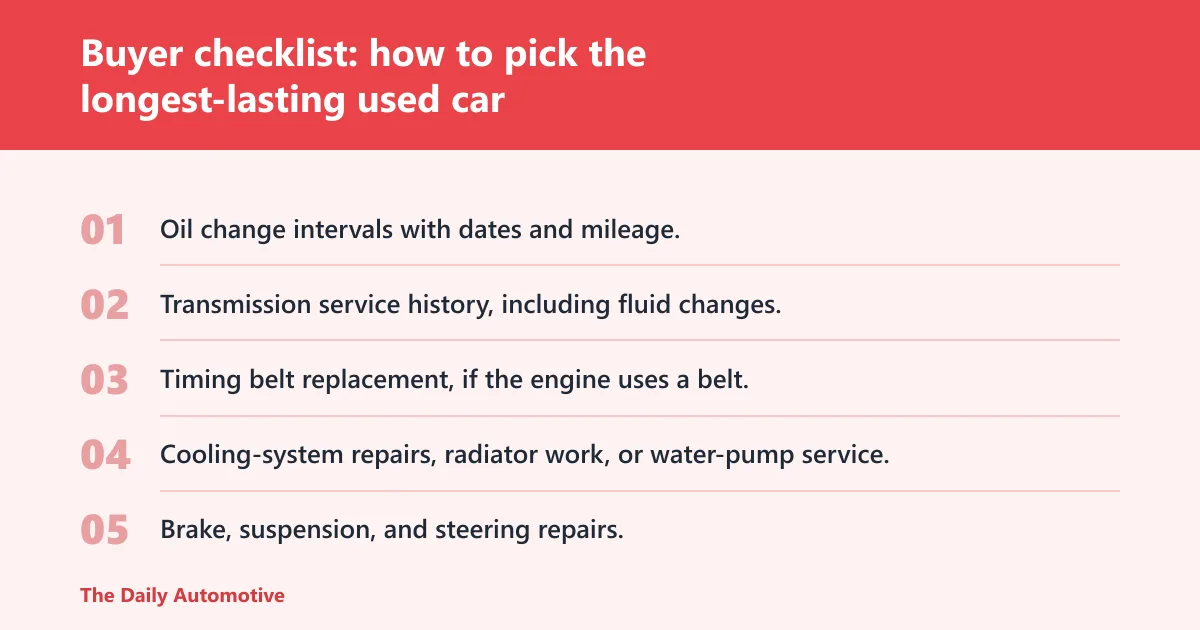
- Oil change intervals with dates and mileage.
- Transmission service history, including fluid changes.
- Timing belt replacement, if the engine uses a belt.
- Cooling-system repairs, radiator work, or water-pump service.
- Brake, suspension, and steering repairs.
- Rust inspection photos, especially underbody and brake lines.
A common first-timer mistake is buying the cleanest-looking truck on the lot and skipping the underbody inspection. Surface shine does not tell you whether the frame, suspension mounts, or fuel lines have corrosion hiding underneath. Rust can shorten a truck’s useful life before the engine gives up.
Simple recommendations for commuters, families, and truck buyers
For commuters, start with a Toyota Camry, Toyota Corolla, or Honda Accord with strong service records. For families, the Toyota RAV4, Lexus RX, or Toyota Highlander-style formula is usually the safer bet, though upkeep costs rise with luxury trim. For truck buyers, the Ford F-150 and Chevrolet Silverado 1500 are the main long-life candidates if the use history is honest.
What mileage and maintenance history should you demand?
You should demand documented oil changes, proof of transmission service, and a clear record of timing-belt or timing-chain work if the engine needs it. A high-mileage car can be a better buy than a lower-mileage neglected one. The condition of the records often tells you more than the odometer alone.
Oil change intervals and transmission service
Regular oil changes help control sludge, wear, and heat. Transmission fluid changes matter because automatic transmissions are expensive to repair and sensitive to neglected fluid. If the seller cannot show service history, assume the car may need catch-up maintenance soon after purchase.
Timing belt versus timing chain service
Timing belts require scheduled replacement. Timing chains usually last longer, but they are not maintenance-free forever. If a belt-driven engine has no proof of replacement, price the job into the purchase. If a chain-driven engine has cold-start rattle or timing-related fault codes, walk away unless the price reflects the risk.
Signs a high-mileage car is a safer buy
Look for clean cold starts, steady idle, even tire wear, a dry transmission case, and an underside without major rust. A car that has accumulated miles mostly on highways and has documentation for major service often has a better remaining life than a similar car used for short trips, deliveries, or repeated towing.
Frequently asked questions
Which brand of cars last the longest?
Toyota is usually the safest answer, with Honda close behind and Lexus leading the luxury side. Those brands appear often because their engines and transmissions tend to survive long mileage when maintained properly. Still, the best result depends on the exact model, service history, and body condition.
What car lasts the longest?
There is no universal winner, but Toyota Camry and Corolla models are among the most dependable high-mileage answers for ordinary buyers. They pair durable powertrains with modest repair burden. For families, the Toyota RAV4 and Lexus RX are strong alternatives when you want more space.
Which car will last the longest?
The car that lasts the longest is usually the one with the best maintenance history and the least abuse. A well-kept Camry, Accord, or Lexus ES can outlast a neglected newer vehicle with a flashier badge. Service records matter more than cosmetic condition or low advertised mileage.
What are the longest-lasting car brands?
Toyota, Honda, and Lexus are the brands most often tied to long service life. Japanese brands tend to dominate durability lists because their drivetrains are often conservative and well supported. Even so, the safest used-car purchase is still the one with verified maintenance, clean rust inspection results, and the right use history.
Products related to this article
Sponsored / affiliate links. As an Amazon Associate I earn from qualifying purchases. I may earn additional commission from eligible campaigns.