What Is the Pace Car in NASCAR? Caution Rules & Lucky Dog
The pace car in NASCAR is a production street car that leads the field at a controlled speed at the start of a race and during every caution period — and no competitor may pass it except the designated Lucky Dog. Break that rule and NASCAR drops you to the tail end of the longest line. This guide covers the full caution-to-restart sequence: pit road order, the Lucky Dog, the wave-around, and the choose rule.
Quick Answer
When the caution flag waves, the pace car picks up the race leader and bunches the field into a single line at reduced speed. Pit road then opens for lead-lap cars first, the Lucky Dog gets a lap back, lapped cars may take a wave-around, and drivers pick a restart lane at the choose cone.
The Essential Role of the Pace Car in Racing
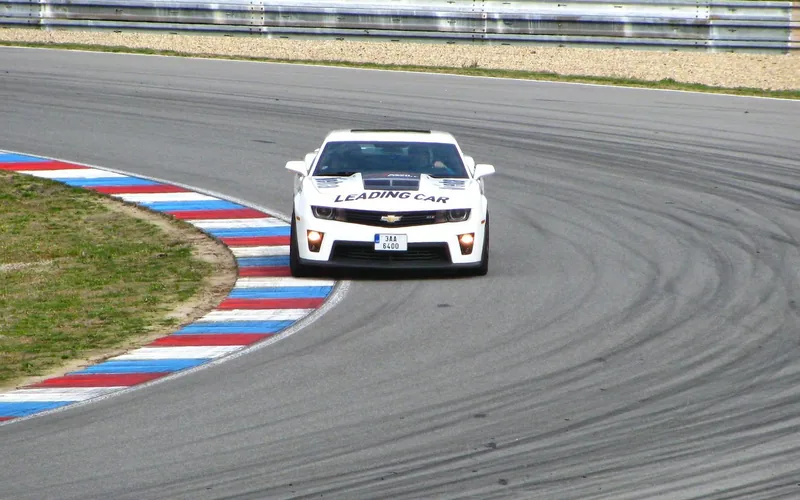
A pace car is a lightly modified production vehicle that sets a controlled speed for the entire field whenever green-flag racing is suspended. Unlike the Cup cars behind it, it is a street-legal machine with a working speedometer, roof-mounted warning lights, and a radio link to race control. It never competes for position.
Its main job is to lead the field around the track at a slower, controlled speed. This happens at the start of a race, during caution periods when there is an accident, or when there is debris on the track. The pace car’s presence gives track crews time to clear hazards safely and lets teams reset their strategy, which makes it a decisive piece of NASCAR racing rather than ceremonial window dressing.
For a broader look at how pace cars work across motorsport — including rolling starts and how caution speeds differ between tracks — see our general guide to what a pace car is. This article focuses specifically on NASCAR’s own caution and restart rules.
Safety and Control on the Racetrack
The primary function of the pace car is to create a safe racing environment. By leading the cars at a reduced speed, it makes conditions survivable while a hazard is cleared. When there is an accident the pace car enters the track and the race goes under caution. Drivers slow and hold their positions behind it, giving safety crews a window to clear debris or attend to anyone involved in the wreck.
- Reducing speed: The pace car controls the field’s speed during yellow flags so no one is closing on a stationary car or a safety truck.
- Maintaining formation: It gathers the cars into a single line and holds the running order that was frozen when the yellow came out.
- Incident response: It creates the gap that lets track workers, tow trucks, and the safety team reach the scene.
- Debris management: It keeps the field slow enough for crews to walk the racing surface and remove parts or fluid.
Pace Car Procedures and Driver Responsibilities
When the yellow flag is displayed, drivers must reduce speed and line up behind the pace car, with the race leader taking the first spot behind it. Holding that order is what allows the race to be restarted correctly, and missteps carry real penalties. Passing the pace car without being waved by, or beating the leader to the restart, typically sends a driver to the tail end of the longest line.
- Responding to yellow flags: Lift immediately, slow to caution speed, and fall into line.
- Maintaining position: Hold the spot you were scored in when the caution was called.
- No passing: Passing is prohibited under caution unless race control directs it, as with the Lucky Dog or a wave-around.
- Restart procedures: The pace car peels off to pit road and the leader controls the restart inside the marked restart zone.
What Happens When the Pace Car Comes Out: Caution to Restart
Most explanations stop at “the pace car slows everyone down.” In practice NASCAR runs a fixed sequence during every single caution, and each stage of it changes who gains and who loses. Here is the order it actually happens in.
- The caution flag waves: Race control freezes the running order the instant the yellow is called, so track position locks in exactly where it stood.
- The pace car picks up the leader: It pulls onto the track ahead of the race leader and gathers the field into a single line at caution speed.
- Pit road opens in sequence: Lead-lap cars are released first, then cars a lap or more down, which keeps the two groups from converging at the pit entrance.
- The Lucky Dog gets a lap back: The first car one lap down that did not cause the caution passes the pace car and rejoins the tail of the lead-lap pack.
- Lapped cars take the wave-around: Cars still a lap down that stayed out while the leaders pitted may drive past the pace car to unlap themselves — but they forfeit their own stop that caution.
- Drivers choose a lane: On the last caution lap each driver commits to the inside or outside lane before crossing the painted choose marking.
- Green flag in the restart zone: The pace car ducks onto pit road and the leader controls the restart inside a marked zone, with no passing allowed before the start/finish line.
📊 Five cautions consumed 27 of the 160 laps at the 2026 Brickyard 400 — roughly one lap in six run under yellow, which pushed NASCAR to begin reviewing how quickly it can pick up the field and reopen pit road. — Source: NASCAR Hauler Talk, July 2026
That review is live as of the 2026 season. NASCAR has said it is looking at when the pace car picks up the field, how long it takes to open pit road for lead-lap and then lap-down cars, and where the choose marking sits at individual tracks — because the choose procedure itself adds an extra caution lap. Cautions that fall late in a stage are the hardest to shorten, which is why NASCAR’s stage format is tied up in the same debate.
“So when you’re at that late, there’s no way to pick up the field, open pit road and get back to green.”
The Lucky Dog: Who Gets a Lap Back
The free pass — universally called the Lucky Dog — hands one full lap back to the first car running one lap down when the caution flies. NASCAR introduced it across its three national series in 2003 to stop the genuinely dangerous practice of drivers racing each other back to the start/finish line after a wreck had already happened. Two exclusions matter: the driver who caused the caution is not eligible, and neither is a driver who lost the lap to a NASCAR penalty.
The Wave-Around: The Rule People Confuse With the Lucky Dog
Added in 2009, the wave-around applies to lapped cars that stay on track while the leaders come to pit road. Those cars are waved past the pace car to unlap themselves, but the trade is real: take the wave-around and you cannot pit during that caution, so you restart on older tires and less fuel than the cars that stopped. Unlike the Lucky Dog, more than one car can take it in a single caution.
| Feature | Lucky Dog (free pass) | Wave-around |
|---|---|---|
| Who is eligible | Only the first car one lap down, and not the caution-causer | Any lapped car that stays out while the leaders pit |
| Cars per caution | One | Multiple |
| Pit stop that caution | Allowed | Not allowed |
| Restart position | Tail of the lead-lap cars | Behind the cars that pitted |
| In use since | 2003 | 2009 |
The Choose Rule and the Restart Zone
NASCAR brought the choose rule to the Cup Series at Michigan in August 2020. On the final caution lap, drivers split from a single line into two and each one commits to the inside or outside lane before reaching an orange V painted on the racing surface. Changing position before choosing, putting a tire inside the painted box, or switching lanes afterward draws a penalty. The rule is used across all three national series except at road courses and superspeedways.
After the lanes are set, the leader controls the restart from inside a marked restart zone and no car may advance before the start/finish line. That single procedural detail is why restarts are so often the most decisive moment of a race — and why a driver who picks the less obvious lane can gain several positions in one corner.
Who Actually Drives the NASCAR Pace Car?
There are two different people fans tend to conflate here. The celebrity or athlete announced as the “honorary pace car driver” handles the parade laps before the green flag and then hands the car over. Every competitive caution for the rest of the afternoon is run by a NASCAR official. Brett Bodine, a former Cup Series race winner, has driven the Cup pace car for NASCAR since 2004.
The job is not simply driving slowly. The pace car driver reads the racing surface for fluid and debris, judges when conditions are safe to return to green, and relays all of it to race control by radio.
How the Pace Car Sets Pit Road Speed
NASCAR Cup cars have no speedometer, which creates an obvious problem: how does a driver hold an exact pit road speed limit? The answer runs through the pace car. During the pace laps it runs at precisely the posted pit road speed and signals that it has reached it, race control relays the call, and each driver notes the engine RPM their car is turning at that moment. From then on they pit by tachometer, usually with a dash light set to illuminate at the target RPM.
That is also why pit road speeding penalties are argued over in fractions of a mile per hour — the driver is matching an RPM number, not watching a gauge that reads in mph. If you want to hear this exchange as it happens, the pace car driver, race control, and every spotter are audible on a scanner in the grandstands.
Best Race Scanner Pick
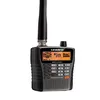
Uniden Bearcat BC125AT Handheld Scanner
A 500-channel analog handheld that lets you follow the pace car driver, race control, and individual spotters live from the grandstands instead of guessing why the field is still under yellow.
- Best for: Fans attending races who want to hear the caution and restart calls as officials make them
- Why we picked it: Alpha-tagging lets you label channels by driver name, so you can jump between teams without memorising frequencies
- Main drawback: Analog only, and it ships without headphones — you will still want hearing protection at a speedway
Compare more race scanner options
 Option 1 Uniden Bearcat SR30C Compact Scanner
|
 Option 2 Rugged Radios H80 Track Talk Headset
|
 Option 3 Uniden Bearcat BCD160DN Digital Scanner
|
As an Amazon Associate we earn from qualifying purchases.
The Pace Car’s Impact on Race Strategy
A caution period is the cheapest pit stop in racing. Because the whole field is circulating slowly behind the pace car, a team that stops under yellow loses a fraction of the track position it would surrender stopping under green. That single fact drives most of the strategy calls you see — whether to take four tires, two, or stay out entirely and gamble on track position.
Fuel and Tire Management During Yellow Flags
Caution laps burn far less fuel than green-flag laps, which can turn a car that was short on fuel range into one that can reach the finish. Tires work the other way: a long caution lets rubber cool and lose temperature, so the first lap after a restart is often the least grippy of the whole run.
- Fuel conservation: Running at caution speed stretches a fuel window that looked impossible under green.
- Tire strategy: Fresh slick tires give a large short-run advantage, which is why staying out is always a gamble.
- Pit stop timing: Stopping under caution costs a fraction of the time a green-flag stop does.
- Track position: At tracks where passing is difficult, staying out can be worth more than new rubber.
Strategic Decisions on Pit Road
Pit road is where the caution is won or lost. Crews add fuel, change tires, and make chassis adjustments, and because pit road opens for lead-lap cars before lap-down cars, the order a team is released in affects how clean its exit is. A fast stop can move a driver several rows forward; a loose wheel or a pit road speeding penalty erases the whole caution’s advantage.
- Pit stop timing: Teams weigh fuel range against tire wear before committing.
- Tire selection: Four tires, two tires, or none is the defining call of most cautions.
- Pit crew execution: A second lost over the wall is several positions on the restart.
- Car adjustments: Wedge and air pressure changes are made in the same stop to correct handling.
Notable Pace Car Incidents and Their Impact
Pace car errors are rare, but when they happen they can decide a race outright — and NASCAR’s most famous example is still argued about more than three decades later.
Memorable Pace Car Mishaps and Their Results
At North Wilkesboro Speedway on 22 April 1990, a caution came out after Kenny Wallace spun. When the pace car pulled onto the track to gather the field, it picked up Dale Earnhardt instead of Brett Bodine, who was running ahead of him. By the time officials caught the error, pit road had already been opened and the mistake could not be undone. Bodine had pitted for four fresh tires while the other front-runners stayed out, and when the error was discovered he was placed at the front of the field for the restart.
NASCAR admitted the mistake publicly, stating that it had picked up the wrong car and that once pit road was open “there was no way to correct it.” Bodine held off Darrell Waltrip for what remained the only Cup Series victory of his career. In one of the sport’s better ironies, the driver who won a race because of a pace car error later became the man who drives NASCAR’s pace car.
- Incorrect pickup: If the pace car collects the wrong car, the entire restart order is built on a false leader.
- Speed inconsistency: A pace car running too slowly can let engines run hot or tires cool excessively.
- Timing of pit road: Once pit road opens, a scoring error becomes very difficult to reverse.
- Race outcomes: Because the running order is frozen at the yellow, an error at that moment is effectively locked in.
Rule Changes and Safety Improvements
Incidents like North Wilkesboro are the reason NASCAR’s caution procedures are now heavily proceduralised and electronically scored. Timing and scoring loops embedded in the track surface record each car’s position continuously, so the running order at the moment of a caution is set by transponder data rather than an official’s judgement from the tower.
- Electronic scoring: Timing loops freeze the field automatically instead of relying on a visual call.
- Defined restart zone: A painted zone removes ambiguity about where the leader may go back to green.
- Choose rule procedure: Lane selection is governed by a painted marking and enforced with penalties.
- Damaged Vehicle Policy: A published repair clock and minimum speed rule replaced case-by-case decisions about which damaged cars may continue.
Frequently Asked Questions
What happens when the pace car comes out during a race?
The yellow flag is displayed and the running order is frozen immediately. Drivers slow to caution speed and form a single line behind the pace car, holding the positions they held when the caution was called. Pit road then opens for lead-lap cars first, followed by lapped cars, before the field is brought back to the green flag.
Can drivers pass the pace car in NASCAR?
No, not under normal conditions. Passing the pace car without authorisation is a penalty that typically sends a driver to the tail end of the longest line. The exceptions are directed by race control: the Lucky Dog car passing to regain its lap, and lapped cars taking a wave-around to unlap themselves when the leaders pit.
What is the Lucky Dog rule in NASCAR?
The Lucky Dog, officially the free pass, gives one full lap back to the first car running one lap down when a caution comes out. NASCAR adopted it across its national series in 2003 to stop drivers racing back to the start/finish line after a wreck. The driver who caused the caution is not eligible, and neither is a driver who lost the lap to a penalty.
What is the wave-around rule in NASCAR?
Introduced in 2009, the wave-around lets lapped cars that stay on track while the leaders pit drive past the pace car to unlap themselves. The trade-off is that a car taking the wave-around cannot pit during that same caution, so it restarts on older tires. Unlike the Lucky Dog, several cars can take a wave-around in one caution.
Who drives the NASCAR pace car?
A NASCAR official drives the pace car for all competitive caution periods. Brett Bodine, a former Cup Series race winner, has held that role for NASCAR since 2004. The celebrity or athlete announced as the honorary pace car driver only leads the parade laps before the green flag and does not drive during the race itself.
Does the pace car always stay on the track during a caution period?
It leads the field for the whole caution and only leaves at the restart, ducking onto pit road so the leader can take the green. How long that takes depends on the incident: a small debris caution may last a few laps, while a heavy crash requiring barrier repair can keep the pace car out considerably longer.
How does the pace car affect race strategy?
It makes pit stops far cheaper. Because the entire field is circulating slowly, a team stopping under caution surrenders much less track position than it would under green. That turns every caution into a decision point about fuel, tires, and whether staying out for track position beats taking fresh rubber.
Final Thoughts
The pace car is the mechanism that turns a wreck into a reset. It freezes the field, protects the crews working on the racing surface, and then hands the race back through a strict sequence — pit road order, Lucky Dog, wave-around, choose rule, restart zone — that quietly decides a great many finishes. Watch which lane the leaders pick at the choose marking on the next restart you see, and you will usually know who is about to gain positions before the green even flies.
Products related to this article
Sponsored / affiliate links. As an Amazon Associate I earn from qualifying purchases. I may earn additional commission from eligible campaigns.