When Did Cassette Tapes Come Out In Cars? Essential History
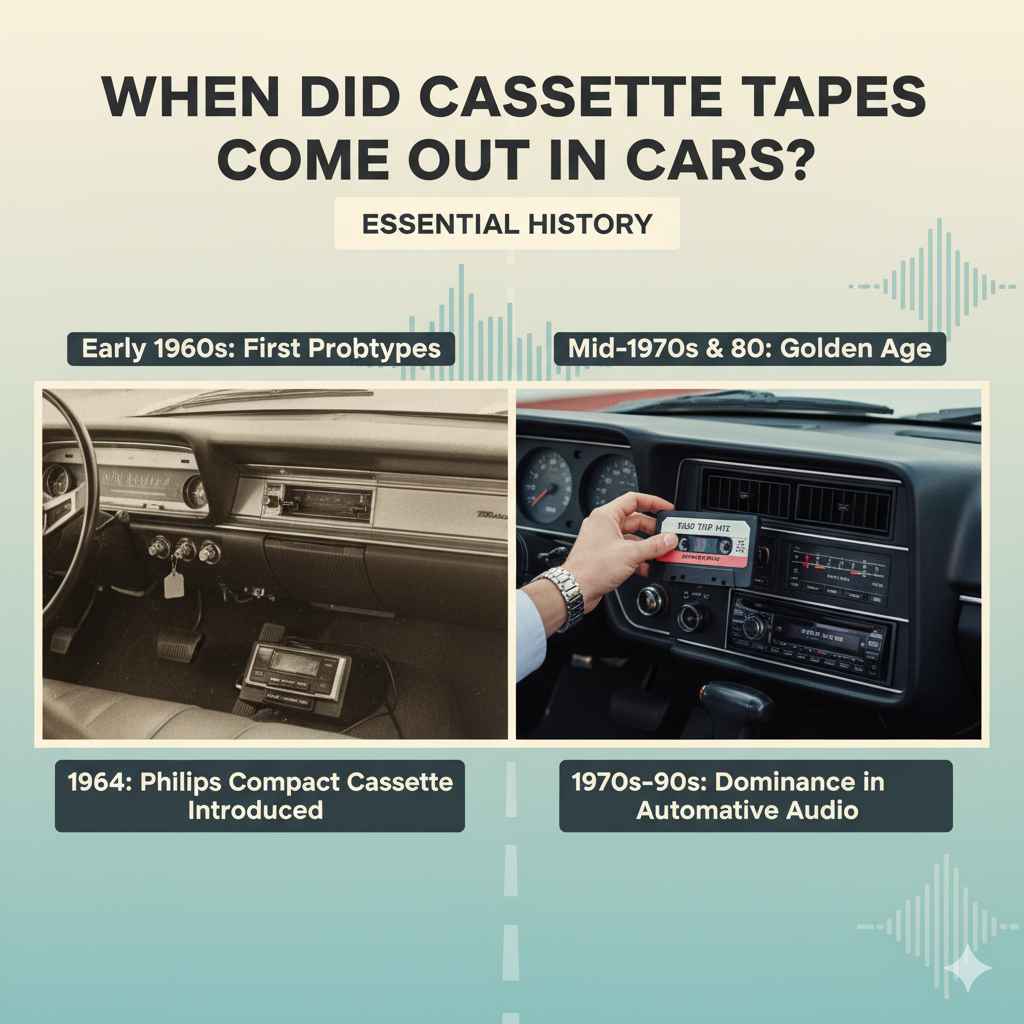
Cassette tapes in cars first appeared in the early 1970s, with widespread adoption beginning in the late 1970s and early 1980s. They revolutionized car audio by offering a portable and convenient way to play your own music on the go.
You’ve probably seen them in old movies or maybe even found one tucked away in a vintage car. Cassette tapes in cars seem like such a distant memory, but they were a huge deal back in the day! If you’ve ever wondered when this car audio revolution actually started, you’re in the right place. It can be confusing trying to pinpoint the exact moment car entertainment changed forever. But don’t worry, we’re going to break down the history of cassette tapes in automobiles in a super simple way. We’ll look at when they first showed up, how they became so popular, and why they eventually faded. Get ready to travel back in time and understand how your car’s sound system got its groove!
The Birth of the Car Cassette Player: A Sound Investment
Imagine a time before streaming music from your phone or even CDs. For many, the car radio was the only option for in-car entertainment. Then came a little plastic rectangle that changed everything: the cassette tape.
The Early Days: Experiments and Innovations
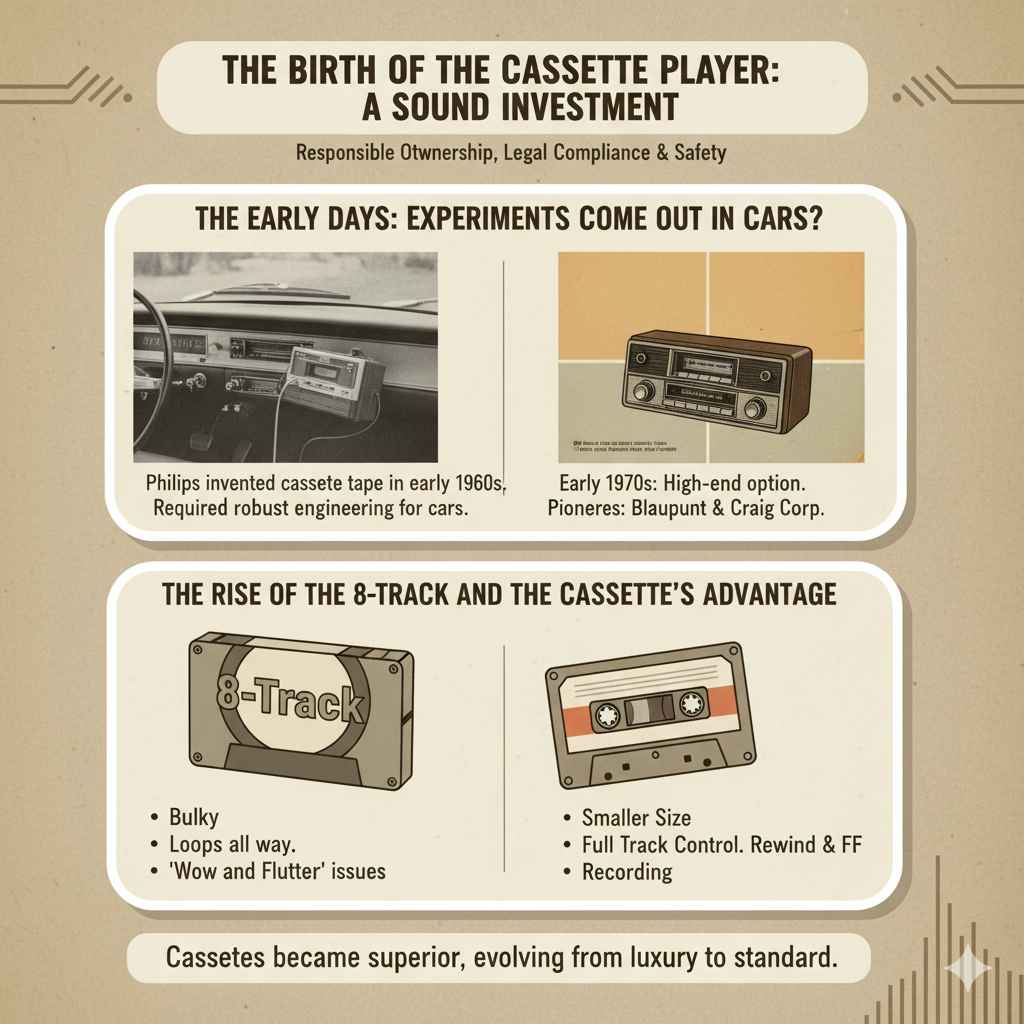
While the cassette tape itself was invented by Philips in the early 1960s, it took a while to make its way into the rugged environment of a car. Early attempts focused on making car radios better, but the idea of playing personal music was a different challenge.
The real game-changer was the development of car stereo systems that could house these new cassette players. It wasn’t just about the tape; it was about integrating a reliable playback device into a car’s dashboard. This meant dealing with vibrations, temperature changes, and the need for robust engineering.
When Did Cassette Tapes Come Out In Cars?
The first car radios with built-in cassette players started appearing in the early 1970s. These were often high-end options, not standard features. Companies like Blaupunkt and Craig Corporation were among the pioneers, offering these advanced systems as premium upgrades.
These early units were a luxury. They allowed drivers to listen to pre-recorded music tapes, which were also becoming more popular. Before this, car entertainment was limited to the radio or, if you were really lucky, an 8-track player, which was bulkier and less reliable.
The Rise of the 8-Track and the Cassette’s Advantage
The 8-track tape was the dominant pre-recorded music format for cars in the late 1960s and early 1970s. However, 8-tracks had a major annoyance: they only had four programs (or songs/sections), and if you wanted to go back to an earlier track, you had to wait for the tape to loop all the way around. They were also prone to “folksy” sound issues where the tape would get misaligned and sound warbly.
Cassette tapes, on the other hand, offered distinct advantages:
- Full Track Control: You could easily switch to any track on the tape by pressing the skip buttons.
- Rewind and Fast Forward: Navigating through your music library was simple.
- Smaller Size: Cassettes were more compact than 8-tracks.
- Recording Capability: While not always used in cars, the ability to record audio was a significant feature that 8-tracks lacked for consumers.
These benefits made the cassette tape a superior choice for portable and car audio. As manufacturing became more efficient and car manufacturers saw the demand, the cassette player began its journey from a luxury item to a standard feature.
From Luxury to Standard: The Cassette Takes Over
The 1970s saw cassettes gain traction, but it was the 1980s when they truly became the king of car audio.
The 1980s: The Golden Age of Car Cassettes
By the early 1980s, cassette players were becoming increasingly common in new cars. Automakers realized that drivers wanted more control over their in-car listening experience. The availability of pre-recorded music on cassette tapes exploded, making it easier than ever for people to curate their own soundtracks for road trips and daily commutes.
This era also saw the rise of the “boombox” and portable cassette players, which helped popularize the medium even further. People were taping songs off the radio, creating mixtapes for friends, and enjoying their favorite albums anywhere, including in their cars.
How Cassette Players Were Integrated into Cars
Car manufacturers began designing dashboards with standardized slots for cassette players. This made installation easier and more seamless. The units often included AM/FM radio tuners, and by the mid-to-late 80s, many featured auto-reverse (so the tape would play on both sides without you having to flip it) and even Dolby noise reduction for clearer sound.
Here’s a look at how cassette players varied over the years:
| Era | Key Features and Innovations | Typical Integration |
|---|---|---|
| Early 1970s | Basic playback, often mono sound, limited models available, primarily premium aftermarket or high-end factory options. | Bulky units that often replaced the entire radio fascia, sometimes separate from the radio. |
| Late 1970s | Stereo sound becomes more common, some early auto-reverse models appear, wider aftermarket selection. | More integrated into dashboard designs, but still often a premium feature. |
| 1980s | Widespread auto-reverse, Dolby noise reduction, seek/scan radio functions, high-power amplifiers, EQ controls. | Standardized DIN-sized units, integrated seamlessly into most dashboards, often paired with more speakers. |
| Late 1980s/Early 1990s | Digital clock displays, anti-theft features, search functions for tapes, improved sound quality. Often the last hurrah before CD players. | Sleek, often motorized faceplates, part of advanced factory sound systems. |
The convenience and personalization offered by cassette tapes made them an indispensable part of the driving experience for millions. For many, the ability to create personalized playlists on mixtapes was a form of self-expression, perfectly suited for the open road.
The Decline of the Cassette: Enter the Digital Age
As technology marched forward, new contenders emerged, eventually leading to the cassette’s graceful exit from the automotive mainstream.
The Arrival of the CD Player
Compact Disc (CD) technology, which debuted for consumers in the early 1980s, offered superior sound quality and durability compared to cassette tapes. However, early car CD players were expensive, prone to skipping due to vibrations, and the discs themselves were fragile.
Despite these initial hurdles, the advantages of CDs—crystal-clear digital sound, instant track access, and resistance to wear from repeated play—were undeniable. Car manufacturers gradually began offering CD players as options in higher-end vehicles through the late 1980s and into the 1990s.
The Transition Period
For a significant period, car audio systems offered a choice between cassette, CD, or a combination of both. Many systems from the mid-to-late 1990s featured a cassette deck alongside a CD player. This allowed consumers to continue using their existing cassette collections while embracing the new digital format.
However, the writing was on the wall for the cassette tape in car audio. The advantages of CDs, coupled with advancements in their in-car integration (like anti-skip mechanisms and trunk-mounted CD changers), made them the preferred choice for audiophiles and mainstream consumers alike.
When Did Cassettes Become Obsolete in Cars?
While cassettes were still produced and available in some vehicles into the early 2000s, they effectively became obsolete as a standard or primary car audio format by the mid-to-late 1990s. Most major automakers stopped offering them as standard features in new cars by around 1998-2000.
The rise of MP3 players and eventually smartphones connected via auxiliary (AUX) inputs and Bluetooth further cemented the cassette’s demise. These newer technologies offered unparalleled convenience, portability, and access to vast music libraries.
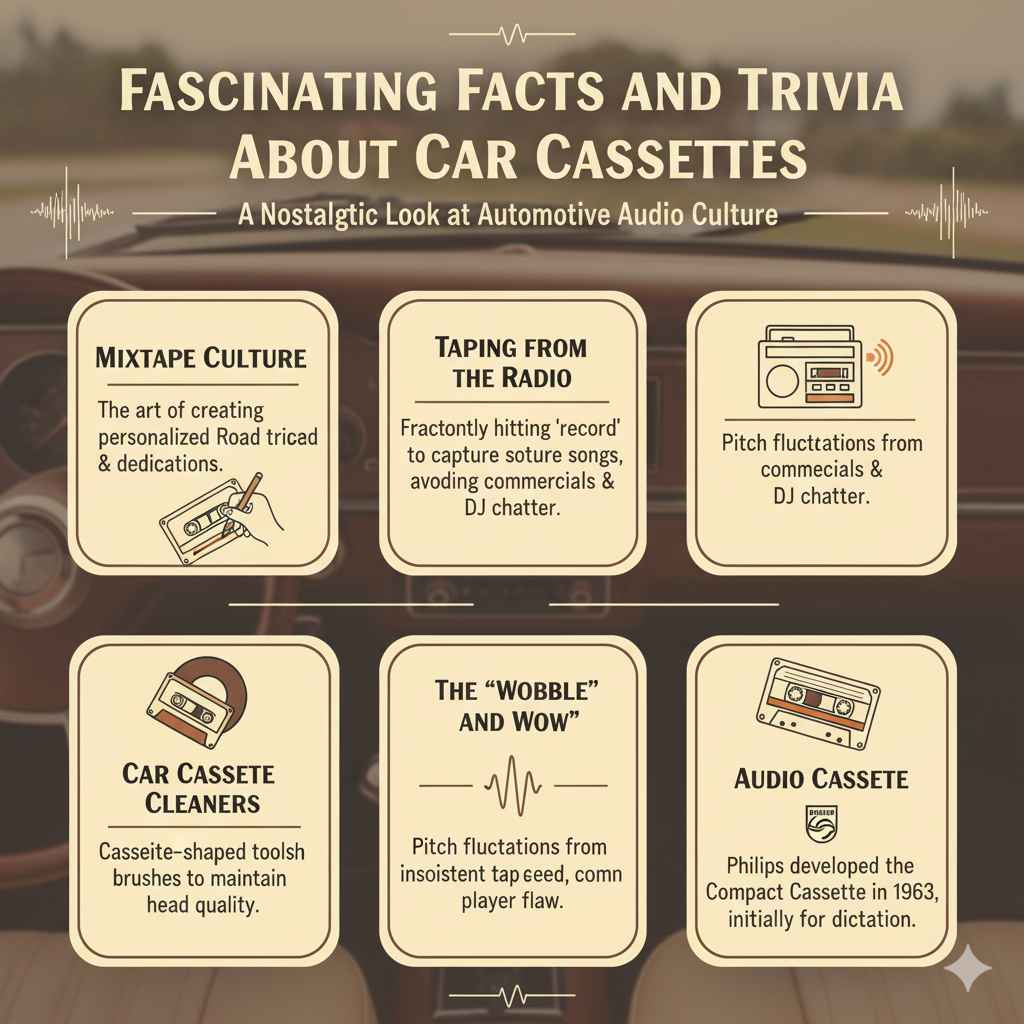
Fascinating Facts and Trivia About Car Cassettes
The era of the car cassette is filled with interesting tidbits that highlight its cultural impact.
- Mixtape Culture: Creating mixtapes for friends, lovers, or just for yourself was an art form. Carefully selecting songs and sequencing them for a road trip or a special occasion was a significant part of 80s and 90s youth culture.
- Taping from the Radio: Many people used their home cassette recorders to “tape” songs directly from the radio to build their collections. This often involved the frantic press of “record” and “play” at the song’s start and quickly hitting “stop” to avoid commercials or DJ chatter.
- The “Wobble” and “Wow”: Cassette players, especially cheaper ones or those in older cars, were notorious for “wow and flutter”—a wavering of pitch caused by inconsistent tape speed.
- Car Cassette Cleaners: Special cassette-shaped devices with brushes were sold to clean the heads of the car’s cassette player, helping to maintain sound quality. Investing in good cleaning tools was key to keeping your player in top shape. You can find guides on cleaning magnetic tape heads from resources like The U.S. National Archives.
- Audio Cassette Standards: Philips developed the Compact Cassette in 1963, initially intended for dictation machines. Its subsequent adoption for music, including in cars, was a testament to its adaptability.
Frequently Asked Questions About Car Cassettes
Q1: When did car cassette players become common?
A1: While they first appeared in the early 1970s, cassette players became a common feature in cars throughout the 1980s and early 1990s.
Q2: What came before cassette tapes in cars?
A2: Before cassettes, the most popular format for pre-recorded music in cars was the 8-track tape. Many cars also just had AM/FM radios.
Q3: Why were cassette tapes better than 8-tracks for cars?
A3: Cassettes offered easier track selection (rewind, fast forward, skip), were smaller, and were generally more reliable and less prone to sound issues than 8-tracks.
Q4: Did all cars have cassette players in the 1980s?
A4: No, not all cars had them. They started as a premium option in the 70s and became standard in many models throughout the 80s. Basic car models might still have only had radio.
Q5: Are cassette tapes still made for cars today?
A5: While very rare, some classic or retro-themed car models might offer them as a novelty. Otherwise, you’d be looking at the used car market or specialized aftermarket systems for modern cars.
Q6: What replaced cassette tapes in cars?
A6: Compact Disc (CD) players gradually replaced cassette tapes, followed by digital music players (like MP3 players) and ultimately smartphones, which connect via AUX cables and Bluetooth.
Conclusion: A Nostalgic Journey Through Car Audio History
So, there you have it! The journey of the cassette tape in cars is a fascinating chapter in automotive history. From its humble beginnings as a luxury feature in the early 1970s, it rapidly evolved to become the dominant form of in-car entertainment throughout the 1980s and early 1990s. This little magnetic tape fundamentally changed how we experienced music on the road, allowing for personalization and a richer driving soundtrack that was previously unimaginable.
While modern cars boast sophisticated infotainment systems with access to virtually all the music ever recorded, there’s a certain charm associated with the era of cassette tapes. The tactile feel of inserting a tape, the hunt for the perfect mixtape, and the familiar whir of the player are memories for many. Understanding when cassette tapes came out in cars helps us appreciate the advancements in technology we enjoy today and celebrate the innovations that made our drives more enjoyable and personal. It’s a testament to how quickly technology moves, but also how enduring certain formats can become in our collective memory.