When Do You Switch Car Seats: Essential Guide
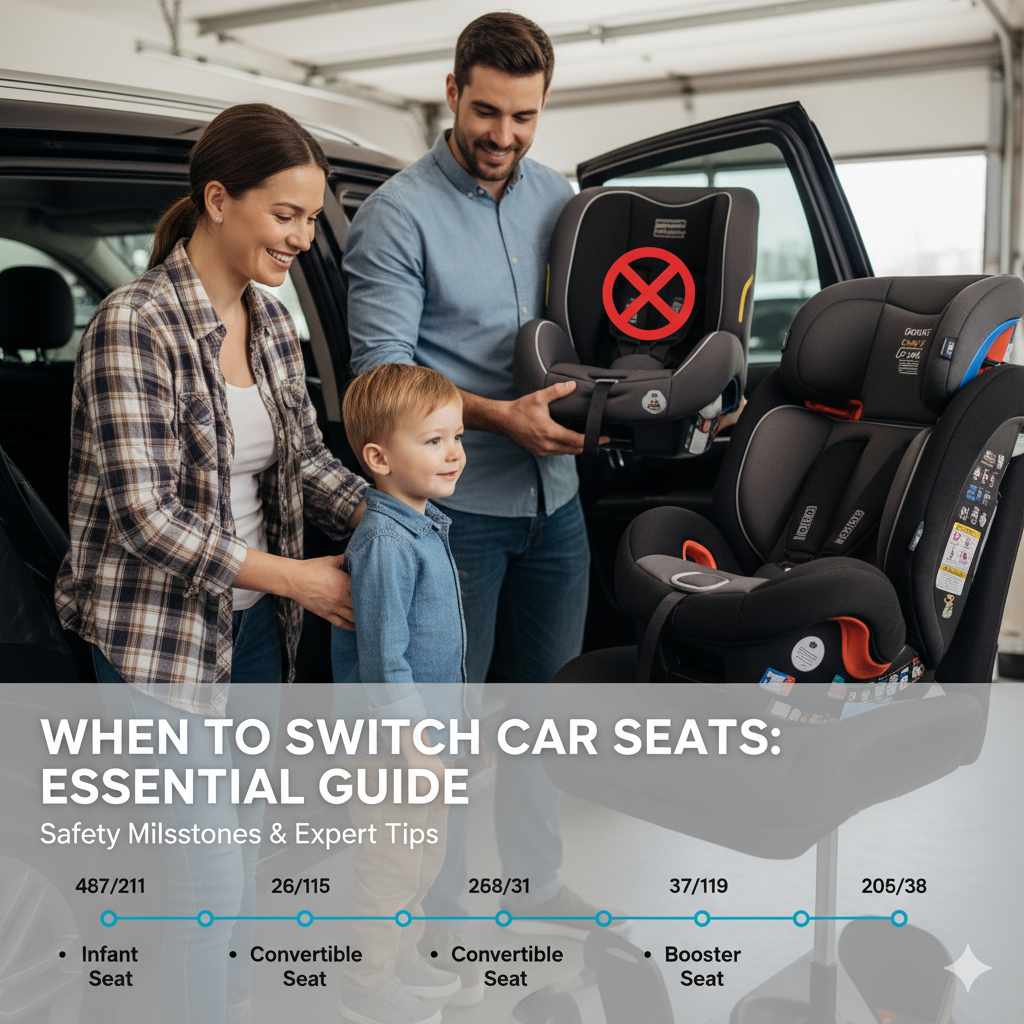
When do you switch car seats? You transition to a new car seat when your child outgrows their current one by height or weight, or when they reach the age where forward-facing or booster seats are recommended for their safety. Always follow the car seat manufacturer’s guidelines and child safety recommendations to keep your little one protected on the road.
Keeping your child safe in the car is every parent’s top priority. That’s why picking the right car seat and knowing when to switch is so important. It can feel a bit confusing with all the different types and rules. But don’t worry, we’re here to clear things up! This guide will walk you through exactly when and how to make those big car seat transitions for your little traveler. Let’s get your child safely secured for every adventure!
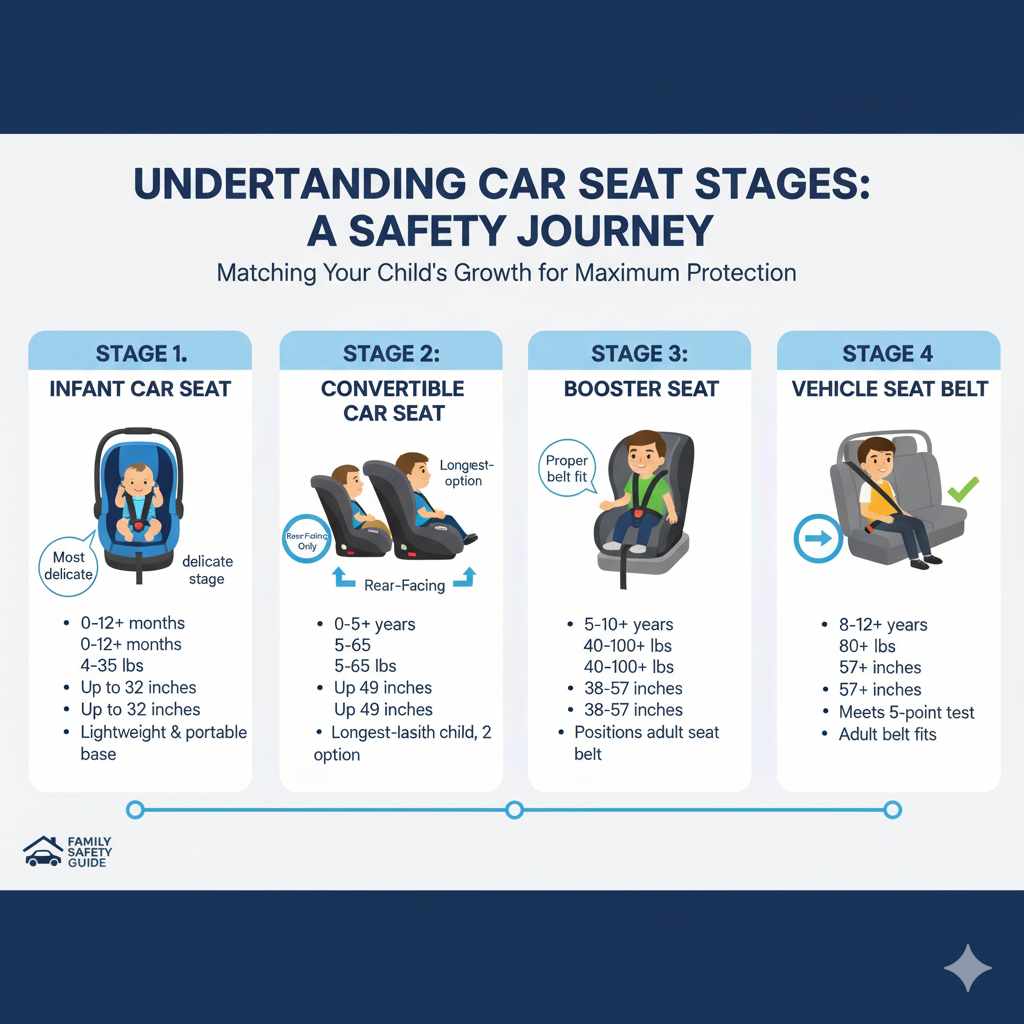
Understanding Car Seat Stages: A Safety Journey
Car seats aren’t just one-size-fits-all. They’re designed in stages to match your child’s growing body and evolving needs for protection. Thinking of it as a safety journey helps make sense of the different types and when your child is ready to move on.
Stage 1: The Infant Car Seat (Rear-Facing Only)
This is usually the first car seat for newborns and very young babies.
- Purpose: Maximum protection for a baby’s delicate head, neck, and spine. Rear-facing is scientifically proven to be five times safer for infants and toddlers.
- Key Features: Typically lightweight, often with a detachable base, allowing you to carry the baby in and out of the car without unbuckling them.
- When to Use: From birth until the baby reaches the weight or height limit specified by the manufacturer, usually around 20-35 pounds and 26-32 inches. Never turn it forward-facing.
Stage 2: The Convertible Car Seat (Rear-Facing and Forward-Facing)
This seat is a workhorse, growing with your child for a longer period.
- Purpose: It can be used rear-facing for infants and toddlers, and then later converted to a forward-facing seat for older children.
- Key Features: Sturdier than infant seats, these offer multiple harness positions and recline options for comfort and safety.
- When to Use (Rear-Facing): Keep your child rear-facing for as long as possible, ideally until they reach the maximum height or weight limit for rear-facing in the convertible seat. Many experts recommend keeping children rear-facing until at least age 2, or even longer if the seat allows.
- When to Use (Forward-Facing): Once your child has outgrown the rear-facing limits, you can turn the seat forward. They must meet the minimum age and weight/height requirements for forward-facing (usually a minimum of 2 years old and meeting the seat’s forward-facing limits).
Stage 3: The All-in-One Car Seat (Rear-Facing, Forward-Facing, and Booster)
This is the ultimate long-term car seat, designed to be the only seat you’ll ever need.
- Purpose: It starts as a rear-facing seat, converts to a forward-facing harnessed seat, and then transforms into a belt-positioning booster seat.
- Key Features: Extremely adjustable with a wide range of weight and height limits to accommodate a child from infancy through booster seat age.
- When to Use: Follow the same transitions as a convertible seat, but it will continue to be used as a booster once the child outgrows the harness.
Stage 4: The Booster Seat (High-Back and Backless)
Once your child outgrows their forward-facing harnessed seat, a booster seat helps them fit the adult seat belt properly.
- Purpose: To “boost” your child up so the vehicle’s lap and shoulder belt fit correctly across the strong bones of their body (pelvis and chest), rather than across their soft stomach and neck.
- Key Features: High-back boosters offer head and neck support. Backless boosters are more portable and often used when a vehicle seat has built-in headrests. Both use the vehicle’s seat belt to restrain the child.
- When to Use: When your child has outgrown their forward-facing harnessed seat’s weight or height limits. They should also be mature enough to sit properly for the entire ride. This is typically around age 5-7, but depends on the child and the seat’s limits. A good rule of thumb: the top of the child’s ears should be below the top of the vehicle headrest when sitting up straight.
Stage 5: The Vehicle Seat Belt
Finally, your child graduates to using the vehicle’s built-in seat belt alone.
- Purpose: The standard safety restraint for passengers.
- When to Use: When your child can sit properly for the entire trip with their back against the vehicle seat, knees bent at the edge of the seat, and feet flat on the floor, AND the adult seat belt fits them correctly. This is often between ages 8-12.
When to Switch: Key Indicators for Each Stage
Knowing the stages is one thing, but knowing when to switch is crucial. The most important rule is to always follow your car seat manufacturer’s weight and height limits. These are usually printed on a sticker on the car seat itself. Children reach these limits at different ages, so there’s no single age for every transition.
Switching from an Infant Car Seat to a Convertible or All-in-One (Rear-Facing)
- Weight Limit Reached: Your baby is heavier than the maximum weight allowed for the infant seat.
- Height Limit Reached: Your baby’s head is sticking out more than 1 inch above the top of the car seat shell when their head is in the normal upright position. This is a critical safety indicator.
- Harness Straps Too Low: The shoulder harness straps are below the point where the baby’s shoulders meet the seat, and you can no longer raise them to an appropriate position. This usually happens before the height limit is reached.
For example, a common weight limit for infant seats is 30 lbs. If your baby hits 30 lbs, it’s time to switch, even if they haven’t reached the height limit.
Switching from Rear-Facing to Forward-Facing (Convertible or All-in-One Seat)
This is a very important transition, and it’s best to keep children rear-facing for as long as safely possible.
- Minimum Age: At least 2 years old.
- Weight Limit for Rear-Facing: Your child has reached the maximum weight limit for rear-facing in their convertible or all-in-one seat. Many seats allow rear-facing up to 40-50 pounds.
- Height Limit for Rear-Facing: The top of your child’s head is less than 1 inch away from the top of the car seat shell when they are in the rear-facing position.
- Harness Strap Position: When rear-facing, the harness straps must be at or below your child’s shoulders.
Think about it this way: if the seat allows rear-facing up to 45 lbs, and your child weighs 35 lbs and is 3 years old, they can still safely ride rear-facing.
Switching from Forward-Facing Harness to a Booster Seat
This is when your child outgrows their forward-facing seat with a 5-point harness.
- Weight Limit Reached: Your child has reached the maximum weight limit for the forward-facing harness of their seat. This is often 40-65 lbs for many seats.
- Height Limit Reached: The top of your child’s ears are at or above the top of the car seat’s headrest, or the shoulder harness straps are too high even at their highest setting.
- Maturity: Your child is mature enough to sit properly in a booster seat for the entire car ride.
A great resource for understanding car seat safety is provided by National Highway Traffic Safety Administration (NHTSA). They offer detailed guides and statistics.
Switching from a Booster Seat to the Vehicle Seat Belt
This is the final stage before your child uses the adult seat belt.
-
The 5-Step Test: This is the standard for knowing when a child is ready for the adult seat belt. Check if your child can:
- Sit all the way back against the car seat.
- Knees bend at the edge of the car seat.
- Feet are flat on the floor.
- Lap belt lies snugly across the upper thighs and hip bones (not the stomach).
- Shoulder belt stays snug across the chest and shoulder (not slipping off the shoulder or across the neck).
- Age and Size: Typically, children are ready between the ages of 8 and 12.
The vehicle seat belt is designed for adults, so until your child passes the 5-step test consistently, a booster seat is crucial for their safety.
Car Seat Expiration Dates and Replacement
Did you know car seats expire? It might sound strange, but like many things, car seats have a lifespan.
Why do they expire? Over time, plastics can become brittle, harness materials can degrade, and safety standards can be updated. Manufacturers set expiration dates to ensure the seat is still offering the best possible safety performance.
- Common Lifespan: Most car seats expire 6 to 10 years from their date of manufacture.
- Where to Find the Date: Look for a sticker on the car seat, usually on the back or bottom. It will have the manufacture date. The expiration date is typically 6-10 years from that date.
-
When to Replace:
- When the expiration date has passed.
- After any car accident, no matter how minor. Even if there’s no visible damage, internal components can be compromised. Check your car seat manual or the manufacturer’s website for their specific accident replacement policy.
- If the seat has any damaged or missing parts.
- If the seat is recalled and cannot be made safe.
Always check for recalls. The SaferCar.gov website is a great resource for this.
Pros and Cons of Each Car Seat Stage
Each stage of car seat has its benefits and considerations. Understanding these can help you make informed decisions.
Infant Car Seats
Pros:
- Lightweight and portable; often includes a base for easy installation.
- Can be easily moved between cars or used with a stroller system (travel system).
- Designed specifically for newborns, offering optimal support.
Cons:
- Infants outgrow them quickly (typically by 1 year old).
- Can be expensive if you need to replace them often.
Convertible Car Seats
Pros:
- Longer lifespan than infant seats; used from infancy through toddlerhood.
- Can be used both rear-facing and forward-facing.
- Often more cost-effective in the long run.
Cons:
- Bulkier and heavier than infant seats; less portable.
- Might not offer the same “lift and go” convenience for newborns.
All-in-One Car Seats
Pros:
- The most cost-effective option as it’s the only seat needed for many years.
- Transition from rear-facing to forward-facing harness to booster.
- Can accommodate a wide range of ages and sizes.
Cons:
- Can be very large and heavy, making them difficult to move between vehicles.
- May not provide the snug fit for very small newborns as an infant seat.
- May not last as long as a separate booster seat in terms of fit and comfort.
Booster Seats
Pros:
- Ensures proper belt fit for older children who have outgrown harness seats.
- More affordable than convertible or all-in-one seats for this stage.
- High-back boosters offer head support and can help children sit properly.
Cons:
- Children must be mature enough to sit correctly for the entire ride.
- Backless boosters are less effective for children who tend to slouch or fall asleep.
Common Mistakes to Avoid
Even with the best intentions, some common slip-ups can happen when using car seats. Being aware of these can help you ensure your child is always as safe as possible.
- Incorrect Harness Tightness: The harness should be snug enough that you can’t pinch any slack at the child’s shoulder.
- Loose Installation: The car seat, when tested at the base, should not move more than 1 inch in any direction (left, right, or forward/back).
- Using the Wrong Seat for the Child’s Age/Size: This is the most common reason for improper safety. Always check weight and height limits.
- Turning Forward-Facing Too Soon: Keeping kids rear-facing longer is significantly safer.
- Belt Positioning Issues with Boosters: The lap belt should lie across the upper thighs, and the shoulder belt across the chest and shoulder, not the neck or face.
- Using Expired or Used Seats with Unknown History: Always check for expiration dates and never use a seat that has been in a crash.
- Not Reading the Manuals: Both the car seat manual and the vehicle owner’s manual have crucial information.
For hands-on assistance and to ensure your seat is installed correctly, look for certified Child Passenger Safety Technicians (CPSTs). Many local police or fire departments offer free car seat checks. You can find one near you through Safe Kids Worldwide.
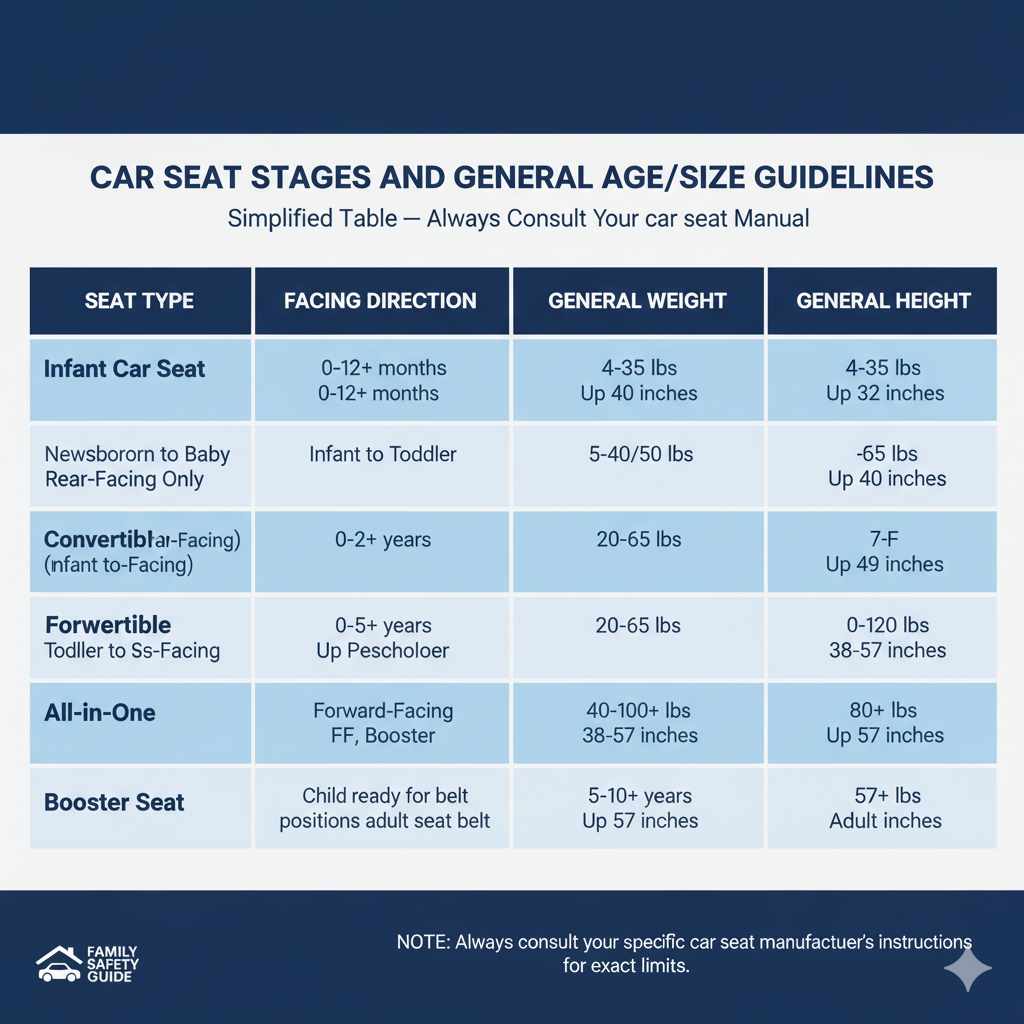
Table: Car Seat Stages and General Age/Size Guidelines
Here’s a simplified table to give you a general idea, but remember, always refer to your specific car seat’s manual and your child’s physical growth.
| Seat Type | Typical Stage | Facing Direction | General Age Range | General Weight Range | General Height Range |
|---|---|---|---|---|---|
| Infant Car Seat | Newborn to Baby | Rear-Facing Only | 0-12+ months | 4-35 lbs | Up to 32 inches (or until head is 1 inch over top) |
| Convertible Car Seat | Infant to Toddler (Rear-Facing) | Rear-Facing | 0-2+ years | 5-40/50 lbs | Up to 40 inches (rear-facing limit) |
| Convertible Car Seat | Toddler to Preschooler (Forward-Facing) | Forward-Facing | 2-5+ years | 20-65 lbs | Up to 49 inches (forward-facing harness limit) |
| All-in-One Car Seat | Infant – Booster | Rear-Facing, Forward-Facing, Booster | 0-10+ years | 4-120 lbs | Up to 57 inches |
| Booster Seat (High-Back/Backless) | Child ready for belt positioning | Forward-Facing | 5-10+ years | 40-100+ lbs | 38-57 inches |
| Vehicle Seat Belt | Mature Child | Forward-Facing | 8-12+ years | 80+ lbs | 57+ inches (depends on vehicle belt fit) |
Note: These are general guidelines. Always consult your specific car seat manufacturer’s instructions and labels for exact weight and height limits.
Frequently Asked Questions (FAQ)
Q1: My baby’s feet are touching the back of the infant seat. Do I need to switch to a convertible seat immediately?
A1: Not necessarily! For rear-facing infant and convertible seats, what matters most is the position of the harness straps and where the child’s head is relative to the shell. If the harness is still at or below the child’s shoulders and their head is not more than 1 inch from the top of the shell, they can likely continue rear-facing. It’s the height limit and harness position that are critical for rear-facing safety, not leg length.
Q2: How often should I check if my child is still fitting properly in their car seat?
A2: It’s a good habit to check regularly, perhaps every few months, as children grow quickly. Pay close attention whenever they have a growth spurt. Always double-check when they reach the upper limits of their current stage or seat’s specifications.
Q3: My child complains the harness is too tight. What should I do?
A3: Ensure you’re not pinching the harness webbing at the shoulder after tightening. If you can’t pinch any slack between your fingers, it’s snug enough. If the straps dig in uncomfortably, check if the harness straps are at the correct height for your child (at or below the shoulders for rear-facing, at or above for forward-facing). Also, consider the padding or inserts that came with the seat; sometimes these can affect fit.
Q4: When can my child start riding forward-facing?
A4: The general recommendation from safety experts like the American Academy of Pediatrics (AAP) is to keep children rear-facing until they are at least 2 years old or have reached the maximum height or weight limit for rear-facing in their convertible seat. Some seats allow rear-facing up to 40 or even 50 pounds, so keep them rear-facing for as long as possible for maximum protection.
Q5: What’s the difference between a high-back booster and a backless booster?
A5: A high-back booster provides head and neck support, which is beneficial for children who might fall asleep in the car or who need extra guidance to sit up properly. A backless booster provides the “boost” needed for proper seat belt fit but doesn’t offer head support. If your car’s seat has built-in headrests, a backless booster might be sufficient.
Q6: Can I use a hand-me-down car seat?
A6: Only if you know its complete history: that it has never been in a crash, is not expired, and has all its parts and labels intact. If you have any doubt about its history, it’s safest to buy a new one.
Q7: My child is 7 years old and still fits their forward-facing harness. Do they need a booster?
A7: If your child is still within the weight and height limits of their forward-facing harness, they can continue to use it. However, once they reach those limits or if they are consistently failing the 5-step test for lap and shoulder belt fit, then a booster is the next safe step until they can properly use the vehicle seat belt alone.
Conclusion
Making the right car seat transitions is a vital part of keeping your child safe as they grow. By understanding the different stages, paying close attention to your child’s growth, and always following the manufacturer’s guidelines and safety recommendations, you can confidently navigate each step of their car seat journey. Remember, patience with rear-facing and proper fit at every stage are your best tools for ensuring a protected ride. Drive safely, and enjoy the journey with your little ones!