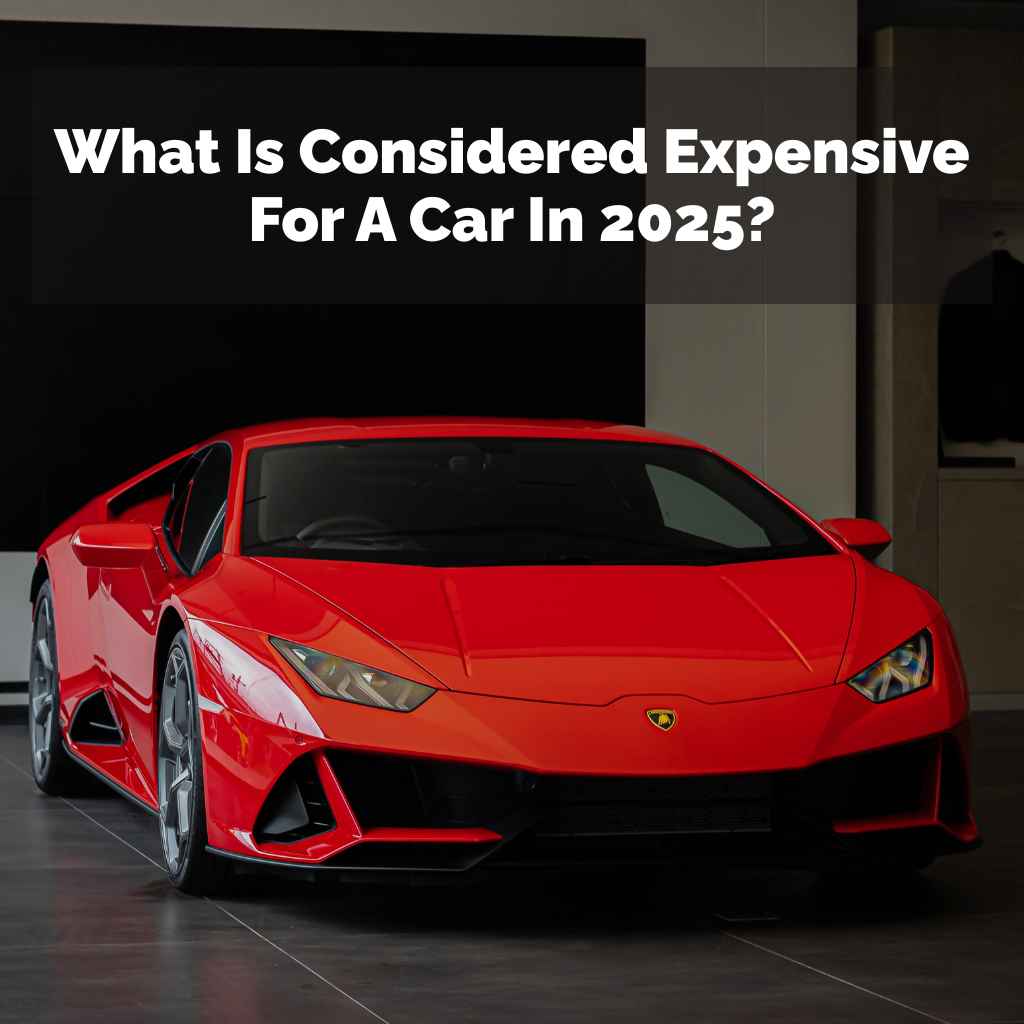
What Is Considered Expensive For A Car In 2025?
In 2025, a car is considered expensive if its price significantly exceeds the average market value for its class, factoring in depreciation, luxury features, advanced technology, and brand prestige. For many, this threshold often starts above $40,000 for a new mainstream vehicle and much higher for luxury or performance models.
Understanding Car Pricing in 2025
Car prices have been on a wild ride. For a while, supply chain issues made cars very expensive. Even used cars cost a lot.
Now, things are starting to change a bit. But the base prices for new cars are still higher than they used to be. A lot of this has to do with new technology.
Cars today have better safety features. They also have fancy infotainment systems. Plus, many now come with hybrid or electric powertrains.
These things add to the cost.
What one person finds expensive, another might see as a good deal. It really depends on your budget and what you need in a car. Think about how much you drive.
Consider what you use your car for. Also, think about how long you plan to keep it. These things all play a part in what an “expensive” car means to you.
We also need to look at the average car price. This gives us a good benchmark. For a while, the average price for a new car in the U.S.
has been over $40,000. Some months it’s closer to $45,000. This number includes everything from small sedans to big SUVs.
When a car’s price is much higher than this average, it starts to feel expensive.
The Rise of the Average Car Price
Let’s dive deeper into why the average price has climbed so much. It wasn’t just one thing. It was a mix of many factors coming together.
Supply chain problems really hit hard. This meant fewer cars were made. When there aren’t enough cars, dealers can charge more.
Buyers were willing to pay more because they needed a car. This drove up prices across the board.
Then came the push for new tech. Modern cars have big touchscreens. They have advanced driver-assistance systems.
Think of things like adaptive cruise control and lane-keeping assist. Electric vehicles (EVs) and hybrids also cost more to build. Their batteries and complex systems add to the price.
Carmakers are trying to make cars safer and more advanced. This means more expensive parts and more research.
Many car companies also changed their strategies. They started focusing on bigger, more profitable vehicles. Think SUVs and trucks.
These larger vehicles naturally cost more to produce and sell. They also tend to have higher profit margins for the manufacturers. This shift in focus means fewer very cheap cars are available.
The cheapest options might still be over $20,000 or $25,000 now.
Key Factors Pushing Car Prices Up
Inflation: General cost of goods and services increases.
Supply Chain: Shortages of parts like computer chips hurt production.
Technology: More advanced safety and entertainment features are costly.
Electrification: EVs and hybrids have expensive battery components.
Consumer Demand: Strong desire for SUVs and trucks raises their prices.

What Does “Expensive” Mean for Different Car Types?
The idea of “expensive” changes depending on the type of car. A luxury sedan that costs $70,000 might be normal for its class. But a compact SUV at $70,000 would seem incredibly expensive.
Let’s look at some common car categories in 2025.
Economy Cars / Compact Sedans
For a small, basic car, prices have gone up. A few years ago, you could find many new cars under $20,000. Now, it’s harder.
If a new compact car is in the $25,000 to $35,000 range, it’s starting to feel pricey for that segment. Anything over $35,000 for a car that isn’t loaded with every option would be considered very expensive.
Mid-Size Sedans and SUVs
This is where many families look. The average price for a new mid-size car is often between $35,000 and $45,000. So, a new mid-size sedan or SUV around $40,000 to $55,000 is pretty standard.
If you’re looking at $55,000 or more for a non-luxury mid-size SUV with most features, that’s definitely on the expensive side.
Full-Size SUVs and Trucks
These vehicles are naturally more expensive. They use more materials and have bigger engines. Prices for these can easily go from $50,000 to $70,000 or even $80,000 for well-equipped models.
A brand new, top-trim full-size truck or SUV hitting $80,000+ is not uncommon now. So, “expensive” here might mean pushing past $90,000 or $100,000.
Luxury Vehicles
The luxury market is a different ballgame. For luxury sedans and SUVs, prices often start in the $50,000s and $60,000s. A price tag of $70,000 to $100,000 is quite common for a well-appointed luxury car.
Anything above $100,000, especially for a non-performance luxury model, is certainly in the high-end or “expensive” category for most buyers.
Performance and Sports Cars
These are built for speed and driving feel. They use specialized engines and materials. Prices for performance cars can start in the $40,000s or $50,000s.
But they can quickly climb to $70,000, $100,000, or much, much higher. For these, “expensive” might not even be a fixed number. It’s more about value for the performance offered.
Price Tiers for New Cars (Approximate 2025)
Budget-Friendly
Under $28,000
Mainstream
$28,000 – $45,000
Note: These are general ranges and can vary widely by model and features.
Upper Mainstream/Near-Luxury
$45,000 – $65,000
Luxury & Premium
$65,000+
The Role of Features and Technology
What a car comes with dramatically affects its price. Basic transportation is one thing. A car loaded with the latest tech is another.
In 2025, certain features are becoming standard. Others are still premium options. When these options add thousands of dollars, the price can jump.
Think about safety systems. Advanced driver aids like automatic emergency braking, blind-spot monitoring, and adaptive cruise control are becoming more common. While great for safety, they increase the manufacturing cost.
Premium sound systems, larger touchscreens, heated and cooled seats, leather upholstery, and panoramic sunroofs all add to the sticker price.
Electric vehicles (EVs) and hybrids are a big part of the technology discussion. The battery pack in an EV is a major cost. While prices are coming down, they still make EVs more expensive upfront than comparable gasoline cars.
This means a fully electric SUV might cost $10,000 to $20,000 more than its gas-powered sibling. Is that extra cost “expensive” or an investment in future fuel savings?
Also, consider the software and connectivity. Many cars now offer over-the-air updates. They have sophisticated navigation systems.
Some even have built-in Wi-Fi hotspots. These advanced features are appealing. But they also contribute to the higher cost of the vehicle.
For many, a car priced over $50,000 with only a few of these advanced tech options might feel overpriced.
Depreciation: How Fast Does Value Drop?
When we talk about car costs, we can’t forget depreciation. This is how much value a car loses over time. Some cars hold their value better than others.
A car that depreciates quickly might be “expensive” in the long run, even if its initial price wasn’t sky-high.
Generally, luxury brands and high-end models depreciate faster than mainstream brands. However, certain popular models from mainstream brands, like trucks and SUVs, often hold their value very well. Electric vehicles are a bit of an unknown factor in long-term depreciation.
Their value can depend heavily on battery health and future technology advancements.
If a car loses 20% of its value in the first year, that’s a significant cost. For a $40,000 car, that’s an $8,000 loss. For a $70,000 car, it’s a $14,000 loss.
When looking at a car’s total cost of ownership, depreciation is a huge piece of the puzzle. A car that is “expensive” upfront but depreciates slowly might be cheaper to own over five years than a cheaper car that loses value rapidly.
Understanding Car Depreciation
Definition: The loss of a vehicle’s value over time.
Factors: Age, mileage, condition, brand reputation, demand, features.
Fast Depreciators: Often luxury brands, less popular models, vehicles with high initial costs.
Slow Depreciators: Often reliable mainstream brands, popular trucks/SUVs, vehicles with high demand.
Impact: Affects resale value and total cost of ownership.
Brand Prestige and Market Perception
Some car brands carry a certain status. This prestige can justify higher prices. Brands like Mercedes-Benz, BMW, Audi, Porsche, and Lexus are known for luxury and performance.
Buyers expect to pay a premium for the badge, the engineering, and the perceived quality.
What’s considered “expensive” is also shaped by market perception. If a brand has a reputation for reliability and craftsmanship, people are more willing to spend more on their vehicles. Conversely, a brand known for issues might struggle to get top dollar, even for a well-equipped car.
This perception is built over years through advertising, reviews, and owner experiences.
For example, a Tesla Model 3 might be priced similarly to a mid-range BMW 3 Series. Both are considered “expensive” in the general car market. However, the Tesla might be seen as a forward-thinking, tech-focused expensive car, while the BMW is an expensive car rooted in luxury and driving dynamics.
The “expensive” label is applied, but the reasons and expectations behind it differ.
My Own Experience with Car Pricing
I remember when I was looking for a new car about five years ago. I had a budget in mind, around $25,000. I wanted something reliable, good on gas, and not too small.
I looked at a few models, and most seemed to fit. Then, a sale happened. A slightly larger SUV that I really liked dropped its price.
It was still around $29,000, but it felt like such a good deal compared to what I’d seen.
Fast forward to today. I was casually browsing online, just out of curiosity. I saw that same SUV.
The base model, without any of the features I had, was now over $35,000. It made my head spin. What was considered a good deal for a family-sized vehicle just a few years back is now the starting point for something more basic.
It really highlights how much the market has shifted. It’s tough to keep up!
Real-World Context: The Average Family’s Budget
When we talk about expensive cars, we need to consider the average American family. Household incomes vary greatly, but many families juggle multiple financial priorities. Mortgages, rent, utilities, food, education, and savings all compete for attention.
A car payment is a significant monthly expense.
For many, a car payment of $500 to $700 per month is the upper limit. This often translates to a vehicle price in the low to mid-$30,000s, depending on the loan terms (interest rate, length of loan) and down payment. If a car pushes their monthly payment to $800 or $900, it’s likely considered too expensive for their current budget.
The cost of insurance also plays a role. More expensive cars, especially luxury or performance models, often have higher insurance premiums. This adds to the overall cost of ownership, making a car feel more expensive than just its purchase price.
Factors Influencing “Expensive” for a Family Budget
Monthly Payment: What fits comfortably in the monthly budget.
Total Loan Cost: Including interest over the loan term.
Insurance Premiums: Higher for newer, more valuable, or performance vehicles.
Fuel Costs: Depending on the engine and mileage.
Maintenance & Repairs: Can be higher for complex or luxury vehicles.
When Is a Car “Expensive” Versus “Just Pricey”?
There’s a subtle difference between a car being “expensive” and just being “pricey” for its segment. A car is “expensive” when it pushes the boundaries of what’s typical for its class and potentially beyond the reach of many buyers. It might be a luxury model, a highly specialized vehicle, or simply a mainstream car with an unusually high price tag.
“Pricey” might refer to a car that is at the higher end of its normal price range but still offers clear value for the money. For example, a fully loaded SUV from a mainstream brand that reaches $55,000 might be considered pricey, but if it offers premium features, excellent safety, and a comfortable ride comparable to some luxury SUVs, it might be seen as worth the cost by some.
In 2025, a brand-new compact car listed for $38,000 would be considered very expensive. A mid-size SUV at $60,000 might be considered pricey but potentially justifiable if it has luxury-like features. A luxury SUV at $90,000 is expected to be expensive, but could be seen as “normal” for that level of luxury and performance.
What This Means for Car Buyers in 2025
It means being more informed than ever. You need to understand the market trends. Know what features really matter to you.
Don’t just look at the sticker price. Consider the total cost of ownership. This includes fuel, insurance, maintenance, and depreciation.
For many, buying a new car might mean adjusting expectations. Perhaps a smaller car, a well-maintained used car, or a longer loan term is the best option. Or maybe focusing on a specific set of essential features rather than every available option.
It’s about finding the right balance of cost, features, and needs.
If your budget is tight, looking at cars priced below the average of $40,000-$45,000 is crucial. This might mean exploring subcompact cars, slightly older models, or even certified pre-owned vehicles. These can offer significant savings compared to the new car market.
Navigating 2025 Car Prices: Quick Tips
Know the Average: Keep the $40k-$45k average in mind.
Define “Need”: Which features are must-haves vs. nice-to-haves?
Total Cost: Factor in fuel, insurance, and upkeep.
Used Market: Consider certified pre-owned for value.
Financing: Shop around for the best loan rates.
Negotiate: Don’t be afraid to negotiate, especially on less popular models.
Quick Fixes & Tips for Smart Car Buying
When looking for a car in 2025, remember these tips. They can help you avoid overspending. And they ensure you get a good value for your money.
- Set a Firm Budget: Know your maximum monthly payment and total spend.
- Research Widely: Look at different brands and models that fit your needs.
- Consider Certified Pre-Owned (CPO): These cars are inspected and often come with warranties. They offer a great way to get a newer car at a lower price.
- Time Your Purchase: Sometimes, end-of-year or end-of-quarter sales can offer better deals.
- Be Patient: Don’t rush into a purchase. Take your time to find the right car at the right price.
- Read Reviews: Look for reviews focusing on long-term reliability and ownership costs. Consumer Reports and JD Power are good resources.
- Test Drive Thoroughly: Make sure the car fits your driving style and comfort needs.
Don’t forget to factor in the cost of taxes, title, and registration fees. These can add several thousand dollars to the final price. Always get an out-the-door price from the dealer.

Frequently Asked Questions
What is the average price of a new car in 2025?
The average price for a new car in 2025 hovers around $40,000 to $45,000. This figure can fluctuate based on market conditions and the mix of vehicles sold.
Can I still find a new car for under $25,000 in 2025?
It’s challenging but not impossible. You might find some very basic subcompact cars or models on deep discount. However, most new cars will likely start above $25,000.
Are electric cars considered expensive compared to gasoline cars in 2025?
Yes, electric cars generally have a higher upfront purchase price than comparable gasoline-powered vehicles due to battery costs. However, their total cost of ownership might be lower over time due to fuel and maintenance savings.
How does technology affect car prices?
Advanced safety systems, larger infotainment screens, connectivity features, and driver-assistance technologies significantly increase a car’s price. These features add to manufacturing costs.
Is buying a used car a good option to avoid high prices in 2025?
Yes, buying a used car, especially a certified pre-owned (CPO) vehicle, can be a very smart way to avoid the higher prices of new cars. CPO vehicles offer a good balance of cost savings and reliability.
What is the best way to determine if a car is too expensive for me?
The best way is to set a strict budget that includes not just the car payment but also insurance, fuel, and potential maintenance. If the total monthly cost strains your finances, the car is likely too expensive.
Conclusion: Defining “Expensive” in Today’s Market
In 2025, an “expensive” car is one that demands a price far beyond the norm for its category. It’s a vehicle where the cost significantly outweighs the average value. It reflects increased technology, evolving market demands, and economic factors.
Your personal definition also matters. It’s about what fits your budget and needs best.
Products related to this article
Sponsored / affiliate links. As an Amazon Associate I earn from qualifying purchases. I may earn additional commission from eligible campaigns.