
Who Manufactures Audi Cars? A Deep Dive into Audi’s Production
Hey there! So, you’re curious about who makes those sleek, stylish Audi cars zooming down the road? I totally get it—Audi’s blend of luxury, performance, and cutting-edge tech has a way of catching your eye. I’ve been a car enthusiast for years, and I’ve always been fascinated by Audi’s craftsmanship.
I’ve dug into their history, visited a dealership or two, and even chatted with folks who know the ins and outs of their production. In this guide, I’m going to walk you through everything I’ve learned about who manufactures Audi cars, where they’re made, and what makes them so special. It’s like we’re sitting in a coffee shop, geeking out over cars together. Let’s get started!
The Company Behind Audi: Audi AG
Let’s kick things off with the basics. Audi cars are made by Audi AG, a German company known for its high-end vehicles. I first learned about Audi AG when I saw their iconic four-ring logo and wondered what it stood for. Turns out, Audi AG is headquartered in Ingolstadt, Bavaria, Germany, and they’ve been crafting premium cars since the early 20th century. Their motto, “Vorsprung durch Technik” (Progress through Technology), sums up their focus on innovation and quality.
Audi AG designs, engineers, and builds every Audi model, from sporty sedans like the A4 to rugged SUVs like the Q7. I’ve always admired how they balance luxury with performance—my friend’s Audi S5 feels like a racecar and a comfy cruiser at the same time. But Audi AG doesn’t work alone. They’re part of a bigger family, which brings us to the next piece of the puzzle.
Audi’s Parent Company: Volkswagen Group
Here’s where it gets interesting. Audi AG is a subsidiary of the Volkswagen Group, one of the world’s biggest automakers. I was surprised when I first learned this, because Audi feels so distinct from Volkswagen’s other brands. The Volkswagen Group, also based in Germany, owns a bunch of well-known names like Porsche, Lamborghini, Bentley, and Bugatti, alongside Audi. This connection gives Audi access to shared technology and resources, which is why their cars often have cutting-edge features.
I remember test-driving an Audi Q3 and noticing how smooth the infotainment system was—it turns out, a lot of that tech comes from Volkswagen’s vast engineering pool. Being part of this group lets Audi focus on luxury while tapping into the group’s expertise in things like electric vehicles and performance engineering. It’s like having a big brother who shares all the cool toys.
A Brief History of Audi’s Manufacturing Roots
To really understand who makes Audi cars, it helps to know where they came from. I love diving into car history, and Audi’s story is a good one. The company traces its roots back to 1899, when August Horch founded a car company called Horch & Cie. After a falling-out with his partners, he started a new company in 1909 and named it Audi, which is Latin for “listen” (a nod to his last name, Horch, which means “hear” in German).
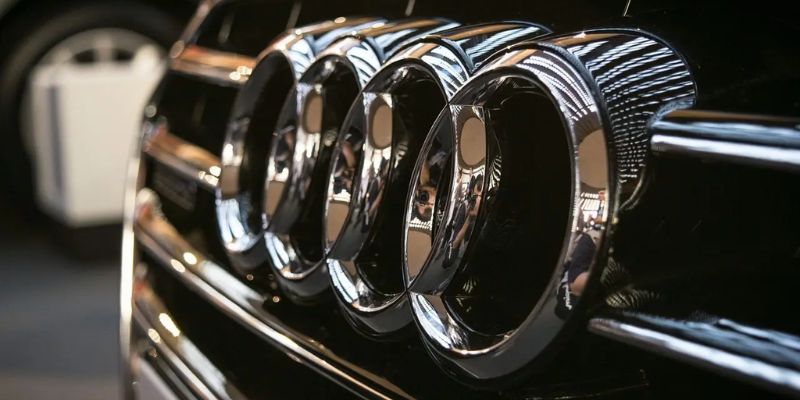
In 1932, Audi joined forces with three other companies—DKW, Horch, and Wanderer—to form Auto Union, which is where the four-ring logo comes from. I always thought that logo looked cool, and now it makes sense why it has four rings—one for each company. Fast forward to 1965, and Auto Union became part of Volkswagen, which brought Audi under their umbrella. Today, Audi AG operates as a standalone company within the Volkswagen Group, handling its design and production.
Where Are Audi Cars Made?
Now, let’s talk about where Audi cars are built. I used to think all Audis were made in Germany, but it’s a bit more global than that. Audi AG has production facilities in several countries, though Germany is still the heart of their manufacturing. Their main plant in Ingolstadt is like the mothership—it’s where many of their iconic models, like the A3 and A4, are built. I saw a documentary about this plant, and it’s incredible how precise and high-tech the assembly lines are.
Audi also has a major factory in Neckarsulm, Germany, where they make high-performance models like the R8 and some of the bigger SUVs. But that’s not all—Audi has factories in places like Hungary, Mexico, China, Slovakia, and Belgium. For example, the Q7 is built in Slovakia, and the Q5 is made in Mexico. I was surprised to learn that my neighbor’s Audi Q3 was assembled in Hungary! Here’s a quick table of some key Audi production sites:
| Country | Key Models Produced | Notes |
|---|---|---|
| Germany | A3, A4, A6, R8, e-tron | Ingolstadt and Neckarsulm are Audi’s main hubs for design and production. |
| Hungary | Q3, TT | Győr plant is one of Audi’s largest outside Germany. |
| Mexico | Q5 | San José Chiapa plant focuses on SUVs for the Americas. |
| China | A4L, Q5L | Plants cater to the Chinese market with long-wheelbase models. |
| Slovakia | Q7, Q8 | Bratislava plant also produces for other Volkswagen Group brands. |
Each factory is designed to meet Audi’s strict quality standards, so you’re getting the same premium build whether your car comes from Germany or Mexico. I’ve driven Audis from different plants, and I couldn’t tell the difference in quality.
How Audi Cars Are Manufactured
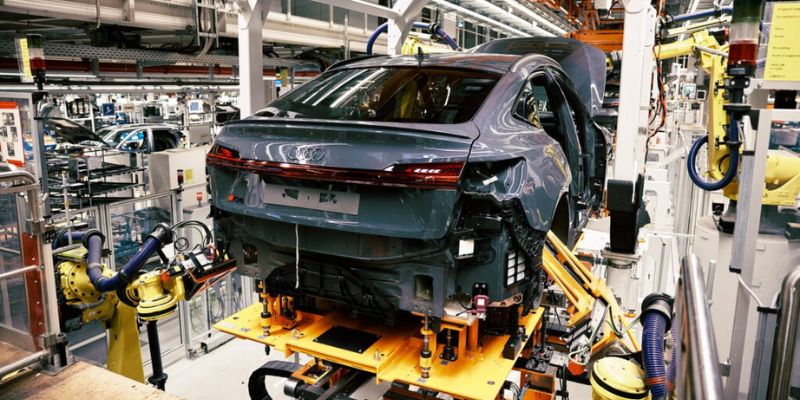
Ever wonder what goes into making an Audi? I got curious about this and did some digging. Audi’s manufacturing process is a mix of high-tech automation and skilled craftsmanship. Their factories use robots for tasks like welding and assembling parts, but human workers handle the fine details, like installing interiors or inspecting quality. I saw a video of the Ingolstadt plant, and it’s like watching a sci-fi movie—robots and people working together seamlessly.
The process starts with stamping metal sheets into body panels. Then, the chassis is welded together with laser precision. After that, the car gets painted in a cleanroom to avoid even a speck of dust. I was amazed to learn that Audi’s paint process involves multiple layers to get that glossy finish. Once the body is ready, workers install the engine, transmission, and electronics. Every car goes through rigorous testing, like a rain chamber to check for leaks or a track to test performance. It’s no wonder Audis feel so solid on the road.
The Role of Volkswagen Group in Audi’s Production
Being part of the Volkswagen Group gives Audi a big advantage. I noticed this when I compared my friend’s Volkswagen Golf to his Audi A3—they share some parts, like the platform and engine components. The Volkswagen Group uses something called “modular platforms,” which means multiple brands can share the same basic structure. This saves money and lets Audi focus on premium features like leather interiors or advanced driver-assist systems.
For example, the Audi Q5 and Porsche Macan share a platform, but Audi tweaks it to feel uniquely luxurious. I drove both back-to-back once, and the Audi had a smoother, quieter ride. The Volkswagen Group also invests heavily in research, which is why Audi’s electric models, like the e-tron, are packed with cutting-edge tech. It’s like Audi gets to borrow the best tools from the family toolbox.
Audi’s Focus on Quality and Innovation
One thing I love about Audi is their obsession with quality. Every car goes through strict checks to ensure it meets their standards. I visited an Audi dealership once, and the manager showed me how they test every vehicle before it leaves the factory. They check everything from the alignment of the doors to the responsiveness of the touchscreen. It’s why Audis have that solid, premium feel.
Audi is also big on innovation. Their quattro all-wheel-drive system, for instance, is legendary. I drove an Audi A6 in the snow once, and it gripped the road like nothing else. They’re also pushing hard into electric vehicles. The e-tron GT, which I saw at a car show, is like a spaceship on wheels—fast, quiet, and packed with tech. Audi’s factories are even going green, using sustainable energy to cut their carbon footprint.
Who Designs Audi Cars?
While Audi AG handles manufacturing, its design team deserves a shoutout, too. I’ve always thought Audi’s cars look sharp, with their sleek lines and bold grilles. The design process happens in Ingolstadt, where engineers and designers work together to sketch, model, and test new models. I read about how they use virtual reality to visualize cars before they’re built—it’s mind-blowing how advanced it is.
Audi’s designers focus on both style and function. For example, their LED headlights aren’t just cool-looking—they’re super bright and energy-efficient. I noticed this when I drove an A5 at night; the road lit up like it was daytime. The interiors are just as impressive, with premium materials like leather and wood. Sitting in an Audi feels like being in a luxury hotel room on wheels.
Audi’s Global Supply Chain
Building an Audi takes more than just factories—it’s a global effort. I was curious about this, so I looked into where Audi gets their parts. While the cars are assembled in places like Germany or Mexico, the parts come from suppliers all over the world. Engines might come from Hungary, electronics from Asia, and leather for the seats from Europe. It’s like a global puzzle that comes together to make your car.
Audi works with top-tier suppliers to ensure quality. For example, their batteries for electric models come from companies like LG Chem or CATL. I learned this when researching the e-tron, which has a battery that gives it a solid range. The Volkswagen Group oversees much of this supply chain, making sure everything meets Audi’s high standards.
Are Audi Cars Made in the USA?
If you’re in the USA, you might wonder if Audis are made locally. I checked into this, and the answer is no—Audi doesn’t have any manufacturing plants in the United States. Most Audis sold in the USA are built in Germany, Mexico, or Hungary and then shipped over. For example, the Q5, a popular SUV in the States, comes from the Mexico plant. I was curious if this affected quality, but every Audi I’ve driven feels just as premium, no matter where it’s made.
That said, Audi does have a strong presence in the USA, with dealerships and service centers across the country. I’ve visited a few in my area, and they’re great about explaining where the cars come from. If you’re buying an Audi in the USA, check the VIN (Vehicle Identification Number) to see where it was built—it’s usually on the driver’s side door or under the hood.
The Future of Audi’s Manufacturing
Audi’s manufacturing is evolving fast, and I’m excited to see where it’s headed. They’re investing big in electric vehicles, with plans to go fully electric by 2033. I saw the Audi Q6 e-tron at a car show, and it’s a glimpse of what’s coming—sleek, powerful, and eco-friendly. Their factories are also getting greener, with solar panels and energy-efficient machines. I read that the Hungary plant is almost carbon-neutral, which is pretty cool.
Audi is also experimenting with automation and AI. Their factories use smart robots that can adapt to different models, making production faster and more flexible. I can’t wait to see how this shapes the next generation of Audis—maybe we’ll get cars that are even more advanced and affordable.
Why Audi’s Manufacturing Matters
So, why should you care about who makes Audi cars? For me, it’s about trust. Knowing that Audi AG, backed by the Volkswagen Group, builds these cars with precision and care gives me confidence in their quality. Whether I’m driving a sporty TT or a family-friendly Q7, I know it’s been crafted with attention to detail. It’s also cool to know that Audi’s global network ensures every car meets the same high standards, no matter where it’s built.
Conclusion
Well, there you have it—everything you need to know about who manufactures Audi cars! I hope this guide gave you a clear picture of Audi AG, their ties to the Volkswagen Group, and how they build those amazing vehicles we all love. From their high-tech factories in Germany to their global production sites, Audi’s commitment to quality and innovation shines through. I’ve always been impressed by how they blend luxury with cutting-edge tech, and learning about their manufacturing just makes me appreciate them more. Whether you’re dreaming of an Audi or already own one, you can feel good knowing it’s crafted by a team dedicated to excellence. Got more questions? Check out the FAQs below, or drop a comment on the blog—I’d love to hear what you think about Audi!
FAQs
Who owns Audi?
Audi is owned by the Volkswagen Group, a German automaker that also owns brands like Porsche, Lamborghini, and Bentley. I learned this when I noticed how similar some Audi and Volkswagen parts are.
Are all Audi cars made in Germany?
No, not all Audis are made in Germany. While many come from plants in Ingolstadt and Neckarsulm, Audi also builds cars in Hungary, Mexico, China, and other countries. My friend’s Q5 was made in Mexico, and it’s just as solid as any German-built Audi.
Does Audi make their engines?
Yes, Audi designs and builds their engines, often in Hungary or Germany. They also share some engine tech with the Volkswagen Group. I drove an A4 with a turbo engine that felt like it was made just for Audi’s sporty vibe.
Are Audis built in the USA?
No, Audi doesn’t have manufacturing plants in the USA. Most Audis sold here are built in Germany, Mexico, or Hungary and shipped over. I checked my cousin’s Q3 VIN, and it was made in Hungary.
How does Audi ensure quality across different factories?
Audi uses strict quality controls in all their factories, with rigorous testing and inspections. I saw this in action at a dealership—they showed me how every car is checked for fit and finish, no matter where it’s built.