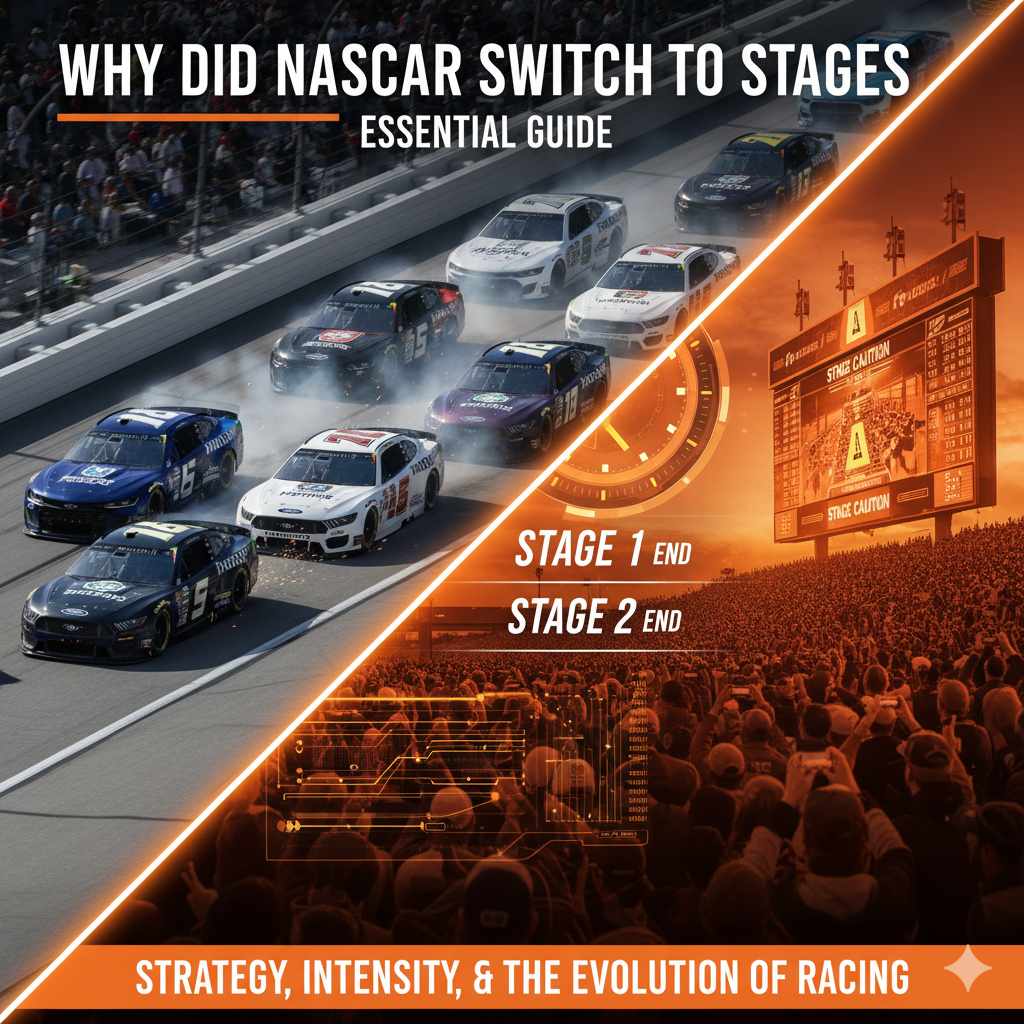
Why Did Nascar Switch To Stages: Essential Guide
NASCAR introduced racing stages to create more excitement and strategic opportunities during races. This change breaks longer races into shorter segments, offering points and bonus opportunities at the end of each stage, keeping fans engaged and drivers strategizing throughout the entire event.
Hey there, fellow racing fans! If you’ve been watching NASCAR lately, you might have noticed something different. The races seem to have these built-in “breaks” or segments. You might be wondering, “Why did NASCAR switch to stages?” It’s a question many fans ask, especially if they’ve been following the sport for a while. Don’t worry, it’s not as complicated as it sounds! Think of it like breaking down a long road trip into smaller, more manageable drives. This change was all about making the races even more thrilling for you, the fans, and adding new layers of strategy for the drivers and teams.
In this guide, we’ll break down exactly why NASCAR decided to implement stages, what they are, and how they’ve changed the racing experience for the better. By the end, you’ll be a staging expert, ready to chat about it with anyone!
Understanding the “Old” Way of NASCAR Racing
Before stages became a thing, NASCAR Cup Series races were largely run as one long event. The finish line was the only real goal. While this created epic finishes, it sometimes meant long stretches where the action, or the importance of what was happening on track, could feel less intense for viewers. Drivers were focused on the overall race, managing their equipment and tires for the long haul. Pit stops were crucial, of course, but there weren’t many specific, immediate rewards for success within the race itself, beyond gaining track position.
This traditional format had its charms, and certainly produced some legendary moments. However, in an effort to boost engagement and provide more reasons for excitement throughout the race, NASCAR looked for ways to inject more drama and strategic complexity into every lap.
The Introduction of NASCAR Stages: What Are They?
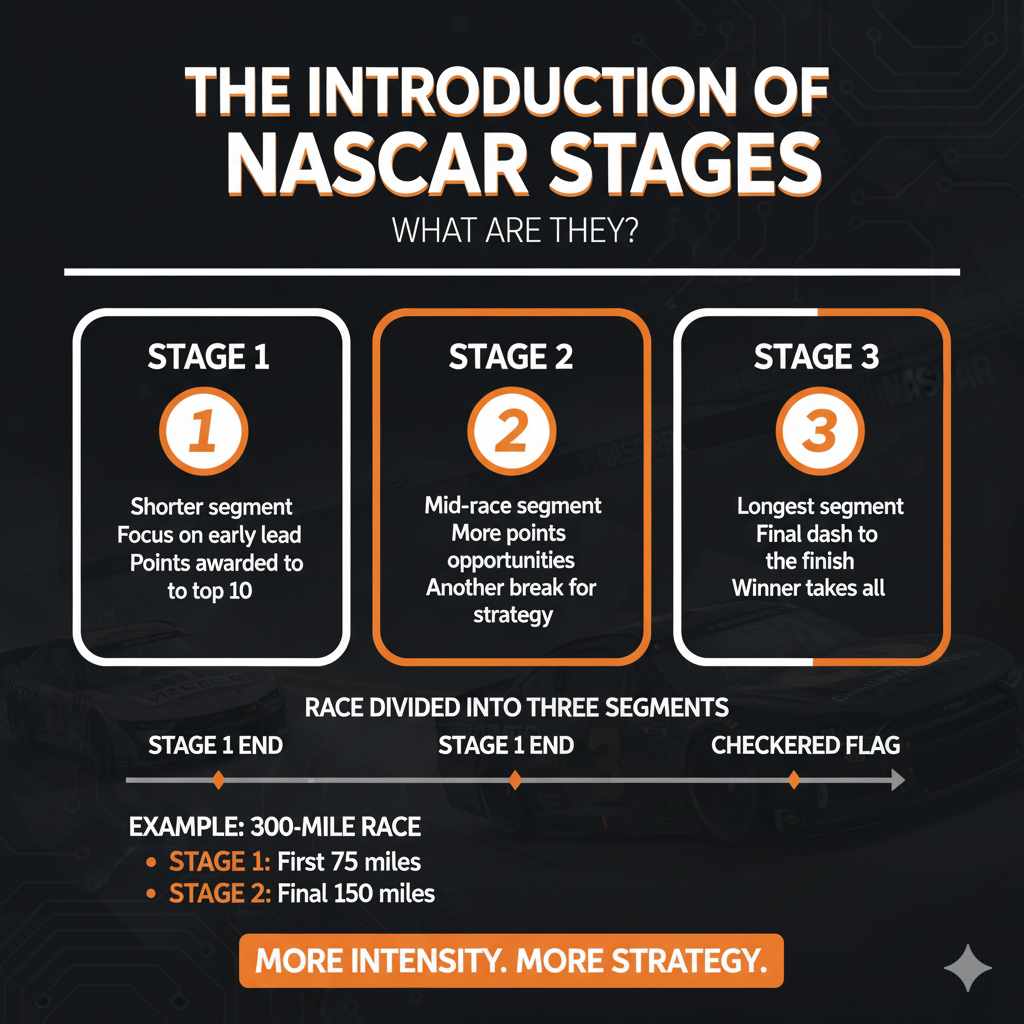
So, what exactly are these “stages” we’re talking about? NASCAR adopted a stage racing format, primarily in the Cup Series, starting in 2017. The idea is simple: a typical race is divided into three segments, or stages. The first two stages are shorter, and the final stage is the longest, concluding with the checkered flag at the end of the race.
For example, a 300-mile race might be broken down into:
- Stage 1: The first 75 miles (or laps)
- Stage 2: The next 75 miles (or laps)
- Stage 3: The final 150 miles (or laps)
The exact lap counts vary depending on the track length and the overall race distance. The key takeaway is that these stages provide defined objectives and reward moments within the race.
Why Did NASCAR Switch To Stages? The Driving Forces
NASCAR’s decision to implement stage racing wasn’t made lightly. It was a strategic move designed to address several aspects of the sport that could be improved. Here are the main reasons:
1. Increased Fan Engagement and Excitement
One of the biggest goals was to keep fans on the edge of their seats for longer. Traditional races could sometimes see long periods where the field spread out, and it felt like not much was changing until the final laps. Stages create mini-climaxes within the race. At the end of each of the first two stages, there’s a designated moment of “checkered flag,” and points are awarded. This means there’s always something significant happening and something to cheer for, even if the overall race isn’t at its final lap yet.
This approach injects more “event” moments into the broadcast, making it easier for casual viewers to tune in at different times and still catch significant action. It breaks the race into digestible parts, much like how a TV show might have mini-cliffhangers!
2. More Strategic Depth for Teams and Drivers
Stage racing introduced a whole new layer of strategy for teams. Before, teams were solely focused on the final race result. Now, they have to balance:
- Aggressive driving to win a stage and gain bonus points.
- Conserving equipment (tires, fuel, engine) for the final stage.
- Making pit stop decisions at optimal times relative to stage endings.
This means every pit stop and every lap leading up to a stage end becomes tactically important. Do you pit before the stage ends to gain track position for the next stage, potentially sacrificing track position now? Or do you stay out and try to win the stage, risking a worse pit stall or needing to save fuel?
This added complexity makes the racing more interesting for dedicated fans who love to dissect the strategies at play. It also creates more opportunities for different teams to shine throughout the race, not just those who might be strongest at the very end.
3. Rewarding Performance Throughout the Race
Under the old system, if a driver had a great car but experienced bad luck or a pit stop error early on, they might be out of contention for the win. Stage racing offers a way to reward drivers and teams for good performance even if they can’t secure the overall victory. Points are awarded to the top 10 finishers in each of the first two stages. This means a driver can have a solid race, gain valuable championship points, and build momentum over the season, even if they don’t end up in Victory Lane.
These stage points can be crucial for drivers trying to make the playoffs or improve their championship standing. It provides a more consistent way to earn rewards based on performance during the event.
4. Addressing Potential Lulls in Action
Let’s be honest, some NASCAR races can be long. In the past, the middle portions of a race sometimes lacked significant on-track battles or drama. By introducing these defined stages, NASCAR created natural points of interest. The competition to win a stage is often intense, leading to close racing, daring passes, and exciting finishes to each segment. This helps combat the perception of races becoming predictable or monotonous.
These structured breaks also allow broadcasters to easily insert commercial breaks and return to live action with a clear narrative: “Who will take the checkered flag for Stage 1?”
5. Compatibility with Playoff Format
NASCAR’s playoff system, the “Chase for the Cup” (now known as the NASCAR Playoffs), is designed to crown a champion over a series of playoff races. Stage racing fits neatly into this structure. The points earned from winning stages and finishing well in stages contribute to a driver’s overall season standing, which is vital for playoff seeding and progression. It creates a continuous accumulation of success that matters from the very first lap of the season all the way to the championship race.
This integration helps ensure that drivers are consistently performing at a high level throughout the season, not just peaking for the playoffs.
How Stages Work: The Nitty-Gritty Details
Let’s dive a bit deeper into how stage racing actually functions during a race weekend.
Stage Lengths
The length of each stage is determined by the specific race and track. For shorter tracks or road courses, stages might be shorter, while for superspeedways, they can be longer. For instance:
| Race Type | Typical Stage 1 Length | Typical Stage 2 Length | Typical Stage 3 Length |
|---|---|---|---|
| Short Tracks (e.g., Martinsville, Bristol) | ~70-85 laps | ~70-85 laps | The remainder of the race |
| Intermediate Tracks (e.g., Charlotte, Michigan) | ~85-100 laps | ~85-100 laps | The remainder of the race |
| Superspeedways (e.g., Daytona, Talladega) | ~50-60 laps | ~50-60 laps | The remainder of the race |
| Road Courses (e.g., Sonoma, Watkins Glen) | ~15-20 laps | ~15-20 laps | The remainder of the race |
Note: These are approximate lap counts and can vary based on the specific race distance. Always check the official race day schedule for exact lap counts.
Points System
Points are awarded to the top 10 finishers at the end of Stage 1 and Stage 2. This is how it breaks down:
- 1st place: 10 points
- 2nd place: 9 points
- 3rd place: 8 points
- 4th place: 7 points
- 5th place: 6 points
- 6th place: 5 points
- 7th place: 4 points
- 8th place: 3 points
- 9th place: 2 points
- 10th place: 1 point
These are in addition to the points awarded for the final race finish in Stage 3.
The Final Stage
Stage 3 is the main event, leading to the checkered flag. The driver who crosses the finish line first wins the race. However, the points earned in Stage 1 and Stage 2 still count towards the driver’s season total. This means a driver can win Stage 3 but have fewer overall points for the race if they didn’t perform well in the earlier stages compared to a driver who won stages but finished lower in Stage 3.
Green Flag Pit Stops within Stages
Pit stops can still happen during a stage under green flag conditions. Teams must strategically decide when to pit. If they pit, they will likely lose track position. The goal is to pit at a time that minimizes lost positions and benefits them for the remainder of the stage or the next stage. Some teams might choose to stay out longer to try and gain stage-ending track position, while others might pit early to get track position for a later run in the stage or into the next one.
Caution Flags
If a caution flag comes out before the end of a stage, the stage often concludes under caution. The finishing order for stage points is determined by the running order when the caution flag flew, or the next time the field crosses the start/finish line after the caution is called. This can sometimes add a bit of strategy around when to pit if a caution is imminent right before a stage ends.
The Impact of Stage Racing on Strategy
Stage racing fundamentally changed how teams approach a race. What was once a straightforward race to the finish line is now a multi-layered tactical battle.
Pit Strategy is Key
Teams must decide on their pit window strategy in relation to stage endings. Do they pit just before a stage ends to maintain track position heading into the next stage? Or do they stay out, pushing their strategy to gain a few more laps and try to win the stage, knowing they might have to pit shortly after?
Consider this: a team might be in second place with five laps to go in Stage 1. They could pit now for fresh tires and fuel, guaranteeing them a good track position to restart Stage 2. Or, they could stay out, battle for the win in Stage 1 (earning precious points), but then have to pit immediately after the stage ends, potentially falling back many positions for the start of Stage 2.
Fuel and Tire Management
While drivers always had to manage fuel and tires, stage racing adds more pressure. Drivers might push harder to win a stage, expending more fuel and wearing tires faster. This could force them into an immediate pit stop after the stage, potentially compromising their position for the start of the next segment. Conversely, teams might opt for conservative runs during stages to save wear and tear for the final, long stage where endurance is paramount.
Aggression vs. Conservation
Drivers now have incentives to be more aggressive at specific points in the race– namely, the end of each stage. This can lead to more passing and exciting battles for stage wins. However, they also know they need to be smart. A driver who wins the first two stages but destroys their equipment or burns through all their fuel trying to do so might not finish well in the final stage. It’s a delicate balance between maximizing immediate rewards and ensuring long-term race viability.
Pit Crew Efficiency Matters More
With more frequent pit stop calculations and the importance of track position after stage breaks, the efficiency of the pit crew becomes even more critical. A quick stop can gain multiple positions, which can be the difference between earning stage points or not, or securing a better starting spot for the next stage.
Pros and Cons of NASCAR Stage Racing
Like any significant change, stage racing has its proponents and its critics. Here’s a look at some of the key advantages and disadvantages.
Pros:
- Increased Excitement: More moments of intense competition and celebration throughout the race.
- More Points Opportunities: Drivers and teams can earn points in multiple ways, rewarding consistent performance.
- Enhanced Strategy: Adds strategic depth for teams and makes the races more engaging for analytical fans.
- Better Spectacle on Broadcast: Breaks make for more dynamic TV programming and easier-to-follow narratives.
- Closer Competition: Encourages aggressive racing throughout the event, potentially leading to more lead changes.
Cons:
- Artificiality Concerns: Some fans feel it disrupts the natural flow of a long-distance race.
- Less Emphasis on the Overall Finish: Concerns that winning a stage might be prioritized over the main race for some drivers/teams.
- Overtime Rules Complexity: Stage completions can sometimes affect how overtime finishes are handled, leading to confusion.
- Pit Strategy Juggling: Can sometimes lead to races being “won” or “lost” on pit strategy alone, rather than pure speed.
- Driver Frustration: Drivers might feel penalized for being aggressive to win a stage if it negatively impacts their final stage run.
The Stages and the Championship Picture
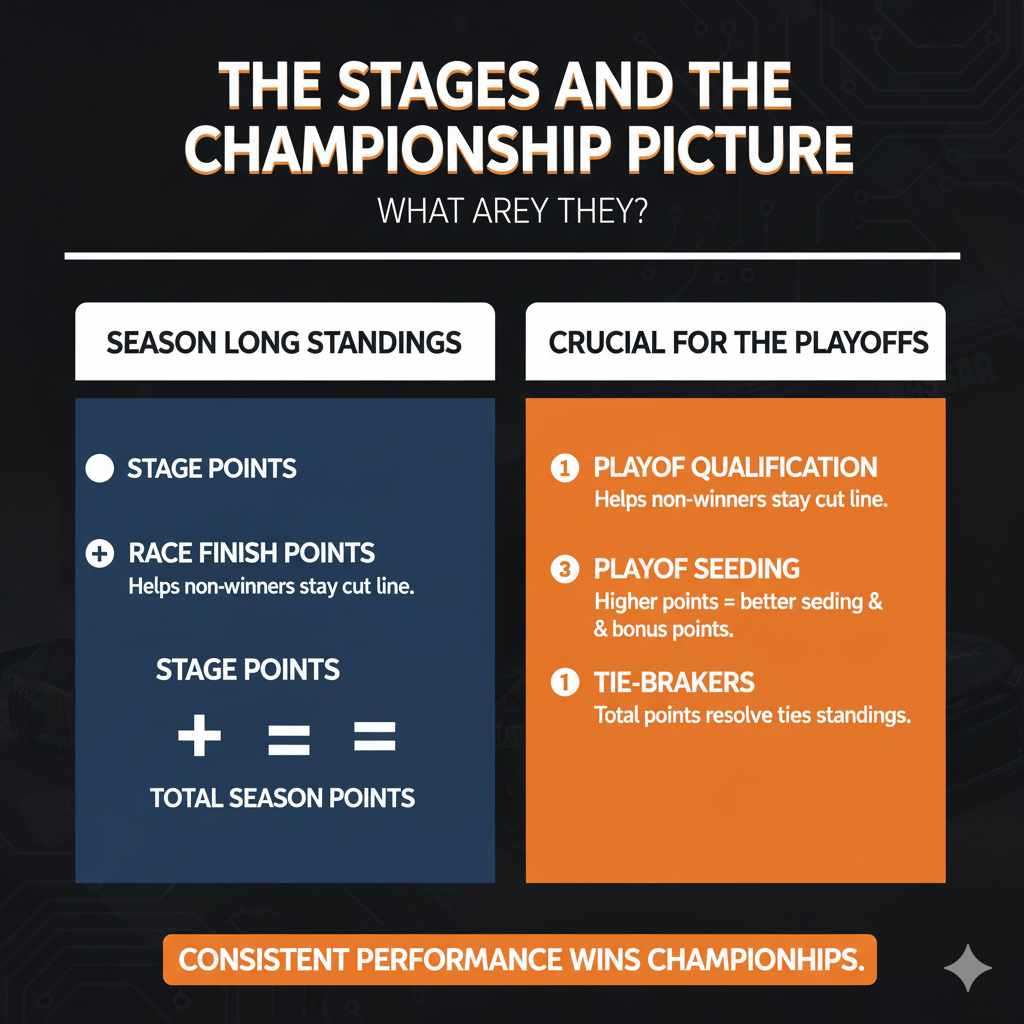
It’s important to understand how stages tie into the bigger picture of the NASCAR season, especially the championship. The points earned from finishing well in stages are added to the points earned from the final race classification. These totals contribute to a driver’s overall season standing.
In the regular season and the playoff rounds, drivers accumulate points. These points are crucial for:
- Playoff Qualification: While wins are the primary way to get into the playoffs, consistent performance (including stage points) helps drivers stay above the cut line in the standings if they don’t have a win.
- Playoff Seeding: Higher point totals mean better seeding in the playoffs, which can offer advantages like playoff “bonus points” at the start of each round.
- Tie-breakers: In the event of ties in the standings, total points earned (including stage points) can be used as a tie-breaker.
This integrated system means that success isn’t just about the 36 races; it’s about consistent performance across all segments of every race. For a deeper dive into how NASCAR points are structured, the official NASCAR website provides excellent resources, such as their explanation of the Cup Series Points System.
Frequently Asked Questions (FAQ) about NASCAR Stages
Q1: When did NASCAR start using stages?
A1: NASCAR officially introduced stage racing to the Cup Series in the 2017 season. It was a significant change to the traditional race format.
Q2: Are stages used in all NASCAR series?
A2: Stage racing is primarily used in the NASCAR Cup Series. While the Xfinity Series and Gander Outdoors Truck Series have used variations of stages in the past, the Cup Series is where it’s most consistently implemented and impactful.
Q3: How many points do you get for winning a stage?
A3: The winner of a stage receives 10 points. Points are awarded to the top 10 finishers in Stage 1 and Stage 2, with 10 points for first down to 1 point for tenth.
Q4: Does winning stages guarantee you make the playoffs?
A4: Winning stages can significantly help a driver’s playoff chances by earning them more points. However, wins in regular season races are the primary automatic berths into the playoffs. A driver could theoretically make the playoffs on points alone if they perform consistently well across many races, including earning stage points, but wins are the most direct route.
Q5: Can a driver pit during a stage?
A5: Yes, drivers can pit at any time during a race, including during a stage under green flag conditions. However, pitting usually results in losing track position.