Who Makes Electric Car Charging Stations? Top Brands
Electric car charging stations are built by hardware companies like ChargePoint, Wallbox, ABB, Siemens, Tesla, and FLO; charging networks such as Electrify America, EVgo, and Shell Recharge usually run the stations, not make the hardware. Pick the wrong pairing and you can overpay, miss plug compatibility, or get slower charging than your vehicle can accept. This guide breaks down top brands for home, workplace, and public fast charging, plus how to match them to your EV.
Who actually makes electric car charging stations?


Two separate businesses sit behind most charging sites: the hardware maker and the network operator. A charger maker builds the physical unit, while a network operator handles payments, uptime tools, and site software. Many brand names sit in only one camp, and some do both.
Why the same brand name can mean two different things
This split matters because a driver sees one logo, but the underlying product may come from a different company. ChargePoint is a good example of a brand known mainly for a networked charging platform, while ABB, Siemens, and Tritium are known as hardware manufacturers. Tesla is different again, because it controls both the equipment and the Supercharger network.
Where home, workplace, and public charging differ
Home charging usually means AC Level 2 hardware on a driveway, garage wall, or pole mount. Workplace and destination charging can use similar AC units, but they often need networked access control, billing, and fleet reporting. Public highway charging is usually DC fast charging, which needs more power, bigger cabinets, and a site operator that handles uptime and payments.
Which brands make the chargers themselves?
ABB, Siemens, and Tritium are examples of charger manufacturers. They build the physical charging equipment used in public infrastructure, especially higher-power systems. Home buyers may also see brands such as Wallbox, Eaton, Schneider Electric, and FLO in the residential and light-commercial market, while fleet buyers often compare these against networked workplace options.
Home Level 2 units versus DC fast-charging cabinets
Home Level 2 equipment is a different purchase from a highway DC fast-charging cabinet. The first is usually a single AC unit with a simpler install and lower electrical demand. The second is a multi-component site with transformers, cabinets, communications gear, and utility coordination, which is why public fast-charging projects cost far more to deploy.
Where installers and site owners fit in the chain
Installers, electricians, utility planners, and site owners sit between the brand name and the finished charger. A homeowner often buys a unit and arranges installation through a local electrician. A grocery chain or fleet depot may buy hardware, software, and service together. Public sites can also be owned by one company and operated by another.
📊 Gridserve has almost 1,500 charging bays at 200 locations. Source: Best electric car charging stations: UK’s top charger networks….
Is ChargePoint a charger maker or a network?
ChargePoint is best understood as a charging network and software platform, not just a box maker. It is described as a market leader, with stations found in offices, shopping malls, restaurants, hotels, and along highways, and tens of thousands of stations installed across the United States. Its value is strongest where access control and software matter. (en.wikipedia.org)
Public and workplace charging focus
ChargePoint’s footprint fits workplace, destination, and some public locations better than it fits one-off home buyers. The brand’s stations are common where drivers park for hours rather than minutes. That makes it useful for office charging, employee programs, retail lots, and mixed-use sites that need networked reporting and driver authentication.
Networked chargers and software features
ChargePoint sells networked chargers with app access, payment handling, and site management tools. For a business, that can mean easier visibility into usage and pricing. For a driver, it can mean the difference between a charger that simply delivers power and one that supports account access, receipts, and remote status checks.
How ChargePoint compares with hardware-first brands
Compared with ABB or Siemens, ChargePoint is less about standalone cabinets and more about the operating layer around them. That difference affects buying. A property owner choosing ChargePoint is often buying a service stack along with the hardware, while a utility or highway developer may buy hardware from ABB and pair it with another operator.
How does Tesla Supercharger fit in?
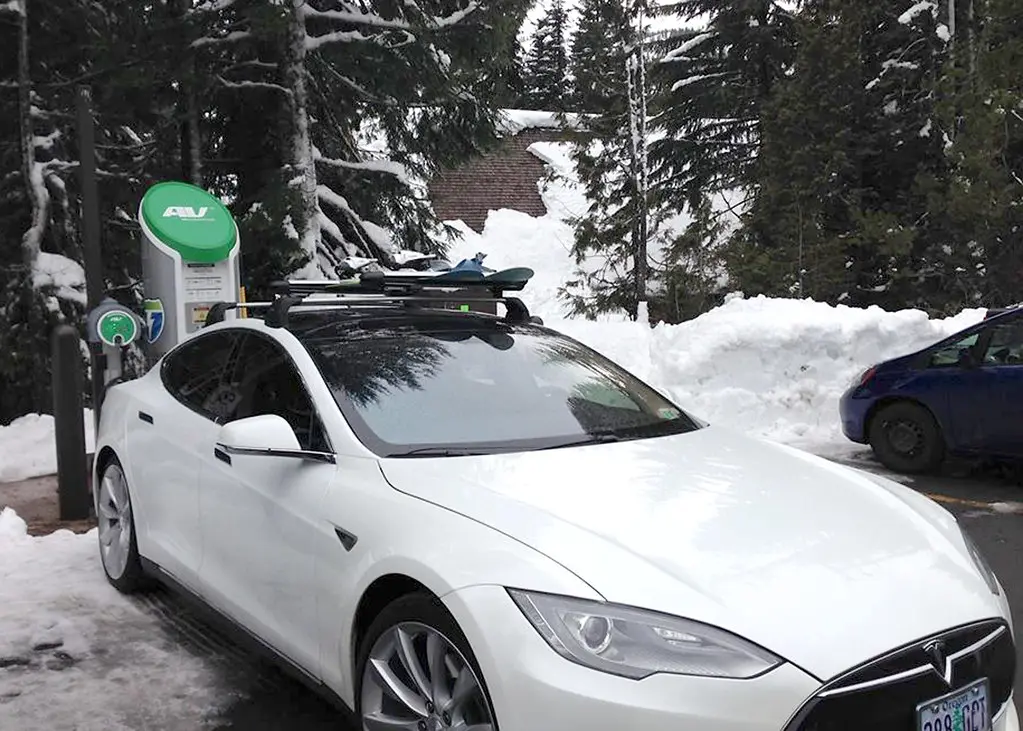
Tesla operates a proprietary charging network called the Supercharger network. It is the biggest manufacturer of EV charging stations in the source material here, and it is built for high-speed DC fast charging. Some sites are now open to CCS-compatible vehicles, which matters for non-Tesla drivers deciding whether access is possible.
Proprietary network and Tesla vehicle access
Supercharger sites were built first for Tesla vehicles, and that still shapes access and connector expectations. A Tesla driver usually gets the simplest experience because the car, account, and plug standard are aligned. For shoppers, that means fewer compatibility questions but also a network that has historically been tightly controlled.
CCS-compatible vehicle access at some sites
Some Tesla sites are open to any CCS-compatible charge port. That is an important interoperability shift. A CCS vehicle may be able to charge there, but only if the site is open, the adapter or native plug arrangement matches, and the vehicle is approved by the network policy in that region.
High-speed DC fast charging and connector changes
Superchargers are built for fast highway charging, not overnight parking. Connector changes are what make this topic confusing: a vehicle can be physically capable of DC fast charging and still be blocked by plug mismatch, site policy, or missing adapter support. That is why connector type matters as much as brand name.
Which EV charging brands support CCS or Tesla plugs?
CCS is a common compatibility standard for much of non-Tesla DC fast charging in North America and Europe. Tesla’s proprietary plug arrangement has been changing through adapter and site-access programs, but compatibility is still site-specific. If the plug, the car, and the network policy do not line up, the session may not start at all.
CCS connector basics
The CCS connector is the main adapter-relevant plug type for many non-Tesla vehicles. It is the standard shoppers should check first when comparing public fast-charging access. If a car uses CCS, it can often use many public DC fast chargers, including some Tesla sites that allow CCS-compatible vehicles.
Adapter use and access limits
Adapters help only when the network, the vehicle, and the adapter are all approved for that session. An adapter cannot fix a car that cannot accept the site’s power level, and it cannot override a network policy that blocks that vehicle class. It also cannot turn an AC-only home charger into a DC fast charger.
What happens when the plug and vehicle do not match
A common first-timer mistake is arriving at a site with the wrong expectation of plug compatibility. If the port is incompatible, the session simply will not start. If the vehicle supports the site but only at a lower rate, it may charge more slowly than nearby signage suggests because the car, not the charger, sets the limit.
Brand map by maker, network, and use case
Use this map to separate hardware makers from operators, then match the brand to the job. Home buyers should focus on AC units and installer support. Workplace buyers need network tools. Highway drivers should prioritize DC fast charging, connector access, and payment convenience.
| Brand | Role, connector standard, typical charging speed, and best use |
|---|---|
| ChargePoint | Network operator; networked AC Level 2 and some public charging; best for workplaces, offices, and destination parking where app access and billing matter. |
| Tesla Supercharger | Both hardware and network; Tesla connector history with some CCS-compatible sites; high-speed DC fast charging; best for Tesla owners and CCS drivers where access is open. |
| ABB | Hardware maker; typically CCS-based public DC fast charging; best for public infrastructure, utility projects, and fleet sites needing high-power equipment. |
| Siemens | Hardware maker; AC and DC charging solutions, usually CCS-oriented for public use; best for workplaces, fleets, and international projects. |
| Tritium | Hardware maker; high-power DC fast-charging hardware, commonly CCS-focused; best for highway corridors and public fast-charge deployments. |
| Electrify America | Network operator; public DC fast charging, mostly CCS in the U.S.; best for highway stops and fast public charging with app-based payments. |
| EVgo | Network operator; public fast charging, largely CCS in the U.S.; best for urban fast charging, retail centers, and drivers who want app and membership options. |
| Ionity | Network operator; CCS-focused, nominally 350kWh units; best for European highway charging and long-distance travel. |
How to read the map for home, workplace, and highway charging
For home, prioritize a hardware seller and a qualified installer. For workplace, look at ChargePoint and similar networked systems with access control. For highway travel, compare Electrify America, EVgo, Ionity, and Tesla Supercharger based on connector access, payment model, and whether the vehicle can accept the site’s power.
- Check your vehicle’s connector type first: CCS, Tesla/NACS, or another regional plug.
- Decide whether you need home AC, workplace AC, or public DC fast charging.
- Verify adapter rules before relying on a cross-network session.
- Confirm the car’s maximum charging rate so the charger is not overspecified.
- Compare app setup, payment methods, and account requirements before a road trip.
Reliability, payment options, and app usability
Public charging network performance is not only about raw speed. Reliability, payment options, and app usability shape the actual experience. A network can have fast hardware and still frustrate drivers if the app is clumsy, the payment flow is slow, or live status data is stale.
Cost and installation differences
Home AC chargers usually tend to cost much less to install than public DC fast-charging sites. That difference comes from electrical capacity, trenching, utility upgrades, cabinets, networking, and site permits. Fleet buyers should compare total install cost, not just the sticker price of the charger enclosure.
Two common scenario checks
Suppose a homeowner with a CCS-equipped EV buys a Tesla-only wall connector. The charger may be excellent hardware, but the plug mismatch stops the session unless an approved adapter and compatible vehicle setup are available. That is a compatibility problem, not a charging-speed problem.
Picture a workplace with eight parking spaces and drivers who stay for six hours. A networked AC solution from ChargePoint or a similar operator makes more sense than a row of public DC fast chargers, because the site needs access control, billing, and long dwell times rather than highway turnaround speed.
What are the top brands for EV charging stations?
The top brands depend on whether you mean hardware or networks. For hardware, ABB, Siemens, and Tritium are major names, with Wallbox, Eaton, Schneider Electric, and FLO also notable. For networks, ChargePoint, Tesla Supercharger, Electrify America, EVgo, and Ionity matter most for shoppers and fleet planners.
Big names by buyer type
Home buyers should compare Wallbox, Eaton, Schneider Electric, and FLO against local install support. Workplace and office buyers should focus on ChargePoint and other networked systems. Highway travel buyers should compare Tesla Supercharger, Electrify America, EVgo, and Ionity by connector access and route coverage.
Who makes public EV charging networks?
Public EV charging networks are usually run by operators rather than pure hardware manufacturers. ChargePoint, Electrify America, EVgo, and Ionity are common examples of public EV charging networks run by operators. They handle access, payments, software, and often maintenance coordination, while the underlying cabinets may come from ABB, Siemens, Tritium, or another maker.
The biggest EV charging networks in the US
In the U.S., ChargePoint is one of the best-known public and workplace brands, with tens of thousands of stations installed across the United States. Tesla Supercharger is a major fast-charging network as well. Electrify America and EVgo are key public fast-charging networks that matter for non-Tesla drivers.
Are ABB, Siemens, and Tritium actual charger manufacturers?
Yes. ABB, Siemens, and Tritium are actual charger manufacturers, not just app brands. They build charging hardware used in public infrastructure and fleet deployments. Their products matter most when the buyer needs the physical charger cabinet, power electronics, and site hardware rather than just access to a charging network.
Where these brands fit best
ABB is often tied to fast-charging infrastructure. Siemens offers broad charging solutions with international reach. Tritium focuses on high-power charging hardware. These companies fit utility-led projects, highway corridors, and fleet sites where equipment quality and power delivery matter more than consumer-facing app features.
Frequently asked questions
Who makes electric car charging stations?
Hardware companies like ABB, Siemens, Tritium, Wallbox, Eaton, Schneider Electric, and Tesla make charging equipment, while networks such as ChargePoint, Electrify America, EVgo, and Ionity operate many public sites. The brand on the app is not always the company that built the charger cabinet.
Is ChargePoint better than Tesla for charging stations?
Neither is universally better. ChargePoint is stronger for workplace and destination charging, where network tools and site management matter. Tesla Supercharger is stronger for high-speed DC fast charging and Tesla-owner convenience, with some CCS-compatible access now available at selected sites.
Who makes home EV chargers?
Home EV chargers are usually made by hardware manufacturers such as Wallbox, Eaton, Schneider Electric, FLO, and sometimes ABB or Siemens depending on the market. The right choice depends on electrical panel capacity, installation cost, and whether you need simple overnight AC charging or network features.
Which EV charging brands support CCS or Supercharger plugs?
CCS is widely supported by public DC fast-charging networks such as Electrify America, EVgo, and Ionity, and many hardware makers build CCS-based equipment. Tesla Supercharger uses Tesla’s proprietary setup, though some sites are now open to CCS-compatible vehicles where policy and adapters allow it.
Products related to this article
Sponsored / affiliate links. As an Amazon Associate I earn from qualifying purchases. I may earn additional commission from eligible campaigns.