Why Does A Car Stall: Essential Causes Revealed
A car stalls because of issues with its fuel, air, or spark systems. Common culprits include a clogged fuel filter, a faulty fuel pump, a dirty air filter, worn spark plugs, or problems with the ignition system. Sometimes, it’s as simple as running out of gas!
Ever been driving along, and suddenly your car just… stops? It can be a startling and stressful experience. That moment when the engine dies, the dashboard lights up, and you’re left coasting to a halt is something many drivers dread. But don’t worry, understanding why your car stalls is the first step to keeping it running smoothly. This guide will break down the most common reasons your car might suddenly stop, explained in a way that’s easy to grasp. We’ll help you identify potential problems and know when it’s time for a closer look.
The Heart of the Matter: What Makes an Engine Run?
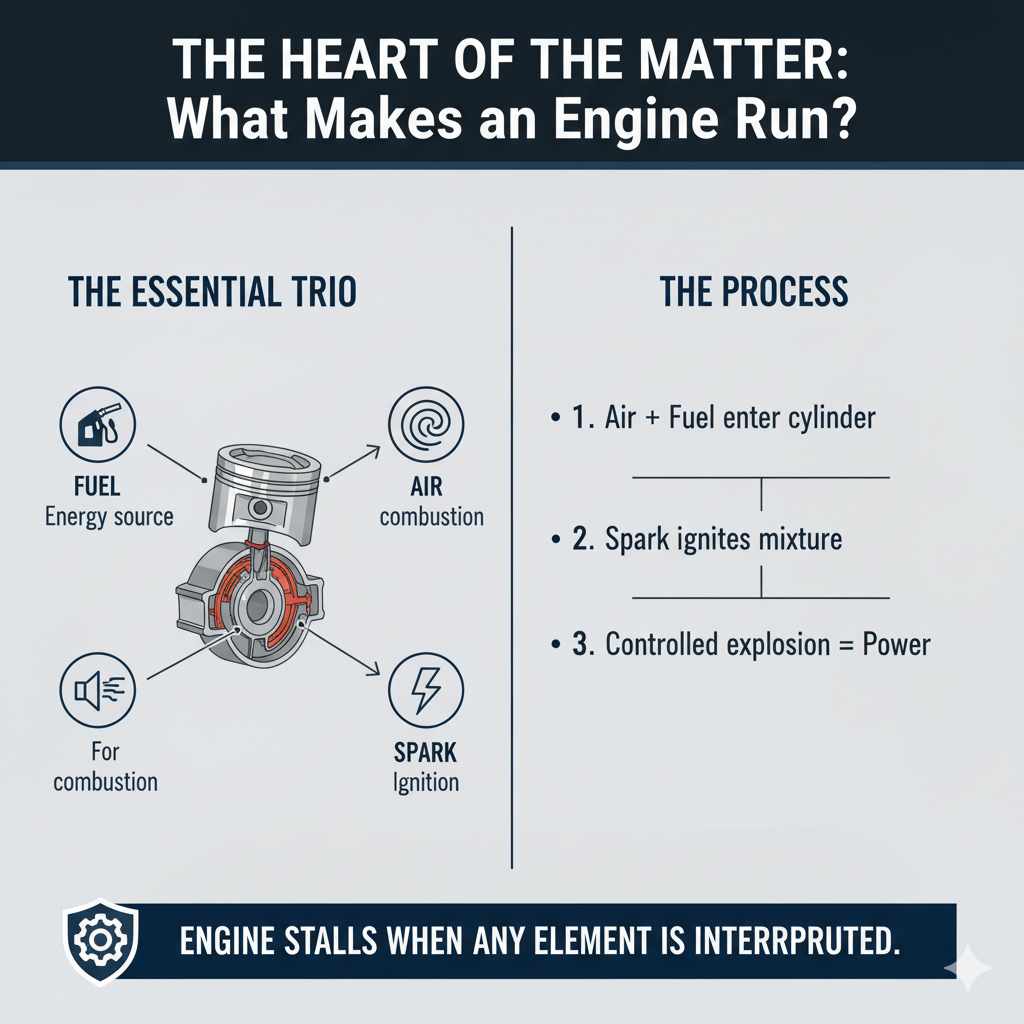
Before we dive into what can go wrong, let’s quickly look at what keeps a car’s engine alive and well. Think of your engine like a tiny, controlled explosion happening thousands of times every minute. For this to work, it needs three main things in the right balance and at the right time:
- Fuel: This is the energy source, like the food for your engine. It needs to be delivered cleanly and in the correct amount.
- Air: This is what helps the fuel burn. The engine needs a steady supply of fresh air.
- Spark: This is the ignition, the tiny lightning bolt that sets off the fuel-air mixture in the engine’s cylinders.
When any of these essential elements are interrupted, or if they aren’t delivered correctly, the engine can sputter and eventually stall. It’s like trying to breathe with your hand over your mouth while someone tries to light a match – it just won’t work!
Why Does a Car Stall? Essential Causes Revealed
Let’s get to the heart of your question: why does a car stall? There are many reasons, but they usually fall into a few key categories. We’ve gathered the most common culprits, from the simple fixes to the slightly more complex issues.
1. Fuel System Problems: The Engine’s Lifeline
The fuel system is responsible for getting gasoline to your engine. If anything goes wrong here, your engine won’t get the “food” it needs to run.
Empty Gas Tank: The Obvious Culprit
This might seem too simple, but it’s surprisingly common! Many cars have a fuel gauge that can be inaccurate, or sometimes we just get distracted and forget to refuel. When the tank is empty, the fuel pump can’t draw any gasoline, and the engine will quickly stall. It’s a good idea to always keep your tank at least a quarter full to avoid this.
Clogged Fuel Filter: The Silent Blocker
Your fuel filter is like a tiny sieve that catches dirt and debris before they get into your engine. Over time, this filter can become clogged. A blocked filter restricts the flow of fuel, meaning your engine might not get enough gas, especially under load (like going uphill or accelerating). This can cause hesitation, sputtering, and eventually, stalling. Your car’s manual will usually recommend a replacement schedule for the fuel filter, typically every 15,000 to 30,000 miles.
Faulty Fuel Pump: The Engine’s Heartbeat
The fuel pump is what pushes the fuel from the gas tank to the engine. If the fuel pump is weak or has failed, it won’t be able to supply adequate fuel pressure. Symptoms can include the engine sputtering and dying, especially when the tank is low, or complete stalling. A failing fuel pump can make noises like whining or humming. Replacing a fuel pump is usually a job for a mechanic unless you have experience.
Dirty Fuel Injectors: The Precise Dispensers
Modern cars use fuel injectors to spray fuel precisely into the engine. If these get clogged with gunk, they can’t deliver the right amount of fuel. This can lead to rough idling, poor acceleration, and eventually, the engine stalling. Cleaning fuel injectors can sometimes be done with additives, but stubborn clogs might require professional servicing.
2. Air Intake and Emission System Issues: Letting Your Engine Breathe
An engine needs air to burn fuel. If the air supply is compromised, or if your emission control systems are malfunctioning, it can cause your car to stall.
Dirty Air Filter: The Smothered Lung
The air filter keeps dust, insects, and debris out of your engine. When it gets clogged with dirt, it’s harder for the engine to get the air it needs. This can reduce performance, cause rough idling, and if it’s severely blocked, it could even lead to stalling. Thankfully, the air filter is one of the easiest parts to check and replace yourself. Most are located in a black plastic box under the hood and can be swapped out in minutes. Check your owner’s manual for its location.
Mass Airflow (MAF) Sensor Problems: The Air Meter Reader
The Mass Airflow sensor measures the amount of air entering the engine. The car’s computer uses this information to decide how much fuel to inject. If the MAF sensor is dirty or faulty, it sends incorrect data, leading to the wrong fuel-air mixture. This can cause stalling, rough idling, and poor performance. Sometimes, cleaning the MAF sensor with a specialized cleaner can help, but a faulty sensor often needs replacement by a professional.
Idle Air Control (IAC) Valve Issues: The Smooth Idler
When your car is idling (stopped at a light, for example), the engine’s computer controls the engine speed using the Idle Air Control (IAC) valve. This valve allows a small amount of air to bypass the throttle plate, keeping the engine running smoothly. If the IAC valve gets dirty or stuck, it can’t regulate the idle speed properly, leading to your engine stalling when you slow down or come to a stop. Cleaning or replacing the IAC valve can solve this. You can often find DIY videos online for specific car models on how to access and clean it.
Exhaust System Blockages: The Breathing Difficulty
While less common, a severely blocked exhaust system (like a clogged catalytic converter) can create backpressure that prevents the engine from getting enough air. This can cause a loss of power and eventually lead to stalling. This is usually accompanied by other performance issues.
3. Ignition System Malfunctions: The Spark of Life
The ignition system is crucial for igniting the fuel-air mixture. When it fails, the engine won’t run.
Worn or Fouled Spark Plugs: The Faltering Spark
Spark plugs create the spark that ignites the fuel in each cylinder. Over time, they wear out, or they can become “fouled” with oil or carbon buildup. If one or more spark plugs aren’t firing correctly, the engine can misfire, run rough, hesitate, and eventually stall. Spark plugs are usually replaced in sets. This is a common DIY maintenance item; you’ll need a spark plug socket wrench. Always ensure you get the correct type of spark plugs for your car model.
Faulty Ignition Coils or Wires: The Spark Delivery System
Spark plugs need a strong electrical current to create a spark. This is delivered by ignition coils (in modern cars) or spark plug wires (in older cars). If a coil is failing or a wire is damaged, the spark might be too weak or not reach the spark plug at all. This can cause misfires and stalling. These are typically diagnosed and replaced by a mechanic.
Distributor Problems (Older Cars): The Spark Distributor
In older vehicles with distributors, a worn-out cap, rotor, or internal component can prevent the proper distribution of spark to the cylinders, leading to stalling. This is less common in modern cars with individual coil-on-plug ignition systems.
4. Electrical System Issues: The Nerve Center
Your car’s electrical system powers everything from the spark plugs to the fuel pump. When it falters, the whole system can shut down.
Weak or Dead Battery: The Power Source
While a dead battery typically prevents the car from starting, a weak battery can cause intermittent power loss that might lead to stalling, especially when electrical accessories like the headlights or air conditioning are running. The alternator charges the battery while the engine is running, so if the battery is failing or the alternator isn’t working properly, you could experience stalling.
Faulty Alternator: The Recharger
The alternator’s job is to recharge the battery and power the car’s electrical systems while the engine is running. If the alternator starts to fail, the battery won’t be recharged, and eventually, there won’t be enough electrical power to keep the engine running. Warning lights on the dashboard, like the battery symbol, often indicate an alternator problem. You might notice dimmed headlights or dimming interior lights before a stall.
Bad Crankshaft or Camshaft Position Sensor: The Engine’s Timing Pulses
These sensors are vital for telling the engine’s computer when to inject fuel and fire the spark plugs. If a crankshaft position sensor or camshaft position sensor fails, the computer loses track of the engine’s timing. This can cause the engine to stop suddenly without warning. These sensors are critical and usually require professional diagnosis and replacement.
For more information on common car sensors and their functions, the U.S. Department of Energy’s FuelEconomy.gov site offers insights into vehicle technology: https://www.fueleconomy.gov/feg/safetech.shtml
Computer (ECU) Malfunctions: The Brains of the Operation
Even the engine control unit (ECU), the car’s computer, can have problems. A glitch or failure in the ECU can lead to a wide range of issues, including stalling, as it controls many vital engine functions.
5. Vacuum Leaks: Disrupted Airflow Balance
Your engine uses a system of vacuum hoses to operate various components. A leak in these hoses can disrupt the air-fuel mixture and cause problems.
Leaking Vacuum Hoses: The Air Breathers
Vacuum leaks can cause the engine to draw in unmetered air, leading to a lean fuel mixture (too much air, not enough fuel). This can cause rough idling, stalling, and difficulty starting. You might hear a hissing sound from under the hood if there’s a significant vacuum leak. Inspecting vacuum hoses for cracks or disconnections is a relatively simple check that can sometimes be done by a beginner.
6. Other Less Common Causes
While the above cover the most frequent reasons, a few other less common issues can lead to a stall:
- Transmission Problems: In some cases, issues with the transmission, especially automatic transmissions, can cause the engine to stall, particularly when shifting gears or coming to a stop.
- Overheating: An engine that overheats severely can shut down to prevent damage. This is usually preceded by a rising temperature gauge and other warning signs.
- Security System Issues: In rare cases, a malfunctioning anti-theft system can cut power to the engine, causing it to stall.
When Your Car Stalls: What to Do
Experiencing a stall can be unnerving, but staying calm is key. Here’s what you should do:
- Stay Calm: Don’t panic. If you’re driving, try to steer to a safe place like the shoulder of the road.
- Hazard Lights: Turn on your hazard lights immediately to warn other drivers.
- Brake and Steering Assist: Remember that power steering and power brakes will be harder to operate once the engine dies. You’ll need to use more force.
- Try to Restart: Once safely stopped, put your car in park (or neutral if manual transmission) and try to restart the engine. If it starts but dies again, you might have a more significant issue.
- Check the Basics: If you suspect it might be fuel-related and you’re comfortable, check your fuel gauge.
- Call for Assistance: If you can’t restart the car, or if you suspect a serious problem, it’s best to call a tow truck and have your vehicle taken to a trusted mechanic.
Troubleshooting Common Stall Scenarios
Let’s look at a few common scenarios and their likely causes:
Scenario 1: Engine stalls when coming to a stop or idling.
- Most likely causes: Idle Air Control (IAC) valve issue, vacuum leak, or Mass Airflow (MAF) sensor problem.
- Beginner check: Listen for hissing sounds (vacuum leak). Check air filter.
Scenario 2: Engine stalls while driving, especially under acceleration or going uphill.
- Most likely causes: Clogged fuel filter, weak fuel pump, or ignition system issue (spark plugs, coils).
- Beginner check: If your car has hesitated before stalling, it points more to fuel or ignition.
Scenario 3: Engine dies suddenly and won’t restart.
- Most likely causes: Major fuel delivery issue (pump failure), critical sensor failure (crankshaft position sensor), or electrical system problem (alternator, battery).
- Beginner check: Check battery terminals for corrosion. If you smell gas, it might be a fuel pressure issue.
Scenario 4: Engine sputters, hesitates, and then stalls.
- Most likely causes: Dirty fuel injectors, clogged fuel filter, or failing spark plugs.
- Beginner check: This often points to fuel delivery or ignition misfiring.
DIY vs. Professional Repair
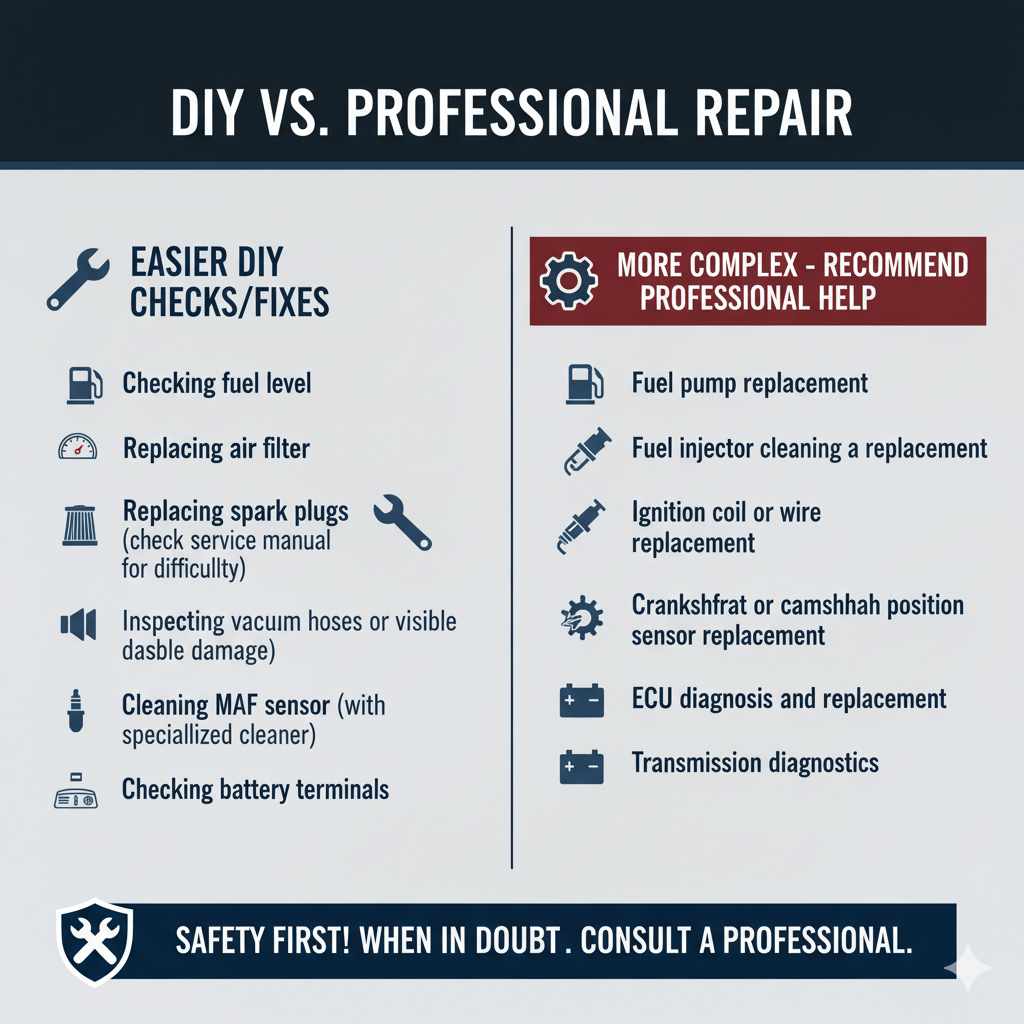
Some stalling causes are easier for beginners to tackle than others. Here’s a general guide:
| Easier DIY Checks/Fixes | More Complex – Recommend Professional Help |
|---|---|
| Checking fuel level | Fuel pump replacement |
| Replacing air filter | Fuel injector cleaning or replacement |
| Replacing spark plugs (check service manual for difficulty) | Ignition coil or wire replacement |
| Inspecting vacuum hoses for visible damage | Crankshaft or camshaft position sensor replacement |
| Cleaning MAF sensor (with specialized cleaner) | Alternator or starter motor replacement |
| Cleaning IAC valve | ECU diagnosis and replacement |
| Checking battery terminals | Transmission diagnostics |
Always consult your car’s repair manual or reliable online guides for specific instructions related to your vehicle’s make and model. Safety first! If you’re unsure, it’s always better to seek professional help to avoid causing further damage or risking injury.
Preventing Stalling: Proactive Car Care
The best way to deal with your car stalling is to prevent it from happening in the first place! Regular maintenance is your best friend.
- Follow the Maintenance Schedule: Adhere to your car manufacturer’s recommended maintenance intervals for oil changes, filter replacements (air, fuel, oil), spark plug changes, and fluid checks. Your owner’s manual is the definitive source for this information.
- Address Warning Lights Promptly: Don’t ignore that check engine light or any other warning light on your dashboard. These lights often indicate an issue that could lead to bigger problems, including stalling. Get them diagnosed early.
- Listen to Your Car: Pay attention to any unusual sounds, smells, or changes in how your car drives. Hesitation, rough idling, or a loss of power can be early signs of trouble.
- Use Quality Fuel: While less common, using poor-quality fuel can sometimes lead to engine issues. Stick to reputable gas stations.
- Regular Inspections: Periodically check under the hood for loose or cracked hoses, dirty filters, and corrosion on battery terminals.
For routine maintenance schedules and tips, resources like the National Highway Traffic Safety Administration (NHTSA) offer valuable guidance on vehicle upkeep.
Frequently Asked Questions About Car Stalling
I just filled up my gas tank, and now my car is stalling. What could be wrong?
This could be a coincidence, or there might be an issue with the fuel delivery system. If you recently filled up, it’s possible that the fuel itself has issues, or perhaps a recent jarring motion dislodged something affecting a fuel line or sensor. It’s also possible the fuel gauge was inaccurate and you were closer to empty than you thought, and now the fuel pump is struggling. A thorough inspection by a mechanic would be needed.