Why Do Some Cars Not Have Front License Plates? What State Law Says
Whether a car has a front license plate comes down to state law, not the manufacturer. Some states issue two plates and require both. Others issue a single plate for the rear. This guide shows what the official statutes and DMV pages we read say for New York, Washington, Colorado, Arizona and Alaska, why many cars have no front mount, and how to add a no-drill bracket if you move to a front-plate state.
Quick Answer
Your state decides. Where two plates are issued, both must be displayed. Where one plate is issued, it goes on the rear. We checked five states on official pages on October 12, 2026 (table below). We could not verify a full 50-state list from official sources, so check your own DMV before you skip a front plate.
Why Do Some Cars Not Have Front License Plates?
Two things combine. First, the law: each state decides how many plates it issues and where they go. Second, the car: many vehicles have a smooth front bumper with no plate mount, so owners in front-plate states often have to add one. A no-drill bracket like the pick below solves that without touching the bumper.
Best No-Drill Front Plate Bracket Pick | |
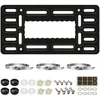 |
XCLPF No-Drill Front License Plate Bracket Kit Black ABS bracket with stainless cable ties, screws and caps. The listing says it fits standard plates with or without two pre-drilled bumper holes. Price on Amazon today: $7.19.
|
As an Amazon Associate we earn from qualifying purchases. This is a spec-based pick from the Amazon listing, not a hands-on test. | |
The rest of this article explains the law first, then the vehicle side, then how to fit a bracket safely.
Which States Do Not Require Front License Plates?
The honest answer is that the number and the list depend on the source and the year. Blog lists often disagree and go stale, so the table below only includes states where we read an official page. Other states vary, so look yours up rather than trusting a generic list, including this one.
| State | Front plate required? | Source and date checked |
|---|---|---|
| New York | Yes. Two plates, one on the front and one on the rear | Vehicle and Traffic Law section 402(1)(a), read Oct 12, 2026 |
| Washington | Yes when two plates are issued (front and rear). A single issued plate goes on the rear | RCW 46.16A.200(5)(a), read Oct 12, 2026 |
| Colorado | A front plate rule exists. It must be mounted horizontally at the location the maker designated | Colorado legislature summary of SB18-028 (2018), read Oct 12, 2026. A bill summary, not current DMV text |
| Arizona | Rear required. A front plate is optional when two plates are issued | A.R.S. 28-2354(A), read Oct 12, 2026 |
| Alaska | No for passenger vehicles: one plate on the back. Commercial vehicles over 10,001 lb: front | Alaska DMV license plates page citing AS 28.10.171, read Oct 12, 2026 |
As of October 12, 2026; check your state. Official text is at New York Vehicle and Traffic Law section 402, RCW 46.16A.200 and A.R.S. 28-2354. The Alaska and Colorado rows come from the state pages named in the table.
Rear-only does not always mean no front plate
This is the part most lists miss. In Arizona, the statute says a motor vehicle’s plate goes “on the rear,” but a vehicle issued two plates may carry one on the front too. Washington and New York tie the rule to how many plates were issued: two issued means front and rear, one issued means rear. So the real question is how many plates your state hands you at registration, not what the car looks like.
That also explains a common confusion. A car you see with no front plate may be registered in a rear-only state, may have had its plate fall off, or may simply be a car whose owner chose not to fit the second plate where the law lets them. From the road you cannot tell which.
Laws change, and bills are not laws
New York is a good example. The 2013-2014 Assembly bill A3824, summarized as requiring one number plate on the rear of each motor vehicle, sat in committee and was never enacted, according to the legislature’s bill page. Similar bills were reintroduced in later sessions, and we did not check how those ended. Section 402 as we read it still says front and rear. Do not rely on a news story about a proposed change until you confirm it became law. Alaska is the useful contrast: its DMV page cites a statute for the single-plate rule, which is exactly the kind of source to look for.
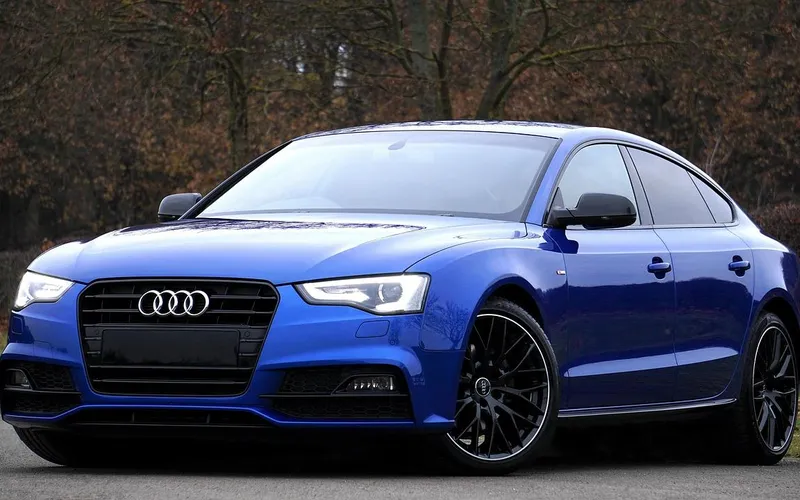
Why Cars Have No Front Plate Mount
The statutes we read explain the rule but not the reason behind it. Owners often point to looks and airflow, but no state page we read gives that as the reason, so treat it as opinion, not fact. What we can say from sources is narrower and more useful.
- The mount depends on the maker. Colorado’s 2018 change tied the front plate location to the one designated by the manufacturer. If a maker designates no spot, you will need an aftermarket solution.
- Makers publish their own brackets. Tesla’s public guide for the Model Y front bracket describes an adhesive bracket that goes on without drilling and is aligned to the camera on the grille. It says you cannot reposition it once it sticks.
- Different laws, one car design. Because front-plate rules differ by state, a bracket that is optional in Arizona and required in New York is something a buyer often has to sort out after purchase. That is our reading of the laws above, not a quoted maker statement.
If you want a number on how common this is, we do not have a verified official count, which is why this article does not give one. A table of states you can click through and verify is more useful than a single total that goes out of date.
How to Add a Front Plate Without Drilling
If you must add a front plate, follow your car maker’s guidance first. For a full walkthrough with tools, see our guide on how to install car plates. The points below are the damage and safety checks that matter most.
Before you buy or stick anything
- Check sensor locations in your owner’s manual first. Many cars have a camera or radar behind the grille or bumper. Tesla’s bracket guide warns that a protective plate frame may obstruct the grille camera. Keep any bracket, frame and plate clear of sensors and cameras.
- Know whether it is adhesive or cable-tie. Adhesive brackets are one-shot. Tesla’s guide says cold or wet conditions can reduce adhesive performance and that you cannot reposition the bracket after it sticks, so test-fit before you peel the tape.
- Test any cleaner on a hidden spot. Tesla’s guide has you test isopropyl alcohol on a hidden painted area before cleaning the mounting spot.
- Use matching fasteners. If you reuse bumper holes or clips, match them. See our note on plastic screws on bumpers.
Install checklist
- Read the owner’s manual sections on the front bumper, camera and radar.
- Hold the bracket at the mounting point without removing any backing to check the plate does not cover a sensor, lamp or grille opening.
- Clean the spot as the instructions say after testing the cleaner on a hidden painted area.
- Fix the bracket per its instructions, then attach the plate with the supplied screws, snug but not over-tightened.
- Check that the plate is secure, level and readable, then re-check after a few days of driving.

If a part looks like it might cover something you cannot identify, stop and ask a dealer or an independent shop. A front plate that disables a driver-assist feature is a worse outcome than a short delay.
What Happens if You Drive Without a Required Front Plate?
Penalties vary by state and change, so we are not quoting fine amounts. The Arizona statute page we read sets the display rule but did not list a penalty in the part we retrieved. Check your state’s DMV or court fee schedule. The practical risk is a stop and a citation, and you may be told to fix it. Never remove plates to avoid identification: that is a separate and more serious problem.
Moving to a state that requires one
If you move from a rear-only state, ask the new state’s DMV when you register, because the rule follows the state that issues your plates. You will often receive two plates. Read our car laws and compliance guide and the notes on where to put the registration sticker for the rest of the process, and see how to transfer a license plate to another car if you are swapping plates between vehicles.
A five-minute way to check your own state
- Search for your state name plus “vehicle code” and “display of license plates”.
- Open only the official legislature or DMV result, not a summary site.
- Look for the words front, rear, and “if two plates are issued”.
- Write down the section number and the date you checked.
- If the page is unclear, call or message the DMV and keep the answer.
Frequently Asked Questions
Why do some cars not have a front license plate?
Because the rule is set by each state, not by the carmaker. A state that issues only a rear plate does not require a front one, and a car registered there may be driven without a front plate. A car registered in a state that issues two plates must show both.
Do I need a front license plate if I move to a new state?
Check the rules where the car will be registered. If the new state issues two plates, you will need a front mount, which can be an aftermarket bracket if your bumper has none. Ask the state DMV when you register.
Can a front plate bracket block my car’s cameras or sensors?
It can. Tesla’s own bracket guide, for example, aligns the bracket to the grille camera and says a protective plate frame may obstruct that camera. Read your owner’s manual for sensor locations and keep brackets, frames and plates clear of them.
Which states do not require a front license plate?
Alaska and Arizona are two examples confirmed from official pages for this article. The list changes over time, so confirm your own state on its DMV or legislature website before you skip a front plate.
Items We Could Not Verify
We did not confirm a count of front-plate states, the Texas or California statutes, or any state fine schedule from an official page this session, so we left them out. Look up your own state’s DMV page and keep a note of the rule with your registration. If a camera or sensor sits near the bumper, check your owner’s manual before any bracket goes on.
Products related to this article
Sponsored / affiliate links. As an Amazon Associate I earn from qualifying purchases. I may earn additional commission from eligible campaigns.