Why Does My Car Ac Only Work Sometimes: The Genius Answer
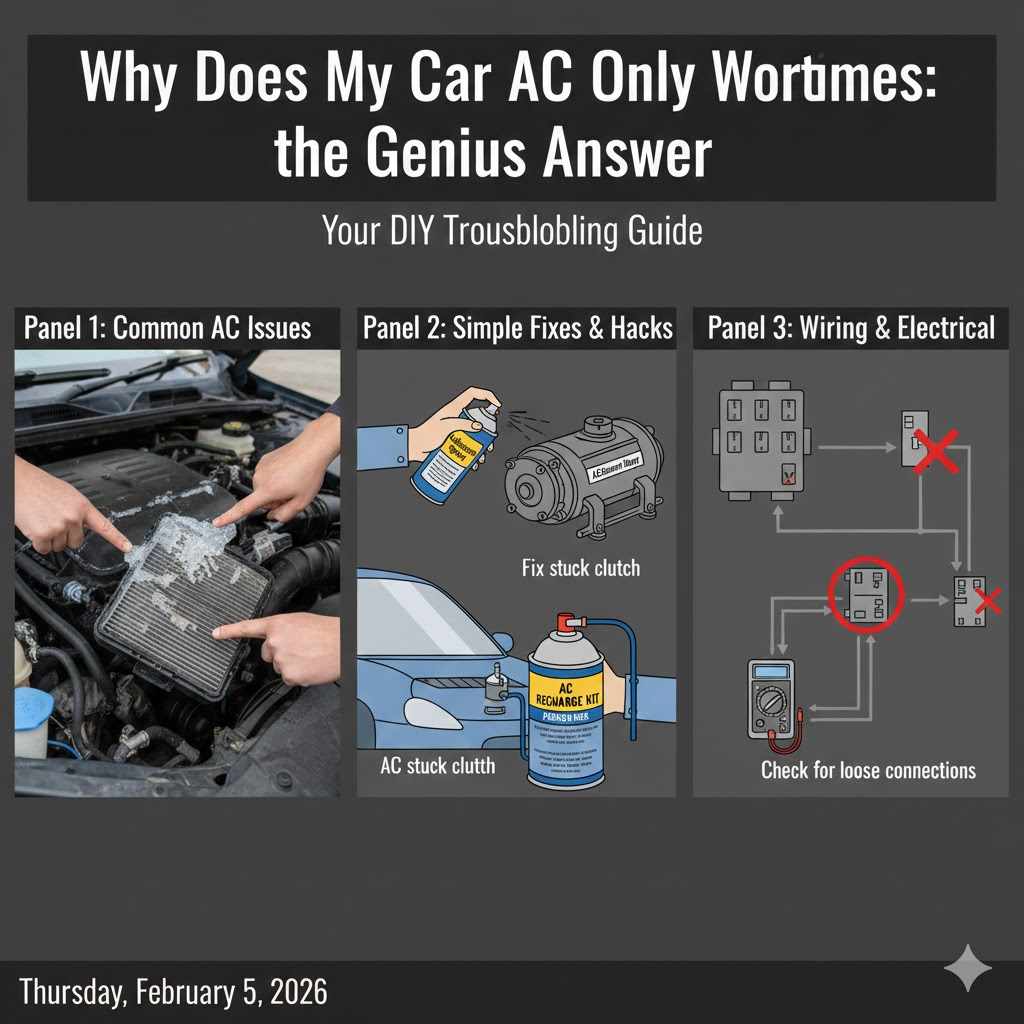
If your car AC only works sometimes, it’s often due to low refrigerant from a small leak, a failing AC compressor clutch that can’t engage consistently, or a simple electrical issue like a bad relay. These common problems prevent your AC system from maintaining pressure or power, causing it to cut in and out unexpectedly.
There’s nothing more frustrating than a car AC that has a mind of its own. One minute, you’re enjoying a cool breeze; the next, you’re hit with a wave of warm, humid air. You’re not alone in this struggle. This “now it works, now it doesn’t” problem is one of the most common car troubles drivers face, especially as a vehicle gets older.
But don’t worry. You don’t need to be a master mechanic to understand what’s going on. In this guide, I’ll walk you through the most likely culprits in simple, easy-to-understand terms. We’ll explore the clues your car is giving you and figure out the next steps to get that consistent, cool air back for good.
First, A Super-Simple Look at How Your Car’s AC Works
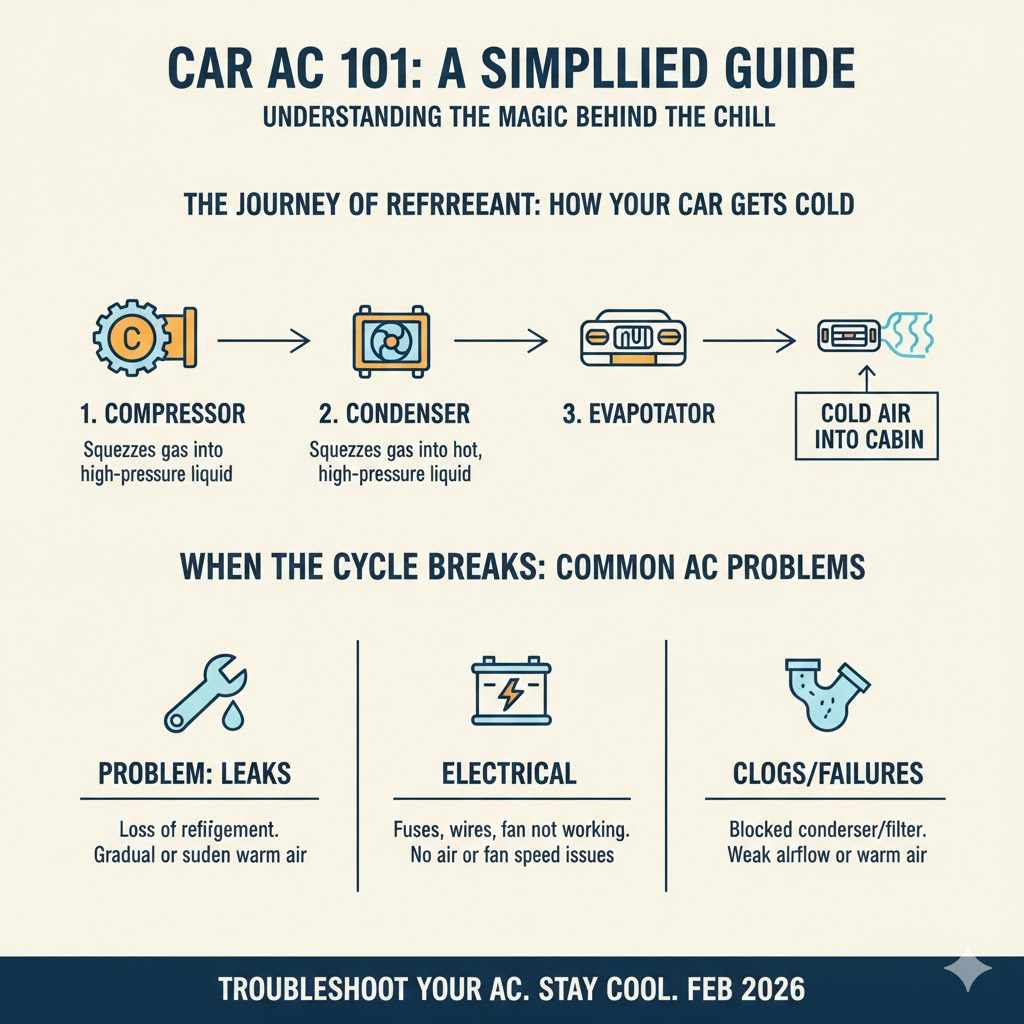
Before we dive into the problems, let’s quickly understand the magic behind your car’s AC. Think of it like a refrigerator for your car. It uses a special gas called refrigerant to move heat from inside your car to the outside.
Here’s the basic journey:
- The Compressor squeezes the refrigerant, turning it into a hot, high-pressure liquid.
- This liquid flows to the Condenser (the radiator-like thing at the front of your car), where a fan helps cool it down, releasing heat outside.
- It then travels to the Evaporator inside your dashboard. Here, it turns back into a gas, absorbing heat from the cabin air and making it ice-cold.
- A fan blows this cold air through your vents, and the cycle starts all over again.
When any part of this cycle is interrupted, your AC starts acting up. Now, let’s find out which part is causing the trouble.
The 7 Most Common Reasons Your AC Is Unpredictable
An AC system that works intermittently is almost always a sign that one component is on the verge of failing or a system level is just slightly off. Here are the most common reasons, starting with the simplest ones.
1. Low Refrigerant Levels (The Most Likely Culprit)
Your AC system is a closed loop, meaning it shouldn’t lose refrigerant (often known by the brand name Freon). If it’s low, there’s a leak somewhere. A small, slow leak is the number one reason for an AC that works sometimes. When the refrigerant level drops just below the optimal amount, safety sensors in the system will shut the compressor off to prevent damage. As pressure fluctuates with temperature and engine speed, the sensor might allow the compressor to turn back on for a short while, creating that on-and-off cycle.
Symptoms to look for:
- The air is cool but not ice-cold.
- The AC works for a little while after you start the car, then gets warm.
- You hear a hissing sound from the dashboard area.
The Fix: This is a job for a professional. While you can buy DIY recharge kits, they are a temporary fix. A mechanic will use a special dye or an electronic “sniffer” to find the leak, repair it, and then properly refill the system to the exact level specified by the manufacturer. According to the U.S. Environmental Protection Agency (EPA), handling refrigerant requires specific certification, so it’s best left to trained technicians.
2. A Failing AC Compressor Clutch
The AC compressor is the heart of the system, and the clutch is what engages it. When you press the AC button, an electromagnet activates the clutch, connecting the compressor to the engine’s drive belt so it can start pumping refrigerant. Over time, this clutch can wear out. The magnetic coil can weaken, or the air gap between the clutch plates can become too wide. When this happens, the clutch may struggle to stay engaged, especially when it gets hot.
Symptoms to look for:
- The AC works when you first start the car but stops after the engine warms up.
- You can see the center of the compressor pulley spinning and then stopping repeatedly.
- The AC works at higher engine speeds (like on the highway) but not when idling.
The Fix: Sometimes, just the clutch can be replaced, but often it’s more cost-effective and reliable to replace the entire compressor assembly. This is a job for a mechanic, as it involves removing the drive belt and evacuating the refrigerant.
3. Electrical Gremlins (Fuses, Relays, and Wires)
Your AC system relies on a network of wires, sensors, fuses, and relays to work correctly. A problem in any of these can cause the system to shut down intermittently. A relay, which is basically an electronic switch, can start to fail when it gets hot. A corroded wire or a loose connection can interrupt the signal to the compressor. Even a failing pressure switch, which protects the system from high or low pressure, can give false readings and shut things down.
Symptoms to look for:
- The AC cuts out randomly, with no clear pattern.
- The AC button light might flicker or turn off by itself.
- Everything else in the car works perfectly, just not the AC.
The Fix: This can be a DIY-friendly check! You can easily check your car’s fuse box (look in your owner’s manual for the location) for a blown AC fuse. You can also try swapping the AC relay with an identical relay from a less critical system (like the horn) to see if that solves the problem. If these simple checks don’t work, an auto electrician or mechanic will need to trace the wiring to find the fault.
4. A Dirty or Clogged Condenser
The condenser sits right at the front of your car, usually in front of the radiator. Its job is to release the heat that the refrigerant has absorbed from your cabin. Because of its location, it’s exposed to bugs, leaves, dirt, and road debris. If it gets too clogged, it can’t dissipate heat effectively. The pressure in the system will build up until a high-pressure switch shuts off the compressor to prevent damage. Once it cools down a bit, it might start working again.
Symptoms to look for:
- The AC works well on the highway but gets warm in stop-and-go traffic or when idling.
- The engine cooling fans seem to be running more than usual.
- You can physically see a layer of dirt, leaves, or bent fins on the condenser.
The Fix: This is a simple DIY fix. With the engine off and cool, you can gently wash the condenser with a low-pressure garden hose. Be careful not to bend the delicate aluminum fins. If the fins are bent, you can use a special tool called a “fin comb” to straighten them out.
5. A Freezing Evaporator Coil
It might sound strange, but your AC can actually get too cold. The evaporator coil inside your dashboard can sometimes freeze into a solid block of ice. This happens when moisture in the air freezes on its surface, usually due to low refrigerant or poor airflow (like from a clogged cabin air filter). Once it freezes, air can’t pass through it, so you’ll feel the airflow from your vents decrease significantly, and the air that does come out will be warm.
Symptoms to look for:
- AC works great for 15-30 minutes, then the airflow from the vents weakens and the air turns warm.
- If you turn the AC off for a while and then turn it back on, it might start working again (because the ice has melted).
- You might see water pooling on the passenger-side floor mat if the drain tube is clogged.
The Fix: The first step is to check and replace your cabin air filter. If that doesn’t solve it, the problem is likely low refrigerant, which means you have a leak that needs to be fixed by a professional.
6. A Faulty Blend Door Actuator
Inside your dashboard, there is a small electric motor called a blend door actuator. Its job is to control a flap (the blend door) that mixes hot air from the heater core and cold air from the evaporator. If this actuator starts to fail, it can get stuck or move randomly. This means it might be sending warm air into the cabin even when you have the AC on full blast.
Symptoms to look for:
- A clicking or tapping noise coming from behind the dashboard.
- Air temperature changes when you go over bumps or make sharp turns.
- The AC blows cold on one side of the car but warm on the other.
The Fix: Replacing a blend door actuator can range from very easy to extremely difficult, depending on its location. Some are accessible by removing the glove box, while others require removing the entire dashboard. This is often a job best left to a mechanic unless you are a confident DIYer.
7. A Malfunctioning Cooling Fan
Your car has large fans behind the condenser and radiator that pull air through them, especially when you are idling or driving slowly. If one of these fans isn’t working correctly, not enough air will pass over the condenser to cool the refrigerant. Just like with a clogged condenser, this will cause pressure to build up and the system to shut down. The AC will typically work fine at highway speeds when natural airflow is high but will fail in traffic.
Symptoms to look for:
- AC works on the highway but not when idling.
- Your car’s engine temperature might also run a little hotter than normal in traffic.
- When you turn the AC on, you don’t hear or see the cooling fans start up.
The Fix: A mechanic will need to diagnose why the fan isn’t working. It could be a bad fan motor, a faulty relay, or a wiring issue.
Your DIY Troubleshooting Checklist
Ready to play detective? Here is a simple, safe checklist you can follow to narrow down the problem before heading to a mechanic. Always do this with the car turned off and the engine cool.
- Visual Inspection: Pop the hood and look at the front of the car. Can you see the AC condenser? Is it covered in leaves, bugs, or dirt? If so, gently clean it with a hose.
- Check the Cabin Air Filter: This is usually located behind the glove box. Your owner’s manual will show you how to access it. If it’s black and full of debris, replace it. This is a cheap and easy fix that can solve airflow problems.
- Listen and Look: With the car running and the AC turned on full blast, listen for the “click” of the compressor clutch engaging. Watch the center part of the AC compressor pulley—is it spinning along with the belt, or is it stationary? If it cycles on and off every few seconds, you might be low on refrigerant.
- Check Fuses and Relays: Find the fuse box. Look for the fuse and relay labeled for the AC, A/C, or with a snowflake symbol. Pull the fuse to see if it’s broken. You can also swap the AC relay with another identical one to see if that helps.
Quick-Reference Troubleshooting Table
Use this table to quickly match your symptoms to the likely cause.
| Symptom | Most Likely Cause(s) | DIY or Pro Fix? |
|---|---|---|
| AC works at highway speeds but not in traffic. | Clogged Condenser or Faulty Cooling Fan | DIY (cleaning condenser), Pro (fan repair) |
| AC works for a bit, then blows warm with weak airflow. | Freezing Evaporator Coil (from low refrigerant or clogged cabin filter) | DIY (replace filter), Pro (fix leak) |
| AC works when first started but quits when the engine gets hot. | Failing AC Compressor Clutch | Pro |
| AC is cool but not cold; performance slowly got worse. | Low Refrigerant (small leak) | Pro |
| Clicking sound from the dash; temperature changes randomly. | Faulty Blend Door Actuator | Pro (usually) |
| AC cuts out completely and randomly. | Electrical Issue (fuse, relay, wiring) | DIY (check fuses/relays), Pro (wiring) |
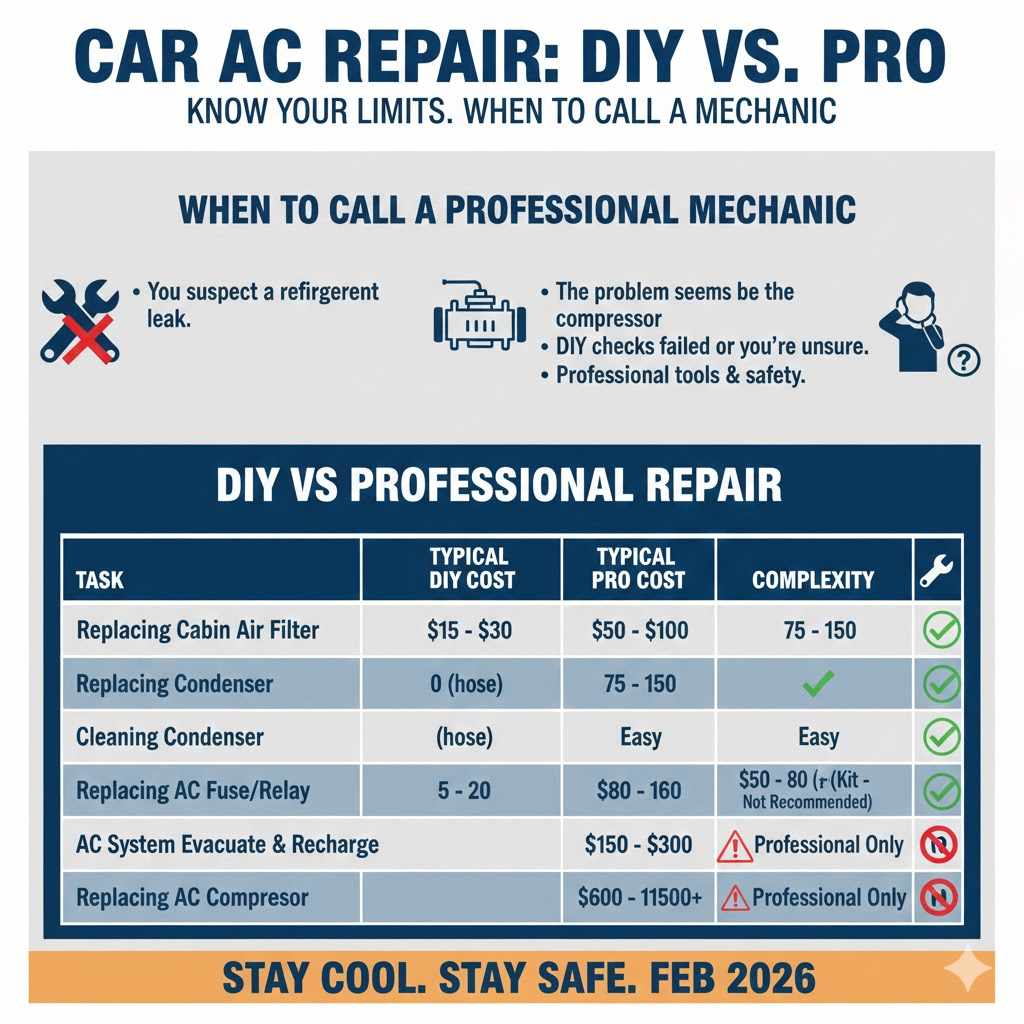
When to Call a Professional Mechanic
While some of the checks are easy for beginners, your car’s AC system is complex and pressurized. You should always visit a qualified mechanic if:
- You suspect a refrigerant leak.
- The problem seems to be the compressor or its clutch.
- You’ve tried the simple DIY checks and nothing has changed.
- You are not comfortable working on your car.
A professional has the specialized tools to safely handle refrigerant, accurately measure pressures, and diagnose complex electrical issues without causing further damage.
DIY vs. Professional Repair: A Cost and Complexity Comparison
| Task | Typical DIY Cost | Typical Pro Cost | Complexity |
|---|---|---|---|
| Replacing Cabin Air Filter | $15 – $30 | $50 – $100 | Very Easy |
| Cleaning Condenser | $0 (if you have a hose) | $75 – $150 | Easy |
| Replacing AC Fuse/Relay | $5 – $20 | $80 – $160 (includes diagnosis) | Easy |
| AC System Evacuate & Recharge | $50 – $80 (DIY Kit – Not Recommended) | $150 – $300 | Professional Only |
| Replacing AC Compressor | $200 – $500 (parts only) | $600 – $1500+ | Professional Only |
Frequently Asked Questions (FAQ)
1. How much does it cost to fix an intermittent car AC?
The cost can vary widely. A simple fix like replacing a fuse might cost under $20. A more common issue like finding and fixing a small refrigerant leak and recharging the system typically costs between $200 and $500. A major repair like replacing the AC compressor can cost over $1,000.
2. Can I just add more refrigerant myself with a DIY kit?
While you can, it’s generally not a good idea. Those kits don’t fix the underlying leak, so you’ll be in the same situation again soon. Overcharging the system can also cause serious damage to the compressor. It’s always best to have a professional find and fix the leak first.
3. Why does my AC work when driving but not when idling?
This is a classic symptom of an airflow problem. When you’re driving, air is naturally forced through the condenser, keeping it cool. When you stop, the system relies on the cooling fans. If a fan is broken or the condenser is clogged with debris, it will quickly overheat and shut down the AC.
4. Is it safe to drive with an AC that works intermittently?
Yes, it is generally safe. An intermittent AC won’t affect your car’s ability to drive, brake, or steer. The worst that can happen is the compressor seizing, which might cause the serpentine belt to break, but this is rare. The main issue is your comfort, not safety.
5. How often should I get my car’s AC serviced?
There’s no strict schedule, but it’s a good idea to have it checked every 2-3 years or if you notice its performance declining. A technician can check the pressure levels and make sure all components are working correctly, which can help prevent more expensive repairs down the road.
6. What does a working AC compressor clutch sound like?
When you turn on your AC, you should hear a distinct “click” from the engine bay, followed by a very slight change in the engine’s idle speed. That click is the sound of the clutch engaging. If you hear grinding, squealing, or rapid clicking, the clutch or compressor may be failing.
Conclusion: Stay Cool and Confident
A car AC that only works sometimes is a real headache, but it’s a solvable problem. By understanding the common causes—from a simple clogged filter to a low refrigerant level—you’re already halfway to the solution. Start with the easy visual checks you can do yourself. This will help you either find a simple fix or have a much more confident conversation with your mechanic.
Remember, your car is communicating with you. Those intermittent blasts of cool air are a clue. By following the steps in this guide, you can decode the message, take control of the situation, and get back to enjoying cool, comfortable drives no matter how hot it gets outside. You’ve got this!