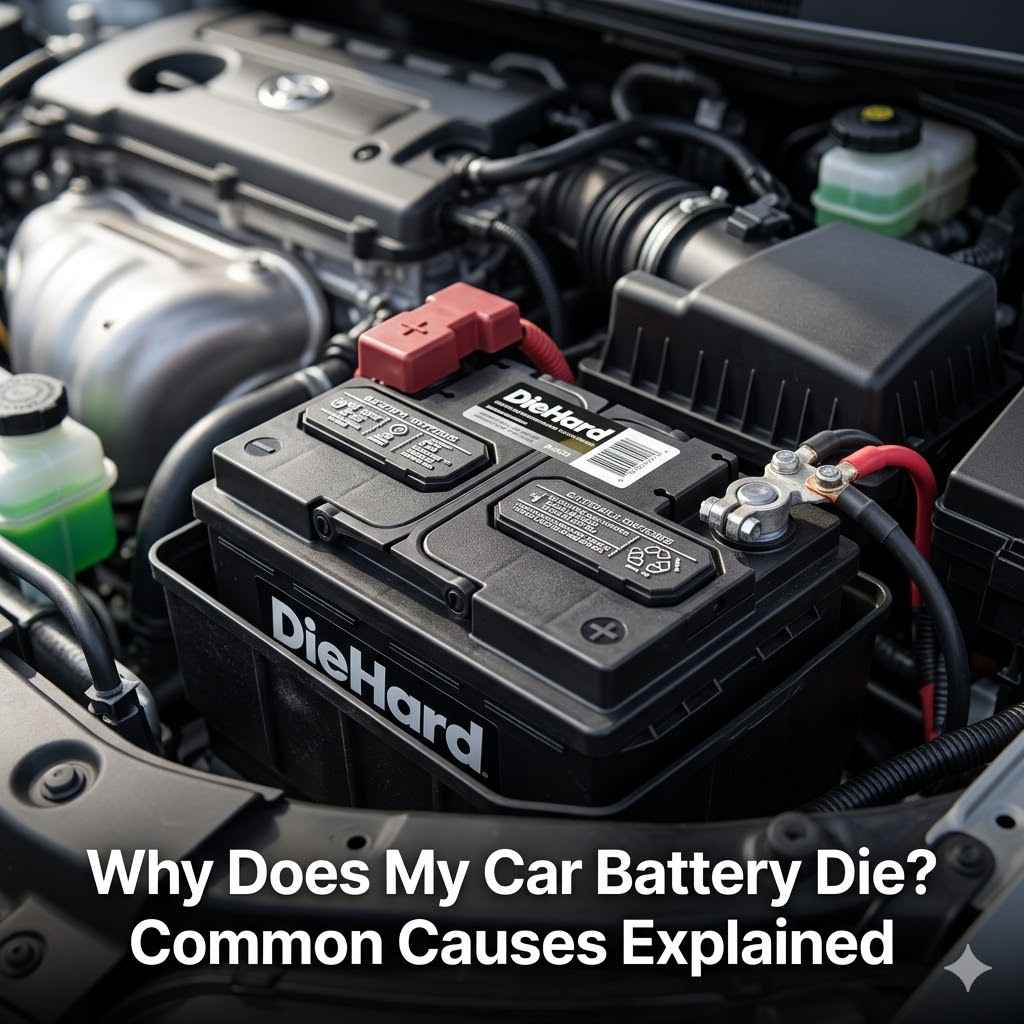
Why Does My Car Battery Die? Common Causes Explained
It can be a real headache when your car won’t start, and you’re left wondering, Why Does My Car Battery Die? Common Causes Explained. For many folks, especially those new to car care, figuring out why a battery suddenly quits can feel like a puzzle.
You might be left stranded, feeling a bit confused and maybe even a little worried. But don’t fret. We’re going to break down the most common reasons your car battery might be giving up on you.
It’s simpler than you think, and by the end of this, you’ll have a clear, step-by-step path to understanding and fixing the issue. Let’s get to the bottom of it.
Understanding Car Battery Life and Failure
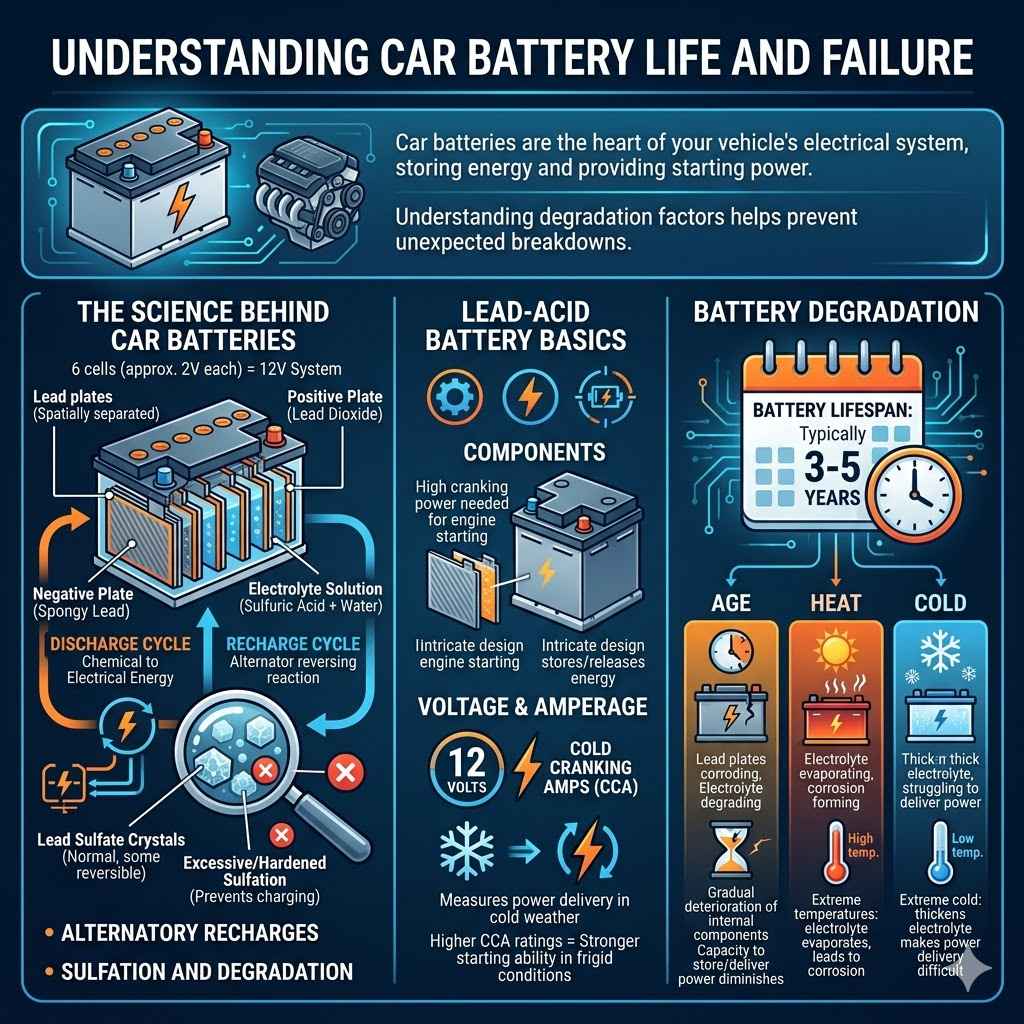
Car batteries are the heart of your vehicle’s electrical system. They store energy from the alternator and provide the power needed to start the engine. Over time, batteries naturally degrade, but various factors can speed up this process or cause sudden failure.
Understanding these common culprits is the first step to preventing unexpected breakdowns and keeping your car running smoothly. This section will explore how batteries work and why they eventually stop performing their vital job.
The Science Behind Car Batteries
A car battery is an electrochemical device that converts chemical energy into electrical energy. It typically consists of six cells, each producing about two volts, totaling a 12-volt system. Inside each cell are lead plates submerged in an electrolyte solution, usually sulfuric acid and water.
When the engine is running, the alternator recharges the battery by reversing the chemical reaction. This constant cycle of discharge and recharge is what keeps your car powered.
Over time, the lead plates can sulfate, a process where lead sulfate crystals form. While some sulfation is normal and reversible during charging, excessive or hardened sulfation reduces the battery’s ability to hold a charge. The electrolyte can also degrade, and the internal components can corrode, all contributing to a battery’s eventual demise.
Lead-Acid Battery Basics
Lead-acid batteries are the most common type used in cars. They are known for their high cranking power, which is the surge of electricity needed to start the engine.
Components The main parts include a positive plate (lead dioxide) and a negative plate (spongy lead) immersed in sulfuric acid. The electrolyte acts as a conductor.
The intricate design allows for the chemical reactions that store and release electrical energy. When you turn the key, a massive current flows, initiating the starting motor. The alternator then replenishes the battery’s energy.
Voltage and Amperage A standard car battery is rated at 12 volts. Cranking amps (CCA) are crucial; they measure how much power the battery can deliver in cold weather.
Higher CCA ratings mean a stronger ability to start your engine, especially in frigid conditions. This is why different vehicles may require batteries with varying CCA specifications.
Battery Degradation
Batteries don’t last forever. Their lifespan is typically 3 to 5 years. Several factors accelerate this natural wear and tear.
Age As a battery ages, its internal components naturally degrade. The lead plates can corrode, and the electrolyte can become less effective.
This gradual deterioration means the battery’s capacity to store and deliver power diminishes. It’s like anything else that gets used regularly; it eventually wears out.
Heat and Cold Extreme temperatures are harsh on batteries. Heat causes the electrolyte to evaporate, leading to corrosion.
Extreme cold can thicken the electrolyte, making it harder for the battery to deliver power. This is why batteries often fail in winter after a hot summer.
Why Does My Car Battery Die? Common Causes Explained
Now that we have a basic grasp of how batteries work, let’s tackle the main question: Why Does My Car Battery Die? Common Causes Explained. Several everyday situations and issues can lead to a drained or dead battery.
Understanding these scenarios will help you spot potential problems before they leave you stranded. We will break down the most frequent offenders, from simple mistakes to more complex automotive issues.
Leaving Lights or Accessories On
This is perhaps the most common reason for a dead car battery, especially for new drivers. Forgetting to turn off headlights, interior lights, or even a phone charger plugged into a 12V outlet can drain a battery significantly overnight. Modern cars have some battery protection features, but these are not foolproof.
A single forgotten accessory can deplete a battery to the point where it won’t have enough power to crank the engine.
Headlights Headlights left on for an extended period can completely drain a battery. They draw a significant amount of power, designed to illuminate the road, not to be used as parking lights for hours.
Many cars now have automatic shut-off features for headlights, but older models or specific settings might not. Always double-check your headlights before exiting the vehicle.
Interior Lights Dome lights and vanity mirror lights, while seeming small, can also contribute to battery drain if left on for too long. Some cars have a delay feature for dome lights, but they will eventually turn off.
If the door isn’t fully closed, or if there’s a fault in the door switch, the interior lights might stay on indefinitely.
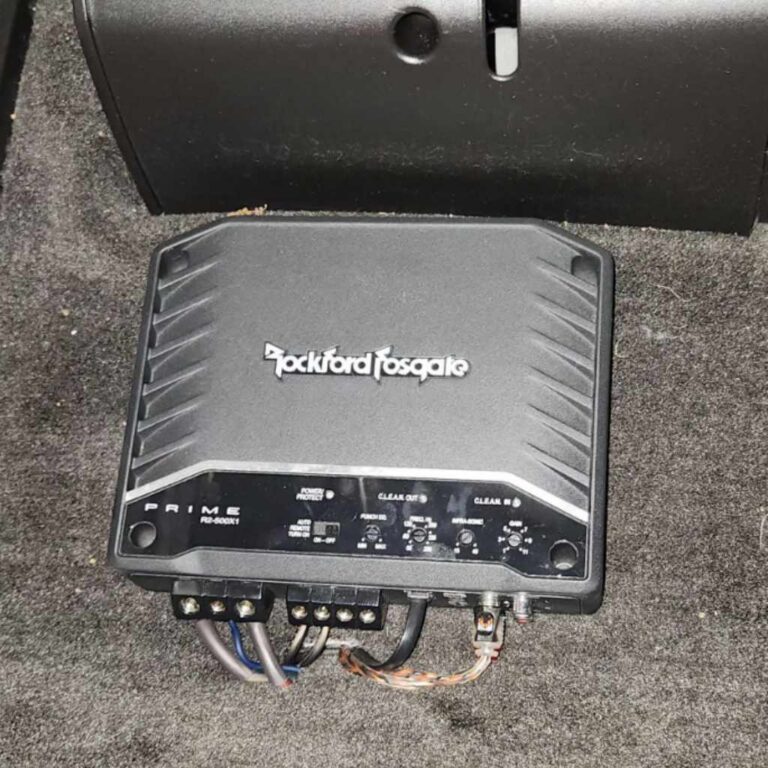
Aftermarket Accessories Aftermarket electronics like car stereos, amplifiers, GPS devices, or even dashcams, if not installed correctly or if they draw power when the car is off, can be silent battery killers.
It’s essential to ensure any added electronics have proper wiring and ideally a relay system that cuts power when the ignition is off.
Problems with the Charging System
If your car’s charging system isn’t working correctly, your battery won’t get the recharge it needs. This means that even if you don’t leave anything on, the battery will gradually lose its charge and eventually die. The charging system consists mainly of the alternator and the voltage regulator.
The Alternator’s Role
The alternator’s primary job is to generate electricity while the engine is running. It converts mechanical energy from the engine’s rotation into electrical energy to power the car’s systems and recharge the battery.
Alternator Failure If the alternator fails, the battery will have to power everything on its own. This is why cars often run for a while after the alternator fails before the battery dies completely. Warning lights on the dashboard, like a battery symbol or a charging system light, often indicate an alternator issue.
A failing alternator might also produce an unusual whining noise from the engine.
Worn or Damaged Belts The alternator is usually driven by a serpentine belt. If this belt is worn, cracked, or loose, it might slip on the alternator pulley, preventing it from spinning at the optimal speed to generate enough electricity.
You might notice squealing sounds from the engine bay, especially when you accelerate, which can be a sign of a slipping belt.
The Voltage Regulator
The voltage regulator works with the alternator to ensure the battery receives the correct amount of voltage. Too much voltage can damage the battery, while too little won’t charge it properly.
Faulty Regulator A malfunctioning voltage regulator can cause overcharging or undercharging. Overcharging can boil the electrolyte, damaging the battery. Undercharging leaves the battery with insufficient power.
A common symptom of a faulty voltage regulator is a battery that keeps dying even after being replaced, or dimming headlights at idle that brighten when you accelerate.
Corroded or Loose Battery Terminals
The battery terminals are where the battery connects to the car’s electrical system. Corrosion or loose connections at these points can prevent the battery from receiving a proper charge or delivering its power effectively.
Corrosion Buildup
Over time, a white or bluish powdery substance can form around the battery terminals. This is corrosion, which is a buildup of minerals and chemicals from the battery’s chemical reactions.
Electrical Resistance Corrosion acts as an insulator, creating electrical resistance. This resistance makes it harder for electricity to flow, leading to poor connections and the inability to start the car, even if the battery is healthy.
You might notice your car struggling to start, or not starting at all, accompanied by a clicking sound, which is often the starter solenoid not receiving enough power.
Cleaning Terminals This corrosion can be cleaned off with a wire brush and a mixture of baking soda and water. It’s a relatively simple maintenance task that can save you a lot of trouble.
Wearing gloves and eye protection is recommended when cleaning battery terminals.
Loose Terminals
If the clamps that hold the battery cables to the terminals are loose, they can wiggle and lose connection intermittently. This can cause various electrical gremlins, including a dead battery.
Intermittent Power Loss Loose terminals can lead to erratic power delivery. You might experience flickering dashboard lights, power windows that work sometimes, or the car suddenly dying while driving.
A simple test is to gently try to move the cable clamps attached to the battery posts. If they are loose, they need to be tightened.
Importance of Tight Connections A secure connection is vital for efficient power transfer. This allows the battery to accept a charge from the alternator and supply enough power to start the engine and run all the car’s electrical components.
Ensure the clamps are snug against the battery posts and that the bolts securing them are tightened.
Extreme Temperatures
Both extreme heat and cold can significantly impact your car battery’s performance and lifespan. Batteries are sensitive to temperature fluctuations, and prolonged exposure to harsh conditions can lead to failure.
The Impact of Heat
Heat is often called the “silent killer” of car batteries. It accelerates the chemical reactions inside the battery, leading to faster degradation and evaporation of the electrolyte.
Electrolyte Evaporation High temperatures cause water in the electrolyte to evaporate. This can expose the lead plates, leading to corrosion and reduced battery capacity.
In very hot climates, checking the electrolyte level (if your battery has removable caps) and topping it up with distilled water might be necessary, though most modern batteries are sealed.
Internal Corrosion Heat speeds up internal corrosion processes within the battery. This damage is irreversible and weakens the battery’s ability to hold a charge over time.
A battery that has been subjected to years of extreme heat may fail prematurely.
The Impact of Cold
Cold weather also presents challenges for car batteries, though its effects are often more immediate and noticeable.
Reduced Performance Cold temperatures thicken the electrolyte, making it harder for the battery to deliver its usual electrical current. This means the battery’s cranking power is significantly reduced.
A battery that is already weak will struggle much more in the cold, making it a common time for battery failures.
Freezing Risk If a battery is significantly discharged and the temperature drops below freezing, the discharged electrolyte (which is more like water) can freeze and expand, cracking the battery case and ruining the battery.
Ensuring your battery is well-charged before winter arrives is crucial to prevent this.
Short Trips and Infrequent Use
If you primarily take very short trips or rarely drive your car, your battery might not get enough time to fully recharge. This can lead to a gradually depleted battery that eventually won’t start your car.
The Short Trip Problem
Starting your car uses a significant amount of battery power. The alternator then works to recharge it. If your trips are too short, the alternator doesn’t have enough time to replenish the energy used during startup.
Insufficient Recharging A typical car engine start can discharge the battery by up to 10%. A 5-10 minute drive might only put back about 5% of that charge. Over time, this deficit builds up.
This is especially true in modern cars with more electronics that draw power even when the engine is off, such as alarm systems, memory for radio presets, and onboard computers.
Deep Discharges Repeated short trips without adequate recharging can lead to the battery experiencing deep discharges. This gradually reduces its capacity and lifespan, similar to how repeatedly draining a smartphone battery too low can damage it over time.
If you frequently make only very short drives, consider taking the car out for a longer drive (30 minutes or more) once a week to allow the battery to fully recharge.
Infrequent Driving
Cars that sit for long periods are also prone to battery issues. Even when a car is off, its various electronic systems draw a small amount of power, known as parasitic drain.
Parasitic Drain This constant, low-level draw will slowly but surely drain a healthy battery over weeks or months. If the car sits for extended periods, this drain can lead to a dead battery.
A parasitic draw test can help identify which electronic component is drawing too much power when the car is supposed to be off.
Battery Maintenance for Storage If you plan to store a vehicle for an extended time, using a battery tender or trickle charger is highly recommended. These devices keep the battery topped up without overcharging it.
Alternatively, disconnecting the negative battery cable can prevent parasitic drain, but this will reset many of your car’s electronic settings.
Faulty Battery Itself
Sometimes, the battery itself is the problem. Batteries, like any manufactured product, can have defects or simply reach the end of their natural life, even with proper care.
Manufacturing Defects
Although rare, some batteries might have internal flaws from the manufacturing process. These defects can lead to premature failure.
Internal Shorts A manufacturing defect could cause a short circuit within the battery. This can lead to rapid discharge and the battery becoming completely dead very quickly.
If a battery fails within its warranty period without obvious external causes, a manufacturing defect might be the reason.
Poor Quality Components The quality of materials used during manufacturing can affect the battery’s lifespan and reliability. Batteries from reputable brands tend to be more consistent in quality.
Always consider purchasing batteries from well-known and trusted manufacturers.
End of Lifespan
As mentioned earlier, batteries have a finite lifespan, typically 3-5 years. Even if you’ve done everything right, an old battery will eventually stop holding a charge effectively.
Reduced Capacity Over years of use, the chemical compounds within the battery degrade. This reduces its capacity to store energy, meaning it can’t provide as much power as it once did.
A battery that used to start your car reliably might start to struggle, especially in demanding conditions like cold weather or on slight inclines.
Signs of Aging Signs of an aging battery include slow cranking, difficulty starting on cold mornings, and electrical accessories dimming more easily.
If your battery is approaching or has passed its expected lifespan, it’s wise to have it tested and consider replacement before it leaves you stranded.
Cold Weather Cranking Amps
Cold weather is particularly hard on car batteries. The engine oil becomes thicker, requiring more power to crank the engine, and the battery’s own ability to produce power is reduced.
How Cold Affects Battery Output
The chemical reactions inside a battery slow down significantly in cold temperatures. This means the battery cannot produce as much electrical current.
Reduced Efficiency At freezing temperatures (0°F or -18°C), a battery’s output can be reduced by up to 50%. This is why a battery that works fine in the summer might struggle or fail in the winter.
This reduced efficiency is a critical factor in cold weather battery failures.
Increased Engine Load Cold engine oil is more viscous, meaning it resists motion more. This makes the engine harder to turn over, demanding more power from the battery.
The combination of a less powerful battery and a harder-working engine is a recipe for starting problems.
Cold Cranking Amps (CCA) Explained
Cold Cranking Amps (CCA) is a rating that measures a battery’s ability to start an engine in freezing temperatures. It’s the number of amps a 12-volt battery can deliver at 0°F (-18°C) for 30 seconds while maintaining a voltage above 7.2 volts.
Importance of CCA Rating Choosing a battery with a sufficient CCA rating for your climate is essential. In colder regions, a higher CCA rating is crucial for reliable starting.
Your car’s manufacturer specifies the minimum CCA requirement for your vehicle.
When to Upgrade CCA If you live in a very cold climate, you might consider a battery with a higher CCA rating than the minimum recommended. This provides an extra buffer for difficult starting conditions.
However, ensure the battery physically fits in its tray and the terminals are compatible.
Parasitic Drain Issues
Parasitic drain refers to the small amount of electrical current that your car’s systems consume even when the ignition is off. While normal, some issues can cause this drain to become excessive, leading to a dead battery.
What is Parasitic Drain
Every car has some level of parasitic draw. This powers things like the clock, the radio’s memory, the alarm system, and the computer’s memory. This draw is typically very low, often measured in milliamps (mA).
Normal Draw Levels For most cars, a normal parasitic draw is between 25 to 50 milliamps. This means a fully charged battery could sit for weeks or even months without dying completely.
However, this can vary depending on the vehicle’s age and the number of electronic accessories installed.
What Causes Excessive Drain Excessive parasitic drain occurs when a component malfunctions or stays “on” when it should be off. This could be a faulty relay, a stuck switch, or a malfunctioning control module.
Even a small continuous draw of 100mA or more can drain a battery overnight if left unattended.
Diagnosing and Fixing Parasitic Drain
Diagnosing parasitic drain requires a multimeter to measure the current draw. It’s a process of elimination to find the culprit.
Using a Multimeter After disconnecting the battery, a multimeter is placed in series between the negative battery cable and the battery terminal. The device then measures the current flowing out.
If the reading is higher than normal, you then start pulling fuses one by one to see which circuit reduces the current draw significantly.
Common Culprits Common items that can cause parasitic drain include interior lights, trunk lights, glove box lights, infotainment systems, GPS trackers, and after-market alarm systems.
Once the faulty circuit is identified, the specific component causing the drain needs to be repaired or replaced.
Age and Overall Battery Condition
Batteries have a limited lifespan. As they age, their ability to hold a charge diminishes, making them more susceptible to failure.
Expected Lifespan
The average lifespan of a car battery is about 3 to 5 years. This can vary based on driving habits, climate, and battery quality.
Factors Influencing Lifespan Factors like frequent deep discharges, exposure to extreme heat or cold, and a poor charging system can shorten a battery’s life.
A battery in a hot climate might last only 2-3 years, while one in a temperate climate could last 5 years or more with proper care.
Regular Testing It’s a good idea to have your battery tested annually, especially as it approaches the 3-year mark. Most auto parts stores offer free battery testing.
This testing can reveal if the battery’s capacity is declining and if replacement is recommended soon.
Signs of an Old or Failing Battery
There are several tell-tale signs that your battery is nearing the end of its life.
Slow Engine Crank When you try to start your car, the engine turns over more slowly than usual. This indicates the battery is struggling to provide enough power.
This is one of the most common and noticeable symptoms of a weakening battery.
Dim Lights and Electrical Issues Headlights, dashboard lights, and interior lights may appear dim, especially when the engine is off or at idle. You might also notice other electrical accessories behaving erratically.
These are signs that the battery’s voltage output is not stable.
Battery Warning Light Many modern cars have a battery warning light on the dashboard. While this often indicates an alternator issue, it can also illuminate if the battery is failing and not holding a charge properly.
Don’t ignore this warning light; it’s your car’s way of telling you something is wrong with the charging system or battery.
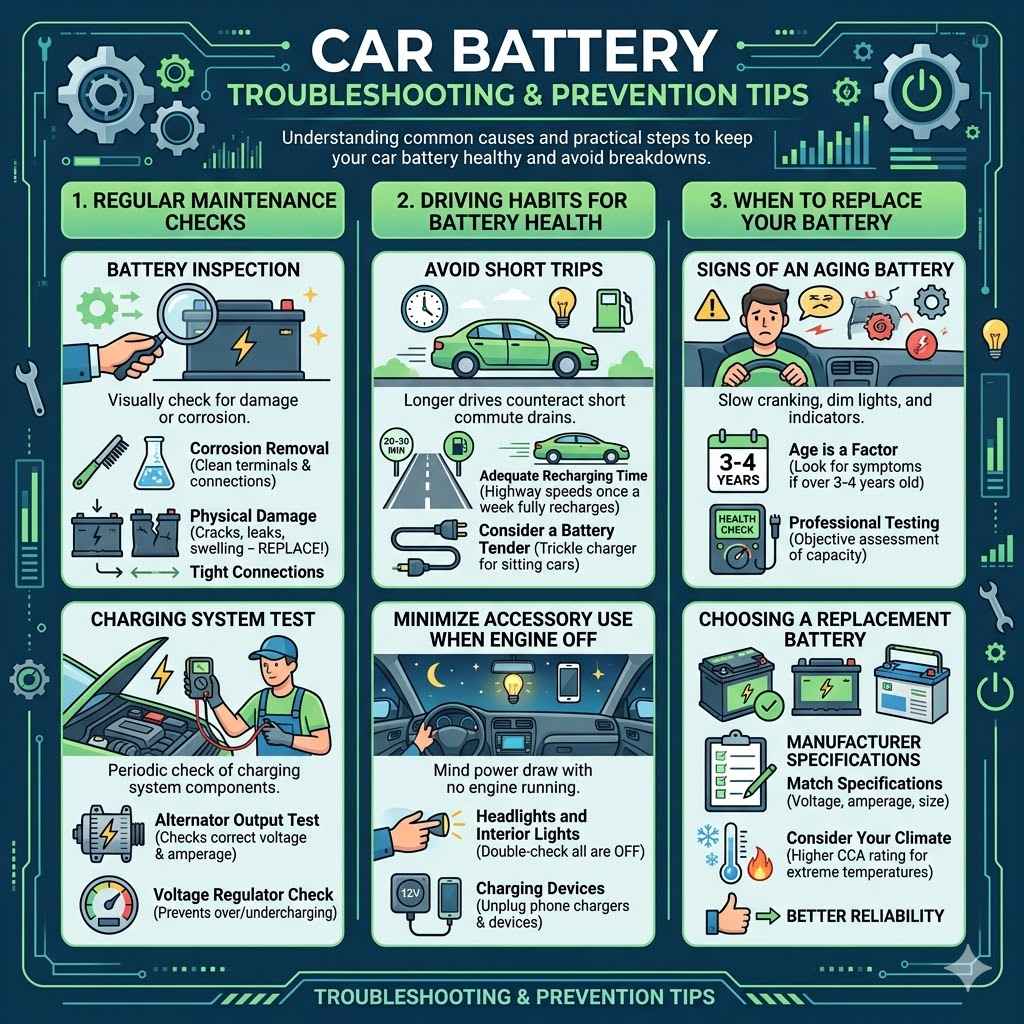
Troubleshooting and Prevention Tips
Understanding the common causes is great, but knowing how to prevent these issues and what to do when they arise is even better. Here we’ll cover practical steps you can take to keep your car battery healthy and avoid unexpected breakdowns.
Regular Maintenance Checks
Proactive maintenance is key to preventing many battery-related problems. Simple checks can save you time, money, and frustration down the road.
Battery Inspection
Visually inspecting your battery for any signs of damage or corrosion is a good habit.
Corrosion Removal As mentioned, clean any visible corrosion from the battery terminals and cables using a wire brush and a baking soda/water mixture. Ensure connections are tight.
This simple act can prevent poor electrical connections.
Physical Damage Check the battery case for cracks, leaks, or swelling. If you notice any, the battery should be replaced immediately as it could be a safety hazard.
A swollen battery can indicate it has been overcharged or exposed to extreme heat.
Charging System Test
Have your car’s charging system, including the alternator and voltage regulator, tested periodically. Most auto shops can perform this test quickly.
Alternator Output Test This test checks if the alternator is producing the correct voltage and amperage to charge the battery. It helps catch potential issues before they lead to battery failure.
A healthy alternator is vital for battery longevity.
Voltage Regulator Check The test also verifies that the voltage regulator is functioning correctly, preventing overcharging or undercharging of the battery.
Proper voltage regulation protects your battery from damage.
Driving Habits for Battery Health
How you drive your car can significantly impact your battery’s well-being. Adjusting your driving habits can prolong its life.
Avoid Short Trips
If your commute is very short, try to incorporate longer drives into your routine.
Adequate Recharging Time Aim for drives of at least 20-30 minutes at highway speeds once a week. This allows the alternator sufficient time to fully recharge the battery.
This counteracts the drain from starting the engine and powering accessories.
Consider a Battery Tender If short trips are unavoidable, consider using a battery tender or trickle charger, especially if the car sits for long periods between uses.
This device ensures the battery remains fully charged.
Minimize Accessory Use When Engine Off
Be mindful of accessories that draw power when the engine is not running.
Headlights and Interior Lights Always double-check that headlights, interior lights, and any other powered accessories are turned off when you leave your car.
This simple habit prevents accidental battery drain.
Charging Devices Unplug phone chargers and other devices from the 12V outlet when not in use, as some can continue to draw a small amount of power even when the car is off.
It’s a small step, but it adds up.
When to Replace Your Battery
Knowing when to replace your battery is as important as knowing why it might die. Replacing a worn-out battery proactively can prevent you from getting stranded.
Signs of an Aging Battery
As discussed earlier, pay attention to slow cranking, dim lights, and warning indicators.
Age is a Factor If your battery is over 3-4 years old and you start noticing these symptoms, it’s a strong indicator it’s time for a replacement.
Don’t wait for it to fail completely.
Professional Testing Rely on professional battery testing services. They can accurately measure the battery’s remaining capacity and health.
This objective assessment helps make an informed decision.
Choosing a Replacement Battery
Selecting the right replacement battery is crucial for optimal performance and longevity.
Match Specifications Always choose a battery that meets or exceeds your vehicle manufacturer’s specifications for voltage, amperage, and size.
Using the wrong battery can cause performance issues or damage electrical components.
Consider Your Climate If you live in an area with extreme temperatures, opt for a battery with a higher Cold Cranking Amps (CCA) rating.
This offers better reliability in challenging weather.
Frequently Asked Questions
Question: How long does a car battery typically last?
Answer: Most car batteries last between 3 to 5 years, though this can vary based on climate, driving habits, and the quality of the battery itself. Extreme heat and cold, as well as frequent short trips, can shorten a battery’s lifespan.
Question: What should I do if my car battery dies?
Answer: If your battery dies, you can try to jump-start your car using jumper cables and another vehicle. If it starts, drive for at least 20-30 minutes to allow the alternator to recharge the battery. If it dies again soon after, the battery or the charging system may need to be checked by a mechanic.
Question: Can I leave my car battery charger connected all the time?
Answer: For long-term storage, a trickle charger or battery tender is ideal. These devices are designed to keep the battery topped up without overcharging it. However, standard battery chargers should not be left connected indefinitely as they can damage the battery.
Question: Is it expensive to replace a car battery?
Answer: The cost of a replacement car battery can range from around $100 to $250 or more, depending on the brand, type, and your vehicle model. Installation might be an additional cost, though many auto parts stores offer free installation.
Question: What is a parasitic drain and how do I check for it?
Answer: Parasitic drain is the small amount of electricity consumed by a car’s systems when the ignition is off. To check for excessive drain, a mechanic uses a multimeter to measure current draw after disconnecting the battery. If the draw is too high, fuses are pulled one by one to find the faulty circuit.
Summary
Understanding Why Does My Car Battery Die? Common Causes Explained empowers you to avoid being stranded. From forgotten lights and charging system faults to temperature extremes and simple aging, various issues can drain your battery.
Regular checks, smart driving habits, and knowing when to replace your battery are your best defenses. Keep an eye on these common problems, and your car will be more reliable.