Best Solar Powered Fans for Car (2026): We Compared
For parked-cabin heat, choose a dual-window solar exhaust fan; for camping, choose a solar fan with battery backup; for emergencies, pick a small clip-on unit that can run from sun or USB. Ignore fit, airflow direction, and power storage, and you will still have a hot cabin and weak cooling when the car sits. This guide compares those three fan types and shows which one actually lowers parked-car heat.
Quick comparison
| Product | Badge | Best for | Price | ||
|---|---|---|---|---|---|
 |
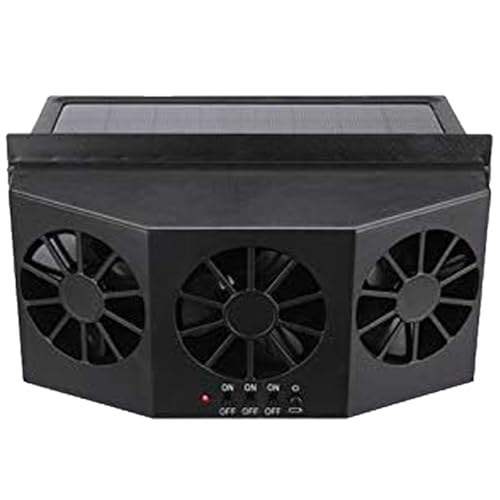
Shkalacar USB & Solar Powered Car Window Exhaust Fan with 3Shkalacar | Our pick | Triple fan · $29.16 · solar/window mount | $29.16
Price as of 24 Oct 2026
|
View |
 |
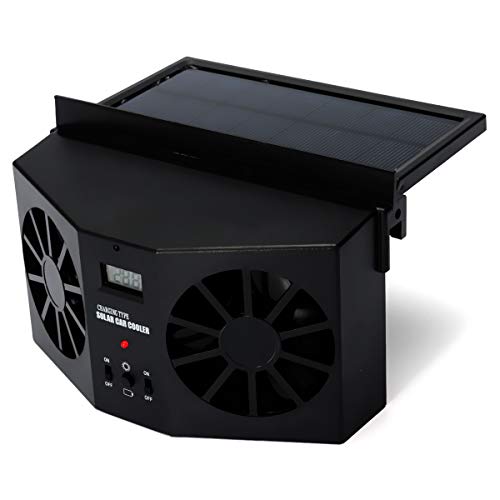
Solar Powered Car Window Exhaust Fan, USB Dual Head AirEAOEIHD | Budget pick | Dual head · $21.99 · solar/USB/window mount | $21.99
Price as of 24 Oct 2026
|
View |
The main trade-off is plain: a window exhaust fan pushes hot air out of the cabin, while a portable solar fan gives you flexible airflow and backup runtime. The right pick changes with parking conditions, battery reserve needs, and your priority, ventilation, quieter operation, or easy removal.
How we chose
We compared the three fan types on the factors that change the purchase, not only the spec sheet. That means ventilation versus cooling, battery capacity and charging options, runtime claims, noise level, fit, and installation difficulty.
Also use only verifiable product details and published figures. Where the numbers come from a product listing or retailer page, they are stated plainly; where they do not, the guidance stays qualitative.
Finally, we separated parked-car heat relief from general airflow. That split matters. A fan that works at a campsite may still be a poor answer for a sun-baked windshield and a closed cabin.
| Use case | Fan type | Installation style | Sunlight dependency | Battery backup | Runtime expectation | Noise tolerance | Best-for verdict |
|---|---|---|---|---|---|---|---|
| Daily parked car in strong sun | Solar-powered car window exhaust fan | Window cracked open, tool-free mount | High; works best in direct sunlight | Usually limited unless the model adds USB power | Best when the car sits in sun and the goal is continuous venting | Moderate to low, depending on motor and speed | Best pick for reducing trapped heat |
| Camping, travel, or off-grid backup | Portable solar camping fan | Clip-on or tabletop placement | Medium; solar helps, but USB backup matters more | Often built in; common capacities range from 4,000mAh to 22,000mAh | Low, medium, and high speed hours vary by battery size | Best when brushless motors and lower speeds are available | Best all-around backup fan |
| Mixed use in car, tent, or garage | Dual-head or triple-head window fan style | Window mount or semi-permanent bracket | Moderate; often better with battery help than with solar alone | Depends on model | Useful when you want targeted airflow, not true cabin cooling | Usually acceptable for daytime use, less ideal for sleep | Best middle ground for airflow and flexibility |
Solar-powered car window exhaust fan: best for parked-car heat
The Shkalacar window exhaust fan is the strongest fit when the job is parked-car ventilation, not general breeze. Its triple-fan layout, solar plus USB dual power option, and independent switches make it the most purpose-built choice here for moving hot air out through an open window.
That matters because a true window exhaust fan attacks the source of the problem. It is made to pull hot cabin air out, which is different from stirring warm air inside the car. If you park in direct sun and want the cabin to shed heat faster, that airflow direction is the point.
The honest drawback is that this style depends heavily on placement and sunlight. If the car sits in shade, if the window seal is poor, or if you expect overnight use without battery help, performance falls fast. It is also less useful if you want a fan you can carry into a tent or use away from the vehicle.
How it installs in an open window
Window exhaust fans mount in a slightly open window and use the opening as part of the airflow path. Fit varies by vehicle, so the seal around the glass matters. A loose fit lets outside air leak back in, which reduces the fan’s ability to push hot air out.
Tool-free mounting is the main convenience benefit here. You can usually install it without tools, but the right window angle and the right amount of crack are what make the setup work well.
Why direct sunlight matters
This type works best when sunlight is hitting the panel directly. Solar output drops in weak sun, under tree cover, or with the car parked in shade. That is why this fan type is the right answer for a hot, sunny parking spot and a weaker answer everywhere else.
Suppose the car is parked nose-in under a garage roof edge, with the panel shaded for most of the afternoon. The fan may still run if USB power is available, but the solar-only advantage is gone, and the result is closer to general ventilation than heat evacuation.
What to expect from airflow and noise
Expect ventilation, not air-conditioning. The fan can reduce trapped heat and stale air, but it does not replace the compressor system in the car. Noise depends on motor design and speed, so lower settings are better when the goal is to keep the cabin from feeling stuffy rather than to move the most air possible.
For a parked car, that quieter, lower-speed use case is often enough. If the car is already hot from sun load, the fan helps the cabin recover faster, but it will not make a sealed car feel cold.
Portable solar camping fan: best for mixed-use backup
A portable solar camping fan is the better choice when you want a fan that can travel with you, run from a battery, and keep working when sunlight is weak. It is less specialized for parked-car exhaust, but it is more flexible for camping, roadside use, and emergency kits.
Battery capacity is the main reason to choose this style. Portable solar camping fan battery capacities are commonly reported to range from about 4,000mAh to 22,000mAh, which can help keep the fan running when sunlight is unavailable. Solar input helps, but USB or USB-C charging is what makes this type practical beyond a bright afternoon.
Battery capacity and runtime expectations
Battery size affects how long the fan runs on low, medium, or high. A larger battery usually gives you more hours at lower speeds and more usable runtime when the panel is not getting strong sun. Published runtime claims still depend on the fan speed, the battery condition, and how much light the panel receives.
One published example in this space is the Innopower model, which is described as having a 20,000 mAh battery, about 18 hours on high, 32 hours on medium, and 58 hours on low, with 2h, 4h, and 8h auto rest timer settings. Those numbers show the pattern buyers should expect: lower speed means much longer runtime.
Solar plus USB or USB-C charging
This style usually makes the most sense when charging options are broad. Solar charging is useful, but it is slow in weak light. USB or USB-C charging gives you a way to top up before a trip or after a cloudy day, and some models can also double as a power bank.
That extra charging flexibility is what separates a useful portable fan from a novelty solar fan. If you need a fan that can work away from the car, the battery path matters more than the panel size alone.
Timer settings, speed modes, and light options
Multiple speed settings add control, and timer options make it easier to manage runtime. For a campsite or a garage break, the low setting may be enough. A lantern or LED light can also make sense in a portable unit, since the fan is already sitting in the right place to serve as a small camp light.
The drawback is that portable fans do not ventilate a car window as directly as a dedicated exhaust fan. They are better at personal airflow than at clearing hot cabin air through a specific path.
Dual-head window fan: best for balanced ventilation
A dual-head window fan sits between the two extremes. It is useful when you want more directional airflow than a clip-on fan and more flexibility than a single-purpose exhaust unit, but you still care about simple installation and moderate cost.
This is the practical middle ground for drivers who want a window-mounted fan without committing to a larger exhaust setup. It can help move air through the cabin and remove stale air, but it still depends on fit and seal quality.
Window fit and seal considerations
Fit is the biggest issue with any window-mounted design. The fan needs enough window opening to sit securely, but not so much opening that the seal falls apart. A poor seal lets hot air leak in around the edges and cuts into the fan’s usefulness.
That makes vehicle shape important. Small hatchbacks, sedans, SUVs, and RV windows do not all clamp the same way. A fan that is easy to mount on one vehicle may wobble or leak on another.
Cabin temperature display and controls
Some dual-head styles include a digital cabin temperature display, which gives a quick real-time heat check. That does not cool the car by itself, but it helps a buyer see whether the cabin is still climbing or starting to stabilize.
Controls matter too. Independent fan heads, speed choices, and a clear on-off layout make the unit easier to adjust without opening the window again.
When dual or triple fan heads make sense
Dual or triple heads make sense when you want broader airflow coverage through a window opening. They can help distribute ventilation more evenly than a single small outlet. That said, more heads do not fix weak sunlight, bad sealing, or an expectation of AC-like cooling.
For a commuter who wants less cabin heat before the drive home, the better question is whether the fan can move air efficiently through the opening. For a camper, the better question is whether it can stay quiet enough for repeated use.
What’s the difference between a window exhaust fan and a portable solar fan?
A window exhaust fan is built to move hot air out of the car through an open window. A portable solar fan is built for flexible personal airflow, off-grid charging, and use away from the vehicle. The first solves parked-car ventilation better; the second is the more versatile backup tool.
That difference is why a portable fan can be better for a tent or a roadside stop, while a window exhaust fan is better for a car that sits in full sun. If your main goal is cabin heat reduction, the exhaust design is the better fit.
Which one should you buy?
Choose the Shkalacar window exhaust fan if your main problem is a hot parked car and you park in direct sunlight often. Its job is to move heat out of the cabin, and that is the right behavior for that task.
Choose a portable solar camping fan if you need battery backup, USB or USB-C charging, and a fan that can work away from the car. It is the better option when sunlight is limited or the fan needs to do more than ventilate one vehicle window.
Choose a dual-head window fan style if you want a middle ground: easier airflow than a clip-on fan, less commitment than a larger exhaust setup, and enough flexibility for mixed driving and light camping use. If you need the quietest setup for sleep, prioritize brushless motors and lower speed settings over raw output.
A common first-timer mistake is buying the cheapest solar fan and expecting it to act like air conditioning. It will not. If the car sits in shade, the windows stay sealed, or the plan is overnight parking without battery reserve, the result is weak airflow and disappointing heat relief.
When to skip solar fans
| Situation | Why to skip | Better move |
|---|---|---|
| Shade parking | Solar input drops too much for dependable use | Pick a battery-backed fan or a non-solar ventilator |
| Overnight parking | Solar alone will not cover dark hours | Use a fan with real battery capacity and USB charging |
| Sealed windows | No opening means no airflow path | Use a different cooling method |
| Expecting AC replacement | These fans ventilate; they do not replace vehicle air conditioning | Set expectations around heat reduction, not cold air |
Frequently asked questions
What is the best solar powered fan for car use?
For parked-car heat, the best solar powered fan for car use is usually a window exhaust fan. That design moves hot air out of the cabin instead of only stirring air around. If you need camping or off-grid flexibility, a battery-backed portable fan is the better fit.
Do solar powered car fans actually cool a hot car?
They help reduce heat buildup, but they do not cool like air conditioning. The useful distinction is ventilation versus cooling: a solar fan can vent trapped hot air and keep the cabin from feeling stagnant, but it cannot replace the compressor system or drop temperatures the same way AC does.
Which solar car fan is quietest?
The quietest option is usually the fan with the lowest speed setting and a brushless motor, especially in a portable design. Noise rises as speed rises, so a model that can run gently is better for sleeping, resting, or long parked intervals. Quiet operation matters more than peak airflow.
Can a solar car fan work at night or on cloudy days?
Yes, but only if it has battery backup or another charging path. Solar alone is weak in poor light and stops at night. A fan with USB or USB-C charging, and a battery in the 4,000mAh to 22,000mAh range, is much more useful when sunlight is unreliable.
How do I install a solar powered car fan in my window?
Open the window enough for the mount to sit securely, then fit the unit so the seal is as tight as possible around the opening. Tool-free models are simplest, but fit varies by vehicle. If the seal leaks, the fan loses much of its ability to move hot air out.
Are solar powered car fans worth it for parked cars?
Yes, if the goal is to lower heat buildup while the car sits in the sun. They are worth it for ventilation, not for AC replacement. The best value comes from matching the fan type to the task: exhaust fan for parked-car heat, battery-backed portable fan for mixed use, and dual-head styles for a middle ground.
Products related to this article
Sponsored / affiliate links. As an Amazon Associate I earn from qualifying purchases. I may earn additional commission from eligible campaigns.