Why Does My Car Feel Like It’s Slipping on Ice
It can be really scary when your car suddenly feels like it’s losing its grip, almost as if you’re driving on ice, even when the road looks fine. Many drivers, especially those new to the road, find this feeling unsettling and are unsure what might be causing it. This sensation, where the car seems unstable or disconnected from the road, is a common concern.
Don’t worry, though. We’ll break down the simple reasons behind this problem and guide you through how to fix it step by step.
Understanding Why Does My Car Feel Like It’s Slipping on Ice
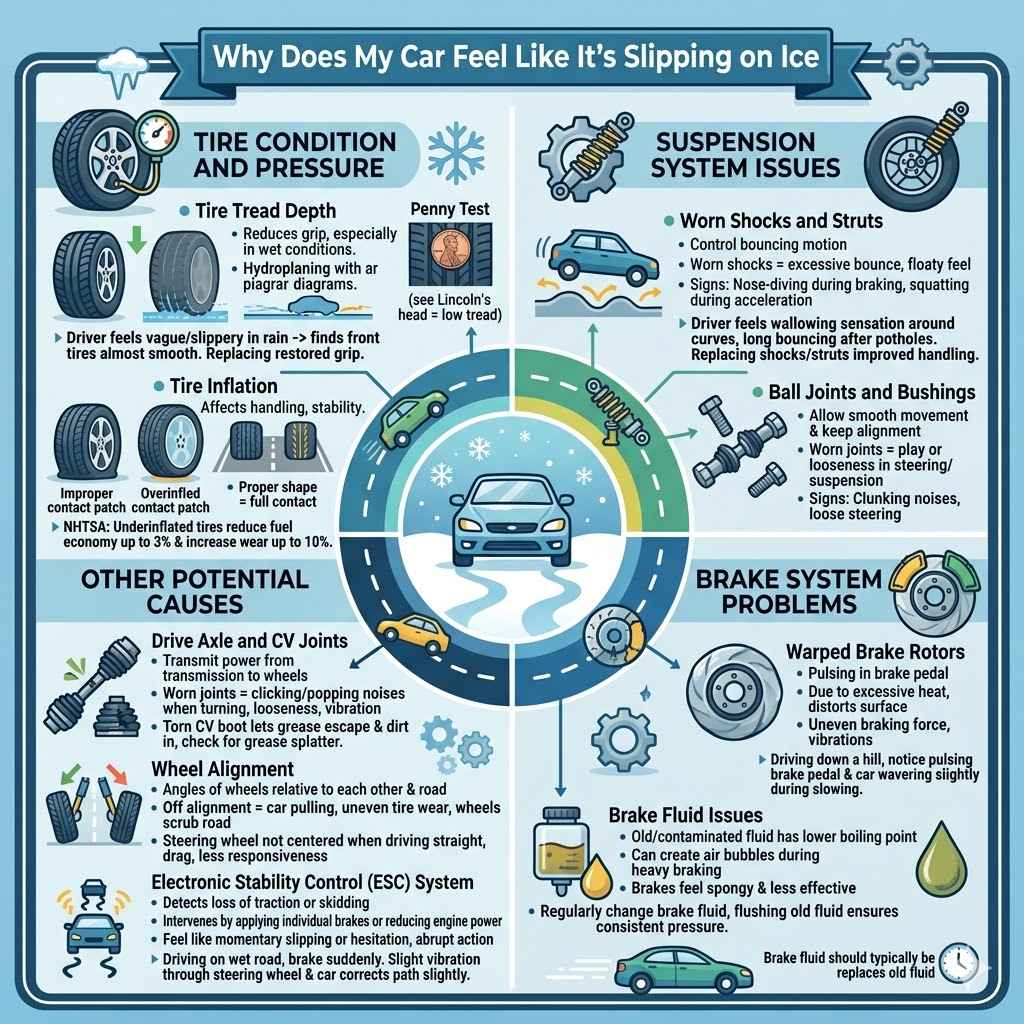
This section explores the common culprits behind that unnerving sensation of your car slipping. When your vehicle feels like it’s losing traction, it’s often due to issues with your tires, the suspension system, or the braking components. These parts are critical for maintaining grip and control, and when they aren’t working right, the result can be a feeling of instability that mimics driving on a slippery surface.
We will break down each of these areas to help you pinpoint the cause of this unsettling experience.
Tire Condition and Pressure
Your tires are the only part of your car that touches the road. If they are worn out or not inflated correctly, they cannot provide the grip your car needs. This is a very frequent reason why your car might feel like it’s slipping.
Tire Tread Depth
Tire tread is the pattern of grooves on the surface of your tires. These grooves are designed to channel water away from the tire, allowing it to maintain contact with the road. As tires wear down, the tread depth decreases, reducing their ability to grip, especially in wet conditions.
Think about a brand-new tire. It has deep grooves that can hold a lot of water. As you drive, these grooves get shallower.
When the tread is too worn, water can get trapped between the tire and the road, creating a thin layer of water. This is called hydroplaning. It’s like your tires are riding on top of the water instead of gripping the road surface beneath it.
A good rule of thumb is to check your tire tread depth regularly. You can use a penny to do this. Insert a penny into the deepest part of the tire tread with Lincoln’s head facing down.
If you can see the top of Lincoln’s head, your tire tread is likely too low and needs replacement.
Example: A driver notices their car feels vague and slippery in the rain. Upon inspection, they find their front tires are worn almost smooth. Replacing the tires with new ones with adequate tread immediately restores confidence and grip.
Tire Inflation
The air pressure inside your tires is also very important. If your tires are underinflated, the contact patch (the part of the tire touching the road) can change shape. This can lead to less stable handling and a feeling of slipping.
Overinflated tires can also be problematic, as they reduce the contact patch and make the ride harsher, potentially leading to a feeling of skittishness.
Your car’s recommended tire pressure is usually found on a sticker inside the driver’s side door jamb or in the owner’s manual. It’s important to check tire pressure when the tires are cold, meaning the car hasn’t been driven for a few hours.
Correct tire pressure ensures the tire is properly shaped to make full contact with the road. This provides the best possible grip and stability. When pressure is too low, the tire can flex too much, leading to unpredictable handling.
When it’s too high, the tire might bounce more, reducing the contact area.
Statistic: According to the National Highway Traffic Safety Administration (NHTSA), underinflated tires can reduce fuel economy by up to 3% and increase tire wear by up to 10%. Improper inflation also significantly impacts handling and safety.
Suspension System Issues
The suspension system connects your car’s wheels to its body. It absorbs bumps and keeps your tires firmly on the ground, which is vital for control. When parts of the suspension are worn or damaged, your car can feel unstable.
Worn Shocks and Struts
Shocks and struts are key components of your suspension. They control the bouncing motion of your car after it hits a bump. If they are worn out, your car might continue to bounce longer than it should, making it feel floaty and difficult to control.
This bouncing can lead to a sensation of slipping, especially when turning or braking.
Shocks and struts work by using hydraulic fluid to dampen the spring’s movement. When this fluid leaks or the seals wear out, the shocks and struts lose their ability to control the bounce. This means the wheels might not stay in constant contact with the road surface.
You might notice your car “nose-diving” when you brake hard or “squatting” when you accelerate. Bouncing excessively after going over bumps is another sign. This lack of stability directly translates to a reduced feeling of connection with the road, making it seem like the car is slipping.
Example: A driver experiences a noticeable wallowing sensation when going around curves. They also feel like the car bounces for a long time after hitting potholes. Replacing the worn shocks and struts significantly improves handling and eliminates the perceived slipping.
Ball Joints and Bushings
Ball joints and bushings are like the flexible joints and rubber cushions in your suspension. They allow different parts to move smoothly while keeping everything aligned. If these wear out, they can cause excessive play or looseness in the steering and suspension.
This looseness can make the car feel unpredictable, especially at higher speeds or when changing lanes.
Worn ball joints can create play in the steering, meaning the wheels don’t always go exactly where you point the steering wheel. Worn bushings can allow the suspension arms to move more than they should, leading to unpredictable shifts in alignment. This instability can feel like the car is unsure of its path, contributing to the slipping sensation.
You might hear clunking noises from your suspension, especially when going over bumps or turning. The steering might feel loose or require more correction than usual. This lack of precise control is a direct cause of the feeling that the car is not firmly planted on the ground.
Brake System Problems
The braking system is essential for stopping your car safely. If there are issues with your brakes, it can affect how your car behaves, sometimes leading to a feeling of slipping or loss of control.
Warped Brake Rotors
Brake rotors are the discs that your brake pads clamp onto to slow your wheels. If rotors become warped, meaning they are no longer perfectly flat, you might feel pulsing in the brake pedal when you apply the brakes. This pulsing can also translate to a feeling of instability or uneven braking, which could be interpreted as slipping.
Warped rotors happen due to excessive heat. When brakes are applied forcefully or repeatedly, rotors can get very hot. If they cool unevenly, they can distort.
This distortion means that as the wheel rotates, the brake pads encounter an uneven surface.
When you brake with warped rotors, the pads grab unevenly. This can cause the car to pull to one side or create vibrations you feel in the steering wheel or the seat. This uneven braking force can make the car feel less stable and contribute to the slipping sensation.
Scenario: You’re driving down a hill and need to brake frequently. You notice a pulsing sensation in the brake pedal and feel the car wavering slightly as you slow down. This is a classic sign of warped rotors.
Brake Fluid Issues
Brake fluid is the hydraulic fluid that transfers the force from your brake pedal to the brake calipers. If the brake fluid is old or contaminated with water, its boiling point can be lowered. This means that under heavy braking, the fluid can boil, creating air bubbles.
Air is compressible, unlike fluid, so this can make your brakes feel spongy and less effective.
When brake fluid boils, the spongy pedal sensation is a direct result of air in the lines. This reduced braking power can make you feel like you have less control over slowing down. In extreme cases, this lack of responsive braking can lead to a feeling of insecurity that might be mistaken for slipping, especially if you have to brake suddenly.
Regularly changing your brake fluid is part of routine maintenance. Over time, brake fluid absorbs moisture from the air, which lowers its performance capabilities. Flushing and replacing the old fluid with fresh fluid ensures your brakes operate with consistent pressure and power.
Statistic: Brake fluid should typically be
Other Potential Causes
While tires, suspension, and brakes are the most common causes, other issues can also make your car feel unstable or like it’s slipping. These include problems with the steering system, drive axles, and even electronic stability control systems.
Drive Axle and CV Joints
The drive axles (or half-shafts) transmit power from the transmission to the wheels. They have flexible joints called Constant Velocity (CV) joints that allow for movement. If these CV joints wear out or their protective boots tear, grease can escape, and dirt can get in.
This can lead to clicking or popping noises when turning and a general feeling of looseness or vibration.
When a CV joint is damaged, it can cause an uneven transfer of power to the wheel. This might feel like a hesitation or a shuddering during acceleration, especially when turning. This uneven power delivery can make the car feel like it’s not moving in a straight line smoothly, contributing to the slipping sensation.
A torn CV boot is a common precursor to CV joint failure. If you notice grease splattered around the inside of your wheel well or hear clicking noises when turning sharply, it’s essential to have your CV joints inspected immediately. Early detection can often prevent more costly repairs.
Wheel Alignment
Wheel alignment refers to the angles of your wheels relative to each other and the road. If your alignment is off, your car might pull to one side, and the tires may not track straight. This can lead to uneven tire wear and make the car feel like it’s constantly fighting itself to go straight.
When your wheels aren’t aligned correctly, they can scrub against the road surface. This creates drag and can make the car feel less responsive. It might feel like you’re constantly making small adjustments to the steering wheel to keep the car going straight, and this effort can contribute to a feeling of instability.
Signs of poor alignment include uneven tire wear (e.g., wear on the edges or the center of the tire), the car pulling to one side when you drive, or a steering wheel that isn’t centered when you’re driving straight. A professional alignment service adjusts these angles to bring your wheels back into the manufacturer’s specifications.
Electronic Stability Control (ESC) System
Modern cars often have Electronic Stability Control (ESC) systems. These systems use sensors to detect when a car is losing traction or skidding. If ESC activates, it can automatically apply individual brakes or reduce engine power to help you regain control.
Sometimes, when ESC intervenes, it can feel like the car is momentarily slipping or hesitating, especially if the driver is not expecting it.
ESC is a safety feature designed to prevent accidents. It works by monitoring steering wheel input and the direction the car is actually going. If there’s a significant difference, it assumes a loss of control and takes action.
This action might feel abrupt to an inexperienced driver.
If you experience a sudden loss of control, you might feel the ESC system working to correct the situation. This can manifest as a subtle change in how the car responds, a slight braking effect on one or more wheels, or a reduction in engine power. While it might feel like slipping, it’s actually the system working to prevent a skid.
Scenario: You’re driving on a wet road and need to brake suddenly. As you do, you feel a slight vibration through the steering wheel and notice the car seems to correct its path slightly on its own. This is likely your ESC system engaging to help you maintain control.
Diagnosing the Slipping Sensation
Figuring out exactly why your car feels like it’s slipping on ice is important for safety and peace of mind. This involves a combination of observing your car’s behavior and performing simple checks. We will outline a systematic approach to help you diagnose the problem.
Observing the Symptoms
Pay close attention to when and how the slipping sensation occurs. Does it happen only in specific conditions, like rain or when turning? Does it happen when you brake, accelerate, or maintain speed?
Are there any unusual sounds accompanying the feeling?
- When does the feeling occur: Is it during acceleration, braking, turning, or at constant speeds? Noting the specific driving action that triggers the sensation is a key clue. For example, if it happens only during hard braking, the issue is likely related to the brakes. If it happens during turns, it could be suspension or tire related.
- Environmental factors: Does the feeling happen on dry roads, wet roads, or gravel? If it’s worse on wet roads, it strongly suggests a tire tread or hydroplaning issue. If it happens on dry roads, the cause is more likely mechanical.
- Accompanying sounds or vibrations: Listen for any grinding, clicking, clunking, or humming noises. Feel for any pulsing in the steering wheel or brake pedal, or vibrations in the car’s body. These sounds and sensations provide direct hints about the malfunctioning component.
- Warning lights: Has any warning light illuminated on your dashboard? Lights like the ABS (Anti-lock Braking System) light, traction control light, or check engine light can indicate specific system problems that might contribute to a slipping sensation.
Simple Checks You Can Do
Before heading to a mechanic, there are a few easy checks you can perform yourself. These simple inspections can often point you in the right direction.
- Check tire pressure: Use a tire pressure gauge to check the air pressure in all four tires. Compare it to the recommended pressure found on the sticker inside your driver’s door jamb or in your owner’s manual. Ensure all tires are inflated to the correct level.
- Inspect tire tread: Visually examine the tread on all your tires. Look for uneven wear patterns or areas where the tread is significantly worn down. Use the penny test described earlier to gauge tread depth.
- Check for visible damage: Look at your tires for any cuts, bulges, or foreign objects embedded in the tread or sidewall. Also, check your suspension components for any obvious signs of damage, such as torn rubber boots or loose parts, though this may require getting under the car.
- Test your brakes lightly: While parked, press the brake pedal firmly. It should feel firm and not spongy. If it feels soft or sinks to the floor, there might be a problem with the brake fluid or the system itself.
When to Seek Professional Help
If you perform these simple checks and cannot identify the problem, or if you suspect a serious mechanical issue, it’s time to consult a qualified mechanic. They have the tools and expertise to accurately diagnose and repair complex automotive problems.
- Complex mechanical issues: Problems with the suspension, braking system, or drivetrain often require specialized knowledge and equipment for diagnosis. A mechanic can perform a thorough inspection of these systems.
- Safety concerns: If the slipping sensation is severe or happens frequently, it’s a significant safety risk. Do not delay in seeking professional help to ensure your car is safe to drive.
- Warning lights on the dashboard: If any warning lights related to braking, stability control, or engine management are illuminated, a mechanic can read the diagnostic trouble codes (DTCs) to pinpoint the issue.
- Lack of experience or tools: If you are not comfortable performing vehicle inspections or do not have the necessary tools, it is always best to rely on professional automotive technicians. They can perform a comprehensive check and provide reliable solutions.
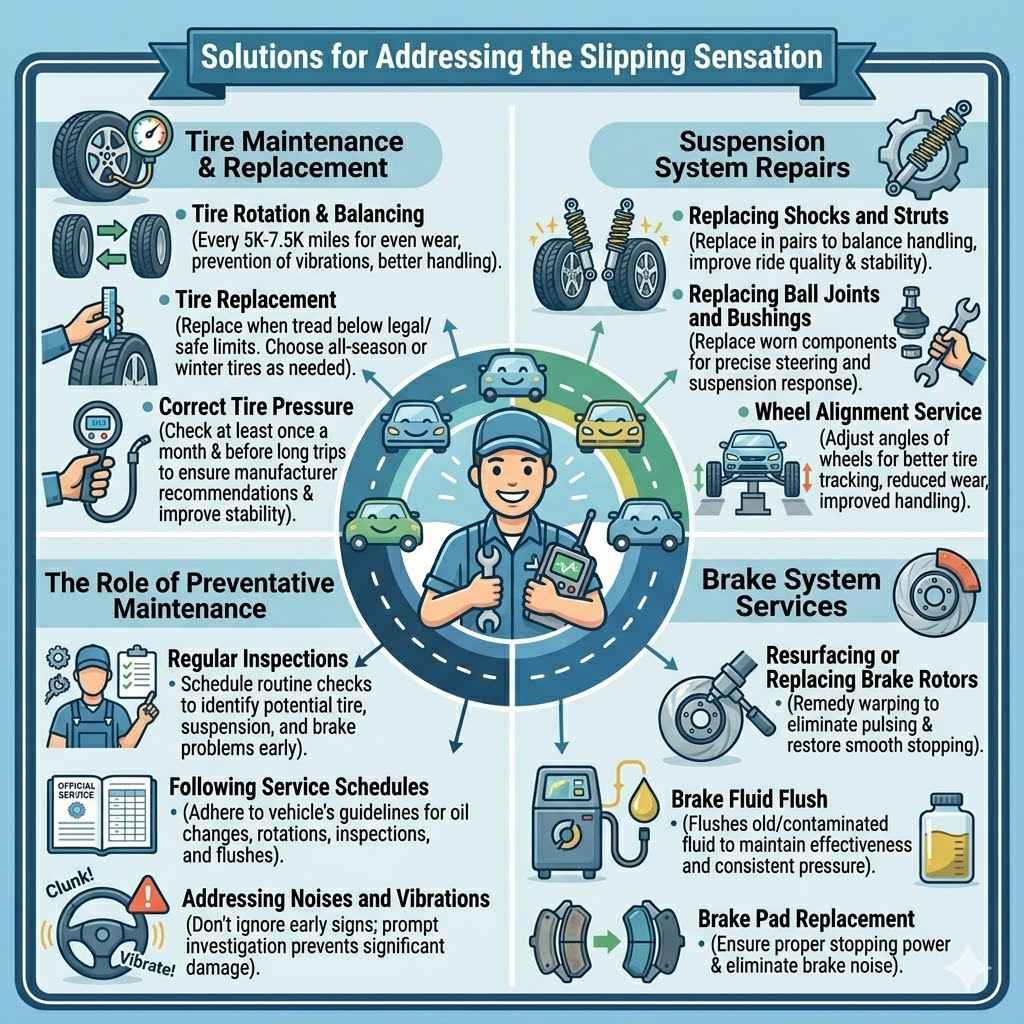
Addressing the Slipping Sensation
Once the cause of the slipping sensation is identified, several solutions can resolve the problem. The fix will depend directly on what we’ve discussed earlier as the root cause.
Tire Maintenance and Replacement
If your tires are the issue, addressing them is usually straightforward but critical. Proper tire care ensures your car grips the road effectively.
- Tire Rotation and Balancing: Regular tire rotation ensures even wear across all four tires, extending their lifespan. Wheel balancing ensures that the weight is distributed evenly around the wheel and tire assembly, preventing vibrations and improving handling. This should be done at recommended intervals, typically every 5,000 to 7,500 miles.
- Tire Replacement: If your tire treads are worn below the legal and safe limit, replacement is necessary. Choosing the right tires for your climate and driving conditions is also important. All-season tires are common, but winter tires offer superior grip in cold and snowy conditions.
- Correct Tire Pressure: Maintaining the manufacturer’s recommended tire pressure is vital. Underinflated tires can cause instability and uneven wear, while overinflated tires can lead to a harsher ride and reduced grip. Check your tire pressure at least once a month and before long trips.
Suspension System Repairs
Issues with your suspension require repair or replacement of worn components. This is crucial for maintaining control and a smooth ride.
- Replacing Shocks and Struts: Worn shocks and struts should be replaced in pairs (both front or both rear) to maintain balanced handling. This is a common repair that significantly improves ride quality and stability.
- Replacing Ball Joints and Bushings: These parts are typically replaced when they become excessively worn or loose. A mechanic will be able to identify which specific components need replacing. This ensures precise steering and suspension response.
- Wheel Alignment Service: If your alignment is off, a professional alignment service will adjust the angles of your wheels. This ensures your tires are pointing in the correct direction, reducing tire wear and improving handling.
Brake System Services
For brake system issues, prompt service is essential for safety. Your car needs to stop effectively.
- Resurfacing or Replacing Brake Rotors: If your brake rotors are warped, they can be resurfaced to become flat again, or they may need to be replaced entirely if they are too thin or severely damaged. This will eliminate pulsing during braking and restore smooth stopping power.
- Brake Fluid Flush: Old or contaminated brake fluid should be flushed and
- Brake Pad Replacement: Worn brake pads can lead to reduced braking effectiveness and noisy brakes. Replacing them is a standard maintenance item that ensures proper stopping power.
The Role of Preventative Maintenance
Taking care of your car regularly can prevent many issues that lead to the feeling of slipping. It’s about staying ahead of problems.
- Regular Inspections: Schedule routine inspections with your mechanic. They can identify potential problems with your tires, suspension, and brakes before they become serious. Early detection saves money and prevents safety hazards.
- Following Service Schedules: Adhere to your vehicle’s recommended maintenance schedule. This includes oil changes, tire rotations, brake inspections, and fluid flushes. Following these guidelines ensures all systems are functioning correctly.
- Addressing Noises and Vibrations: Don’t ignore unusual noises or vibrations. They are often early indicators of a problem that could escalate. Investigating these symptoms promptly can prevent more significant damage and costly repairs.
Frequently Asked Questions
Question: Why does my car feel like it is slipping when I turn?
Answer: This can be due to several reasons. Worn tires with low tread depth may not grip well during turns. Problems with your suspension, like worn ball joints or bushings, can cause looseness and instability.
Also, if your wheel alignment is off, your tires won’t be pointing straight, affecting how they handle turns.
Question: Is it dangerous if my car feels like it’s slipping on ice?
Answer: Yes, it can be very dangerous. This feeling indicates a loss of traction or control. If your car is not gripping the road properly, you might have difficulty steering, braking, or accelerating, which increases the risk of an accident, especially in adverse weather conditions.
Question: How often should I check my tire pressure?
Answer: You should check your tire pressure at least once a month and before any long trips. It’s best to check when the tires are cold, meaning the car has not been driven for at least three hours. This gives you the most accurate reading.
Question: What does it mean if my car’s traction control light comes on?
Answer: The traction control light indicates that the system is actively working to prevent wheel spin and help you maintain traction. It usually comes on when you are driving on slippery surfaces or if the system detects one or more wheels losing grip. It is a safety feature, but its activation means you are experiencing some loss of traction.
Question: Can bad alignment make my car feel like it’s slipping?
Answer: Yes, bad wheel alignment can contribute to a feeling of slipping. When your wheels are not properly aligned, they can drag or scrub against the road, making the car harder to control and feel less stable. This can lead to a sensation of the car fighting to go straight or feeling unstable.
Conclusion
When your car feels like it’s slipping on ice, it’s usually due to issues with tires, suspension, or brakes. Addressing worn treads, incorrect tire pressure, or faulty suspension parts like shocks and struts can restore stability. Similarly, brake problems such as warped rotors or low fluid need fixing.
Regular checks and maintenance are key to preventing these sensations and ensuring your car grips the road safely.