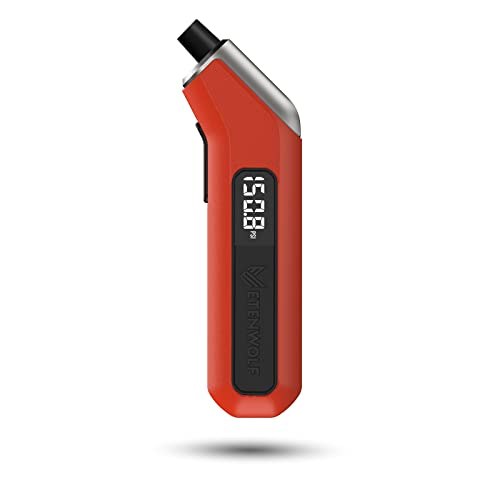
Best Air Pressure Gauge for Your Car: 3 Top Picks for 2026
For most drivers, the best air pressure gauge is a digital model with ±1 psi accuracy, a 0-100 psi range, and an easy-read backlit display; choose a pencil gauge only if storage size matters more than speed. A bad gauge can leave tires too low or too high, which cuts tread life, fuel economy, and wet-weather grip. This guide compares three top picks for 2026 by use case, PSI range, and accuracy standard.
Quick comparison
| Product | Badge | Best for | Price | ||
|---|---|---|---|---|---|
 |
Longacre 50417 0-60 PSI Analog Tire Pressure Gauge, 2 InchLongacre | Our pick | 2 inch · 0-60 PSI · Analog | $42.81
Price as of 30 Oct 2026
|
View |
 |
CZC AUTO Digital Tire Pressure Gauge with Tread DepthCZC AUTO | Also great | 2 in 1 · 0-100 PSI · Digital | $18.99
Price as of 30 Oct 2026
|
View |
 |
AstroAI Digital Tire Pressure Gauge, Heavy Duty TireAstroAI | Upgrade pick | 250 PSI · Digital · Inflator Gauge | $32.77
Price as of 30 Oct 2026
|
View |
 |
Milton S-920 Pencil Tire Pressure Gauge With Tread DepthMilton | Budget pick | Pencil · 10-70 PSI · Deflator | $12.90
Price as of 30 Oct 2026
|
View |
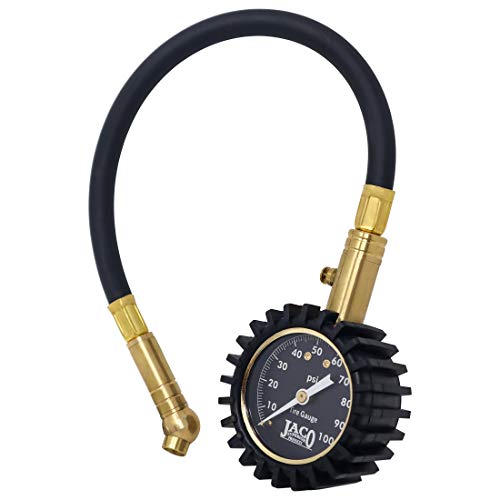 |
JACO ElitePro Tire Pressure Gauge – 100 PSIJACO Superior Products | Our pick | $22.90
Price as of 31 Oct 2026
|
View |
Match the gauge to your vehicle first, then to where you will use it. A compact glovebox tool, a winter-night checker, and a frequent-inflation inflator gauge are not the same purchase.
How we chose
We compared manufacturer specs, listing details, and published buyer feedback for readability, fit, accuracy claims, and storage size. Also check the stated PSI range against common passenger-car and SUV needs, because a gauge reads less reliably near the top of its range.
We gave extra weight to features that matter in daily use: backlighting, battery type, swivel or angle chucks, bleed valves, and whether the form factor suits glovebox storage or shop use. No hands-on testing is claimed here.
Digital tire gauge: best for daily drivers
The CZC AUTO digital gauge is the best fit for most drivers who want one tool that is easy to read in dark garages, quick at the curb, and small enough for everyday carry. Its backlit LCD helps in low light, and the 2-in-1 layout adds tread-depth checking without asking you to carry a second tool.
Based on the listing details, it measures 0-100 PSI and suits cars, trucks, motorcycles, and bicycles. That makes it broad enough for routine passenger-car use while leaving room for higher-pressure applications.
The main drawback is simple: it is a battery-powered digital tool, so you need to keep track of battery condition and replaceability for glovebox use. If you want the speed of a digital readout but also want a compact backup, this is the style to start with.
Analog dial gauge: best for battery-free use
The Longacre 50417 makes sense if you want a battery-free gauge with a large face and quick visual reading. Its glow-in-the-dark dial helps more than a tiny pencil scale when you are checking pressures in a shop bay, a pit lane, or a dim driveway.
The listing says it measures 0-60 PSI, which is the right band for many passenger cars. It also includes angle and ball chucks plus a built-in deflator valve, so the tool is set up for both measurement and fine correction.
The drawback is range. A 0-60 PSI dial is a good everyday-car fit, but it is not the right ceiling for many SUVs, light trucks, or higher-pressure applications. If your vehicle calls for pressures that sit near the top of the gauge, choose a wider range.
Inflator gauge combo: best for frequent inflation
The AstroAI inflator gauge is the best pick if you often add air and want one tool that checks pressure while you inflate. The stainless braided hose, quick-connect coupler, and rotatable dial are useful when the valve stem is awkward to reach or the chuck needs a steadier seal.
Its listing says 250 PSI and notes ANSI B40.7 Grade 2A accuracy. The one-hand inflation and micro-deflation setup is the real advantage here, because a bleed valve lets you trim pressure in small steps instead of removing the chuck repeatedly.
The drawback is bulk. Inflator-gauge combos are better in a garage, along a driveway, or in a service routine than in a tiny glovebox. If you only check tires once a month, this is more tool than you need.
What a tire gauge measures
A tire pressure gauge measures PSI, the pressure inside the tire. You use it to check each tire manually, which matters because TPMS only warns after notable pressure loss and does not tell you the exact pressure at the valve stem.
That is why a handheld gauge still matters even on newer vehicles. A dashboard warning is useful, but it is not a substitute for checking all four tires when you want exact pressure for load, weather, or fuel economy.
Properly inflated tires can help support fuel efficiency, handling, and overall tire health. If one tire is 4 to 6 PSI low, the car may still drive normally enough to miss the problem on the road, but the tire will not be working at the pressure the maker intended.
Digital vs analog tire pressure gauge: which is better?
Digital gauges are easier to read at a glance, especially with a backlit LCD. They often offer 0.1 PSI or 0.5 PSI resolution depending on model, and many include hold or lock readings so you can remove the chuck without losing the display.
Analog dial gauges still have a place. They do not need batteries, and the large needle face can be easier to use in a garage or pit setting where the display is already close to eye level.
Choose digital if readability and low-light use matter most. Choose analog if you want battery-free simplicity and a larger face that is easy to scan fast. A pencil gauge is still the smallest option, but it trades away ease of reading.
What PSI range do I need for a car tire gauge?
For many passenger cars, a 60 PSI gauge is a common fit. For heavier cars, SUVs, and light trucks, 75 PSI is usually the safer middle ground. If you are checking trucks, RVs, or large trailers, go to 100 PSI or more so the gauge does not run near its upper limit.
That top-end margin matters because readings are less accurate near the top of a gauge’s range. A 60 PSI gauge is a poor match if your vehicle regularly asks for pressures that sit close to 60 PSI.
Suppose your sedan calls for 35 PSI. A 60 PSI gauge gives you comfortable headroom. Picture a light truck with a higher door-jamb spec. That same gauge can work, but a 75 PSI or 100 PSI tool will be easier to trust near the target.
How accurate should a tire gauge be?
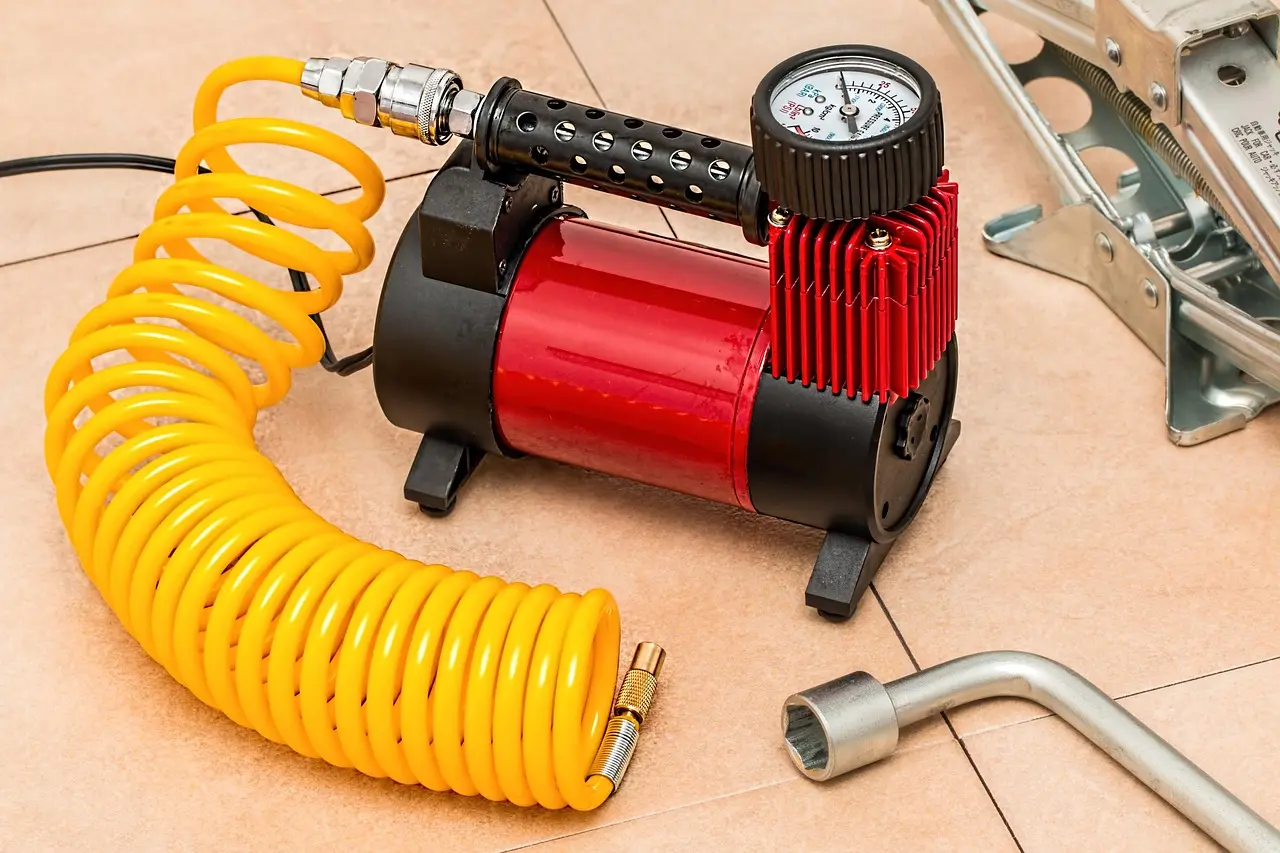
For daily use, a handheld gauge should be close enough to stay within about 1 PSI at normal car pressures, especially around the 30 to 40 PSI range most passenger cars use. The important part is not just the advertised claim; it is how that claim translates at your tire’s working pressure.
Accuracy claims are often written as a percent of full scale. That can look precise on paper while hiding a larger real-world PSI error at common car pressures. A gauge with a smaller operating range often gives you a more useful reading for passenger-car work.
Accuracy translation box
| Claim format | Full scale | Error at 35 PSI | Error at 60 PSI | What it means in practice |
|---|---|---|---|---|
| ±1% of full scale | 60 PSI | ±0.6 PSI | ±0.6 PSI | Very usable for passenger-car pressures. |
| ±1% of full scale | 100 PSI | ±1.0 PSI | ±1.0 PSI | Still reasonable, but less targeted for cars than a 60 PSI gauge. |
| ±0.5% of full scale | 200 PSI | ±1.0 PSI | ±1.0 PSI | Good on paper, but the higher scale can be more than a car needs. |
ANSI references can help you compare products, but they do not tell the whole story by themselves. A gauge may cite an ANSI standard and still be a better or worse fit depending on the range, display style, and how near the top of its scale your vehicle runs.
Pressure gauge comparison table
| Driver scenario | Correct gauge type | PSI range | Must-have features | Storage fit |
|---|---|---|---|---|
| Daily commuter car | Digital or compact analog | 60 PSI | Backlit display or large face, good chuck seal, easy battery access if digital | Glovebox or center console |
| Winter checking in low light | Digital | 60 PSI or 75 PSI | Backlit LCD, hold/lock reading, readable buttons with gloves | Glovebox |
| Roadside top-off | Digital or inflator gauge | 75 PSI | Swivel chuck, clear readout, bleed valve if you plan to fine-tune | Door pocket or cargo box |
| Glovebox emergency kit | Pencil or compact digital | 60 PSI | Small body, simple display, replaceable battery if digital | Best in a glovebox |
| Shop or frequent inflation | Inflator gauge combo | 100 PSI | Bleed valve, hose, swivel or rotatable head, secure seal | Tool chest or garage shelf |
Use this as a simple rule: 60 PSI for most passenger cars, 75 PSI if you also deal with heavier SUVs or light trucks, and 100 PSI for truck or RV work. If the gauge will live in a glovebox, size and battery life matter almost as much as the display.
Why low-light readability and hand fit matter
Backlit displays help in low light, but the rest of the tool matters too. A gauge can have a bright screen and still be frustrating if the buttons are tiny, the chuck is hard to line up, or the body is too large for a cramped wheel well.
Battery type also matters. AAA, LR44, and button-cell batteries all appear on different models, and the best choice is the one you can actually keep working after the first battery change. That is especially important for glovebox storage, where you want the gauge to sit ready for months.
For drivers with limited hand strength or dexterity, the best design is usually the one with a secure chuck, a readable screen, and a simple one-hand grip. A swivel chuck can help more than a bigger display when the valve stem points awkwardly behind a wheel spoke.
Do I need a gauge with a bleed valve?
You do if you want to set pressure precisely. A bleed valve lets you release small amounts of air without disconnecting the gauge, which makes it easier to land on the exact target instead of overshooting and starting over.
It matters most on inflator gauges and premium analog dials. For a basic monthly check, it is optional. For frequent inflation, winter pressure tuning, or trailer work, it saves time and reduces guesswork.
How to keep a gauge trustworthy
A tire gauge does not need much maintenance, but it does need a few checks. Dirt at the chuck, a weak battery, or a damaged seal can make a good tool read badly enough to matter.
- Keep the chuck clean and dry so it seals fully on the valve stem.
- Check the battery before winter and before long trips if the gauge is digital.
- Store the gauge where it will not be crushed in the glovebox or cargo area.
- Compare it occasionally against a known-good gauge at the same tire pressure.
- Replace it if the display flickers, the needle sticks, or the chuck leaks air.
A common first-timer mistake is assuming a gauge is wrong when the problem is actually the valve stem connection. If the chuck does not seat squarely, the reading can drift or hiss, and the result will look less trustworthy than it really is.
Which one should you buy?
If you want the best all-around choice for a daily car, buy the CZC AUTO digital gauge. It offers a backlit display, a 0-100 PSI range, and a compact 2-in-1 format that works well for glovebox storage and low-light checks.
If you want battery-free use and a quick-reading face, choose the Longacre analog gauge. It is the better pick for drivers who care more about fast visual checks and glow-in-the-dark readability than about a digital display.
If you add air often and want one tool for inflation and pressure setting, choose the AstroAI inflator gauge. Its hose, quick-connect setup, and micro-deflation control make it the most useful choice for frequent top-offs.
As a simple decision rule, start with 60 PSI for passenger cars, 75 PSI for heavier SUVs and light trucks, and 100 PSI for trucks and RVs. Then decide whether low-light readability, battery-free storage, or inflating ability matters more in your routine.
Frequently asked questions
What is the best air pressure gauge for a car?
For most cars, a digital gauge with a 0-100 PSI range, backlit display, and about 1 PSI accuracy is the best all-purpose choice. It is easy to read, works in low light, and gives enough range for most passenger vehicles without being oversized for glovebox storage.
How accurate should a tire pressure gauge be?
A good daily-use gauge should be accurate enough to keep you within about 1 PSI at normal passenger-car pressures. That matters more than a big-sounding percentage claim on the box, because percent-of-full-scale specs can translate into more error than you expect at 35 PSI or 60 PSI.
Can I use a tire pressure gauge in low light?
Yes, if you choose the right style. A digital gauge with a backlit LCD is the easiest option in a dark garage or at night. Some analog gauges also help with glow-in-the-dark faces, but they are usually less convenient when visibility is poor.
Which tire pressure gauge works best if I also inflate tires?
An inflator-gauge combo is the best fit if you add air often. Look for a swivel or angled chuck, a bleed valve for fine adjustments, and a hose that helps you reach awkward valve stems. Check the maker’s listing for the pressure range and accuracy claim before buying.
Products related to this article
Sponsored / affiliate links. As an Amazon Associate I earn from qualifying purchases. I may earn additional commission from eligible campaigns.