Why Does My Car AC Turn On and Off? 7 Causes + Fixes
That rhythmic click as your car’s AC compressor kicks on and off can be completely normal — or an early sign your system is heading toward a much bigger repair bill. The tricky part is telling the difference just by listening, since a healthy compressor and a failing one can sound almost identical at first. This guide breaks down every reason a car AC turns on and off, which causes you can diagnose yourself, and when the problem is serious enough to book a shop visit.
Quick Answer
Car AC cycling on and off every 5–45 seconds is normal. If it’s cycling faster than every 5 seconds (short cycling), the cause is almost always low refrigerant triggering the low-pressure cutoff switch. Other causes include a clogged condenser, faulty compressor clutch, or overcharged refrigerant. Start with a visual condenser check and an OBD2 scan before recharging.
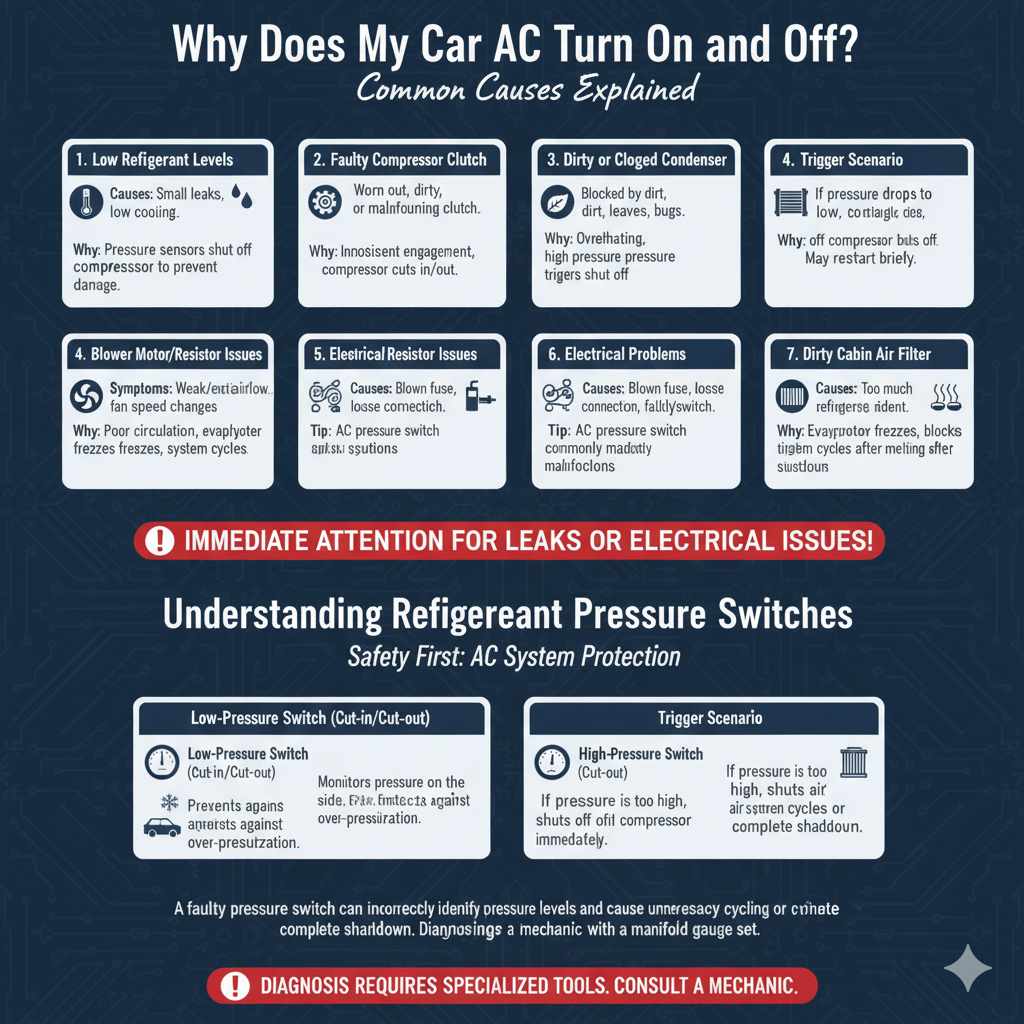
Why Does My Car AC Turn On and Off? Common Causes Explained
AC compressor short cycling is when the compressor switches on and off faster than normal — typically every 5 seconds or less instead of the normal 5–45 second cycle. It happens when the system’s pressure sensors detect an out-of-range condition and cut power to the compressor to prevent damage. Each rapid cycle adds wear to the clutch and compressor, making early diagnosis important.
1. Low Refrigerant Levels
Low refrigerant is the most common cause. When refrigerant level drops — typically due to a slow leak — system pressure falls below the low-pressure switch threshold (usually around 25 PSI on R-134a systems). The switch cuts power to the compressor. Once pressure briefly recovers, the compressor re-engages, then cuts again — producing rapid cycling. You’ll also notice reduced cooling performance even when the compressor is running.
2. Faulty Compressor Clutch
The compressor clutch engages the compressor when you turn on the AC. A worn, dirty, or failing clutch may engage briefly then disengage due to insufficient magnetic force or internal wear. It can also overheat under repeated engagement and cut out as a protective measure. Listen for a clicking or chattering sound from the compressor area as a diagnostic clue.
3. Dirty or Clogged Condenser
The condenser sits at the front of the vehicle in front of the main radiator. Blocked fins — from dirt, bugs, or debris — prevent heat from escaping the refrigerant. This causes high-side pressure to spike, triggering the high-pressure switch to cut the compressor. Once the system cools slightly, pressure drops and the compressor re-engages — starting the cycle again. A visual inspection and gentle rinse often resolves this cause entirely.
4. Issues with the Blower Motor or Resistor
The blower motor pushes cooled air through the vents. A failing motor or faulty resistor can reduce airflow to the evaporator, causing it to freeze. Once frozen, the system can’t move air — the compressor cuts out. When the ice melts, the cycle repeats. Symptoms include unusual fan noise, fan speed that doesn’t match the setting, or no airflow on certain speed settings.
5. Electrical Problems
Blown fuses, loose wiring, a faulty relay, or a malfunctioning pressure switch can all interrupt power to the AC compressor intermittently. Electrical faults are often intermittent — the AC may work fine for a while before cutting out. Check the AC fuse and relay in your fuse box first. A faulty AC pressure switch is the most common electrical cause of short cycling and can be tested and replaced for $50–$150.
6. Overcharged Refrigerant
Too much refrigerant creates excessive high-side pressure, which triggers the high-pressure switch to shut down the compressor — the same result as a clogged condenser but from the opposite direction. This typically happens after an AC service where the system was overfilled. The fix requires a certified technician to recover the excess refrigerant using EPA-compliant equipment.
7. Dirty Cabin Air Filter
A severely clogged cabin air filter restricts airflow through the evaporator. In extreme cases, restricted airflow causes the evaporator coil to freeze — stopping airflow entirely. Once the ice melts, airflow resumes and the system restarts, producing an on-off cycle. Cabin air filters should be replaced every 12,000–15,000 miles and are a $15–$30 DIY fix.
Common AC System Components and Their Roles
| Component | Function | How it Falters |
|---|---|---|
| Compressor | Circulates refrigerant and creates the cooling effect | Worn clutch, electrical failure, internal seizure |
| Condenser | Releases heat from refrigerant to outside air | Clogged fins from dirt or debris |
| Evaporator | Absorbs heat from cabin air, making air cold | Freezes up from low refrigerant or restricted airflow |
| Refrigerant | Transfers heat between evaporator and condenser | Low levels from leaks; too much if overcharged |
| Expansion Valve/Orifice Tube | Controls refrigerant flow into the evaporator | Clogs or fails to regulate flow |
| Pressure Switches | Protect the compressor by cutting power at unsafe pressures | Faulty switches trigger unnecessary shutdowns |
| Blower Motor | Pushes cooled air through vents into the cabin | Failing motor or resistor reduces or stops airflow |
DIY Fixes: What You Can Do Yourself
Work through these steps in order before calling a shop. Steps 1–3 are free; Step 4 requires a $15–$30 recharge kit. If none of these resolve the issue, the problem is refrigerant leak, compressor failure, or an internal blockage — all requiring a professional with recovery equipment. For related AC troubleshooting, see our guide on how to reset your car’s air conditioner.
Step 1: Visual Inspection – The Obvious Clues
- Check the Condenser: Look at the condenser fins at the front of the car. Are they packed with dirt, leaves, or debris? Clean gently with a low-pressure water rinse. Engine must be off and cool.
- Inspect the Serpentine Belt: With the engine off, check the belt that drives the AC compressor. A loose or cracked belt can cause intermittent compressor disengagement.
- Look for Oily Residue: Refrigerant leaks leave an oily film around AC hose connections and the compressor. This won’t fix itself — it needs a professional leak repair.
Step 2: Clean the Condenser
- Park on a level surface with the engine off and fully cooled.
- Locate the AC condenser — the thin radiator-like component in front of the main radiator.
- Rinse gently with a garden hose on low pressure. High pressure bends the delicate aluminum fins.
- Use a soft brush for stubborn debris between the fins.
- Allow to dry, then retest the AC.
Step 3: Check the Cabin Air Filter
- Find the cabin air filter location in your owner’s manual — usually behind the glove box or under the dashboard.
- Remove the filter and hold it up to light. If you can’t see light through it, it needs replacing.
- Install the replacement filter in the correct airflow direction (arrow on the filter frame indicates direction).
- Cabin air filters cost $15–$30 and take under 10 minutes to replace on most vehicles.
Step 4: Check Fuses and Relays
- Consult your owner’s manual for the AC fuse and relay location — usually in the under-dash or engine bay fuse box.
- Turn off the ignition before touching any fuse.
- Pull the AC fuse and inspect for a broken or melted element. Replace with the exact same amperage rating only.
- Swap the AC relay with an identical relay from a non-critical circuit (like the horn) to test. If AC works with the swapped relay, replace the relay.
Step 5: Topping Up Refrigerant (Use with Caution)
- Identify refrigerant type: Check the underhood label for R-134a (most vehicles before 2021) or R-1234yf (most 2021+ vehicles). They are not interchangeable.
- Connect the recharge kit: Attach to the low-pressure port (smaller port, typically on the larger AC line). Engine running, AC set to max cold.
- Monitor the gauge: Add refrigerant slowly. Stop at the correct PSI range shown on the gauge for your ambient temperature. Overfilling causes the same short cycling as overcharging.
Important: AC recharge kits treat symptoms, not the cause. If there’s a leak, refrigerant will escape again. For EPA refrigerant handling regulations, see EPA Section 609. If short cycling returns within days of recharging, take the vehicle to a shop for a leak test.
Best Car AC Recharge Kit Pick
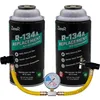
ZeroR AC Recharge Kit R134a
Eco-friendly R134a replacement refrigerant with built-in gauge — the easiest way to recharge a low AC system at home without a separate manifold gauge set.
- Best for: DIY recharge on R134a systems (most vehicles pre-2021) with short cycling from low refrigerant
- Why we picked it: Built-in pressure gauge prevents overcharging; eco-friendly formula; works without extra tools
- Main drawback: Temporary fix if there’s a leak — system will lose charge again without sealing the leak first
Compare more AC recharge options
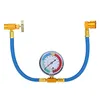 Option 1 SURIEEN AC Charge Hose with Gauge
|
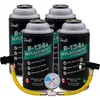 Option 2 ZeroR AC Recharge Kit (14oz)
|
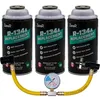 Option 3 ZeroR AC Recharge Kit with Leak Sealer
|
As an Amazon Associate we earn from qualifying purchases.
When to Call a Professional Mechanic
DIY steps won’t fix these — a shop with refrigerant recovery equipment and manifold gauges is required. Expect to pay $100–$300 for a professional recharge with leak test, $50–$150 for a pressure switch replacement, or $500–$1,500 for compressor replacement depending on vehicle make and labor rates.
- Confirmed Refrigerant Leak: Requires leak detection dye or UV lamp, professional recovery of old refrigerant, leak repair, and precise recharge to spec.
- Compressor Failure: Requires system depressurization, refrigerant recovery, compressor removal and installation, system evacuation, and recharge. Not a DIY job.
- Faulty Pressure Switch: Can be replaced for $50–$150 by a shop; requires refrigerant recovery on some vehicles to access.
- Expansion Valve or Orifice Tube Blockage: Requires system disassembly and professional diagnosis with manifold gauges.
- Electrical Fault Beyond Fuses: A mechanic with a scan tool can trace wiring and sensor faults in the AC control module that aren’t visible to DIY inspection.
Understanding Refrigerant Pressure Switches
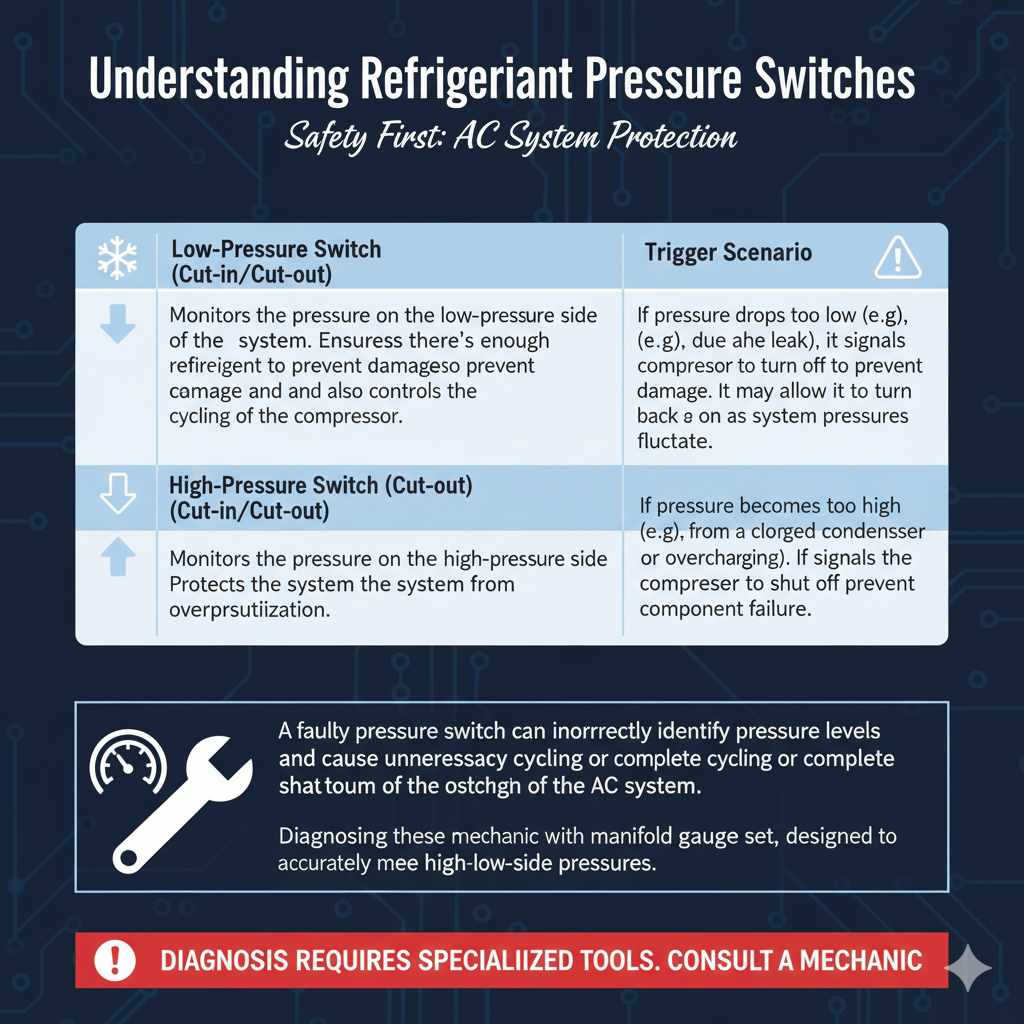
Pressure switches are the primary reason AC compressors cycle on and off. They protect the compressor from damage at unsafe pressures. When either switch triggers, the compressor cuts out — this is by design, not a malfunction. A malfunction occurs when a switch triggers at incorrect pressures due to a fault in the switch itself.
| Switch Type | Function | Trigger Scenario |
|---|---|---|
| Low-Pressure Switch | Monitors low-side pressure; prevents compressor from running without enough refrigerant | Triggers when low-side drops below ~25 PSI — usually from low refrigerant or a slow leak |
| High-Pressure Switch | Monitors high-side pressure; prevents over-pressurization damage | Triggers when high-side exceeds ~400 PSI — usually from clogged condenser or overcharging |
A faulty pressure switch can trigger at incorrect pressures, causing unnecessary short cycling even when refrigerant level is correct. Diagnosis requires a manifold gauge set to measure actual system pressures and compare them to the switch trigger thresholds.
Frequently Asked Questions
Why does my car AC blow cold for a bit, then warm, then cold again?
This classic short cycling pattern is almost always caused by low refrigerant triggering the low-pressure switch. The compressor runs briefly, pressure drops, the switch cuts out. Once pressure stabilizes slightly, the compressor re-engages, then cuts out again. Other causes: a clogged condenser causing high-pressure cutoff, or a failing compressor clutch that loses engagement after warming up.
Is it normal for a car AC compressor to cycle on and off?
Yes — on vehicles with CCOT (Clutch Cycling Orifice Tube) systems, the compressor cycling on and off every 5–45 seconds is normal operation by design. The system maintains evaporator temperature by cycling. Cycling faster than every 5 seconds (short cycling) or in a fixed rapid pattern is abnormal and indicates a problem — usually low refrigerant or a pressure switch fault.
Can I add refrigerant myself to fix AC short cycling?
Yes, using an AC recharge kit, but only if low refrigerant is confirmed as the cause. Use the correct refrigerant type — R-134a for most pre-2021 vehicles, R-1234yf for most 2021+ vehicles. Stop at the correct PSI range for your ambient temperature — overcharging causes the same short cycling as undercharging. If the system loses charge again within days, there’s a leak requiring professional repair.
My car AC stopped working completely — what should I check first?
Check the AC fuse and relay first — a blown fuse is a $1 fix. Then check the cabin air filter for blockage. If both are fine, check the condenser for debris. If still not working, the system likely has critically low refrigerant, a failed compressor clutch, or an electrical fault in the pressure switch circuit — these need a diagnostic gauge test.
How much does it cost to fix car AC that turns on and off?
Cost depends on the cause. Condenser cleaning: free DIY. Cabin air filter replacement: $15–$30. Fuse or relay: $1–$10. DIY refrigerant recharge kit: $30–$60. Professional recharge with leak test: $100–$300. Pressure switch replacement: $50–$150. Compressor clutch repair: $200–$500. Full compressor replacement: $500–$1,500 depending on vehicle make and shop labor rates.
Conclusion
Car AC cycling on and off is normal at 5–45 second intervals — anything faster is short cycling caused by a pressure-triggered cutoff. Start with the free fixes: clean the condenser, check the cabin filter, inspect fuses. If the system is low on refrigerant, a recharge kit addresses it temporarily. Recurring short cycling after a recharge means there’s a leak — at that point, a professional shop with manifold gauges and recovery equipment is the right next step before compressor damage compounds the repair cost.
Products related to this article
Sponsored / affiliate links. As an Amazon Associate I earn from qualifying purchases. I may earn additional commission from eligible campaigns.