Why Is Automotive Repair a High-Tech Field Now?
Automotive repair is high-tech now because late-model fixes usually start with fault codes, live data, software checks, and sensor calibration. A scan tool is often step 1. Skip that, and you can replace good parts, miss hidden faults, and turn a small repair into a much bigger bill. This guide explains why modern cars depend on electronics, diagnostics, programming, and calibration, and what that means for drivers, shops, and technicians.
From Wrenches to Networks: ECUs, Can Bus, and Data
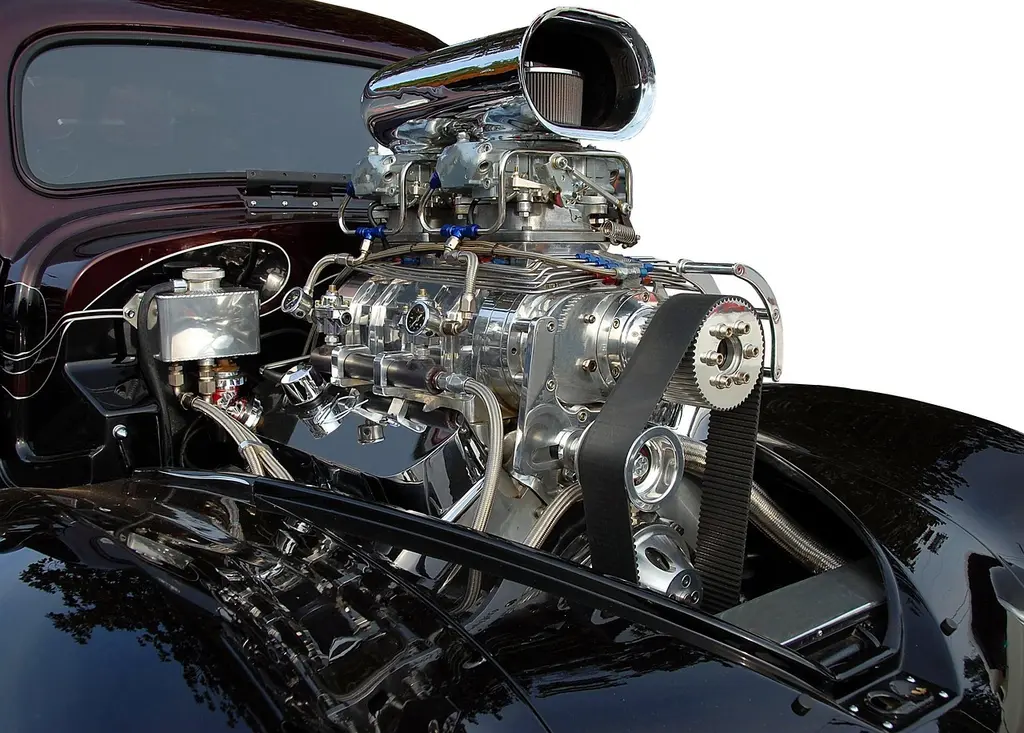
Repair is high-tech now because the car is a networked computer system. Brakes, steering, powertrain, safety, and comfort systems all talk to each other. A technician often has to read data, verify software, and calibrate sensors before turning a wrench.
From wrenches to networks: what changed in modern vehicles
Many late-model vehicles use several ECUs and modules for engine, transmission, body electronics, airbags, camera systems, and driver-assistance features. Those modules often communicate over CAN bus networks, so a fault in one area can show up in more than one system. Diagnosis is often a data problem before it is a parts problem.
That shift matters because a warning lamp may point to a failed sensor, a wiring issue, a module communication fault, or a software problem. Replace a part without checking the data, and you can miss the real cause.
Why sensors, software, and modules turned diagnosis into the first repair step
OBD-II gives technicians a standardized diagnostic port, trouble codes, and live data streams. That is the starting point. On many vehicles, the repair path continues into bidirectional testing, module coding, software updates, and post-repair calibration. (en.wikipedia.org)
Say your SUV comes in with an airbag light and a stability-control warning after a battery replacement. The battery may be fine. The issue may be a low-voltage event that set faults in multiple modules, which then need scan-tool review and a guided reset.
What technology do mechanics use in modern repair shops?
Modern shops use diagnostic scan tools, OEM service information, electrical test equipment, and calibration gear. Those tools help technicians read fault codes, watch live sensor data, command components on and off, and follow factory procedures for repair and setup.
Diagnostic scan tools and live data
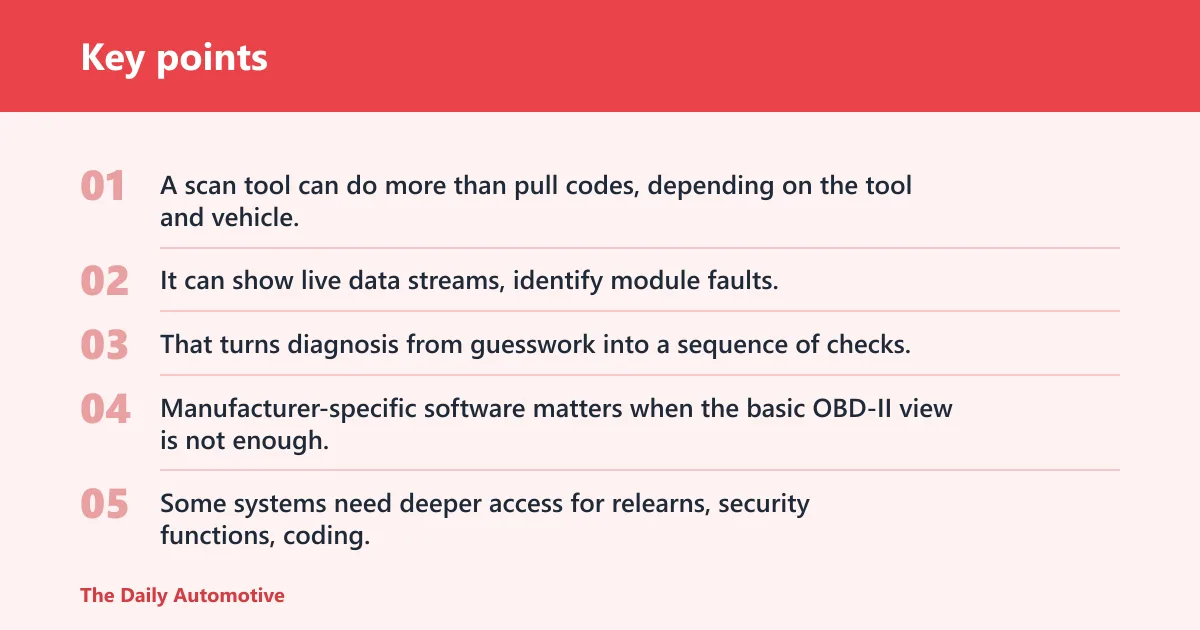
A scan tool can do more than pull codes, depending on the tool and vehicle. It can show live data streams, identify module faults, and run bidirectional tests such as commanding a cooling fan, cycling a purge valve, or checking an ABS pump. That turns diagnosis from guesswork into a sequence of checks.
Manufacturer-specific software matters when the basic OBD-II view is not enough. Some systems need deeper access for relearns, security functions, coding, or module programming.
OEM service information, wiring diagrams, and repair procedures
OEM service information typically provides factory wiring diagrams, torque specs, software update instructions, and calibration steps. Shops use it to see which connector feeds a sensor, what fastener torque applies, and whether a repair requires a post-job relearn or programming step.
That information is especially important on vehicles with networked electronics, because an unplugged connector or incorrect setup can create symptoms that look unrelated. The wiring diagram often matters as much as the part number.
How do ECUs, modules, and CAN bus networks change diagnosis?
ECUs and other modules make diagnosis more technical because they store fault memory, exchange messages over CAN bus networks, and sometimes need coding or programming after replacement. A problem in one module can trigger warnings in several others, so the fault path must be traced carefully.
Engine, transmission, body, and safety modules in one network
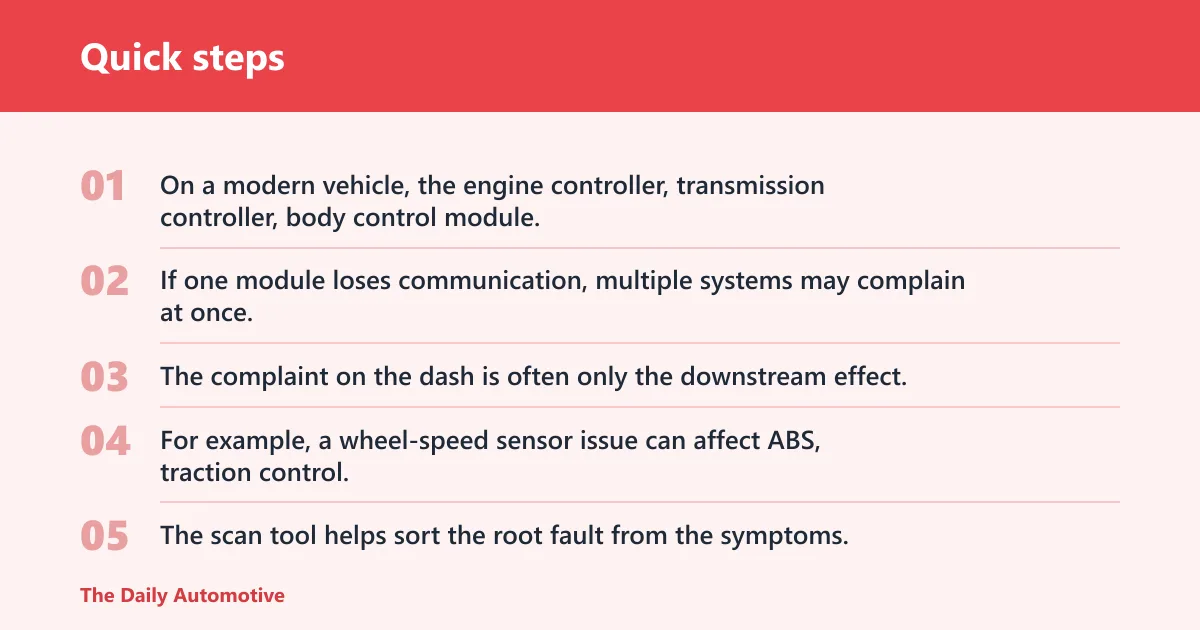
On a modern vehicle, the engine controller, transmission controller, body control module, ABS module, and airbag module share information constantly. If one module loses communication, multiple systems may complain at once. The complaint on the dash is often only the downstream effect.
For example, a wheel-speed sensor issue can affect ABS, traction control, stability control, and sometimes adaptive cruise features. The scan tool helps sort the root fault from the symptoms.
How CAN communication failures can create multiple symptoms?
CAN bus communication problems may come from damaged wiring, a corroded connector, low system voltage, or a failing module that drags the network down. Because the modules depend on shared data, a single fault can create several unrelated-looking warnings.
A technician may need to check network resistance, power and ground feeds, scan-module communication status, and freeze-frame data before replacing anything. That is electrical diagnosis, not parts swapping.
When programming or coding becomes part of the repair
Programming and coding are not the same as mechanical repair. Programming updates module software. Coding sets configuration options so a module matches the vehicle’s equipment. Mechanical repair fixes the hard parts. A replacement module may need all three steps to work correctly.
OEM information usually matters here because the exact procedure can depend on the model year, engine, option package, and security access rules. Skip that step, and you can end up with a part that is installed but not fully functional.
Why ADAS makes modern repair a calibration job too
ADAS turns many repairs into calibration jobs because cameras, radar units, and related sensors must point exactly where the software expects. After windshield, bumper, alignment, suspension, or collision work, a vehicle may need static or dynamic calibration before those systems can trust their inputs.
Camera and radar systems in lane keeping and emergency braking
Lane keeping, emergency braking, adaptive cruise control, and parking assistance often depend on forward cameras and radar sensors. These systems are sensitive to mounting angle, ride height, bumper condition, windshield replacement, and even wheel alignment.
That is why an ADAS warning can appear after a repair that did not touch the sensor directly. A bumper cover that changed shape by a small amount can be enough to alter radar alignment.
Static and dynamic calibration equipment and shop setup needs
Static calibration usually needs targets, measured distances, a level floor, and the correct setup for the specific vehicle. Dynamic calibration may require a road drive at a certain speed and in specific conditions. Many shops need both the space and the equipment to do the job correctly.
Calibration equipment is not one universal box. It can include target boards, alignment support, floor-level checks, and OEM procedures that tell the shop exactly where to position the vehicle and for how long.
Why do EV and hybrid repairs demand different skills?
EV and hybrid repairs often call for different skills because high-voltage systems usually require safety procedures, insulated tools, and different diagnostic steps. A technician must know how to disable the high-voltage system before inspecting components that would be ordinary on a gasoline vehicle.
High-voltage battery, inverter, and motor systems
These systems change both the repair process and the risk profile. High-voltage cables, contactors, cooling circuits, and inverter electronics can all create faults that are not visible from a quick inspection. The scan tool and the manufacturer service data become central here.
On many hybrids and EVs, battery state-of-health data, cell balancing information, and inverter fault codes shape the next step. That is a different workflow from checking spark, fuel, and exhaust parts.
Insulated tools, safety steps, and lockout procedures
Insulated tools, personal protective equipment, and lockout procedures are part of the job because high-voltage systems can injure or kill if handled casually. The correct procedure usually includes power-down steps, wait times for capacitors to discharge, and verification that the system is safe to touch.
That is why EV and hybrid training matters. The work is still automotive repair, but the hazards and diagnostic path are different.
Why is automotive repair a high-tech field now? technician workflow table?
This table shows how modern complaints move through the real repair process. The key point is simple: the first answer is often data, not a new part. Calibration, programming, and OEM information enter the workflow when the system involved depends on sensors or modules.
| Common symptom | Likely system involved | Scan-tool step | Calibration or programming step | When OEM information is required |
|---|---|---|---|---|
| Lane-keeping warning after windshield replacement | ADAS camera module | Read camera codes and live data | Static or dynamic camera calibration | Targets, aim specs, and exact calibration procedure |
| Multiple dash warnings after low battery voltage | Body and safety modules | Check fault memory in each module | Clear faults and verify module status; code if needed | Module reset steps and coding guidance |
| ABS and traction-control lights with no brake pedal change | Wheel-speed sensor or ABS module | Watch live wheel-speed data while driving | Relearn or module setup if the sensor or hub was replaced | Torque specs, sensor gap, and relearn procedure |
| Tire-pressure light after tire rotation | TPMS sensors | Identify sensor IDs and battery status | TPMS relearn or sensor registration | Relearn method, sensor placement, and vehicle-specific steps |
| Hybrid refuses to go ready after service | High-voltage system or inverter control | Read hybrid battery and inverter codes | Follow safety reset and clear fault logic; program if a module changed | High-voltage disable steps and fault-tree diagnostics |
| Transmission shift concern with no obvious mechanical noise | Transmission ECU or related module | Check live data, solenoid commands, and fault memory | Adaptation reset or programming after replacement | Software version, adaptation reset, and fill procedure |
A common first-timer mistake is treating diagnosis as replacement
Picture a compact car with a TPMS light after one tire was replaced. If the shop skips the sensor ID check and relearn step, the warning can stay on even though the tire itself is fine. The fix is not always another tire part; sometimes it is registration and confirmation.
- Read the fault codes and live data first.
- Check whether the fault is electrical, mechanical, or communication-related.
- Confirm whether the vehicle needs calibration, relearn, coding, or programming.
- Use OEM service information for the exact procedure.
- Verify the repair with a final scan and road test or calibration check.
What skills do automotive technicians need for newer vehicles?
Technicians need electrical diagnosis, scan-tool fluency, network troubleshooting, and the ability to read service data. They also need comfort with software-driven tasks such as relearns, module setup, and ADAS calibration. Mechanical skill still matters, but it is only part of the job.
Why do auto repair technicians need training in electronics now?
Because the vehicle’s faults often live in circuits, software, and communication networks. Training in electronics helps technicians test power, ground, resistance, signal integrity, and module communication instead of guessing at parts. That makes diagnosis faster and more accurate.
What makes high-tech auto repair different from old-school wrench work?
Old-school repair focused mainly on mechanical wear and adjustment. High-tech repair adds fault-code analysis, software versions, sensor alignment, and module communication checks. The wrench is still important, but the scan tool and service information now sit beside it.
Is auto repair still a good career with all the new technology?
Yes. Auto repair is still viable, and strong technicians are in demand, but the skill mix has changed toward diagnostics, data interpretation, and software-driven procedures. People entering the field should expect more electronics work and more learning after formal training.
Frequently asked questions
Why is automotive repair a high-tech field now?
Because the repair often starts with software, sensor data, and module communication rather than disassembly. Modern vehicles use ECUs, CAN bus networks, ADAS, TPMS, and other electronics that require scan tools, calibration, and factory information to fix correctly.
How do ADAS and computer diagnostics change auto repair?
ADAS adds camera and radar systems that must be calibrated after certain repairs, including windshield replacement, bumper work, alignment changes, suspension work, and collision repair. Computer diagnostics help identify whether the problem is a sensor, a module, a network fault, or a calibration issue.
Products related to this article
Sponsored / affiliate links. As an Amazon Associate I earn from qualifying purchases. I may earn additional commission from eligible campaigns.