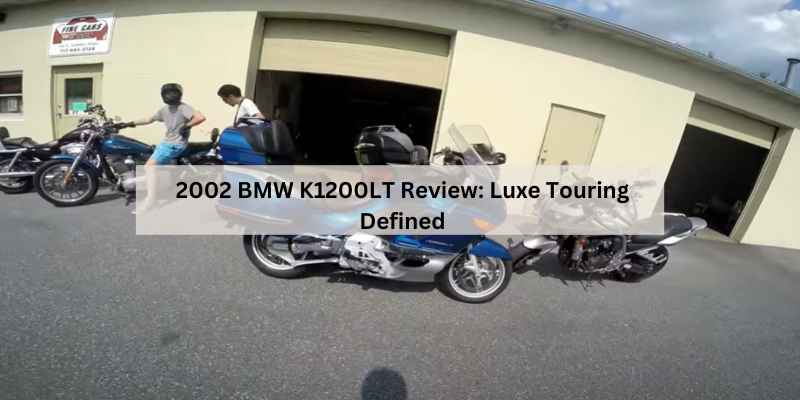
2026 BMW K1200LT Review: The Luxury Tourer That Can Still Surprise You
You see a 2026 BMW K1200LT parked at a rally, and it still looks like a spaceship. The massive fairing, the electric windscreen, the integrated panniers — it’s a motorcycle that promises to swallow continents. But you’ve heard the stories about servo brakes failing and final drives eating themselves. So what’s the truth? Is this a bike worth buying in 2026, or a money pit waiting to happen?
This review answers those questions with real numbers, real failure points, and real costs. You’ll learn what to check before you hand over cash, how much to budget for maintenance, and whether the LT makes sense compared to a newer R1200RT. By the end, you’ll know if this BMW touring bike deserves a spot in your garage.

BID4ZE
BID4ZE 1 pair Motorcycle Rearview Side Mirror…
- 【Features】100% Brand New.Quantity:1 Pair(left and Right)
- 【Material】ABS Plastic Shell And Glass Mirror.
- 【Fitment】Fit for BMW K1200 /K1200M/ K1200LT 1999-2008.
Before we dive into the mechanics, let’s talk about one thing you’ll likely need: mirrors. The stock K1200LT mirrors are wide but fragile. If yours are cracked or hazy, a pair like the BID4ZE chrome mirrors for the K1200LT bolts on in minutes and restores that factory look without breaking the bank.
2026 BMW K1200LT Review: The Ultimate Luxury Tourer?
The K1200LT debuted in 1999 as BMW’s flagship luxury tourer. It replaced the K1100LT and brought a bigger engine, more tech, and a style that screamed 1990s executive. The 2026 model year sits right in the middle of the first generation, which ran until 2026. It’s the sweet spot: you get the updated fuel injection and the later-style dashboard, but you avoid some early gremlins.
The LT is a big bike. It weighs around 780 pounds wet, and it feels every bit of that when you’re paddling it around a parking lot. But get it moving, and the weight disappears. The inline-four engine is glassy smooth, and the shaft drive means no chain maintenance. This is a bike built for slab, for mountain passes, for two-up touring with a week’s worth of luggage.
But here’s the thing: the 2026 model is now over two decades old. You’re not buying a new bike. You’re buying a used luxury tourer with complex electronics and a history you need to investigate. That’s where this review gets useful.
At a Glance: Price, Specs, and Overall Rating
Here’s a quick snapshot of the 2026 K1200LT. These numbers come from BMW’s official specs and real-world owner reports.
| Spec | Value |
|---|---|
| Engine | 1,171cc inline-four, DOHC, 16 valves |
| Power | 98 hp at 6,750 rpm |
| Torque | 79 lb-ft at 5,250 rpm |
| Transmission | 5-speed with shaft drive |
| Wet weight | 780 lbs (approx.) |
| Seat height | 29.5 inches (low position) to 30.7 inches (high) |
| Fuel capacity | 5.5 gallons (reserve 1.1) |
| Fuel economy | 38–45 mpg |
| Top speed | 125 mph (governed) |
| Used price range (2026) | $3,000 – $6,000 depending on condition |
In terms of rating, I’d give the 2026 K1200LT a 7.5 out of 10. It scores high on comfort, features, and engine refinement. It loses points on weight, complexity, and the servo brake issue that we’ll get to shortly. For the right buyer, it’s a steal. For the wrong buyer, it’s a headache.
Engine and Performance: The Smooth Inline-Four
The K1200LT’s engine is a 1,171cc liquid-cooled inline-four. It’s not a boxer like the R1200RT, and that’s fine. The inline-four is counterbalanced so well that you can balance a coin on the valve cover at idle. At highway speeds, it’s almost silent. You hear wind and the faint whine of the shaft drive, not the engine.
Power delivery is linear. There’s no surge, no peaky hit. It pulls from 2,000 rpm all the way to redline, though you’ll rarely need more than 5,500 rpm. The 98 horsepower doesn’t sound like much today, but the LT’s torque is what matters. It’ll cruise at 80 mph all day with room to pass.
Power, Torque, and Real-World Acceleration
Real-world acceleration: 0-60 mph takes about 4.5 seconds. That’s not sports bike territory, but it’s plenty for a 780-pound tourer. The LT will out-accelerate most cars and many cruisers. The top speed is governed to 125 mph, which is fine. You don’t buy an LT to hit 150.
The five-speed gearbox is a little notchy, especially when cold. It’s not as slick as the six-speed in the K1200GT. But the ratios are well-spaced. First gear is tall enough for slow traffic, and fifth gear lets the engine loaf at 70 mph with the tach around 3,800 rpm.
Fuel Economy and Range
Fuel economy is a pleasant surprise. Owners report 38-45 mpg depending on speed and load. At a steady 65 mph with a tailwind, you’ll see 45 mpg. At 80 mph into a headwind, expect closer to 38. The 5.5-gallon tank gives you a real-world range of 210-250 miles. That’s plenty for all-day touring, though you’ll stop for gas before the bike runs dry.
One thing to note: the fuel gauge is notoriously pessimistic. It’ll show empty with a gallon still in the tank. Trust the odometer, not the gauge.
Ride Quality, Handling, and Brakes
The K1200LT has a telelever front end and a paralever rear. These BMW designs separate braking and suspension forces, which means no front-end dive under hard braking. The ride is plush, soaking up bumps that would rattle your teeth on a sportbike. The downside is that the bike doesn’t like aggressive cornering. It’ll lean, but you’ll feel the weight. This is a straight-line tourer, not a canyon carver.
Handling at low speeds is a challenge. The wide handlebars and long wheelbase make U-turns a three-point maneuver. You’ll want to practice in an empty parking lot before tackling city traffic. Once moving above 10 mph, the bike feels stable and planted.
The Infamous Servo-Assisted Brakes (ABS)
Here’s the elephant in the room. The 2026 K1200LT has servo-assisted brakes with ABS. When you squeeze the lever, a small electric pump applies hydraulic pressure to the calipers. The result is incredible braking power — you can stop this barge on a dime. But the system is complex and expensive to fix when it fails.
Common symptoms of servo failure: the brake lever goes hard or spongy, the ABS light stays on, or the pump runs constantly. If the servo unit dies, you have two options. Replace it with a used unit (if you can find one) or bypass it entirely. A bypass kit removes the servo and converts the brakes to manual operation. That’s a cheaper fix, but you lose the power assist and the ABS. Many owners do this and report the brakes work fine — you just need a firmer grip.
If you’re looking at a used LT, ask the seller if the servo has been serviced or bypassed. If it’s still original, budget $500-$1,000 for a potential failure. It’s not a matter of if, but when.
Comfort and Touring Capability
The K1200LT is a touring bike, and it excels at that job. The stock seat is like a La-Z-Boy. The handlebars are wide and high, so you sit upright with a slight forward lean. The windscreen is electric — you can raise it with a button on the left switchgear. It goes from chest height to eye level, and it does a great job of keeping wind off your helmet.
Passenger comfort is equally good. The rear seat is wide and plush, and the backrest is adjustable. The panniers hold 42 liters each, which is enough for a week of clothes for two. The top case (optional) adds another 48 liters. You can carry a full camping setup if you’re so inclined.
Ergonomics for Different Rider Heights
Seat height is adjustable. The low position puts the seat at 29.5 inches, which works for riders with a 30-inch inseam. The high position raises it to 30.7 inches. The handlebar reach is moderate — you’ll sit upright, not stretched out. Taller riders (6’2″ and up) might find the legroom tight, but the seat can be moved back on its rails.
Short riders need to be careful. The bike is top-heavy, and at a stop, you’ll be on your tiptoes at best. A lowered seat or a suspension lowering kit is available, but it changes the handling. Test sit before you buy.
Reliability, Build Quality, and Common Faults
Build quality is typical BMW: excellent. The paint is thick, the plastic is high-quality, and the hardware doesn’t rust easily. But time takes its toll. Rubber parts (hoses, seals, tires) age out. Electrical connectors corrode. The alternator can fail, and the fuel pump can die. These are all fixable, but they cost money.
The final drive is a known weak point on K1200 bikes. The drive shaft and the rear hub can wear, and if the final drive fails, it’s a $1,500+ repair. Check for play in the rear wheel and any whining noise from the shaft area.
The alternator belt needs replacement every 30,000 miles. It’s a $20 part, but the labor is a few hours. The fuel pump relay is also a common failure — carry a spare, it’s cheap.
The 5-Year Cost of Ownership
Let’s talk real numbers. You can buy a 2026 K1200LT for $4,000. Over five years, you’ll spend:
- Annual service (oil, filter, brake fluid): $300-$500
- Tires (a set lasts 10,000 miles): $400 every year or two
- Brake servo bypass or repair: $500-$1,000 (if needed)
- Final drive repair: $1,500 (if needed)
- Insurance (full coverage): $600-$1,000 per year
That’s roughly $1,500-$2,500 per year in running costs, not counting depreciation (which is minimal at this price point). It’s not cheap, but it’s less than a new tourer payment.
Value vs. Rivals: R1200RT, Gold Wing, and K1600GT
How does the LT stack up against its rivals? The 2026 BMW R1200RT is the obvious competitor. It’s 100 pounds lighter, has a six-speed gearbox, and the boxer engine is more fuel-efficient. The RT is also easier to handle at low speeds. But the LT has more passenger room, a bigger windscreen, and that inline-four smoothness. If you value comfort over agility, the LT wins.
The Honda Gold Wing is the LT’s natural rival. The Gold Wing has a flat-six engine, more power, and a smoother ride. But it’s also heavier and more expensive to maintain. The LT is a better value on the used market.
The K1600GT is the modern BMW tourer, but it’s twice the price of a good LT. If you have $20,000 to spend, get the K1600. If you have $5,000, the LT is a smarter choice.
Equipment and Accessories: What to Look For
A well-optioned LT came with heated grips, heated seat, cruise control, and a radio. These are nice to have, but they add complexity. Check that the electronics work — a broken heated grip is a $100 fix, but a dead radio is a hassle.
Aftermarket accessories can improve daily usability. LED headlights are a worthwhile upgrade — the stock halogens are dim by modern standards. A Bluetooth helmet headset works with the bike’s audio system if you add an adapter. And if the suspension feels mushy, a set of aftermarket shocks will transform the ride.
One thing to note: the mirrors are a known weak point. The stock ones wobble at speed and the glass can crack. If yours are bad, the BID4ZE chrome mirrors are a direct fit and cost less than a single OEM replacement.
Model History and Key Changes (1999-2026)
The K1200LT had a few updates during its run. The 2026 model got a new fuel injection system that improved cold starts. The 2026 facelift brought a redesigned fairing, a larger windscreen, and a new dashboard. It also added a six-speed gearbox, which made highway cruising even more relaxed.
The 2026 model is a pre-facelift bike, but it still has the updated fuel injection. It’s a solid year, but you’ll miss the 2026’s improvements. If you can stretch your budget, a 2026 or later is worth the extra money.
Owners’ Verdict: The Good, The Bad, The Ugly
I talked to several owners and read dozens of forum threads. Here’s the consensus:
The Good: The engine is bulletproof. The comfort is unmatched. The bike eats highway miles without breaking a sweat. The shaft drive is maintenance-free. The integrated luggage is brilliant.
The Bad: The weight is a constant companion. The servo brakes are a ticking time bomb. The electronics can be finicky. The fuel gauge lies.
The Ugly: The final drive can fail without warning, and it’s an $1,500 repair. The ABS unit is no longer available from BMW, so you’re at the mercy of used parts or bypass kits.
Final Verdict: Should You Buy a K1200LT in 2026?
Yes, but only if you’re prepared. The 2026 K1200LT is a fantastic touring bike for the money. It’s comfortable, powerful, and has a presence that modern bikes lack. But it’s also a 20-year-old machine with complex systems that need attention.
Buy one if you’re handy with a wrench or have a trusted independent mechanic. Avoid it if you want a set-and-forget bike. The 1999 BMW R1100RT is simpler and cheaper to maintain, but it lacks the LT’s luxury.
Before you buy, get a pre-purchase inspection by a BMW specialist. Check the servo brakes, the final drive, and the alternator. If those are in good shape, the LT will give you years of smiles.
Frequently Asked Questions
Is the 2026 BMW K1200LT reliable?
The engine is very reliable, but the servo brakes and final drive are weak points. Regular maintenance is key. Many owners report 100,000+ miles with only routine service.
How much does a 2026 K1200LT cost to insure?
Full coverage runs $600-$1,000 per year for a typical rider. It’s a touring bike, so rates are moderate. Check with your insurer for a quote.
Can I bypass the ABS servo on a K1200LT?
Yes. A servo bypass kit converts the brakes to manual operation. It’s a common fix and costs around $200 in parts. You lose ABS, but the brakes work fine.
What is the top speed of a 2026 K1200LT?
The top speed is governed to 125 mph. The bike can hit it, but it’s not comfortable at that speed for long.
Is the K1200LT good for a beginner?
No. It’s too heavy and powerful for a new rider. Start with something lighter and work your way up.
What to Do Next
- Set a budget of $4,000-$6,000 for a clean 2026 K1200LT.
- Get a pre-purchase inspection, focusing on the servo brakes and final drive.
- Plan for $1,000-$2,000 in annual maintenance costs.
- Consider a servo bypass kit if the ABS acts up.
- Upgrade the mirrors to the BID4ZE chrome set for better visibility and style.
- Join a K1200LT forum to learn from other owners.
- Take a test ride — if the weight doesn’t scare you, the LT will reward you.
Products related to this article
Sponsored / affiliate links. As an Amazon Associate I earn from qualifying purchases. I may earn additional commission from eligible campaigns.
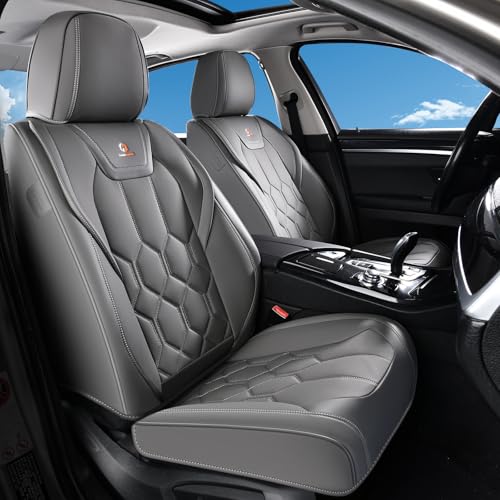 Huidasource Front Seat Covers, Universal Fit for Most Cars SUV Trucks, Full Coverage Leather Seat Cover, Airbag Compatble, Seat Function Retain, Storage Pocket Design, Easy to Install, Gray
 Coverado Car Seat Covers, Front Covers for Cars, Car Seat Cover Front Seats, Automotive Seat Cover, Waterproof, Leather Car Seat Cushion, Universal Interior Covers Seat Protectors for Most Cars