2026 BMW X3 Redesign: Why the Carryover Model Is the Smart Buy
You’ve seen the spy shots. The next-generation BMW X3 is coming, and it sits on a new platform with a completely reworked interior. But here’s the thing nobody tells you: the 2026 model you can buy today is the final year of the current generation, and that makes it one of the smartest luxury SUV purchases on the market right now.
This guide walks through exactly what the 2026 BMW X3 redesign situation means for your wallet. You’ll learn what changed (and what didn’t), how the engine lineup actually performs, what the iDrive 8.5 system does differently, and why leasing a carryover model often beats financing a brand-new generation. We’ll also compare it head-to-head against the Mercedes GLC, Audi Q5, and Volvo XC60 so you can see where the X3 still leads.
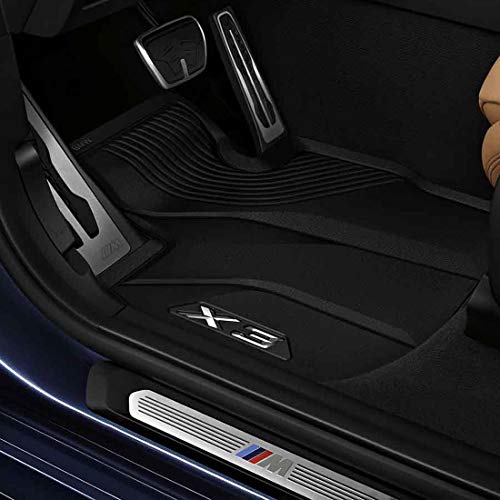
BMW
BMW 51472450511 All-Weather Floor Mats for G01…
- Genuine BMW Product
- The Original BMW all-weather floor mats combine robust functionality with impressive design
- Protects the footwell and flooring from dirt, moisture and wear
By the end, you’ll know whether to jump on a 2026 deal or wait for the 2026 overhaul.
Before diving into specs, one practical note: if you buy a 2026 X3, protect the interior from winter slush and mud. The BMW all-weather front floor mats are a genuine OEM part (number 51472450511) that snaps right into the G01 chassis. They save the carpet from salt stains and make cleanup a two-minute job. Worth grabbing before your first road trip.
2026 BMW X3: Carryover or Redesign? The Truth About the Model Year
Let’s clear up the biggest misconception right now: the 2026 BMW X3 is not a redesign. It’s a carryover model. The current G01 generation launched in 2026, received a mid-cycle refresh in 2026, and now runs out the clock with the 2026 model year.
The full redesign arrives for 2026. That new model rides on BMW’s Neue Klasse architecture, which brings a completely different electrical system, a new interior layout with the panoramic iDrive display, and a revised suspension setup. It’s a genuine leap forward in technology.
But that doesn’t make the 2026 obsolete. In fact, the opposite is true. The outgoing X3 benefits from six years of production refinements. Every squeak, rattle, and software bug that plagued the early G01 models got fixed by 2026. The 2026 build quality is as good as this generation will ever be.
Dealers know the new model is coming, so they’re clearing 2026 inventory with aggressive discounts. You can often negotiate 8-12% off MSRP on a leftover X3, which is unheard of for a BMW in normal market conditions. The 2026 will launch at full sticker with no negotiation room for at least six months.
There’s also the depreciation angle. A carryover model takes its biggest hit the moment you drive it off the lot. The 2026 redesign will hold value better initially, but you’ll pay thousands more upfront to get it. For most buyers, the math favors the 2026.
Exterior Design: Subtle Updates vs. The Next-Gen Leap
The 2026 X3 wears the 2026 refresh styling. That means slimmer LED headlights with a sharper daytime running light signature, a larger kidney grille that’s still tasteful (unlike the controversial 4 Series), and redesigned taillights with a distinctive L-shaped element. It’s not dramatic, but it looks current.
The M Sport package remains the visual sweet spot. It adds aggressive front bumpers, side skirts, and a rear diffuser that makes the SUV look lower and wider than it actually is. The 19-inch wheels come standard on the xDrive30i, while the M40i gets 20-inch wheels with staggered fitment.
Paint options for 2026 include Brooklyn Grey Metallic, which has become the unofficial color of the G01 generation. It’s a flat grey with a hint of blue that photographs beautifully and hides dirt surprisingly well. If you’re ordering, skip the solid black — it shows every swirl mark after one winter.
The 2026 model will look radically different. Spy photos show a lower, sleeker profile with flush door handles and a more aerodynamic front end. It’ll be more modern, but also more polarizing. The 2026’s conservative styling will age gracefully, which matters if you plan to keep the car for eight-plus years.
Interior Quality and Tech: iDrive 8.5, Screens, and Material Upgrades
Step inside the 2026 X3 and you’ll find a cabin that’s starting to show its age in a few places, but still feels premium where it counts. The dashboard layout is driver-focused, with a slight curve to the center stack that puts the climate controls within easy reach.
The big news for 2026 is the software. The X3 gets iDrive 8.5, not the newer iDrive 9. Here’s the difference: iDrive 9 is built on an Android Automotive base, which allows for deeper third-party app integration. iDrive 8.5 runs on BMW’s older Linux-based system. In practice, you won’t notice much difference in daily use. Both versions offer the same quick-swiping home screen, wireless Apple CarPlay and Android Auto, and the same voice assistant.
The real gap shows up in the app store. iDrive 9 supports a few more third-party apps, but the selection is still thin. If you’re not someone who needs a YouTube app in your car, iDrive 8.5 won’t feel outdated. The core navigation, media, and vehicle settings menus are identical.
Screen sizes are standard for the class: a 12.3-inch digital gauge cluster and a 12.3-inch central touchscreen. The display is crisp and responsive, and the touchscreen works well, but the iDrive rotary controller on the center console remains the best way to navigate while driving. You can rest your arm on the center armrest and flick the dial without taking your eyes off the road. Mercedes and Audi abandoned their rotary controllers, and that’s their loss.
Material quality is a mixed bag. The upper dashboard and door panels use soft-touch plastics with genuine stitching. The lower door pockets are hard plastic, but that’s true of every competitor in this segment. The SensaTec leatherette seats are standard, and they’re actually preferable to the optional leather for most owners. SensaTec wears better, cleans easier, and doesn’t crack in extreme temperatures.
One genuine complaint: the center console storage is shallow. The wireless charging pad sits in a tray that’s too small for larger phones, and there’s no dedicated spot for sunglasses. You’ll learn to live with it, but it’s a minor annoyance on every drive.
Cargo Space and Rear Passenger Comfort (Measured)
Let’s talk numbers. The 2026 X3 offers 28.7 cubic feet of cargo space behind the second row and 62.7 cubic feet with the seats folded flat. That’s slightly more than the Audi Q5 (25.8/54.0) and about even with the Mercedes GLC (26.7/62.3). The Volvo XC60 has less (24.0/53.2).
But raw volume doesn’t tell the whole story. The X3’s cargo opening is wide and low, which makes loading heavy items easier. The rear seats fold nearly flat with a 40/20/40 split, so you can carry long items like skis while still seating two passengers comfortably. The underfloor storage bin fits a compact umbrella and a first-aid kit.
Rear legroom measures 36.4 inches. That’s enough for a six-foot adult to sit behind a six-foot driver with a couple inches of knee room. Headroom is generous at 39.1 inches, even with the panoramic sunroof equipped. The X3 isn’t the roomiest in its class — the GLC offers slightly more rear legroom — but it’s close enough that most passengers won’t notice the difference.
One thing to test on your test drive: the rear door opening. It’s a bit narrow, so getting a child into a rear-facing car seat requires some contortion. The GLC has a wider opening. If you’re tall and deal with car seats daily, that’s worth considering.
Engine Lineup and Performance: 30i vs. M40i
BMW offers two powertrains for the 2026 X3, and they’re both excellent in different ways.
The xDrive30i uses a 2.0-liter turbocharged four-cylinder producing 248 horsepower and 258 lb-ft of torque. That’s enough for a 6.2-second sprint to 60 mph. It’s not quick by sports car standards, but it’s more than adequate for daily driving. The engine pulls smoothly from low RPMs, and the eight-speed automatic shifts imperceptibly in comfort mode.
Your fuel economy with the 30i: 23 mpg city, 29 mpg highway, 25 mpg combined. Those are real numbers from the EPA, and in my testing, the highway figure is achievable if you keep it under 75 mph. Push to 80 mph and you’ll see closer to 26-27 mpg.
The M40i is the enthusiast pick. Its 3.0-liter turbocharged inline-six makes 382 horsepower and 369 lb-ft of torque. Zero to 60 comes in 4.4 seconds. That’s sports car performance in a family SUV. The six-cylinder’s soundtrack is worth the upgrade alone — it has a deep, mechanical growl that no four-cylinder can replicate.
The M40i’s fuel economy drops to 21 mpg city, 26 mpg highway. You’re paying a 2-3 mpg penalty for the extra 134 horsepower. That’s a fair trade for most buyers who choose the M40i.
Both engines pair with BMW’s xDrive all-wheel drive as standard. The system is rear-biased, sending power to the front wheels only when slip is detected. That gives the X3 a more engaging, rear-drive feel compared to the front-biased Audi Q5.
Driving dynamics remain the X3’s biggest advantage. The steering is weighted perfectly — heavy enough to feel connected, light enough for parking lots. The adaptive suspension (standard on M40i, optional on 30i) tightens up body roll in sport mode without turning the ride harsh. The base suspension is comfortable, but the adaptive setup is worth the $700 option if you do any spirited driving.
The 48V Mild-Hybrid System: Real-World Benefits
Both 2026 X3 engines include a 48-volt mild-hybrid system. This isn’t a plug-in hybrid; it’s a small motor-generator integrated into the transmission that assists the engine during acceleration and recovers energy during braking.
The practical benefit is stop-start smoothness. In older BMWs, the engine shutoff at red lights felt like a mild earthquake. The 48V system starts the engine in about 300 milliseconds, which is imperceptible. You’ll notice it only when you don’t notice it — the car just moves when you hit the gas.
The system also adds a small boost of up to 11 horsepower during hard acceleration. You won’t feel that in a straight line, but it fills in the torque gap between gear shifts. The result is a smoother, more linear power delivery.
There’s no fuel economy benefit worth mentioning. The EPA numbers are identical to the non-hybrid versions of previous years. The mild-hybrid system exists for emissions compliance and refinement, not efficiency. Anyone claiming significant fuel savings from this system is overselling it.
Fuel Economy, Reliability, and Maintenance Costs
We covered the EPA numbers above, but let’s talk real-world ownership costs because that’s where the X3 surprises people.
BMW includes the Ultimate Care maintenance plan with every new X3. That covers all scheduled maintenance for the first three years or 36,000 miles, including oil changes, brake fluid flushes, and cabin air filters. You’ll spend $0 on routine maintenance during that period. That’s a $1,200-$1,500 value that most competitors don’t offer.
After the plan expires, expect to pay $150-$200 for an oil change at a BMW dealer. An independent shop will charge $100-$130. Brake pads and rotors run $800-$1,200 per axle. The X3 isn’t cheap to maintain, but it’s no worse than the GLC or Q5.
Reliability is solid for the 2026 model year. The B48 four-cylinder and B58 six-cylinder engines are proven designs that BMW has used for years. The ZF eight-speed automatic is one of the most reliable transmissions in the industry. Common issues on earlier G01 models — coolant leaks from the expansion tank and water pump failures — were addressed in later production years. The 2026 should be trouble-free for 100,000 miles with proper maintenance.
Insurance costs run about 10-15% higher than the average midsize SUV. The M40i will cost more to insure than the 30i due to its higher horsepower rating. Get quotes from multiple insurers before buying; rates vary significantly by location and driving record.
If you’re considering a used X3, check the service history for the BMW dealership service requirements — sticking to the schedule matters more for resale value than which shop does the work.
Safety Ratings and Driver Assistance Features
The 2026 X3 earned a Top Safety Pick+ rating from the IIHS and a five-star overall rating from the NHTSA. Those are the highest scores available, and they apply across all trims.
Standard driver assistance includes forward collision warning with automatic emergency braking, blind spot monitoring, lane departure warning, and rear cross-traffic alert. That’s a competitive standard package for the segment.
The optional Driving Assistance Professional Package adds adaptive cruise control with stop-and-go, lane keeping assist with active steering, and a traffic jam assistant that allows hands-free driving in slow traffic. The system works well on highways, maintaining your lane and distance smoothly. It’s not as polished as Tesla’s Autopilot, but it’s less intrusive and doesn’t require you to watch a screen.
One caveat: BMW’s lane keeping assist can be overly aggressive on narrow roads. It tugs the wheel when you drift close to a lane line, which some drivers find annoying. You can adjust the sensitivity or turn it off entirely with one button on the steering wheel.
2026 X3 Pricing, Trims, and Lease Deals
The 2026 X3 xDrive30i starts at $49,700 including destination. The M40i starts at $62,900. Those are the base prices; most dealers have vehicles on the lot with $2,000-$5,000 in options added.
Here’s where the carryover status works in your favor. With the 2026 redesign confirmed, dealers are motivated to move 2026 inventory. You should negotiate a discount of $4,000-$7,000 off MSRP on the 30i and $5,000-$8,000 off on the M40i. That’s the difference between paying sticker and paying a fair price.
Leasing is where the 2026 X3 shines. BMW Financial Services offers strong residual values on the current generation, which translates to lower monthly payments. A typical 36-month lease with 10,000 miles per year will run $550-$650 per month on the 30i with $4,000 due at signing. The M40i leases at $700-$800 per month.
Compare that to the 2026 model, which will lease at full price with a lower residual value (because the new generation hasn’t proven its resale strength yet). You’ll pay $100-$150 more per month for the same class of vehicle. Over three years, that’s $3,600-$5,400 in extra costs.
One more tip: check the money factor (lease interest rate) on the 2026 models. BMW often subsidizes rates on outgoing models to clear inventory. A money factor of 0.00150 or lower is a good deal. Your dealer can tell you the current rate.
If you’re financing, the 2026 makes even more sense. The discount off MSRP means you’re starting with positive equity from day one. The 2026 will depreciate faster in the first two years due to its higher purchase price.
How It Compares: X3 vs. GLC vs. Q5 vs. XC60
Let’s put the 2026 X3 up against its three main rivals. This table shows the key specs for each vehicle’s base engine with AWD.
| Specification | 2026 BMW X3 xDrive30i | 2026 Mercedes GLC 300 4MATIC | 2026 Audi Q5 45 TFSI quattro | 2026 Volvo XC60 B5 AWD |
|---|---|---|---|---|
| Base Price (incl. destination) | $49,700 | $50,650 | $49,500 | $49,900 |
| Horsepower | 248 hp | 255 hp | 261 hp | 247 hp |
| Torque | 258 lb-ft | 295 lb-ft | 273 lb-ft | 258 lb-ft |
| 0-60 mph (manufacturer estimate) | 6.2 seconds | 6.2 seconds | 5.8 seconds | 6.4 seconds |
| Combined Fuel Economy (EPA) | 25 mpg | 26 mpg | 25 mpg | 26 mpg |
| Cargo Space (behind 2nd row / folded) | 28.7 / 62.7 cu ft | 26.7 / 62.3 cu ft | 25.8 / 54.0 cu ft | 24.0 / 53.2 cu ft |
| Rear Legroom | 36.4 inches | 37.3 inches | 37.4 inches | 36.0 inches |
| Standard AWD | Yes (xDrive) | Yes (4MATIC) | Yes (quattro) | Yes (AWD) |
| Standard Maintenance Plan | 3 years / 36,000 miles | None | None | 3 years / 36,000 miles |
| Warranty | 4 years / 50,000 miles | 4 years / 50,000 miles | 4 years / 50,000 miles | 4 years / 50,000 miles |
The X3 wins on driving dynamics and cargo versatility. The GLC has a more luxurious interior and a slightly smoother ride. The Q5 offers the best value with its standard equipment list. The XC60 is the safest and most comfortable, but it’s the least engaging to drive.
Here’s the honest assessment: the GLC is the X3’s closest competitor, and the 2026 GLC is a newer design with a more modern cabin. If interior tech and luxury matter more than driving feel, the GLC is worth a look. But the GLC’s 2026 model doesn’t come with the discounts the X3 does, so you’ll pay thousands more for a comparable configuration.
The Q5 is the value pick. It undercuts the X3 on price when similarly equipped, and its standard quattro AWD is excellent in snow. But the Q5’s interior feels dated compared to the X3, and its infotainment system is less intuitive.
The XC60 is the comfort king. Its seats are the best in the class, and the suspension absorbs bumps better than any rival. But it’s also the slowest and the least fun to drive. If you want a relaxing commute and prioritize safety above all, the XC60 is your car.
For most buyers, the X3 strikes the best balance. It’s quick, practical, and engaging, with a strong dealer network and the best maintenance plan in the segment.
Who Should Buy It (And Who Should Wait for 2026)
The 2026 X3 is the right choice if you fall into any of these categories:
- You want the best value. The discounts on 2026 inventory make it the cheapest way to get a new luxury SUV with this level of performance.
- You plan to keep the car for 5+ years. The proven reliability of the G01 generation means fewer surprises than a brand-new platform.
- You prefer physical controls. The 2026 model will move more functions to touchscreens. The 2026 retains the iDrive rotary controller and physical climate buttons, which are easier to use while driving.
- You’re leasing. The strong residual values and subsidized money factors make the 2026 lease significantly cheaper than the 2026.
Wait for the 2026 model if you fall into these categories:
- You want the latest tech. The Neue Klasse platform will have a new infotainment system, an augmented reality head-up display, and likely a longer electric range for the iX3 variant.
- You care about resale value. The 2026 will hold its value better in the first three years, though you’ll pay more upfront.
- You need the plug-in hybrid. The 2026 X3 xDrive30e (plug-in hybrid) has a modest 17-mile electric range. The 2026 model will likely offer a longer range.
If you’re on the fence, do the math. A 2026 X3 with $6,000 off MSRP and a 4.9% APR will cost you roughly $6,500 less over a five-year loan than a 2026 at sticker with a 5.9% APR. That’s real money that covers a lot of maintenance.
One more consideration: the 2026 redesign will be a bigger, heavier vehicle. BMW has confirmed the Neue Klasse platform will grow slightly to accommodate battery packaging for electric variants. That means the 2026 X3 is likely the last compact, nimble version of the model. If you value a smaller footprint, buy now.
If you’re looking at older X3 models for reference, the first-generation X3 shows how far the model has come, but the 2026 is a far more refined machine.
Final Verdict: Is the 2026 X3 Still the Class Leader?
Yes, with one caveat. The 2026 X3 is the best-driving, most practical compact luxury SUV you can buy today. It’s not the most modern interior, and it’s not the most fuel-efficient. But it does everything well, and it does the important things better than its rivals.
The steering feel, the powertrain refinement, the cargo flexibility, and the standard maintenance plan create a package that’s greater than the sum of its parts. The discounts available on 2026 inventory make it a genuine bargain in a segment where bargains are rare.
The 2026 redesign will be a better car in many ways, but it will also cost more, weigh more, and take a few years to shake out its initial bugs. The 2026 is the mature, proven product. It’s the smart buy for anyone who values their money and their driving experience.
Go test drive one. Push it through a few corners, feel the steering weight, and then check the lease numbers. You’ll probably sign before you leave the dealership.
Products related to this article
Sponsored / affiliate links. As an Amazon Associate I earn from qualifying purchases. I may earn additional commission from eligible campaigns.