Car Battery Prices: What You’ll Really Pay for a Replacement
Understanding Car Battery Prices – What You’ll Really Pay
You turn the key and nothing happens. Just a click. Or maybe the dash lights dim and the engine cranks slow. You need a new battery. The question hits fast: how much is this going to cost?
Walk into any auto parts store and you’ll see prices from $50 to over $400. That spread is confusing. The cheapest option might die in two years. The expensive one might be overkill for your car. And nobody tells you about the core charge, the disposal fee, or the installation cost until you’re at the register.
This article covers every factor that drives car battery prices up or down. You’ll see real price ranges for flooded, EFB, and AGM batteries. You’ll learn how group size, cold cranking amps, and reserve capacity affect cost. And you’ll know exactly what to pay for a battery that fits your car, your climate, and your budget.
If you also need to power devices on the road, a PiSFAU 200W Car Power Inverter plugs into your 12V outlet and converts DC to 110V AC. It’s compact enough to stash in a glove box, giving you two AC outlets and four USB ports for laptops, tablets, or phone chargers. Useful for long trips or when you’re camping and don’t want to drain the battery you just bought.
Factors That Affect Car Battery Cost
Battery Type (AGM, EFB, Flooded)
The internal chemistry and construction determine the biggest price jump. Flooded lead-acid batteries (also called wet-cell) are the cheapest. They cost $50 to $120. They need occasional water top-offs and are more prone to spillage if tipped. Most older cars and budget replacements use flooded batteries.
Enhanced Flooded Batteries (EFB) are a step up. They handle partial state-of-charge better and resist vibration, making them common in stop-start systems and some European cars. Expect to pay $100 to $180.
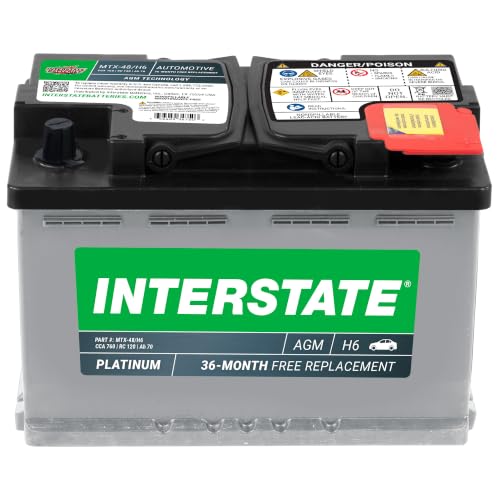
Absorbent Glass Mat (AGM) batteries are the premium choice. They’re sealed, spill-proof, and deliver high cold cranking amps. AGM batteries are standard in many modern cars with start-stop, advanced electronics, or high electrical loads. Prices range from $160 to $350. Some luxury-car AGM batteries hit $400+.
Group Size, Cold Cranking Amps, and Reserve Capacity
Group size is the physical dimensions and terminal orientation. A battery that fits a Honda Civic won’t fit a Ford F-150. Wrong size means the hold-down won’t work or the terminals are reversed. Check your car’s manual or the old battery label for the group size number (like 24F, 35, 48, 65, etc.). Using the wrong group size can damage cables or cause the battery to shift.
Cold Cranking Amps (CCA) measures how much power a battery can deliver at 0°F for 30 seconds while maintaining voltage. Higher CCA costs more. If you live in Minnesota, you need more CCA than someone in Florida. But buying a battery with CCA far above your car’s spec won’t help – it just costs extra. Stick to the OEM recommendation or slightly higher.
Reserve Capacity (RC) is how long the battery can run your car’s electronics if the alternator fails. More RC means longer limp-home time. It also adds $10–$30 to the price. For most drivers, the standard RC for your car’s group size is fine.
Brand and Warranty Length
Brands like Optima, Odyssey, and Interstate tend to charge a premium. House brands at AutoZone (Duralast) or Advance Auto (DieHard) are often rebranded versions of the same batteries from Johnson Controls or East Penn. You pay more for the name and the warranty coverage.
Warranty length matters. A 3-year free replacement warranty costs more upfront than a 1-year warranty. But if the battery fails in year two, you get a free replacement. That can save you $100–$200. Look at the prorated period too – many warranties switch to a pro-rated credit after the first few years.
Battery Types and Their Price Ranges (with Real Examples)
| Battery Type | Typical Price Range | Common Vehicles | Warranty |
|---|---|---|---|
| Flooded (Wet-Cell) | $50 – $120 | Older cars, basic sedans, trucks | 1–3 years |
| EFB (Enhanced Flooded) | $100 – $180 | Stop-start systems, many European cars | 2–4 years |
| AGM (Absorbent Glass Mat) | $160 – $350 | Modern cars with stop-start, luxury sedans, SUVs | 3–5 years |
| AGM (High-Performance) | $300 – $450+ | Performance cars, heavy electrical loads, audio systems | 4–5 years |
These ranges are before installation fees and core charges. A standard flooded battery for a 2026 Toyota Corolla might be $85. An AGM for a 2026 BMW 3-series runs about $250.
Installation Costs, Core Charges, and Hidden Fees
The sticker price is not the final price. Here’s what you’ll actually pay.
Installation fee: Most chain stores charge $15–$30 for installation. Some include it free if you buy the battery from them. Independent shops often charge $20–$40. DIY installation is free, but you need basic tools and must safely dispose of the old battery.
Core charge: This is a deposit on the old battery you’re returning. Expect $10–$25. You get it back when you hand over your old battery. If you don’t return it, you lose that money. Some online retailers add a core charge that’s refunded after you ship back the old battery – shipping costs might eat into that refund.
Disposal fee: Some states require a small disposal fee (usually $1–$5) for lead-acid batteries. This is rare but worth knowing.
Online shipping: Buying from Amazon or other online sellers can add $10–$30 for shipping. Some sellers offer free shipping but charge a higher core refund. Always check the total delivered cost before ordering.
How to Find the Right Battery for Your Car
Start with your owner’s manual. It lists the recommended group size, CCA, and sometimes the battery type. If you don’t have the manual, look at the old battery label – it has the group size and CCA printed on it.
Next, consider your driving habits. Short trips (under 20 minutes) don’t fully recharge the battery. If you mostly drive short distances, an AGM battery handles partial charging better than a flooded battery. AGM also resists vibration if you drive on rough roads.
Climate matters. In cold regions, get a battery with CCA at least as high as the OEM spec. In hot regions, heat accelerates battery degradation. AGM batteries tolerate heat better than flooded ones, but they still degrade faster in extreme heat. Read more about how extreme heat kills a car battery and what you can do about it.
If you run a lot of electronics – dashcams, phone chargers, inverters – you might want higher reserve capacity or an AGM battery. A car battery for car audio systems needs extra capacity and deep-cycle capability.
Where to Buy – Online vs In-Store Price Comparison
Auto parts stores like AutoZone, Advance Auto, O’Reilly, and NAPA offer convenience. You can test your battery for free, get the right fit, and walk out with a new battery installed in 15 minutes. Prices are often $10–$30 higher than online, but you avoid shipping costs and wait time.
Online retailers like Amazon, RockAuto, and BatteryMart offer lower listed prices. But you pay shipping and sometimes a core charge. You also need to install it yourself. If the battery is damaged in shipping, returns are a hassle.
Membership warehouses like Costco and Sam’s Club sell batteries at good prices (often $70–$120 for flooded batteries, $140–$200 for AGM). They include installation for free. You need a membership, but the savings can cover the annual fee.
Dealerships are the most expensive. They charge list price plus a high installation fee. A dealer AGM battery for a Honda Accord might be $350 installed, while the same battery at an auto parts store is $220. Only go to the dealer if you’re under warranty or want an exact OEM match.
Car Battery Warranty – What to Look For
Warranties have two parts: free replacement period and pro-rated period. A 3-year free replacement warranty means if the battery fails within 3 years, you get a new one at no cost (you still pay for installation if you didn’t do it yourself). After that, the pro-rated period gives you a credit based on the remaining months. For example, a battery with a 3-year free replacement and 5-year total warranty gives you a prorated credit in years 4 and 5.
Some brands like Optima and Odyssey offer 3–5 year free replacement. Budget brands often offer 1 year free replacement. The longer warranty costs $20–$50 more upfront, but it’s worth it if you plan to keep the car for several years.
Watch for exclusions. AGM batteries sometimes have shorter warranties if used in non-AGM vehicles. And warranties don’t cover damage from overcharging, physical damage, or misuse.
Frequently Asked Questions About Car Battery Prices
How much does a car battery cost on average?
For a typical sedan or SUV, expect to pay $80–$200 installed. The average cost for a flooded battery is around $120, for an AGM battery around $250. Luxury cars with AGM batteries often cost $300–$400.
Why are AGM batteries so much more expensive than flooded batteries?
AGM batteries use glass mat separators and a sealed design that prevents spills and allows higher CCA output. They cost more to manufacture and last longer if properly maintained. The price difference is about $80–$150.
Can I replace a flooded battery with an AGM battery?
Yes, but you need to make sure the charging system is compatible. Some older alternators overcharge AGM batteries, shortening their life. Modern cars with smart alternators handle AGM fine. Check your vehicle’s charging voltage – AGM prefers 14.0–14.5V, same as flooded. If your car has a stop-start system, switching to AGM is often required.
What is a core charge, and do I have to pay it?
A core charge is a deposit on your old battery. You pay it upfront, then get it back when you return the old battery. It’s required by law in many states to encourage recycling. You can avoid it by bringing your old battery when you buy a new one. Online retailers often add a core charge that you get back after shipping the old battery back.
How long should a car battery last, and does that affect the price?
Flooded batteries last 3–5 years. EFB and AGM batteries last 4–7 years. In hot climates, expect 1–2 years less. Paying more for a premium battery often extends life, but not always. A $200 AGM battery that lasts 6 years costs less per year than a $100 flooded battery that lasts 3 years. The upfront cost might be higher, but the long-term value is better.
Quick Takeaways
- Match the battery type (flooded, EFB, AGM) to your car’s requirements and your driving habits. AGM costs more but lasts longer in stop-start and short-trip use.
- Check group size, CCA, and RC before buying. Wrong size won’t fit; wrong CCA can cause starting issues.
- Add installation ($15–$30), core charge ($10–$25), and any shipping fees to the listed price.
- Online retailers may offer lower prices but add shipping costs and installation effort. In-store purchase includes free battery testing and installation.
- Warranty length matters. A 3-year free replacement warranty is worth the extra $20–$50.
- Recycle your old battery to get the core charge back and avoid environmental fines.
- If you power devices on the road, a compact inverter like the PiSFAU 200W Car Power Inverter keeps your electronics charged without draining the battery too fast.
Products related to this article
Sponsored / affiliate links. As an Amazon Associate I earn from qualifying purchases. I may earn additional commission from eligible campaigns.