How Much Does a Camshaft Position Sensor Cost?
A camshaft position sensor usually costs about $20 to $150 for the part, and about $100 to $350 installed, though some late-model or luxury vehicles may cost more. Ignore it, and you can face hard starts, stalling, poor fuel economy, or a no-start that gets misdiagnosed. This guide breaks down parts, labor, relearn time, and the traps that can make the repair cost more than it should.
Camshaft sensor basics
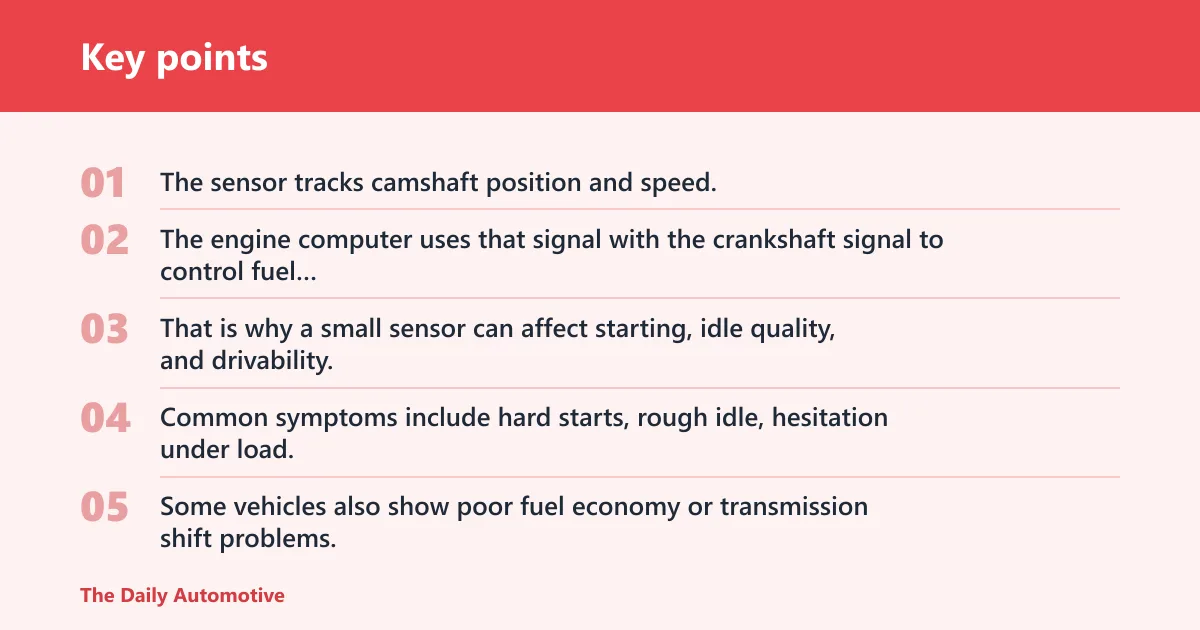

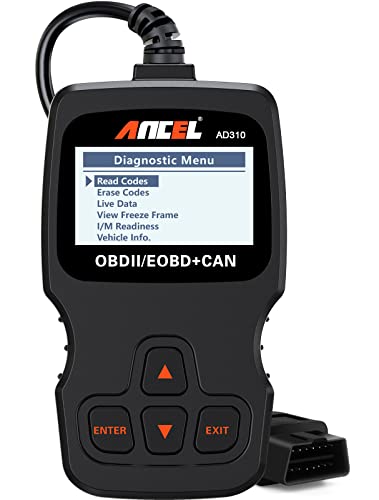
The sensor tracks camshaft position and speed. The engine computer uses that signal with the crankshaft signal to control fuel injection, ignition timing, and variable valve timing. That is why a small sensor can affect starting, idle quality, and drivability.
Common symptoms include hard starts, rough idle, hesitation under load, misfires at idle or cruise, stalling at stoplights, and a check engine light. Some vehicles also show poor fuel economy or transmission shift problems. A code does not always mean the sensor has failed, so the first money-saving step is checking the electrical circuit and timing data.
Common codes that send shoppers to the parts counter
Codes in the P0340 to P0345 family often point toward a camshaft sensor circuit issue. Correlation codes such as P0016 to P0019 can show that cam and crank signals do not agree, which may mean timing wear, wiring trouble, or a sensor fault. P0011 can also appear on some vehicles tied to variable valve timing faults.
How much does it cost to replace?
The part itself usually costs about $20 to $150. The final bill depends on access, whether the shop uses OEM or aftermarket parts, and whether the vehicle needs a cam/crank relearn after the repair.
Part-only price range
Aftermarket sensors often sit near the lower end of the range, while OEM parts usually cost more. On many common vehicles, the OEM-versus-aftermarket spread is meaningful enough to change the quote by $30 to $100 or more. That spread can be even larger on some import, turbo, or luxury applications.
Installed price range
Labor is often the bigger variable than the sensor itself. A simple sensor swap on an easy-access engine may stay near the low end, while a sensor near the intake, valve cover, or rear of a transversely mounted engine can push the job much higher. Add relearn time, and the quote rises again.
What changes the labor bill?
Access is the main labor driver. If the sensor is visible at the front of the engine with room for a socket, the job may take less than an hour. If it sits under intake parts, behind heat shielding, or tight to the valve cover, labor climbs fast because disassembly and reassembly take longer.
Easy-access engines
On easy-access layouts, the sensor is often reachable with basic hand tools. A shop may charge for a short diagnostic check, part replacement, code clearing, and a road test. This is the best case for a low bill.
Average-access engines
Average-access jobs usually require more time around adjacent parts, connectors, or covers. The sensor may still be simple to replace, but the extra labor adds up because the mechanic has to work around brackets, air ducts, or limited space.
Hard-access engines
Hard-access engines can require intake removal, partial valve cover work, or extra disassembly near other sensors and hoses. That is where a quote can jump from a routine repair to a half-day job. The part is still small; the labor is not.
Camshaft sensor cost table
| Vehicle situation | Expected part price tier | Labor-time driver | Likely total installed cost band |
|---|---|---|---|
| Easy-access engine | $20 to $60 aftermarket; $50 to $120 OEM | Short access, basic socket work, quick scan and clear | $100 to $200 |
| Average-access engine | $30 to $90 aftermarket; $70 to $150 OEM | Limited room, nearby brackets or covers, extra setup time | $175 to $300 |
| Hard-access engine | $40 to $150 aftermarket; $100 to $250 OEM | Intake removal, valve cover proximity, longer labor, possible relearn | $275 to $500+ |
| Wiring or VVT-related fault instead of the sensor | $0 to $150 for inspection repair parts; sensor may be unnecessary | Testing circuit, connector, or timing issue before replacement | $120 to $600+ |
Cam vs VVT sensor cost
Shoppers often mix up a camshaft position sensor with a variable camshaft timing position sensor. They are not always the same part. A VVT-related sensor or actuator may be priced separately, and on some engines the quote is really for a variable valve timing problem rather than a base cam sensor.
The confusion matters because the diagnosis and parts list change. A quote for a camshaft sensor replacement may miss the real problem if the fault sits in the VVT system, the oil control circuit, or the wiring that feeds it. That is one reason the scan codes matter before authorizing parts.
Picture a 2017 four-cylinder car with a P0011 code and a rough idle. Replacing only the camshaft position sensor may not fix it if the real issue is a VVT control fault or oil-flow problem. The safer move is to confirm which component the code path actually points to.
Why can the bill be higher?
The bill gets bigger when the sensor is only part of the problem. Damaged wiring, poor electrical connections, oil contamination, or timing chain wear can mimic sensor failure. A camshaft sensor code does not always mean the sensor itself has failed, so diagnosis should come before replacement.
Wiring and connector checks
Inspect the wiring and connector before replacing the sensor. Broken insulation, oil-soaked terminals, loose pins, or corrosion can create intermittent or repeated codes. If the connector is loose or the wiring is damaged, a new sensor may not change the symptom at all.
O-ring or seal fitment
Some sensors use an O-ring or seal that must sit correctly. Reusing a hardened seal or pinching the new one can create an oil leak or make the sensor sit wrong in the bore. That is a small detail with a large payoff in avoiding a comeback.
Cam/crank relearn time
Some vehicles need a scan-tool reset or relearn after the repair. That step is vehicle-specific and can add labor time if the shop has to perform a cam/crank relearn or calibration after the new sensor is in place. Ask whether that step is included in the quote.
- Read the code family first, including P0340 to P0345 and any correlation codes such as P0016 to P0019.
- Check battery voltage, wiring condition, and connector fit before buying parts.
- Confirm whether the engine uses a cam sensor, a VVT-related sensor, or both.
- Ask whether the quote includes labor for access, code clearing, and relearn time.
- Replace the sensor only after the circuit and timing checks make sense.
How much does a camshaft position sensor cost?
For most drivers, the answer is $20 to $150 for the part and $100 to $350 installed. That range assumes the sensor itself is the problem and the engine offers normal access. If the vehicle is hard to reach, needs a relearn, or has a wiring issue, the price can climb fast.
When should you replace camshaft position sensor?
Replace it after code-based diagnosis, not just because the check engine light is on. If you see a P0340-family code and the wiring, connector, battery voltage, and timing data all check out, the sensor becomes a strong candidate. If not, inspect the circuit and timing system first.
Suppose a sedan sets a P0341 code after a rainstorm and then clears itself for a day. That pattern points harder toward a connector, moisture intrusion, or wiring problem than a dead sensor. Swapping the part first may waste money.
Frequently asked questions
How much does a camshaft position sensor cost to replace?
Most replacements cost $100 to $350 installed. Easy-access engines may stay near the low end, while hard-access engines with extra disassembly can move well above that. If the shop also performs a scan-tool relearn, the total can rise further.
How much does it cost to fix a camshaft position sensor?
If the sensor itself failed, the fix often falls in the same $100 to $350 installed range. But if the problem is wiring, a connector, or a timing issue, the real repair cost may be lower or higher than a sensor swap. Diagnosis determines which bill you actually pay.
How much does a variable camshaft timing position sensor cost?
A variable camshaft timing position sensor can cost separately from a base cam sensor, and pricing varies more by engine and system design. In many cases it lands in a similar parts range, but VVT-related repairs can run higher because the fault may involve oil control parts, solenoids, or recalibration.
How much does a crank sensor cost?
A crank sensor often costs a similar amount to a cam sensor, but the installed price can differ because access and diagnosis differ. Shops should not mix the two parts in a quote. A crank sensor problem can look similar, yet the repair path and labor time may be different.
How much does it cost to get a camshaft sensor replaced?
To get a camshaft sensor replaced, expect a shop bill around $100 to $350 in many common cases. The number goes up if the sensor is buried near the intake or valve cover, or if the vehicle needs a cam/crank relearn after installation. Ask for both parts and labor before approving the job.
Products related to this article
Sponsored / affiliate links. As an Amazon Associate I earn from qualifying purchases. I may earn additional commission from eligible campaigns.