Are Car Washes Safe: Essential Guide
Yes, most modern car washes are safe for your vehicle when used correctly and choosing the right type. Automatic car washes have evolved with gentler technologies to protect your paint.
It’s a question many of us wonder when we pull up to that tunnel of spinning brushes and spraying water: “Is this going to hurt my car?” You’ve probably heard stories or seen warning signs that make you second-guess whether an automatic car wash is the best choice for your beloved vehicle. But keeping your car clean shouldn’t be a gamble! Many drivers worry about scratches, paint damage, or even more serious issues. Don’t fret! We’re here to break down exactly what makes car washes safe, what to watch out for, and how to ensure your car gets a sparkling clean without any unwanted surprises. Let’s dive into the world of car washing and make sure you’re an informed driver.
Are Car Washes Safe? Your Essential Guide
As Md Meraj, your trusted automotive guide, I want to demystify car washes for you. Keeping your car looking its best isn’t just about appearances; it also helps maintain its value and can prevent rust and other damage caused by dirt, salt, and grime. But knowing how to clean it safely is key. This guide will cover everything you need to know.
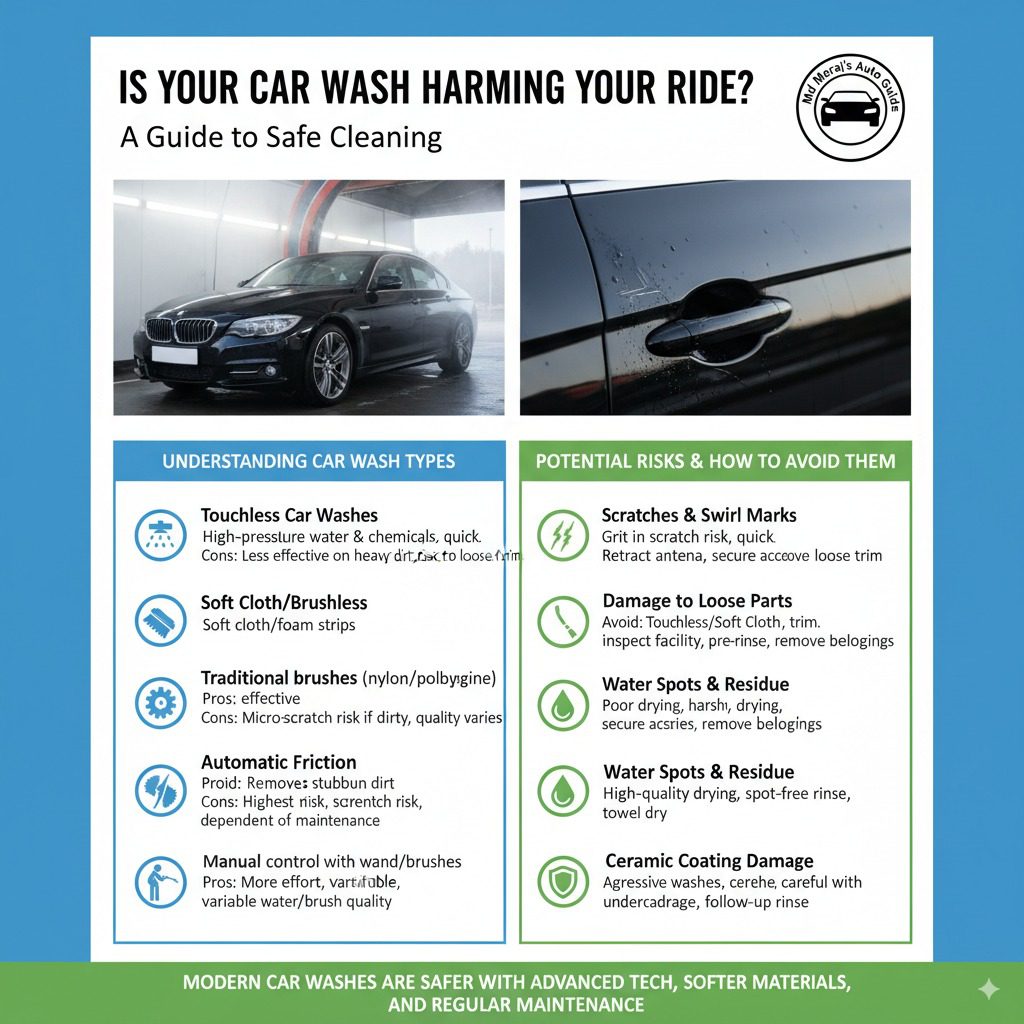
Understanding Car Wash Types: What’s the Difference?
Not all car washes are created equal. The type of wash you choose can significantly impact its safety for your car. Here’s a rundown:
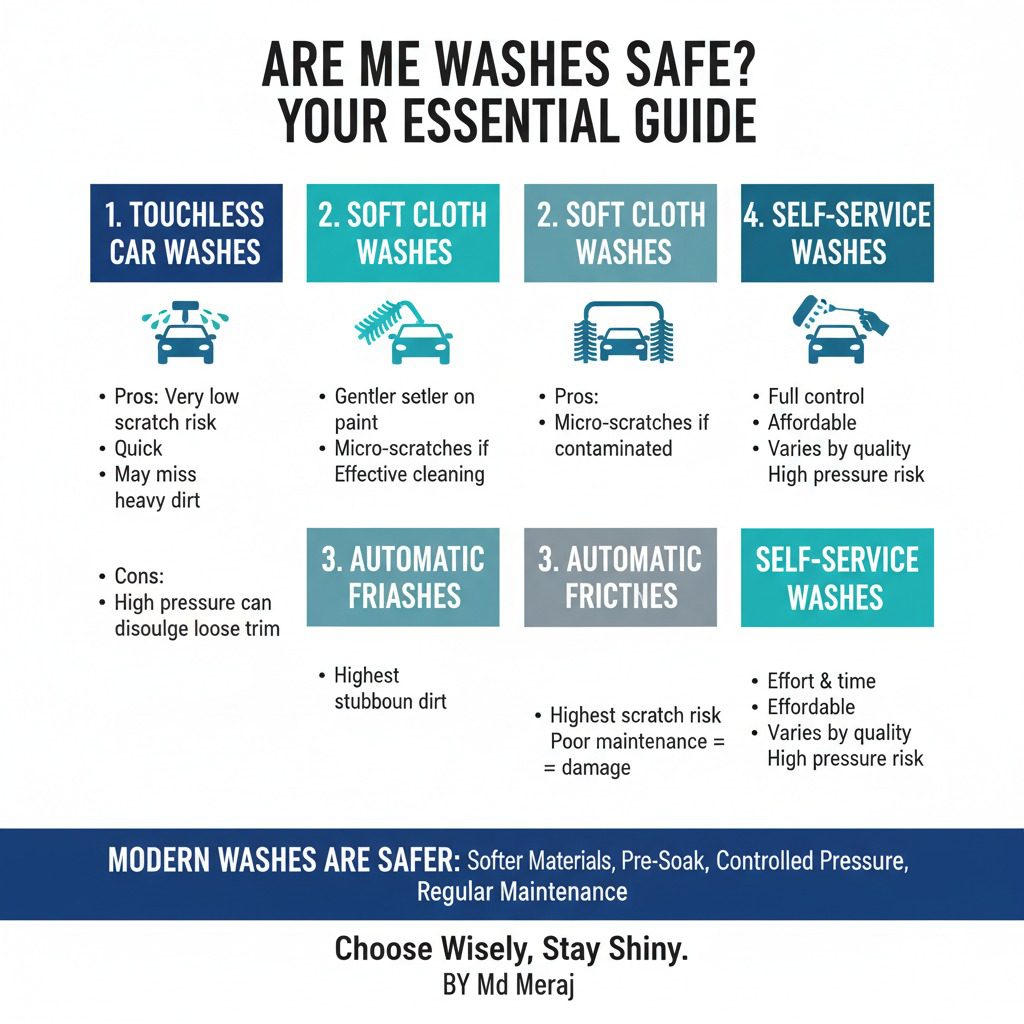
1. Touchless Car Washes
These washes use high-pressure water jets and cleaning chemicals to lift dirt off your car. They don’t have any physical brushes or cloths that touch your vehicle.
Pros:
- Very low risk of scratches or paint damage.
- Quick and efficient.
Cons:
- May not remove heavily caked-on dirt or grime as effectively as touch washes.
- Higher-pressure water could potentially dislodge loose trim or badges if they are already weakened.
2. Soft Cloth/Brushless Car Washes
These washes use soft cloth strips or foam strips instead of stiff brushes. These materials are designed to be gentle on your car’s paintwork.
Pros:
- Much gentler on paint than older-style brush washes.
- Effectively removes dirt and grime.
Cons:
- If the cloths are not properly maintained or are contaminated with grit, there’s still a small risk of micro-scratches.
- The quality can vary greatly depending on the car wash’s maintenance practices.
3. Automatic Friction Washes (Traditional Brush Washes)
These are the car washes with the big spinning brushes you might see in older movies or TV shows. They use physical brushes made of materials like Nylon, Polyethylene, or cloth strips.
Pros:
- Very effective at removing stubborn dirt, mud, and road film.
Cons:
- Highest risk of scratches and paint damage if not well-maintained. Older or lower-quality brushes can trap dirt and act like sandpaper.
- Lower-quality washes might use brushes that are too stiff or not cleaned often enough.
4. Self-Service Car Washes
These are bays where you use provided high-pressure spray wands and brushes to wash your car yourself. You have full control over the process.
Pros:
- Complete control over the cleaning process.
- Often more affordable.
- You can choose which parts to focus on and how much pressure to use.
Cons:
- Requires more effort and time.
- The quality of brushes and the cleanliness of the water can vary.
- High-pressure wands can still cause damage if held too close or directed at sensitive areas.
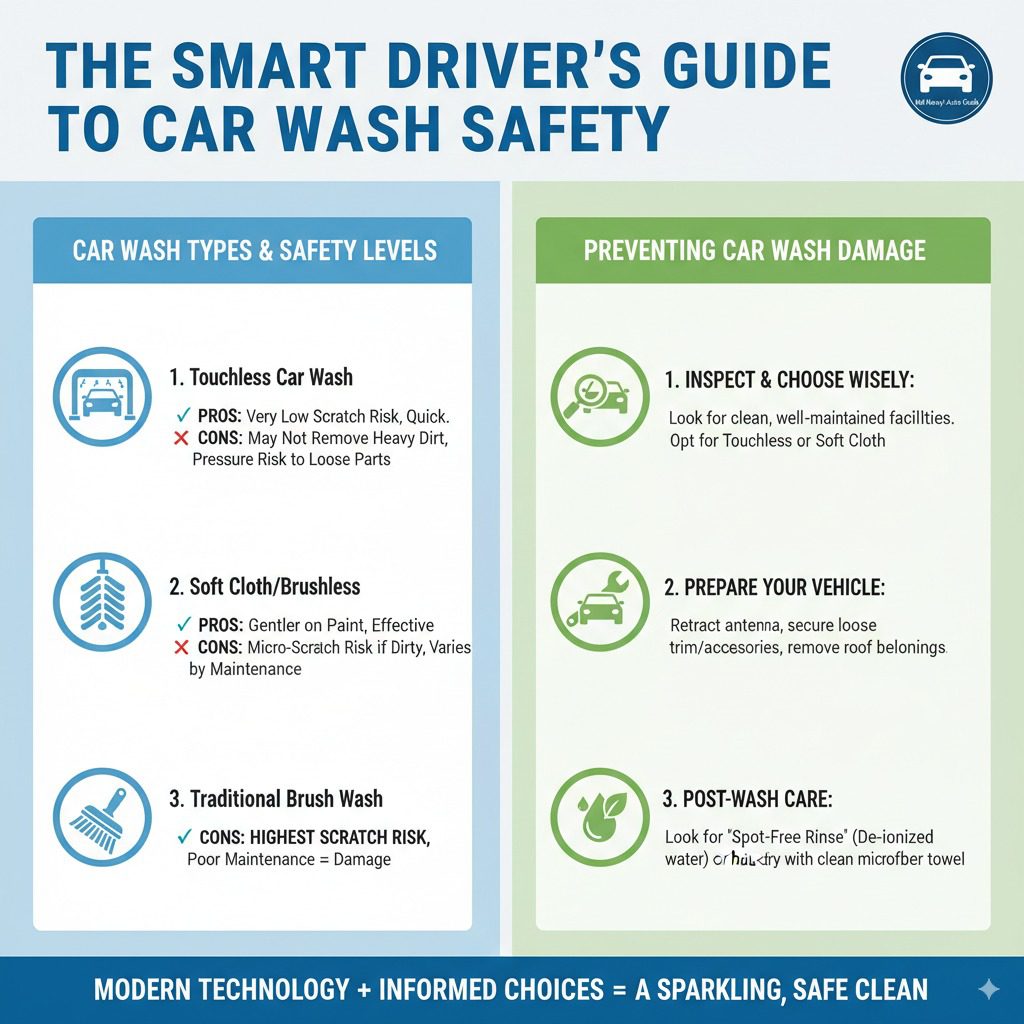
What Makes Car Washes Safe for Your Paint?
Modern automatic car washes have significantly improved their technology to better protect your car’s finish. Here’s what contributes to their safety:
- Softer Materials: Many modern washes use foam or soft cloth strips that are specifically designed to be non-abrasive.
- Pre-Soak and Rinse Systems: Advanced washes often have powerful pre-soak solutions and high-pressure rinses that remove loose dirt and debris before any brushes touch the car. This is a crucial step in preventing scratches.
- Controlled Water Pressure: While high pressure can be an issue for loose parts, car washes use calibrated pressure to clean effectively without damaging intact seals or paint.
- Regular Maintenance: Reputable car washes regularly clean and replace their brushes and cloths, as well as maintain their cleaning solutions.
- Quality Control: Many car wash operators understand that customer satisfaction means protecting their vehicles. They invest in better equipment and processes.
Potential Risks and How to Avoid Them
While most car washes are safe, some potential issues can arise, especially with older or poorly maintained facilities.
1. Scratches and Swirl Marks
This is the most common concern. It happens when dirt and grit are trapped in the brushes or cloths and then rubbed against your car’s paintwork.
How to Avoid:
- Choose Touchless or Soft Cloth Washes: These have a much lower risk.
- Inspect the Venue: Look for car washes that appear clean and well-maintained. Are the brushes dirty or frayed? Does the facility look organized?
- Pre-Rinse is Key: A good pre-rinse system at the car wash can remove a lot of the abrasive particles before the main wash cycle.
- Consider Your Car’s Condition: If your car already has a lot of existing scratches or is very dirty, a wash might temporarily highlight them, but it won’t create new ones unless the equipment is faulty.
2. Damage to Accessories or Loose Parts
Things like loose spoilers, roof racks, antennas, or damaged trim can sometimes catch on the equipment in an automatic wash.
How to Avoid:
- Retract or Remove Antennas: If you have a classic car with a pull-up antenna, retract it. Modern whips are usually fine.
- Secure Accessories: Ensure any roof racks, bike carriers, or other external accessories are firmly attached.
- Retract or Remove Mirrors: Some older cars have mirrors that stick out significantly. While most modern washes are designed to avoid this, it’s good to be aware.
- Cover Aftermarket Add-ons: If you have aftermarket spoilers, body kits, or custom trim, assess their sturdiness before going through an automatic wash.
- Remove Belongings: Don’t leave anything on your roof or in your trunk that could be caught or blown off.
3. Water Spots and Chemical Residue
If the drying process isn’t efficient, mineral deposits from the water can leave spots. Harsh chemicals, if not rinsed properly, can leave residue.
How to Avoid:
- Look for High-Quality Drying Systems: Many washes use large, powerful blowers.
- A Spot-Free Rinse: Some advanced washes use de-ionized water for the final rinse, which evaporates without leaving mineral deposits.
- Self-Dry or Towel Dry: After an automatic wash, a quick wipe-down with a clean microfiber towel can prevent spots.
4. Damage to Ceramic Coatings or Sealants
While most modern washes won’t harm a properly cured ceramic coating or paint sealant, very aggressive chemicals or friction in a poorly maintained wash could degrade them over time.
How to Avoid:
- Choose Gentler Washes: Opt for touchless or soft cloth washes.
- Avoid Undercarriage Washes with Harsh Chemicals: Unless specifically designed for protected finishes, some undercarriage sprays can be very strong.
- Follow up with a Gentle Rinse: If you’re concerned, a quick rinse with your own gentle car soap and a microfiber mitt at a self-service bay afterwards can be a good precaution.
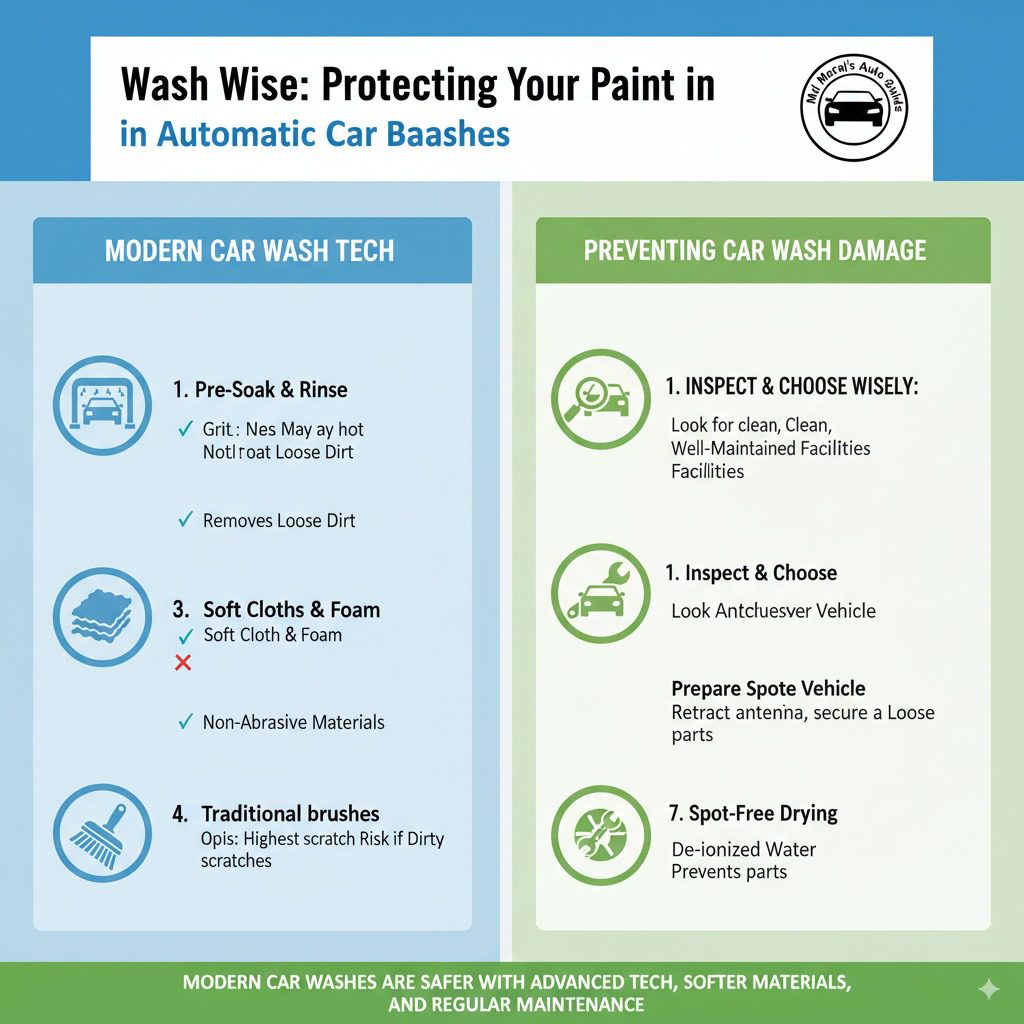
Preparing Your Car for the Car Wash
A little preparation can go a long way in ensuring a safe and effective car wash experience.
1. Check for Loose Parts
Before you even approach the car wash, do a quick visual inspection. Are your side mirrors secure? Is your antenna firmly attached? Are there any loose trim pieces or aftermarket accessories?
2. Close All Windows and Doors Tightly
This is essential to prevent water from entering the cabin. Even touchless washes use high-pressure water.
3. Retract or Remove Antennas
If your car has a manual antenna, make sure it’s retracted. Many modern antennas are flexible or firmly mounted and don’t pose an issue.
4. Secure or Fold Side Mirrors
Some side mirrors are more susceptible to being hit or caught. If your car has manual folding mirrors, consider folding them. Automatic folding mirrors usually lock in place.
5. Remove Accessories from Roof and Trunk
Anything stored on your roof rack, or even items loosely placed on your trunk, could get dislodged during the wash cycle.
6. Turn Off Windshield Wipers
Ensure your wipers are in their normal resting position. If they are left on, the water jets or brushes could damage them or their motors.
7. Check Your Car’s Paint
If your car’s paint is already chipped or peeling, especially around edges or mud flaps, it might be more vulnerable to damage in an automatic wash. Consider the condition of your paint before choosing the wash type.
DIY vs. Automatic: Which is Safer?
The “safest” option often depends on your comfort level, the quality of the car wash available, and your own skills.
DIY (Self-Service or Home Washing)
Pros:
- Maximum control over the process.
- You choose the soaps and mitts (using high-quality microfiber is crucial).
- Can be more thorough for specific areas or delicate finishes.
- Often less expensive in the long run.
Cons:
- Requires time, effort, and space.
- You need to invest in proper washing supplies (buckets, mitts, drying towels, appropriate soap).
- Risk of introducing scratches if you use dirty water or mitts.
Modern Automatic Car Washes
Pros:
- Convenient and fast.
- Uses specialized cleaning agents and high-pressure water that you might not have access to at home.
- Modern washes are designed with paint protection in mind.
Cons:
- Less control over the process.
- Risk of scratches if the facility is poorly maintained.
- Can be costly if done frequently.
Md Meraj’s Tip: For most drivers, a reputable, modern touchless or soft-cloth automatic car wash is perfectly safe and convenient. If you’re really precious about your paint and have the time, a meticulous DIY wash using the two-bucket method is arguably the safest way to prevent swirls.
Maintaining Your Car’s Finish Long-Term
Keeping your car clean is one thing; maintaining its finish for years to come is another.
- Regular Washing: Don’t let dirt and grime sit on your car for too long, especially after exposure to salt in winter or bird droppings in summer.
- Protect Your Paint: Consider applying a quality car wax, paint sealant, or ceramic coating. These create a protective layer. A good quality ceramic coating can be purchased online (e.g., from brands like Chemical Guys certified installers, or brands available on Amazon like Adam’s Polishes or Meguiar’s) and applied by a detailer, or even DIY for the more adventurous. Visit sites like AutoGeek’s car care tips for more advanced advice.
- Address Issues Promptly: Bird droppings, tar, and tree sap are acidic and can damage paint quickly. Clean them off as soon as possible.
- Inspect Your Car: Regularly check for new scratches or dings.
When to Absolutely Avoid Automatic Car Washes
There are a few scenarios where you should steer clear of automatic washes:
- If Your Car Has Existing Paint Damage: Deep scratches, chips, or peeling paint can be exacerbated by the washing process.
- If Your Car Has Loose or Damaged Trim: Any part of your car that is not securely attached is at risk.
- If You Have Extensive Aftermarket Add-ons: Custom spoilers, wide body kits, or large roof racks might not be compatible.
- If the Car Wash Looks Unkempt: Dirty brushes, standing water with debris, or generally run-down appearance are red flags.
- If Your Car is Extremely Dirty: Think thick mud or road salt build-up. A pre-rinse is essential. If the car wash doesn’t offer one, or if your car is exceptionally caked, a self-service wash or a professional detailer might be a better first step.
A Quick Comparison: Car Wash Safety Features
Here’s a quick look at how different wash types stack up in terms of safety and effectiveness:
| Car Wash Type | Paint Safety (Low to High Risk) | Cleaning Effectiveness (Low to High) | Convenience |
|---|---|---|---|
| Touchless | Low Risk | Medium | High |
| Soft Cloth/Foam | Very Low Risk | High | High |
| Automatic Friction (Brushes) | Medium to High Risk (if poorly maintained) | Very High | High |
| Self-Service Bay | Low to Medium Risk (depends on user) | High | Medium |
When choosing an automatic wash, prioritize those that clearly advertise “touchless” or “soft cloth” systems. Reputable car washes often display their technology or cleaning standards.
What Do Experts Say?
Many automotive detailing experts agree that modern, well-maintained automatic car washes, particularly touchless and soft-cloth varieties, are safe for most vehicles. The key, they emphasize, is the quality of the equipment and the diligence of the maintenance. Organizations like AAA (American Automobile Association) often provide tips on car maintenance, and their general advice leans towards choosing reputable establishments. For instance, the U.S. Environmental Protection Agency (EPA) has information on water conservation in car washes, which often correlates with better technology and maintenance practices, as efficient washes use less water and often have better filtration systems. You can find more information on best practices for vehicle cleaning on resources like the EPA’s website, which indirectly supports the idea of using modern, efficient systems.
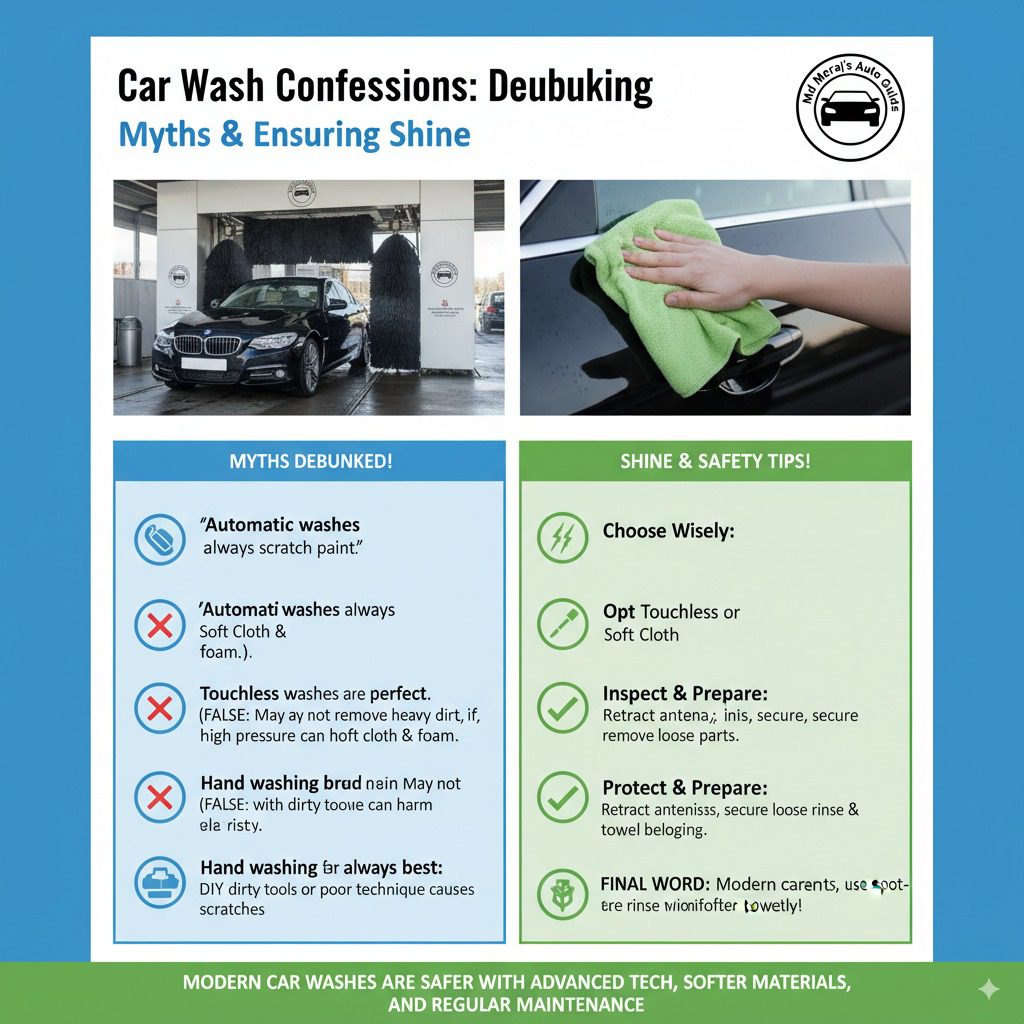
FAQ: Your Car Wash Questions Answered
Here are some common questions beginner car owners have about car washes:
Q1: Can automatic car washes damage my car’s paint?
A1: While it’s possible, it’s less likely with modern car washes. Touchless washes use only water and chemicals, and soft-cloth washes use gentler materials than older brush systems. The risk increases if the car wash isn’t well-maintained, trapping dirt in the brushes.
Q2: Is a touchless car wash better than a soft-cloth car wash for my paint?
A2: Touchless washes have the absolute lowest risk of scratching because nothing physically touches your car. However, they might not remove heavy grime as effectively. Soft-cloth washes are very effective and use materials designed to be gentle, making them a great balance of safety and cleaning power.
Q3: What if my car has aftermarket parts like a spoiler or roof rack?
A3: It’s best to remove or secure any aftermarket add-ons before entering an automatic car wash. Things that protrude significantly or aren’t factory-fitted can catch on equipment and get damaged or dislodged.
Q4: My car has a ceramic coating. Can I still go to an automatic car wash?
A4: Yes, generally. Reputable automatic car washes, especially touchless or soft-cloth types, are usually safe for ceramic coatings. Avoid washes with extremely harsh chemicals or aggressive brushes. Some ceramic coating manufacturers even approve of certain automatic wash types.