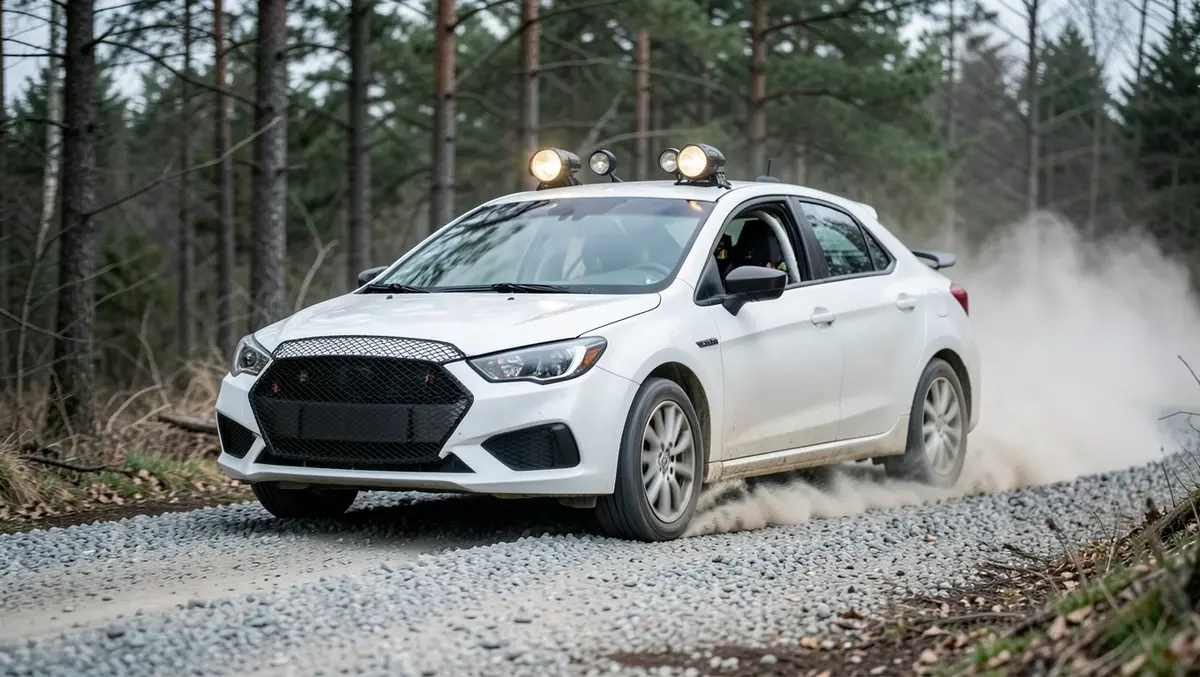
Are Rally Cars All Wheel Drive? AWD, FWD, and RWD Explained
Most top-level rally cars are all-wheel drive (AWD), including every WRC Rally1, Rally2, and Rally3 car. But rallying isn’t only AWD – the FIA’s entry-level Rally4 and Rally5 classes are strictly two-wheel drive, and rallying’s early decades were dominated by rear-wheel drive cars before Audi’s Quattro changed everything in 1981.
So the honest answer is “it depends on the class.” Here’s exactly which rally cars run AWD, which don’t, why the drivetrain split exists in the first place, and what’s actually changed in the sport’s technical rules for 2025 and 2026.
What Drivetrain Do WRC Rally1 Cars Use?
Every car competing at the top level of the World Rally Championship – the Rally1 class run by Toyota Gazoo Racing, Hyundai Shell Mobis, and M-Sport Ford – is all-wheel drive. Rally1 regulations require a 1.6-liter turbocharged engine paired with a full-time AWD system, and that hasn’t changed. What has changed is the power source behind it.
From 2022 through 2024, Rally1 cars ran a plug-in hybrid system that added an electric boost on top of the turbo engine, with total output over 500 PS. That hybrid unit is gone. Starting with the 2025 season, the FIA removed the hybrid system entirely to cut costs, dropped the minimum car weight from 1,260 kg to 1,180 kg, and shrank the turbo’s air restrictor from 36mm to 35mm to keep the power-to-weight ratio roughly in line with the old hybrid cars. Peak output is now around 370 PS, all from the combustion engine alone. The 2026 season continues with this same non-hybrid, all-wheel drive Rally1 package.
Not Every Rally Car Is AWD: The FIA Class Pyramid
Rally isn’t one drivetrain rule for every car on a stage – it’s a pyramid of FIA-defined classes, and drivetrain requirements change depending on where a car sits in that pyramid. This is the detail most articles on this topic skip entirely.
| Class | Drivetrain | Engine | Typical Role |
|---|---|---|---|
| Rally1 | All-wheel drive | 1.6L turbo (hybrid through 2024, non-hybrid from 2025) | WRC’s top factory class |
| Rally2 | All-wheel drive | 1.6L turbo | Privateer and WRC2 category cars |
| Rally3 | All-wheel drive | 900-1,600cc, turbo or naturally aspirated | Entry-level AWD, cheapest way into 4WD rallying |
| Rally4 | Two-wheel drive (FWD or RWD) | Production-based, naturally aspirated or turbo | Junior/national-level competition |
| Rally5 | Two-wheel drive (FWD or RWD) | Production-based | Entry-level club and grassroots rallying |
In other words, once you drop below Rally3, AWD isn’t just optional – the FIA’s own rulebook requires two-wheel drive for Rally4 and Rally5 cars. A driver working their way up through the rally pyramid will typically spend years in FWD or RWD cars before ever sitting in an AWD one. If you’re curious what any of these classes actually costs to buy or run, we’ve broken down rally car prices by class separately.
Why All-Wheel Drive Took Over Rally Racing
Rallying wasn’t always an AWD sport. Through the 1960s and 1970s, cars like the Lancia Stratos and Ford Escort RS1800 won World Rally Championship titles running rear-wheel drive, and RWD remained competitive because the cars were light and the top classes hadn’t yet allowed anything else.
That changed with the Audi Quattro. Audi entered its turbocharged, all-wheel drive Quattro in the WRC in 1981, and it won its first world championship rally that same year. The Quattro’s AWD system let it put down power on loose gravel, snow, and ice far more effectively than the RWD cars it was racing against, and by 1982 Audi had the manufacturers’ title. Within a few seasons, every serious manufacturer either had an AWD car or was building one. The FIA’s Group B era that followed (1982-1986) cemented AWD as the standard for top-level rally cars, and every WRC-winning car since has used it.
The reason is simple physics: on a loose, low-grip surface, a two-wheel drive car can only put engine power through two contact patches before the tires start spinning. An AWD system splits that power across all four contact patches, using a center differential (or, on modern cars, an electronically controlled center coupling) to send more torque to whichever end of the car has more grip at that instant. On tarmac that advantage shrinks, which is part of why some tarmac-only rally classes historically allowed 2WD cars to stay competitive.
The Trade-offs: Why Some Rally Classes Stay Two-Wheel Drive
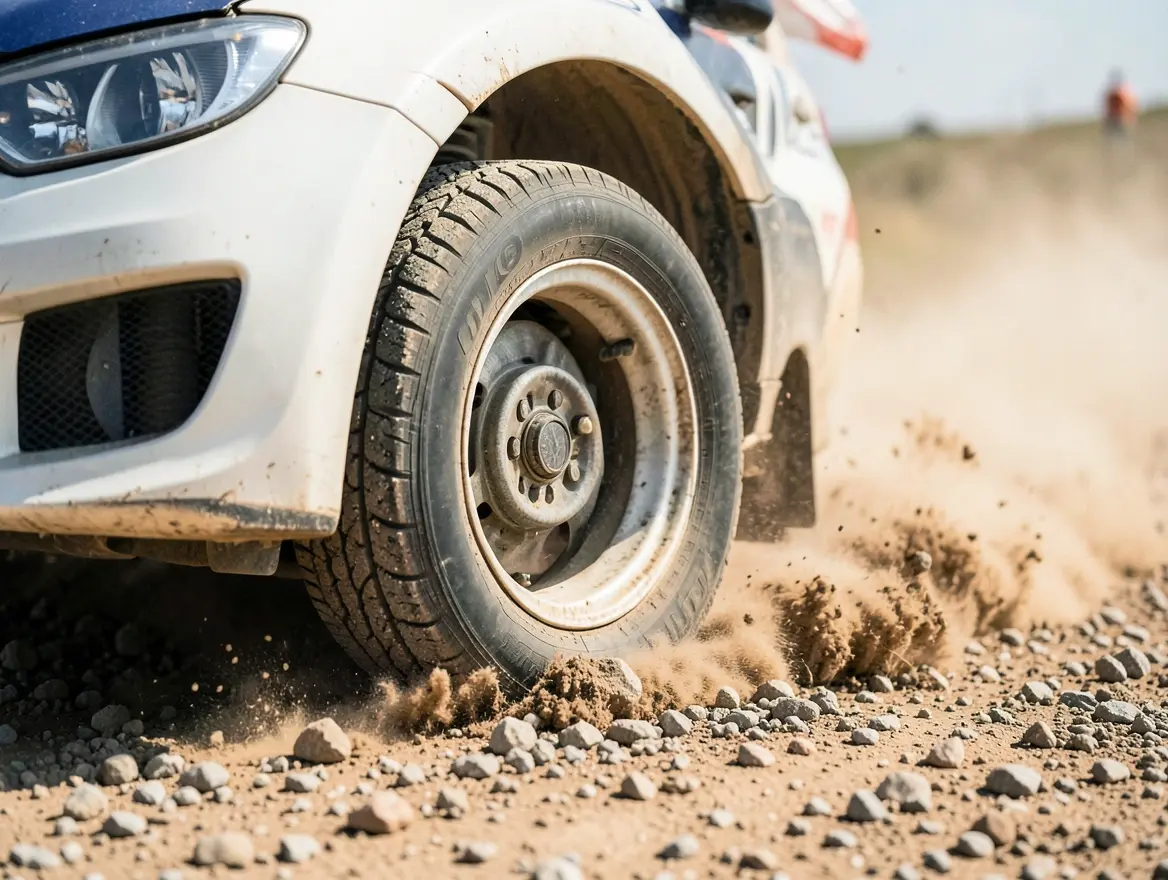
If AWD grips better, why does the FIA still mandate 2WD for its entry-level Rally4 and Rally5 classes? Cost and weight are the two big reasons.
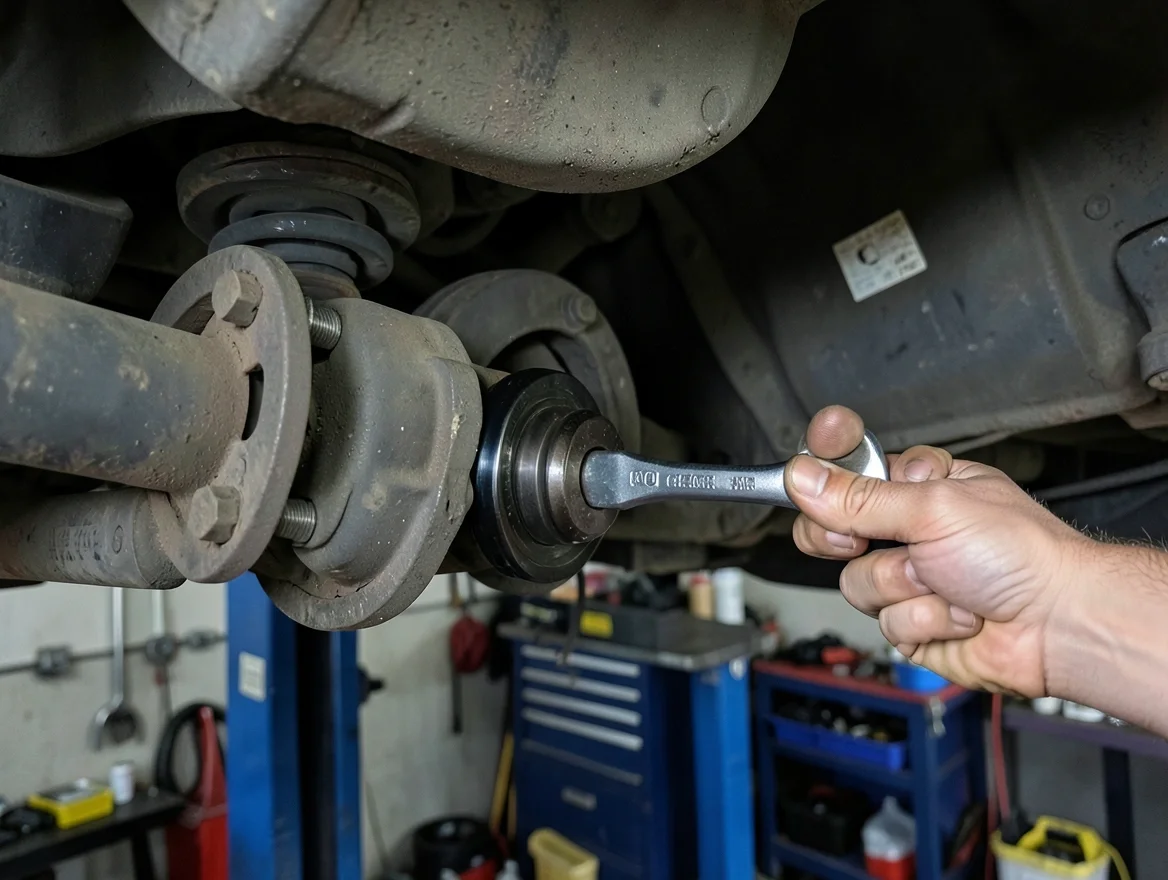
An AWD system adds a second differential, a transfer case, extra driveshafts running to the rear axle, and (on the more advanced Rally1/Rally2 cars) an electronically managed center coupling. Every one of those parts adds weight, adds a failure point, and adds cost – both to build and to repair when something breaks on a stage in the middle of nowhere. A 2WD car is lighter, simpler to maintain, and dramatically cheaper to build and run, which is exactly the point of an entry class meant to get new drivers and teams into the sport affordably. It’s also why national and club-level rally series worldwide are still full of front-wheel drive hatchbacks decades after AWD took over at the top.
Famous AWD Rally Cars Through History
A handful of AWD rally cars became legends in their own right. The Audi Quattro started it all in 1981. The Lancia Delta Integrale dominated the late-1980s and early-1990s, winning six straight manufacturers’ titles. The Subaru Impreza WRC and Mitsubishi Lancer Evolution defined AWD rallying through the 1990s and 2000s, both racking up multiple world titles before Subaru and Mitsubishi withdrew their factory WRC teams in the mid-to-late 2000s – neither brand currently fields a factory WRC entry, though their road-going AWD versions built huge followings that still exist today.
The current generation of factory AWD rally cars competing in Rally1 are the Toyota GR Yaris Rally1, the Hyundai i20 N Rally1, and the Ford Puma Rally1 – all built to the same non-hybrid, 1.6-liter turbo AWD spec described above. If you’re wondering why Audi’s own AWD system carries the “Quattro” name on its road cars, we’ve covered what Quattro actually means on Audi cars in more detail.
Frequently Asked Questions
Are Rally Cars FWD or AWD?
It depends entirely on the class. Top-level Rally1, Rally2, and Rally3 cars are all AWD. The FIA’s entry-level Rally4 and Rally5 classes are strictly two-wheel drive, which can be front-wheel drive or rear-wheel drive depending on the base production car. Most drivers race in FWD or RWD cars for years before ever moving up to an AWD car.
Are Rally Cars Two-Wheel Drive?
Some are. The FIA’s Rally4 and Rally5 classes are strictly two-wheel drive by rule, and historic rallying before 1981 was almost entirely rear-wheel drive. Two-wheel drive cars remain common in club and national-level rallying today because they’re far cheaper to build, run, and repair than an AWD car.
Are Subaru Rally Cars AWD?
Yes. Subaru built its WRC reputation entirely on all-wheel drive, most famously with the Impreza WRC in the 1990s and 2000s. Subaru withdrew its factory World Rally Championship team in 2008, so it no longer fields a current Rally1 entry, but its road-going Impreza WRX and STI models still carry forward the same symmetrical AWD system.
Are Rally3 Cars AWD?
Yes, Rally3 is strictly all-wheel drive under FIA rules. The engines are 900cc to 1,600cc, either turbocharged or naturally aspirated, producing up to around 235 hp with a five-speed sequential gearbox. Rally3 was created specifically to be the cheapest way for privateers to get into AWD rallying, sitting between the FWD/RWD Rally4 class and the more expensive Rally2 class.
Do Current WRC Rally1 Cars Still Use Hybrid Power?
No. Rally1 cars used a plug-in hybrid system from 2022 through 2024, but the FIA removed it entirely starting with the 2025 season to reduce costs, and the 2026 season continues without it. Current Rally1 cars run purely on their 1.6-liter turbocharged engine through an all-wheel drive system, with peak output around 370 PS.
Conclusion
Rally cars are AWD at the top of the sport – Rally1, Rally2, and Rally3 all require it – but rallying’s entry-level classes are built around two-wheel drive on purpose, and the sport spent its first two decades running RWD before Audi’s Quattro changed the rules in 1981. Whichever drivetrain a given car uses usually comes down to one thing: which FIA class it’s built to compete in.
Products related to this article
Sponsored / affiliate links. As an Amazon Associate I earn from qualifying purchases. I may earn additional commission from eligible campaigns.