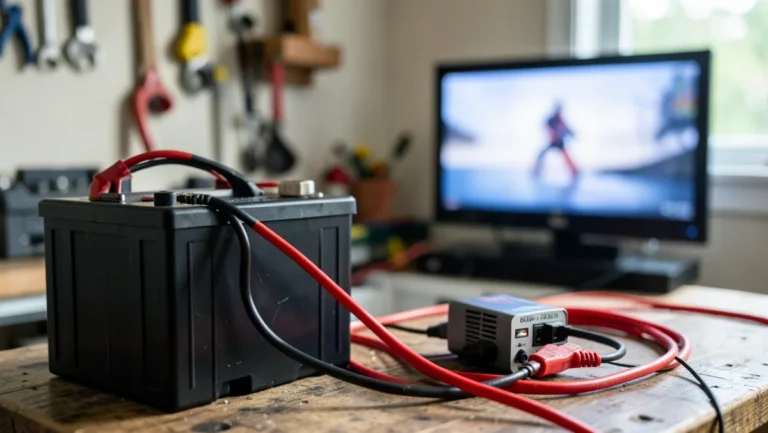
How Much Does a Car Battery Weigh? Weight by Type & Size
A typical car battery weighs 30 to 50 pounds, with the average standard lead-acid battery landing right around 41 pounds. The exact number depends mostly on battery group size and construction type: AGM batteries usually weigh a bit more than a standard flooded battery of the same size (sometimes 44-66 pounds), while lithium (LiFePO4) starter batteries can weigh as little as 10-20 pounds for the same physical case size.
Knowing the actual weight matters more than most people expect — it changes how you lift the battery safely, what you can expect to get for it in scrap, and whether a lighter lithium swap is worth the extra cost. Here’s a breakdown by type and group size, plus what battery weight actually does (and doesn’t) affect on your car.
Average Car Battery Weight by Type
MAKES A HEAVY BATTERY EASIER TO LIFT
 |
OEMTOOLS 25316 Battery Carrier – $14.69 A 40-50 pound battery with an awkward top-post grip is a common cause of dropped batteries and pinched fingers — this carrier clamps onto the posts so you lift with a proper handle instead.
|
Not all car batteries are built the same way, and the construction type is the single biggest factor in weight once you account for physical size.
| Battery Type | Typical Weight | Why |
|---|---|---|
| Standard flooded lead-acid | 30-50 lbs (avg. ~41 lbs) | Liquid electrolyte plus dense lead plates; the most common type in gas-powered cars |
| AGM (Absorbed Glass Mat) | 40-66 lbs | Packs more lead plate material into the same case for higher output, so it’s usually a few pounds heavier than a flooded battery of the same size |
| Lithium (LiFePO4) | 10-20 lbs | No lead and no liquid electrolyte, so it can deliver similar cranking power in a fraction of the weight |
Car Battery Weight by Group Size
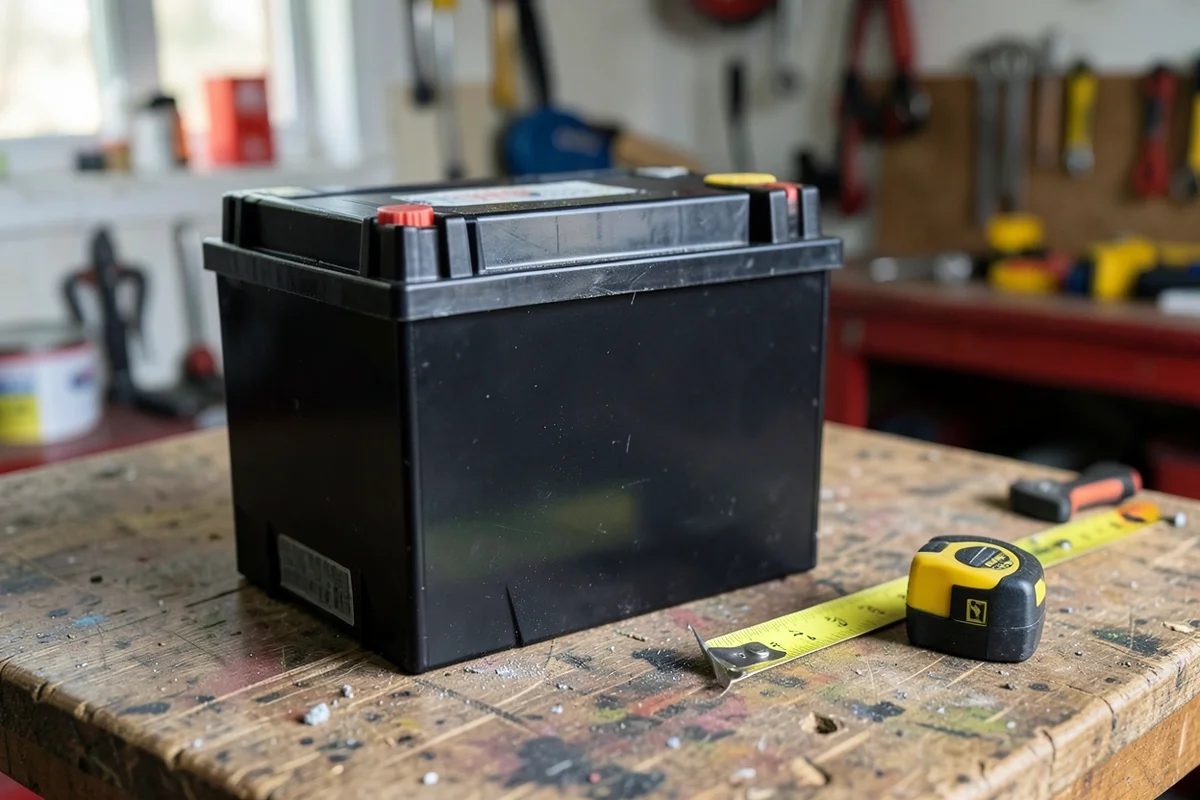
The Battery Council International (BCI) group number on your battery’s label tells you its exact physical dimensions and terminal layout — and weight is tightly standardized within a group, usually varying by no more than a pound or two between brands.
| BCI Group | Common In | Lead-Acid Weight | Lithium Equivalent |
|---|---|---|---|
| Group 24/24F | Honda, Toyota, Nissan sedans | 40-43 lbs | ~15-18 lbs |
| Group 34/78 | GM and Chrysler cars, some trucks | 37-41 lbs | ~14-17 lbs |
| Group 35 | Many Ford, Hyundai, Kia models | 41-45 lbs | ~16-18 lbs |
| Group 65 | Full-size Ford trucks and SUVs | 45-57 lbs | ~26 lbs |
| Group 75 | Some GM and import models | 33-46 lbs | ~14-18 lbs |
| Group 94R | European luxury sedans and SUVs | 52-75 lbs | ~17 lbs |
If you’re not sure which group your car uses, the number is usually printed right on the top or side label of your current battery, or listed in your owner’s manual. European makes in particular tend to spec specific AGM group sizes — our guide to picking a BMW battery by group size walks through that in more detail.
Why AGM Batteries Weigh More Than Standard Batteries
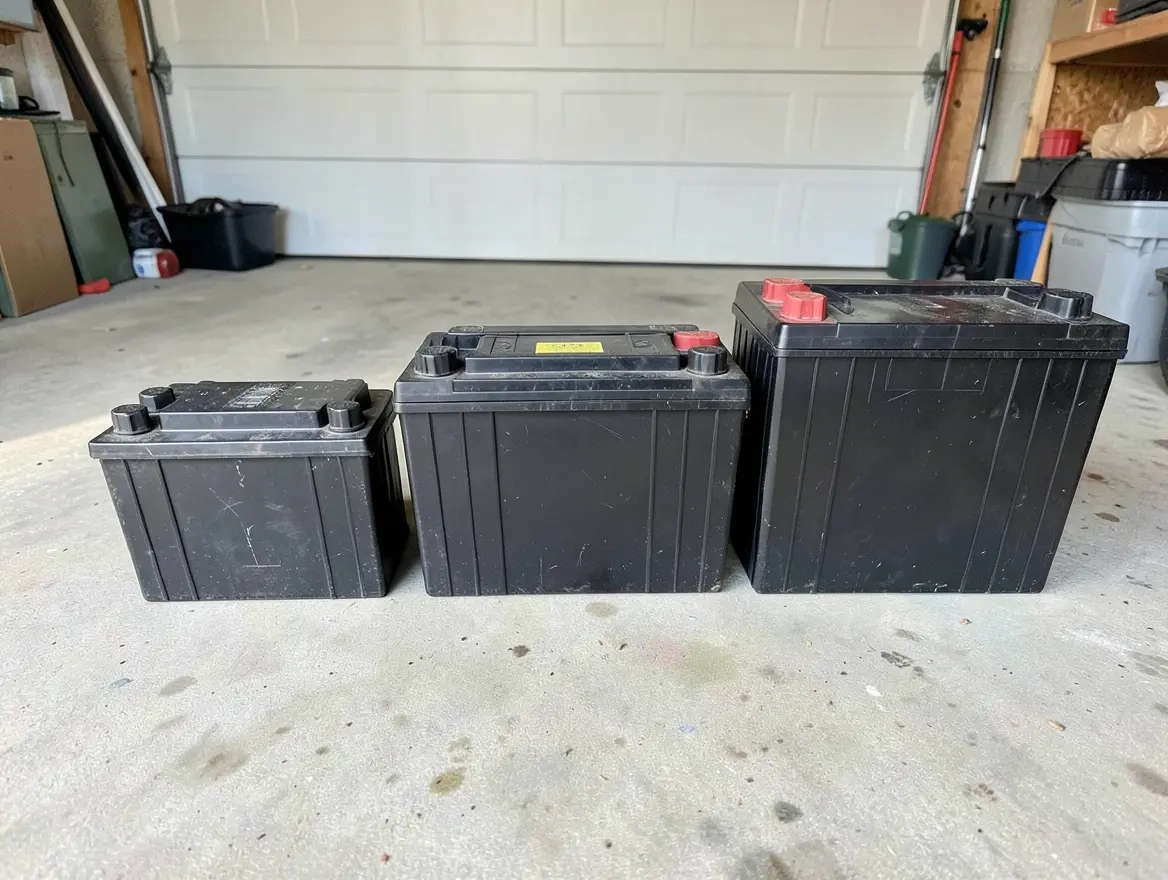
AGM (Absorbed Glass Mat) batteries suspend their electrolyte in fiberglass mats instead of leaving it as free liquid, which makes them spill-proof and vibration-resistant. To get the higher cranking power and deeper cycling that AGM batteries are known for, manufacturers pack more active lead plate material into the same case — and that extra lead is what adds the few pounds over a comparable flooded battery. This is also why AGM batteries have become standard equipment on many vehicles with start-stop technology, which repeatedly cycles the battery every time the engine shuts off at a light.
Why Lithium Car Batteries Weigh So Much Less
A lithium iron phosphate (LiFePO4) starter battery skips lead and liquid electrolyte entirely, using lightweight lithium cells and a plastic case instead. That’s how a lithium battery can match or beat a lead-acid battery’s cranking amps at roughly a third of the weight. The tradeoff is price: a quality lithium starter battery typically costs 3-5 times more than a comparable lead-acid or AGM battery, so the weight savings mainly make sense for racers, off-roaders shedding unsprung weight, or anyone who needs to physically carry the battery often.
Does Battery Weight Actually Affect Fuel Economy or Handling?
Only marginally, and the effect is much smaller than a lot of blog posts suggest. The weight difference between a heavy AGM battery and a light lithium one is typically 20-30 pounds — less than 1% of the total weight of a 3,500-4,500 pound passenger car. For comparison, a full tank of gas, one extra passenger, or a roof rack all add far more weight than swapping battery types ever will. Where battery weight does matter more is in racing and weight-sensitive builds, where every pound saved is tracked closely, or in trucks and SUVs that stack a heavier battery on top of other weight-conscious modifications. A weak or dying battery has a far bigger effect on how your car actually drives than its weight does — see our breakdown of how a bad battery affects car performance for that side of things.
How to Safely Lift and Carry a Heavy Car Battery
- Wear gloves and eye protection — battery terminals and any residue on the case can carry corrosive acid.
- Disconnect the negative terminal first, then the positive, before lifting the battery out.
- Bend at the knees and lift with your legs, not your back — a 40-50 pound battery held at an awkward angle is a common source of back strain.
- Use a battery carrier or lifting strap that clamps onto the terminals or case edges for a proper handle, rather than trying to grip the smooth plastic case directly.
- Carry the battery upright at all times to avoid spilling electrolyte, and set it down gently rather than dropping it.
What Is a Car Battery Worth in Scrap?
Scrap yards typically pay based on weight, at a rate that has recently run around $0.20 to $0.28 per pound for lead-acid batteries. On a standard 40-pound battery, that works out to roughly $8 to $12, though rates shift with the scrap lead market and vary by location. That scrap payout is separate from a core charge, which is the deposit-style credit an auto parts store gives you for trading in your old battery when you buy a new one — core charges are usually higher than straight scrap value, so it’s almost always better to turn your old battery in at the store where you bought the replacement rather than hauling it to a scrap yard.
Frequently Asked Questions
How much does a car battery weigh in pounds?
Most car batteries weigh 30 to 50 pounds, with a standard flooded lead-acid battery averaging around 41 pounds. AGM batteries usually run a bit heavier, and lithium batteries can weigh as little as 10 to 20 pounds for the same physical size.
How much does a 12-volt car battery weigh?
Nearly all car batteries are 12 volts, so the voltage itself doesn’t change the weight — the physical group size and construction type do. A 12-volt lead-acid battery typically weighs 30 to 50 pounds, while a 12-volt lithium battery in the same case size can weigh under 20 pounds.
How much do AGM and lithium batteries weigh compared to a standard battery?
An AGM battery is typically a few pounds heavier than a flooded lead-acid battery of the same group size, often landing between 40 and 66 pounds. A lithium (LiFePO4) battery in that same case size usually weighs 10 to 20 pounds — roughly a third of the weight, because it has no lead plates or liquid electrolyte.
Is a car battery heavy to carry?
Yes. At 30 to 50 pounds and often held at an awkward angle in the engine bay, a car battery is heavy enough to cause back strain or a dropped-battery accident if you lift it incorrectly. Bend at the knees, use a battery carrier tool if you have one, and carry it upright.
How much is a car battery worth in scrap?
A standard 40-pound car battery is typically worth about $8 to $12 in scrap, based on recent lead-acid scrap rates of roughly $0.20 to $0.28 per pound. A core charge credit at an auto parts store, paid when you trade in your old battery for a new one, is usually worth more than scrapping it.
Does a heavier car battery mean more power?
Not directly. More weight in a lead-acid battery usually comes from more lead plate material, which can mean higher cranking amps, but it’s the plate area and chemistry that determine power — not the weight itself. A lithium battery proves this by delivering comparable or better cranking power at a fraction of the weight of a lead-acid battery.
Conclusion
A car battery typically weighs 30 to 50 pounds, and the exact number comes down to group size and construction type more than anything else — standard flooded batteries average around 41 pounds, AGM batteries run a bit heavier for their extra performance, and lithium batteries can cut that weight by two-thirds. Check the group size on your current battery’s label before buying a replacement, and use a proper carrier tool when you lift it out.
Products related to this article
Sponsored / affiliate links. As an Amazon Associate I earn from qualifying purchases. I may earn additional commission from eligible campaigns.