Automatic Car Wash Price
Premium automatic car washes often run about $25 to $40. Choose the wrong tier and you pay for features you do not need, or you leave road film, pollen, and brake dust behind because the wash was too light. This guide breaks down each price band, what it includes, when memberships pencil out, and what commercial equipment buyers should budget.
Price ladder from $7 self-service to $40 full-service
The fastest way to read an automatic car wash price is as a ladder, not a single number. Each step adds labor, chemistry, or machine time, and extras often move the final bill more than the base wash itself.
| Tier | Typical price range | What is included | Best use case | Likely drawbacks | Worth it when |
|---|---|---|---|---|---|
| Self-service bay | $7–$15 | Coin-operated bay, spray wand, soap cycle, rinse, and often vacuum access | Light dirt, budget cleaning, owners who want control over stubborn spots | More effort and time; no full exterior automation | You want the lowest price and can do the work yourself |
| Basic machine wash | $10–$20 | Drive-through wash with soap, rinse, and basic drying | Weekly maintenance wash and quick cleanup | May miss heavy grime, wheel buildup, and lower-body winter residue | You mainly need routine dirt removal |
| Touchless wash | $15–$25 | High-pressure water jets, detergent, and drying with no brushes or bristles | Drivers who want a brush-free option and a stronger rinse on heavier grime | Often costs more than a basic machine wash and may need a second pass on stuck-on soil | You want the brush-free option and can pay a small premium |
| Brush wash with add-ons | $20–$35 | Cylindrical brush system, soap, high-pressure hoses, plus extras such as wax, tire shine, and undercarriage wash | Cars with winter grime, road film, or dirt that needs more mechanical action | Higher price; brush contact can leave swirl marks on some finishes | You need a deeper clean and the add-ons solve a real problem |
| Full-service wash | $25–$40 for many cars; sedans often fall into the $50–$100 range when wash and basic detailing are bundled | Wash, wax, vacuuming, polishing, and more labor time | Drivers who want the interior touched too, or a cleaner presentation before a trip or sale | Most expensive tier; SUV pricing is usually higher than sedan pricing | You want both exterior and interior work done in one stop |
What you get at the cheapest tier
The cheapest automatic options are the self-service bay and the basic machine wash. Yelp lists self-service car washes at $7–$15 per wash, machine wash prices at $10–20 per wash, and a basic gas station wash at $10–20. Those prices usually cover the core clean, not the extras that make a dirty vehicle look finished.
A common first-timer mistake is paying for the cheapest tunnel wash after a week of winter driving. If the car has salt on the lower panels and packed grime behind the wheels, the base wash can leave a dull film even though the paint looks rinsed.
Where add-ons start raising the bill
Add-ons change the equation fast. The same source says add-on services can add $5–10 extra per service, and common extras include wax, tire shine, undercarriage wash, and vacuuming. A base wash that looks inexpensive can move into mid-tier territory once two or three extras get added.
What full-service usually adds
Full-service washes add labor, not just more water. The same source lists full-service wash and basic detailing at $50–100 for sedans, with upgraded detailing at $100–200 for sedans. That higher tier usually includes wash, wax, vacuuming, and polishing, and SUVs generally cost more because they take more time and material.
Touchless vs brush wash
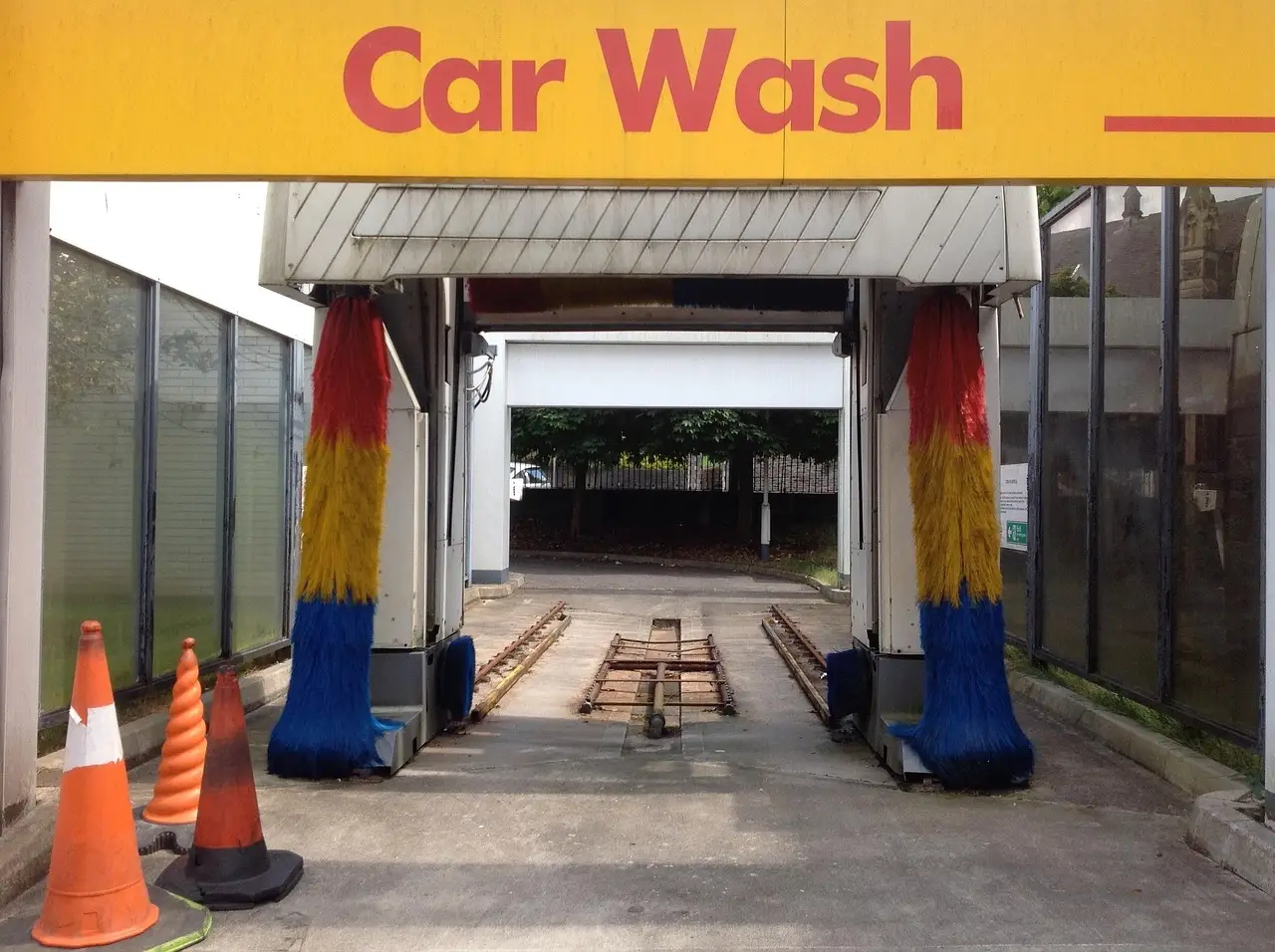
Touchless and brush systems both automate the job, but they clean in different ways and price differently. Touchless systems use high-pressure water jets and no brushes or bristles, while brush systems use cylindrical brushes along with soap and high-pressure hoses. More contact can scrub off heavier dirt, but it also brings more concern for paint finish.
How touchless systems clean
Touchless automatic car wash pricing usually sits above a basic machine wash. That premium buys you the no-brush method: strong jets, detergent, and rinse cycles that rely on water force rather than physical contact. Expect the touchless option to be about $5–$10 more than a basic machine wash in many markets, though local pricing can move that gap.
How brush systems clean
Brush systems use cylindrical brushes to scrub the body panels while soap and high-pressure hoses break loose grime. They can be very effective on road film and mud, especially when the vehicle needs more than a spray rinse. The tradeoff is paint safety: frequent brush contact can leave swirl marks on some finishes.
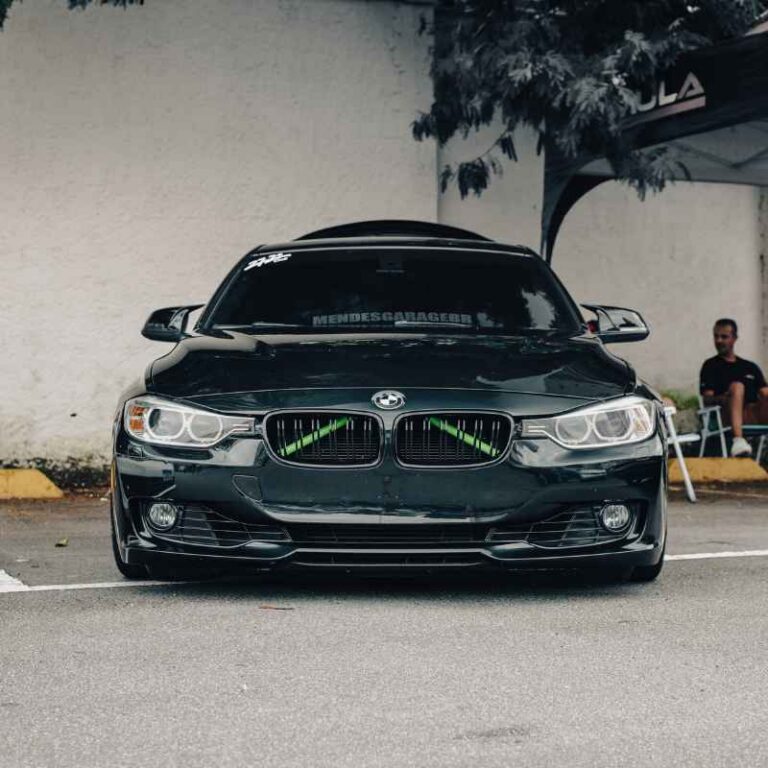
Picture a black sedan that has just come through a salty week of driving. A touchless wash may leave some residue behind if the buildup is heavy, while a brush wash can clean more aggressively but may not be the first choice for an owner worried about finish quality.
Why do automatic car wash prices vary?
Prices change because the wash is solving different problems at different cost levels. Vehicle size, local labor, water, property costs, and the amount of chemistry or labor built into the package all affect the final price. That is why one city may feel inexpensive while another makes the same service look expensive.
Vehicle size and pricing brackets
Small cars usually stay near the base price, while SUVs, vans, and taller vehicles often move into a higher bracket. The reason is straightforward: they need more soap, more rinse time, and sometimes more attention around rooflines, wheels, and rear panels. Full-service operations are especially likely to price SUVs above sedans.
Location, labor, and water costs
A wash in a dense market with higher rent and labor costs will usually charge more than a wash in a lower-cost area. Water pricing also matters, especially where utilities are expensive or where the site uses more fresh water instead of recycling part of it. That is why the average automatic car wash price near you may sit above or below the national range.
Wax, undercarriage wash, tire shine, and vacuuming
These extras are not small details. They are separate labor or material steps, and each one can add $5–$10. Undercarriage wash matters more in winter. Wax and tire shine are cosmetic. Vacuuming shifts the service toward a full-service package, which is why the bill rises faster than many drivers expect.
When is the next tier worth it?
The next tier is worth it when the cheaper wash stops solving the real problem. If the car only has light dust, the base wash is usually enough. If it has salt, heavy road film, bird droppings, or winter grime, the cheapest tier can turn into poor value because you may need a second wash or extra add-ons anyway.
Winter salt and road grime
Salt and slush collect on lower panels, wheel wells, and the undercarriage. In that situation, a brush wash with an undercarriage add-on often makes more sense than a bare-bones rinse. The extra spend can save you from paying twice when the first wash leaves residue behind.
Bird droppings and heavy contamination
Bird droppings and sticky contamination often need more than a fast pass through the cheapest machine. If the spot has started to bond to the paint, the value of the base wash falls quickly. A more complete package, or even a self-service bay with more time at the wand, can be the better buy.
Automatic car wash machine costs
Business-only: consumer wash pricing and operator equipment pricing are different questions. If you are budgeting a site, the machine purchase price is only the first line item. Installation, maintenance, water management, and throughput all affect the real cost to build and run the business.
| Operator item | Typical cost | What it means |
|---|---|---|
| Basic rollover system | $15,000–$40,000 | Lower-complexity automatic unit for compact footprints |
| Touchless system | $20,000–$50,000+ | Higher-cost no-brush setup with more spray and control hardware |
| Tunnel system | $50,000–$100,000+ | Larger-capacity system for higher throughput and more customization |
| Installation | $2,000–$10,000 | Site prep, utility tie-ins, and setup costs |
| Water recycling option | Upfront add-on cost varies by system | Reclaims part of the water stream and can cut operating costs over time |
Purchase price range
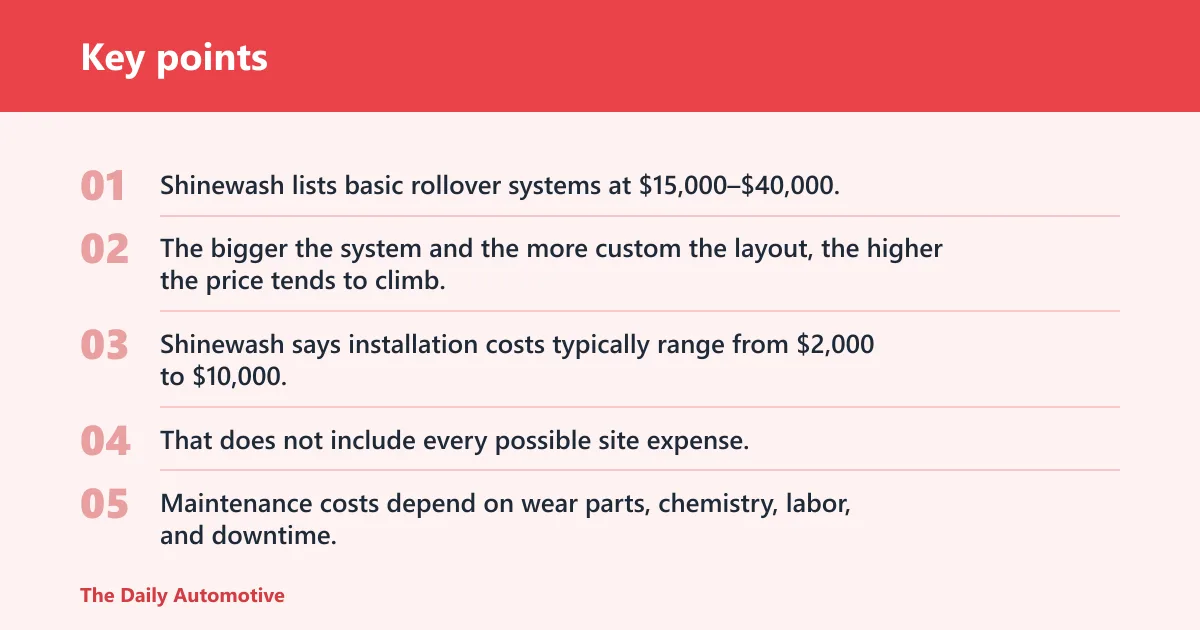
Shinewash lists basic rollover systems at $15,000–$40,000, touchless systems at $20,000–$50,000+, and tunnel systems at $50,000–$100,000+. The bigger the system and the more custom the layout, the higher the price tends to climb.
Installation cost range
The same source says installation costs typically range from $2,000 to $10,000. That does not include every possible site expense, but it gives buyers a realistic starting point before utility work, paving, or additional building changes are added.
Maintenance and throughput
Maintenance costs depend on wear parts, chemistry, labor, and downtime, so operators should budget beyond the sticker price. Throughput matters too. A small automatic unit may process far fewer cars per hour than a tunnel setup, so the revenue side must match the site’s traffic.
Water recycling system cost
Water recycling systems reclaim a portion of the wash water, often reducing the amount of fresh water needed per cycle. The reclaimed-water percentage depends on the equipment and site design, and the operating-cost impact is usually lower utility use over time. The tradeoff is a higher upfront cost for the recycling hardware.
Are monthly plans worth it?
Monthly plans are worth it when you wash often enough to beat the single-wash total. The same source says monthly subscriptions can cost $15–30 per month, while a basic machine wash often costs $10–20. That means the break-even point usually lands after 2 to 4 washes, depending on the plan and the pay-per-wash price.
Typical membership pricing
Subscriptions are usually the easiest way to lower the per-wash cost for frequent drivers. If a plan costs $20 and a single wash is $10, the math is simple: the second wash makes the membership look better, and every additional wash lowers the average cost further.
Break-even against single washes
Use a quick test. Divide the monthly plan price by the wash price you would normally pay. A $15 plan against a $10 wash breaks even at two washes. A $30 plan against a $15 wash breaks even at two washes as well. If your usage is below that level, pay-per-wash can be the better value.
When subscriptions save money
Subscriptions save money when you wash often, drive through rain and slush regularly, or prefer to keep brake dust and road film from building up. They are less useful if you wash only once a month or less, because the subscription can outpace the actual usage.
Suppose a driver in a snowy area uses the wash after every storm and twice more during the month. A $20 membership can make sense quickly, especially if the alternative is paying $10–20 each time for a basic machine wash or paying extra for salt removal on top of that.
Frequently asked questions
How much does an automatic car wash cost?
For consumers, a basic automatic wash often falls around $10–20, with touchless washes commonly priced a bit higher and full-service washes much higher. The same source lists machine wash prices at $10–20 per wash, self-service bays at $7–15, and full-service wash and basic detailing at $50–100 for sedans.
What is the average automatic car wash price near me?
The local average depends on labor, rent, water, and how much service is bundled into the wash. A city center site can price well above a suburban bay, and winter demand can push packages upward. Use the national range only as a starting point, not a local guarantee.
Why do automatic car wash prices vary by location and wash type?
Prices vary because different systems consume different amounts of labor, water, and machine time. Touchless and full-service packages cost more because they add equipment complexity or labor. Vehicle size, local costs, and extras such as wax or vacuuming also shift the total bill.
How much is a touchless car wash compared with a brush wash?
Touchless washes usually cost more than basic machine washes because they rely on high-pressure jets and specialized cycles instead of brushes. Brush washes can be priced similarly or slightly higher once add-ons are included. The premium is often about $5–$10 over a basic wash, depending on the market.
What add-ons raise the price at an automatic car wash?
Wax, tire shine, undercarriage wash, and vacuuming are the most common extras. The same source says add-on services can add $5–10 extra per service. Those charges are why a low advertised price can turn into a much higher ticket at checkout.
How much does an automatic car wash machine cost to buy?
Those figures are for equipment only, so buyers still need to budget for installation, utilities, and ongoing maintenance.
Products related to this article
Sponsored / affiliate links. As an Amazon Associate I earn from qualifying purchases. I may earn additional commission from eligible campaigns.