Best Car Interior Cleaning Supplies for Fast Results: We Compared
The best car interior cleaning supplies for fast results are a pH-balanced interior cleaner, a microfiber towel, a soft detailing brush, and a small vacuum. That four-item set clears common messes in the fewest steps. Use the wrong tool and you can smear grime, leave dust in seams, and waste time re-cleaning panels, screens, and seats. This guide ranks quick-clean supplies and kits by speed to visible results, from dust and crumbs to spills, stains, and stuck-on residue.
Quick comparison
| Product | Badge | Best for | Price | ||
|---|---|---|---|---|---|
 |
Meguiar’s Quik Interior Detailer CleanerMeguiar’s | Our pick | 24 Oz · All-Purpose · Meguiar’s Quik | $9.74
Price as of 11 Nov 2026
|
View |
 |
Chemical Guys, Citrus Fabric & Carpet Cleaner SprayChemical Guys | Also great | 16 oz · Citrus Scent · With Brush Kit | $20.99
Price as of 11 Nov 2026
|
View |
If you want the fastest visible clean, start with a multi-surface cleaner and a microfiber towel, then add the specialty tool that fits the mess. Wipes are quicker for touch-ups. A fabric cleaner earns its place when the stain is in cloth or carpet.
How we chose
This list uses manufacturer listings, product details, and published buyer feedback, then ranks tools by how quickly they can improve the surface you can see. Speed mattered more than brand reputation.
- Fast visible change: the first pass should remove dust, film, or staining without extra steps.
- Surface range: products that work on common cabin materials get priority for daily use.
- Tool efficiency: we favored products that cut down the number of passes, towels, or separate purchases.
- Practical format: ready-to-use sprays, wipes, and kits beat mixes that slow you down.
- Listing clarity: if the product data did not state a spec, use the manufacturer’s listing for your model before buying.
Interior cleaning matrix
This matrix maps the mess to the smallest supply stack that should get you to a visible result quickly. It also shows what not to grab first, because the wrong tool often adds time.
| Mess type | Best supply | Backup supply | Time to visible improvement | Common mistake |
|---|---|---|---|---|
| Dust film | Interior duster or soft detailing brush, then a microfiber towel | Multi-surface interior cleaner on a towel | 2-5 minutes | Using a wet cleaner first and turning dust into streaks |
| Fingerprints | Multi-surface interior cleaner and microfiber towel | Interior cleaning wipes | 2-4 minutes | Spraying too much and leaving residue on piano black trim |
| Drink residue | Multi-surface interior cleaner, microfiber towel, soft brush for seams | Cleaner wipe for the first pass | 4-8 minutes | Scrubbing hard before loosening the spill |
| Fabric stains | Car upholstery cleaner | Portable upholstery extractor | 5-15 minutes | Soaking the seat and pushing the stain deeper |
| Pet hair | Detailing brush set and vacuum | Upholstery extractor after loose hair is removed | 5-12 minutes | Using a wet cleaner before pulling hair off the fabric |
| Glass haze | Glass-specific wipe or multi-surface cleaner on a clean microfiber towel | Dry edgeless microfiber towel after a light spray | 2-6 minutes | Using a plush towel that leaves lint on the glass |
Say your dashboard has dust, your center console has fingerprints, and the windshield has a light haze. A brush or duster clears the loose grit first, then a cleaner and microfiber towel finish the surfaces without extra passes. That order is faster than starting with a wet wipe and chasing streaks later.
Suppose the passenger seat has a coffee ring on cloth and the rear seat has pet hair. The hair should come off first with a brush and vacuum, while the stain gets a fabric cleaner or extractor. If you reverse that order, the wet fabric grabs more hair and slows the cleanup.
Multi-surface interior cleaner: best for daily wipe-downs
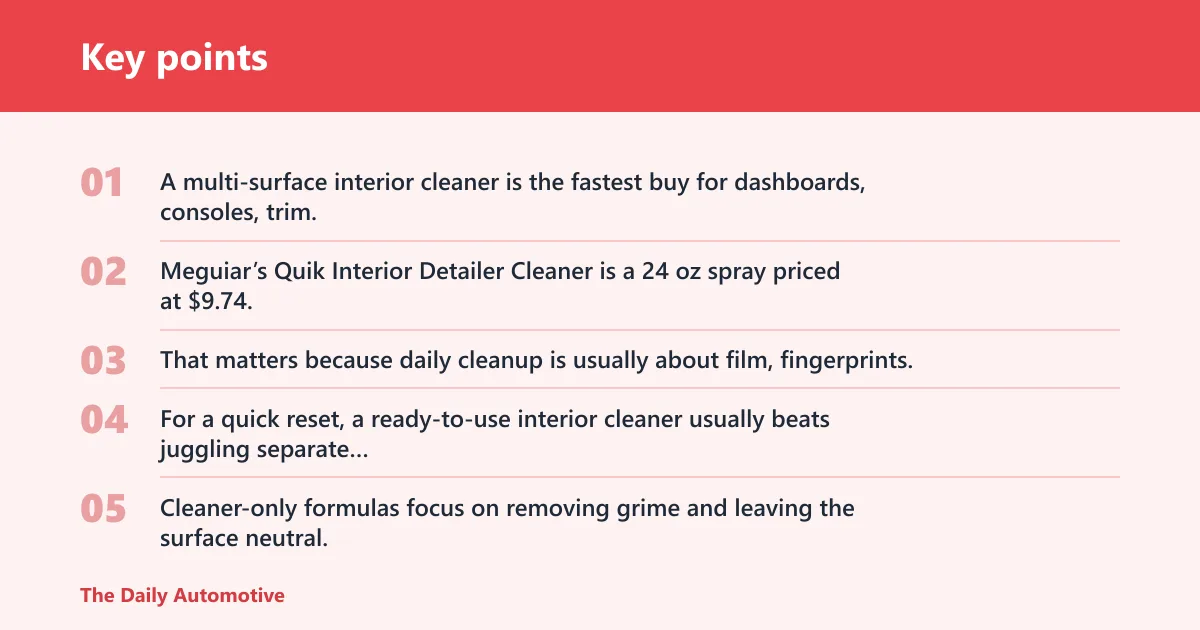
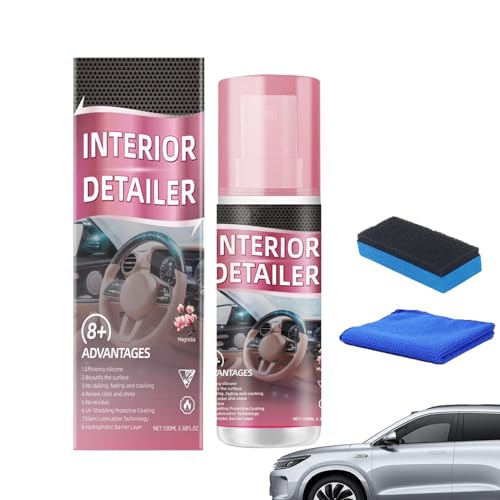
A multi-surface interior cleaner is the fastest buy for dashboards, consoles, trim, and leather when you want one bottle that handles routine grime. Meguiar’s Quik Interior Detailer Cleaner is a 24 oz spray priced at $9.74, and the listing says it is formulated for a wide range of interior materials with a high-lubricity formula and sun-blocking agents.
That matters because daily cleanup is usually about film, fingerprints, and light residue, not heavy extraction. For a quick reset, a ready-to-use interior cleaner usually beats juggling separate products, especially when you want fewer steps and less residue on touchy trim.
Cleaner-only vs cleaner-plus-protectant
Cleaner-only formulas focus on removing grime and leaving the surface neutral. Cleaner-plus-protectant versions add a finish that may help slow UV wear or keep the surface looking dressed. If the cabin is already clean and you only want speed, cleaner-only is usually the faster choice.
Meguiar’s listing places this product in the cleaner-plus-protectant lane because of the sun-blocking agents. That can help with dashboard and trim maintenance, but it is not the same thing as a stain remover for fabric seats.
Where it works fastest
This type of product works fastest on hard interior surfaces that show fingerprints and light film: dashboard, console, door trim, and coated leather. It also fits the common “quick refresh before driving” job because you can spray a towel, wipe once, and inspect the result immediately.
For plastic, vinyl, and leather, a single cleaner can work if the manufacturer says so on the label. If the listing does not spell out the surface, check the manufacturer’s listing for your model before using it on a visible panel.
What not to use it
Do not treat it like a fabric stain remover. It is not the first pick for soaked upholstery, embedded pet hair, or deep carpet spots. Also avoid flooding screens, switches, or seams where extra liquid can collect and make the next pass take longer.
Use the vehicle manual for any surface restrictions, and keep products out of airbag zones and the driver’s view on the dash and windshield area.
Interior cleaning wipes: best for grab-and-go touch-ups
Interior cleaning wipes are the quickest option when you want one-step maintenance and no spray bottle or towel setup. They are best for fingerprints, fresh dust, and small cleanup jobs where the goal is speed, not deep cleaning. If you are already parked and short on time, wipes often win.
The tradeoff is coverage. A wipe can be faster on a steering wheel button cluster or a door handle, but it can run out of clean surface fast on larger panels. For bigger areas, a spray and microfiber towel usually covers more square footage with fewer wipes.
When wipes beat spray and towel
Wipes beat spray and towel when the mess is small, the cabin is already mostly clean, and you do not want to pull out multiple tools. They are also easier for quick stops, glovebox storage, and rental-car cleanup where portability matters more than finish quality.
For anyone choosing between formats, the fastest path is often the simplest: a wipe for a small spot, a spray for a panel, and a brush for seams.
Glass wipe, cleaning wipe, and protectant wipe types
Glass wipes are built for clearer visibility and less haze. Standard cleaning wipes handle general cabin film. Protectant wipes add a finish that can help with UV-conscious maintenance, but that extra layer is not always needed for a quick touch-up.
Watch the wipe count before buying. Chemical Guys Total Interior New Car Smell Cleaner & Protectant Wipes come in a 30-count canister and are priced at $8.97. Armor All Glass & Cleaning Wipes come as three 30-count canisters, which matters if you want a dedicated glass supply rather than using one wipe type everywhere.
What to watch in wipe count and residue
Wipes save time only when they stay wet enough to finish the job. Once a canister starts drying out, each wipe takes longer and may leave streaks. That is why buyers should check the count, the intended surface, and whether the wipe is meant for glass, cleaning, or protection.
If a wipe leaves residue on piano black trim, switch to a microfiber towel and a lighter spray. That usually fixes the finish faster than trying to buff a dry film off with more wipes.
What cleaner works fastest on dashboards, seats, and consoles?
The fastest cleaner for dashboards, seats, and consoles is usually a ready-to-use interior spray that matches the surface, plus a microfiber towel. On hard panels, a cleaner-and-towel combo outpaces wipes once the area gets larger than a few fingerprints. On fabric seats, a dedicated upholstery cleaner works faster only when the stain is actually in the cloth.
Car upholstery cleaner for fabric seats and carpet
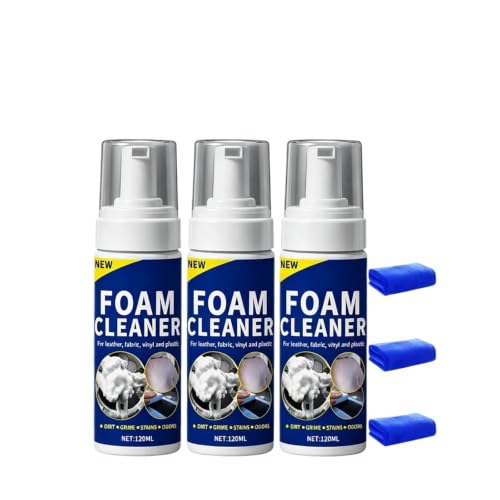
Car upholstery cleaner is the right call for fabric seats and carpet when the mess is a stain, not just loose dust. Chemical Guys Citrus Fabric & Carpet Cleaner Spray with Brush Kit is listed as a 16 oz ready-to-use foaming spray with an included interior brush, and is priced at about $20.99. The low-moisture foam is meant to reduce soaking, which helps speed cleanup on cloth surfaces.
This is a better pick for visible seat or carpet spots than a general interior cleaner. It is still a fabric-focused product, though, so it does not replace a dashboard cleaner for plastic and trim.
Portable upholstery extractor for set stains
A portable upholstery extractor becomes worth it when stains have settled into seat fabric or carpet and a spray alone leaves the mark behind. Shark StainStriker is marketed as perfect for car interiors, and the listing context shows 7,303 customer reviews on Walmart. The value here is faster liquid removal than wipes or a towel can manage.
Think of an extractor as the next step after a cleaner loosens the stain. It is better for spot-cleaning depth, but it is slower to set up than a spray bottle and towel, so it makes more sense for repeated stain cleanup than for every daily wipe-down.
Where spray-and-towel still wins
Spray and towel still wins on hard surfaces, light film, and fresh spills that have not soaked in. It is faster to control, easier to dry, and less likely to overload the material. For most dashboards, that is the quickest route to a visible result.
A common first-timer mistake is spraying upholstery cleaner onto a small stain and stopping there. The better sequence is light application, brief dwell time if the label allows it, gentle agitation with a brush, then a towel or extractor to pull the soil back out.
Detailing brush set: best for vents and seams
A detailing brush set is the fastest fix for tight seams, vent slats, badge edges, and button gaps where dust hides. Soft bristles are safer for delicate trim, while stiffer bristles clean faster on durable plastic and floor mats. The brush matters because the wrong stiffness can scratch or smear.
For vents and seams, shape matters too. A narrow, tapered brush reaches deeper into cramped areas, while a wider face clears larger grooves faster. Use the smallest brush that can still move the dust out in one pass.
Soft brush vs stiff brush jobs
Use soft brushes on glossy trim, screens, leather stitching, and any surface that marks easily. Use stiffer brushes where the material can take more agitation, such as heavy carpet or tougher plastic texture. The goal is less scrubbing, not more pressure.
Brushes pair well with a vacuum because they loosen debris first. That sequence is faster than vacuuming a packed seam with no agitation at all.
Bristle shape for tight gaps
Look for a bristle shape that narrows at the tip or fans slightly at the base. That helps move dust from vent edges and seam lines without forcing the whole brush into a space that is too small. The right shape can cut the number of passes in half.
Stay gentle around piano black trim and infotainment edges. If the brush is too stiff, the cleanup may finish fast but leave visible scuffs that take longer to correct.
How to avoid scratching delicate trim
Brush dry dust away first, then follow with a microfiber towel or cleaner if needed. Do not press hard on glossy plastics, and do not scrub across a surface that still has grit sitting on it. That grit is what causes the damage, not the brush alone.
For delicate trim, a soft brush and a clean towel are usually safer than a wet, aggressive scrub. The quickest clean is the one you do once.
Are interior cleaning wipes or spray cleaners better for quick cleaning?
For quick cleaning, wipes are faster for tiny touch-ups and spray cleaners are faster for larger panels. Wipes win when you need one tool and no setup. Spray cleaners win when you need coverage, a better finish, or a towel-based wipe-down across dashboard, door cards, and console plastics.
Microfiber towel: best for the final wipe
A microfiber towel is the last step that makes the clean look finished. It lifts remaining moisture, reduces lint, and helps turn a hazy wipe into a streak-free surface. For fast results, use one towel for wet cleanup and a second clean towel for the final pass.
Edgeless towels are often preferred for glass and glossy trim because the edge is less likely to mark. Plush towels suit general interior wiping better when you want more absorbency and less drag.
Plush vs edgeless towels
Plush towels are a good general-purpose option for dashboards, consoles, and leather. Edgeless towels are often better for glass and piano black trim because they leave fewer edge marks and can dry cleaner-looking in fewer swipes. Either way, keep the towel clean.
A loaded towel stops being fast. Once it is full of dust or product, switch to a fresh one instead of spreading residue back across the panel.
Glass drying vs interior surface wiping
For glass, the towel should dry the surface rather than dress it. Use a cleaner sparingly and finish with a dry towel to cut haze. For interior plastics, the towel’s job is to collect residue and leave an even finish, not to buff hard like paint correction.
That distinction matters because glass shows streaks immediately. Interior trim hides more, but it also shows lint if the wrong towel is used.
Interior duster and vent tool: best for fast dust removal
An interior duster or vent tool is the quickest choice for loose dust on vents, seams, and textured plastic. Gel dusters can pick up particles from awkward spots, while brush-style tools are better for repeated quick passes. Both are faster than starting with liquid on a dusty surface.
For maintenance between deep cleans, this is the best low-effort tool. It keeps dust from building into the greasy film that eventually needs a full wipe-down.
Gel vs brush duster styles
Gel dusters are useful for irregular surfaces and fine crevices because they conform to the shape of the opening. Brush dusters are better when you want to sweep dust out quickly and repeatedly. Choose the style that matches your cabin’s worst dust spots.
Use caution on delicate trim. If you are unsure how a surface reacts, start with the gentlest tool and work up only if needed.
Quick-pass maintenance between deep cleans
A quick-pass tool is for ten-second dust removal, not for deep grime. It keeps vents and seams from turning into a bigger job later. That is why many drivers keep one in the cabin and use it before the weekly wipe-down.
If the dust is clinging because of a greasy film, switch to a cleaner and towel. A dry tool will only move it around.
What supplies do I need to clean a car interior quickly?
The minimum fast-clean stack is an interior cleaner, a microfiber towel, a soft brush, and a small vacuum. Add wipes if you want grab-and-go maintenance, and add a fabric cleaner or extractor only if you regularly deal with seats, carpet, pets, or spills that soak in.
All-purpose interior kit: best for one-box buying
An all-purpose interior kit is the fastest buying decision when you want the basics in one box instead of piecemeal purchases. The best starter kits include a cleaner, brush, towel, and storage bag or case, because that setup reduces setup time and keeps the tools together.
The THINKWORK car cleaning kit claims 8,000 Pa suction power, and the 17-piece detailing kit includes a vacuum and tools. That kind of bundle can be a practical shortcut for a new owner who wants one purchase to cover dust, crumbs, and light surface cleaning.
What a starter kit should include
At minimum, a useful kit should cover dust removal, wiping, and tight-space agitation. If the kit omits a towel or brush, it may look complete but still force you to buy the missing pieces later. The point of a kit is fewer decisions, not just more parts.
For fabric-heavy interiors, a kit with upholstery tools makes more sense than a cleaner-only bundle. For mostly hard surfaces, the value is usually in the cleaner, brush, and storage case.
Case or bag storage
A bag or case matters because speed starts with access. If the cleaner, brush, and towel stay together, you are more likely to use them for small messes before they become bigger jobs. That is where a kit can outperform separate products.
Separate products still win when you already know your exact problem. If the cabin is mostly clean and you only need one specialty item, a kit can be more than you need.
Which one should you buy?
For daily maintenance, choose the multi-surface cleaner first. It is the quickest path to dashboard, console, trim, and leather touch-ups. At $9.74 for Meguiar’s Quik Interior Detailer Cleaner, it is also the better fit if you want one product that can handle the most common cabin film.
For stains and pet mess, choose the fabric cleaner or an extractor. Chemical Guys Citrus Fabric & Carpet Cleaner Spray with Brush Kit is built for fabric seats and carpet, while a portable extractor is the stronger move when the stain needs more pull than a spray can provide.
For the fastest buy decision, pick a small kit if you do not already own the basics. If you already have towels and brushes, buy the cleaner separately. If you do not, the kit is often faster than gathering pieces one by one.
Here are the simplest decision rules:
- Budget and daily touch-ups: buy one multi-surface cleaner and one microfiber towel.
- Quick maintenance with no setup: choose wipes, especially for fingerprints and small spots.
- Seat or carpet stains: use a fabric cleaner first, then step up to an extractor if the mark stays visible.
- Dust in vents and seams: add a soft brush or duster before any liquid product.
- One-box convenience: choose a kit if it includes cleaner, towel, brush, and storage.
For dashboards, seats, and consoles, the fastest clean comes from matching the tool to the failure mode. Dust gets swept, film gets wiped, stains get treated, and glass gets finished last.
Frequently asked questions
What are the best car interior cleaning supplies for fast results?
The fastest setup is a multi-surface interior cleaner, a microfiber towel, a soft detailing brush, and a small vacuum. That combination handles dust, fingerprints, crumbs, and light film with minimal setup. Add wipes for convenience and a fabric cleaner only if your seats or carpets need stain treatment.
Can one interior cleaner work on plastic, vinyl, and leather?
Yes, if the manufacturer lists those materials on the product page. A multi-surface interior cleaner is the right starting point for hard interior surfaces and leather, but you should still check the label for your model. If the listing does not confirm compatibility, use the manufacturer’s guidance before applying it.
What is the fastest way to clean car upholstery stains?
The fastest route is to lift loose dirt first, apply a fabric cleaner to the stain, agitate lightly with a brush, and pull the residue away with a towel or extractor. A portable upholstery extractor is worth it when the stain is set and a spray alone leaves a visible mark behind.
Products related to this article
Sponsored / affiliate links. As an Amazon Associate I earn from qualifying purchases. I may earn additional commission from eligible campaigns.