How Much Does It Cost to Dye Car Leather?
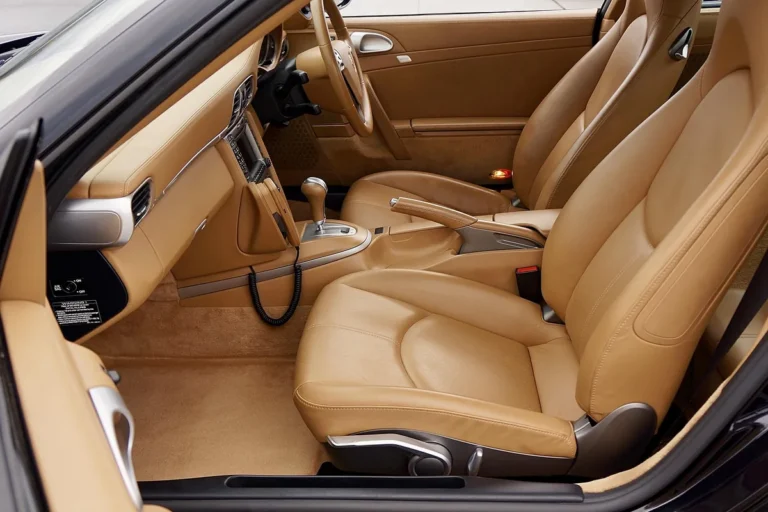
Dyeing car leather can cost about $30 to $100 for a DIY kit, $300 to $1,200 for professional recoloring, and $1,500 to $6,000 or more for a full leather refit. Poor prep or the wrong dye can leave streaks, peeling color, and a bill for rework. This guide breaks the price down by job type, so you can choose the least costly option that still works.
How much does it cost to dye car leather?
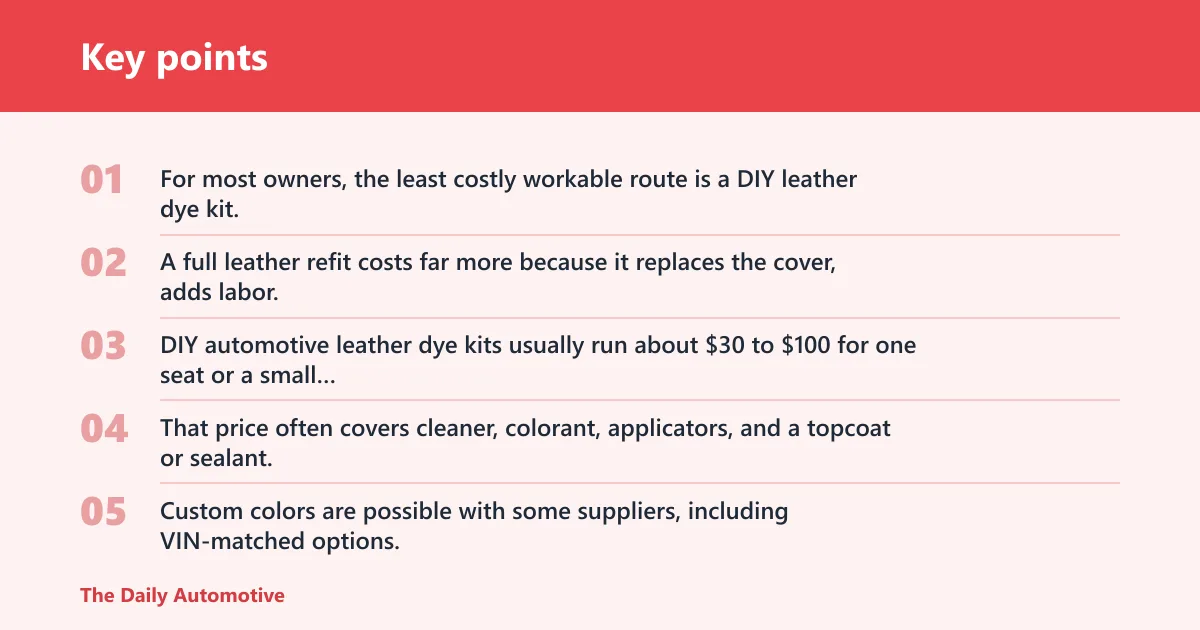


For most owners, the least costly workable route is a DIY leather dye kit, then professional recoloring if the seats are worn or the color has to match closely. A full leather refit costs far more because it replaces the cover, adds labor, and often changes material grade at the same time.
Typical DIY dye-kit price range
DIY automotive leather dye kits usually run about $30 to $100 for one seat or a small interior job. That price often covers cleaner, colorant, applicators, and a topcoat or sealant, but it does not include sanding blocks, masking materials, or the time needed for prep. Custom colors are possible with some suppliers, including VIN-matched options.
Typical professional recoloring price range
Professional recoloring commonly lands between $300 and $1,200, depending on whether the work is limited to small touch-ups, a pair of front seats, or an entire cabin. Labor drives most of the bill. Once a tech has to clean, deglaze, mask, color match, and seal the interior, the total climbs fast.
Typical full-seat refit price range
A full leather refit usually starts around $1,500 and can exceed $6,000, especially when the job covers multiple rows, higher-grade leather, complex stitching, or a classic vehicle. That price covers new materials and upholstery labor, so it is a different job from dyeing. If the original covers are cracked, torn, or foam-damaged, refit pricing may make more sense than recoloring.
Leather dye cost matrix
This matrix separates the three real price paths. DIY kits are the cheapest upfront option. Professional recoloring costs more because labor and color matching matter. Full refits cost the most because you are paying for new covers, not just a new finish.
| Job size | DIY kit cost | Pro recoloring cost | Full refit cost | Prep steps | Likely failure risk |
|---|---|---|---|---|---|
| One seat bolster or small touch-up | $30 to $60 | $120 to $250 | Not usually cost-effective | Clean, deglaze, spot sand, mask, apply color, seal | Low to moderate if the surface is intact; color mismatch and rub-off can happen |
| Two front seats | $50 to $100 | $300 to $700 | $1,500 to $3,500 | Deep clean, deglaze, sand wear spots, mask trim, spray or wipe color, topcoat | Moderate; poor prep can cause sticky finish, transfer, or peeling |
| Seats plus door inserts | $70 to $120 | $500 to $900 | $2,000 to $4,500 | Clean larger surface area, mask switches and trim, blend panels, cure finish | Moderate to high if panels are sun-faded or stitched areas absorb unevenly |
| Full cabin color change | $80 to $150 | $800 to $1,200 | $4,000 to $6,000+ | Full deglaze, multiple masking stages, full-panel recolor, sealant, cure time | High if the color change is dramatic or the interior has mixed wear levels |
What affects the price?
Four factors drive most of the bill: vehicle size, leather grade, scope, and interior complexity. The same dye product can cost very different amounts to apply because labor changes with panel count, perforation, and stitching. Regional shop rates matter too, especially outside the U.S.
Vehicle size
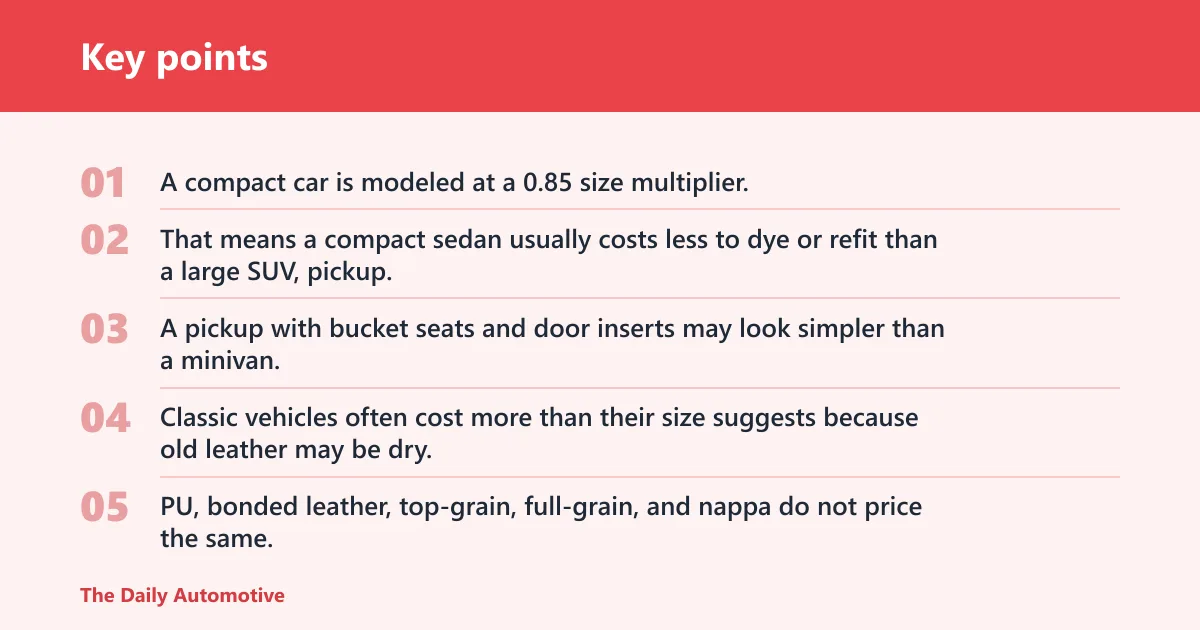
Size changes material use and labor hours. A compact car is modeled at a 0.85 size multiplier, while a sedan sits at 1.00 and an SUV at 1.25. That means a compact sedan usually costs less to dye or refit than a large SUV, pickup, or minivan because there is simply less surface area.
A pickup with bucket seats and door inserts may look simpler than a minivan, but the total labor can still climb once you include seatbacks, armrests, and plastic trim that must be masked carefully. Classic vehicles often cost more than their size suggests because old leather may be dry, brittle, or hard to match.
Leather grade
PU, bonded leather, top-grain, full-grain, and nappa do not price the same. PU and bonded leather tend to sit at the lower end of refit pricing, while top-grain, full-grain, and nappa cost more because the material itself is more expensive. Premium hides also demand more careful prep and finishing.
That matters for replacement more than for dyeing. Dyeing a worn bonded-leather seat can be a cost-saving move if the base material is still sound. Dyeing a cracked top-grain or full-grain seat may hide the color shift for a while, but it will not repair structural damage in the leather face.
Scope
Seats only is the cheapest repaint or refinish path. Seats and doors adds a larger visible area, and a full-cabin job adds console, dash, and sometimes lower trim. The calculator tiers commonly used by upholstery shops start with Seats + Doors, then Seats + Doors + Console + Dash, and finally a full cabin wrap.
Suppose a sedan has faded front seats but the rear bench and door cards still look good. Recoloring only the front pair is the cheaper workable option. If the whole cabin has sun fade, one-panel touch-up can look patchy, and a broader recolor becomes the cleaner choice.
Perforation and stitching pattern
Perforation raises both labor and material waste. Heated and vented seat perforation adds $80 and 1.5 labor hours in the calculator model, while full perforated panels add $220 in materials and 4 labor hours. Those holes make masking and color application slower, and finish buildup can block airflow if the job is rushed.
Stitching adds another layer of cost. OEM standard stitching is the base case. Contrast thread usually adds some labor because color edges must stay clean. Diamond quilted accents raise labor by 26 percent in the calculator model, which is why sport trims and custom interiors usually cost more than plain seats.
Regional labor rates also change the total. The calculator uses U.S. shop labor at $65 per hour, but shops in the U.K., Canada, Australia, New Zealand, Ireland, and India will price work differently based on local wage levels, overhead, and material sourcing. A quote from one region should never be treated as universal.
Can you dye car leather yourself?
Yes, if the leather is faded, the damage is mostly cosmetic, and you are comfortable with surface prep. A DIY kit can restore color on seats and trim for far less than a shop. It works best when the leather is intact, the original color is known, and you have time to let the finish cure properly.
What a DIY kit usually includes
Most automotive leather dye kits include cleaner, colorant, and a protective topcoat or sealant. Better kits also include adhesion promoter, prep pads, and clear instructions for seat leather and interior trim. Some professional-grade auto leather dye products are sold as custom-mixed colors rather than one-size-fits-all black or tan.
Prep steps you should not skip
- Clean the leather thoroughly to remove body oils and grime.
- Deglaze or strip the old finish so the new color bonds properly.
- Sand wear spots lightly where the surface is rough or flaking.
- Mask plastic trim, switches, stitching details, and adjacent panels.
- Apply thin color coats and let each coat dry before the next pass.
- Finish with a topcoat or sealant and allow full cure time.
When DIY is the cheaper workable option
DIY is usually the better value for small scuffs, faded bolsters, and a single-seat refresh. It also makes sense when the color change is modest and the interior is already imperfect. The risk stays lower if you are repairing one panel instead of trying to recolor an entire cabin in one weekend.
When a shop is the better call
Hire a shop when the car has perforated seats, complex stitching, heavy wear, or a custom color that must match the rest of the interior. A pro is also the safer choice if the car has premium leather, including nappa or full-grain hides, because those materials are less forgiving when prep goes wrong.
When is professional recoloring worth it?
Professional recoloring is worth the extra money when appearance, color match, and finish durability matter more than the lowest price. Shops can handle touch-up, full recolor, and restoration work, and some can match the shade to your vehicle’s VIN. That reduces the chance of a visible mismatch across seats and trim.
Touch-up versus full recolor versus restoration
Touch-up is the cheapest pro option and works best for local wear. Full recolor costs more because the whole surface gets blended for uniform color. Restoration sits in between when the leather still has life left but needs extra prep, filler, or blending to hide age and abrasion.
Picture a sedan with gray leather that has faded to a lighter tone on the driver bolster. A touch-up may fix the worn area, but the repair can stand out if the rest of the seat is sun-faded. In that case, a full-seat recolor is often the cleaner visual result.
Why labor costs dominate the bill
Colorant is only part of the invoice. The real work is in cleaning, sanding, deglazing, masking, blending, and topcoating. If the shop has to remove seats, work around airbags, or spend extra time on stitched panels and perforations, labor quickly overtakes material cost.
Common failure cases after poor prep
The most common problems are color mismatch, sticky finish, transfer onto clothing, peeling, and cracking. Those failures usually trace back to weak cleaning or skipping deglazing. A dye job on dirty leather may look fine at pickup and fail later when heat and friction expose the bad bond.
How much does a full leather refit cost?
A full leather refit usually costs far more than dyeing because you are buying new covers, not changing the color of old ones. Expect pricing to rise with scope, leather grade, perforation, and stitching. Seats and doors is the most common starting point, while a full cabin wrap is the top end.
Seats and doors pricing
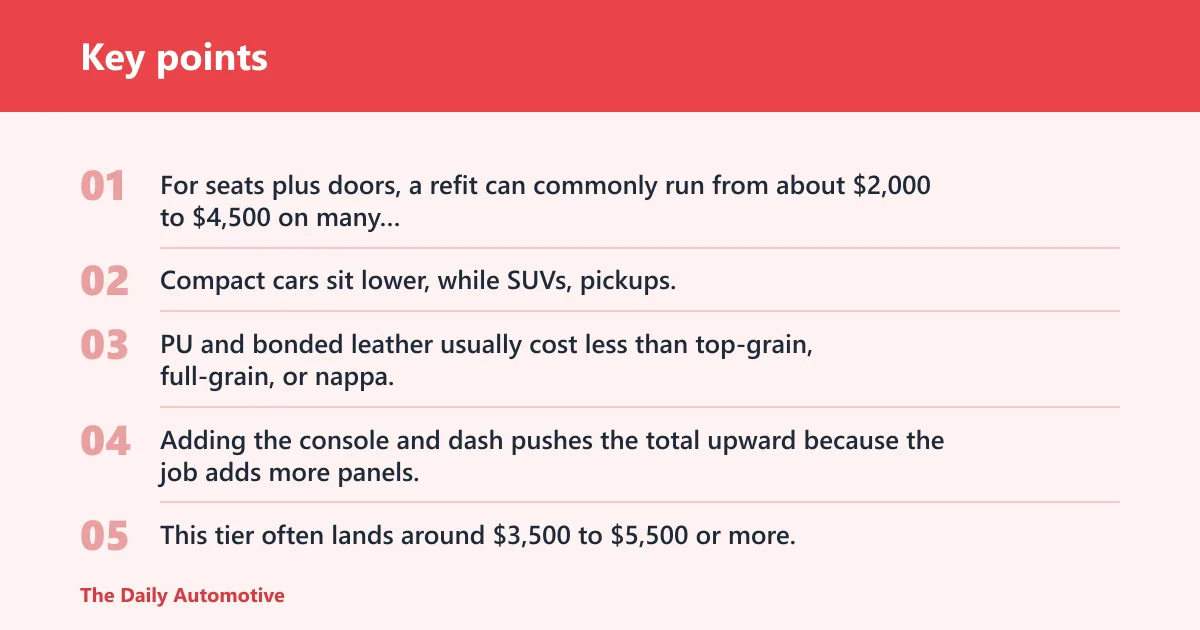
For seats plus doors, a refit can commonly run from about $2,000 to $4,500 on many modern vehicles. Compact cars sit lower, while SUVs, pickups, and minivans climb higher because of larger seating surfaces and more trim pieces. PU and bonded leather usually cost less than top-grain, full-grain, or nappa.
Seats, doors, console, and dash pricing
Adding the console and dash pushes the total upward because the job adds more panels, more shaping, and more labor. This tier often lands around $3,500 to $5,500 or more, depending on material grade and how much trim must be removed. Complex dashboards and custom seams raise the bill further.
Full cabin wrap pricing
A full cabin wrap can reach $4,000 to $6,000 or more, especially on larger vehicles or with premium hides. That price covers a much broader scope than a dye job. If the interior needs a full color change, matching across seats, doors, console, and dash is the real cost driver.
How labor changes with perforation and stitching
Perforated panels take longer to cut, fit, and finish. Contrast thread requires more attention at seams. Diamond quilted accents add labor beyond standard patterns, and the 26 percent increase used in the calculator model shows why patterned interiors cost more than flat panels. Heated and vented seats also add material and labor hours.
For a low-cost but workable answer, dye small worn areas or a pair of seats if the leather is still healthy. Choose professional recoloring when you need a close color match or a uniform result. Move to a full refit only when the covers are cracked, torn, or the interior needs a different material grade.
Frequently asked questions
How much does it cost to dye leather car seats?
DIY dye kits usually cost $30 to $100 for a seat or small interior job. Professional recoloring often costs $300 to $1,200 for seats, depending on condition, color matching, and prep time. If the leather is cracked or the job expands to doors and trim, pricing rises quickly.
How much does it cost to re dye leather car seats?
Re-dyeing car seats normally falls in the professional recoloring range of $300 to $1,200, with smaller touch-ups landing lower and full-seat recolors landing higher. The price depends on how much cleaning, deglazing, sanding, and topcoating is needed, plus whether the shop has to custom-match the color.
How much does it cost to change the color of leather car seats?
Changing seat color is usually more expensive than touching up faded spots because the entire visible surface has to be blended.
Is it cheaper to dye leather seats or replace them?
Dyeing is usually cheaper than replacing seats or refitting the whole interior. A dye kit can cost under $100, and pro recoloring often stays under $1,200. Replacement or full upholstery work often starts around $1,500 and can climb past $6,000, especially with premium leather or complex trim.
What affects the cost of dying car leather?
The biggest cost drivers are vehicle size, leather grade, scope, perforation, stitching pattern, and labor rates. Compact cars are cheaper than SUVs. PU and bonded leather usually cost less than top-grain, full-grain, or nappa. Heated, vented, and perforated seats add labor, and diamond quilting adds more.
Should I use leather dye or leather paint on car seats?
For automotive seats, choose a product made for leather restoration or recoloring, not a generic paint. Automotive leather dye is designed for faded interiors, touch-up, and full recoloring, and some professional-grade products are custom matched to VIN. The better product is the one that bonds properly after correct prep.
Products related to this article
Sponsored / affiliate links. As an Amazon Associate I earn from qualifying purchases. I may earn additional commission from eligible campaigns.