How Much Does a Leather Steering Wheel Repair Cost?
Leather steering wheel repair is often quoted at roughly $75 to $250 for cleaning, dyeing, or seam fixes, while workshop and mobile repairs may start around $200 CAD and $250 CAD depending on location and the work required. Once cracking or peeling covers roughly a third of the rim or more, rewrapping is usually the better value. Worn leather can leave sharp edges, loose material, and a wheel that keeps breaking down. This guide breaks down repair prices, rewrap costs, replacement pricing, and the point where refinishing no longer pays.
Repair levels from surface refinishing to full rewraps
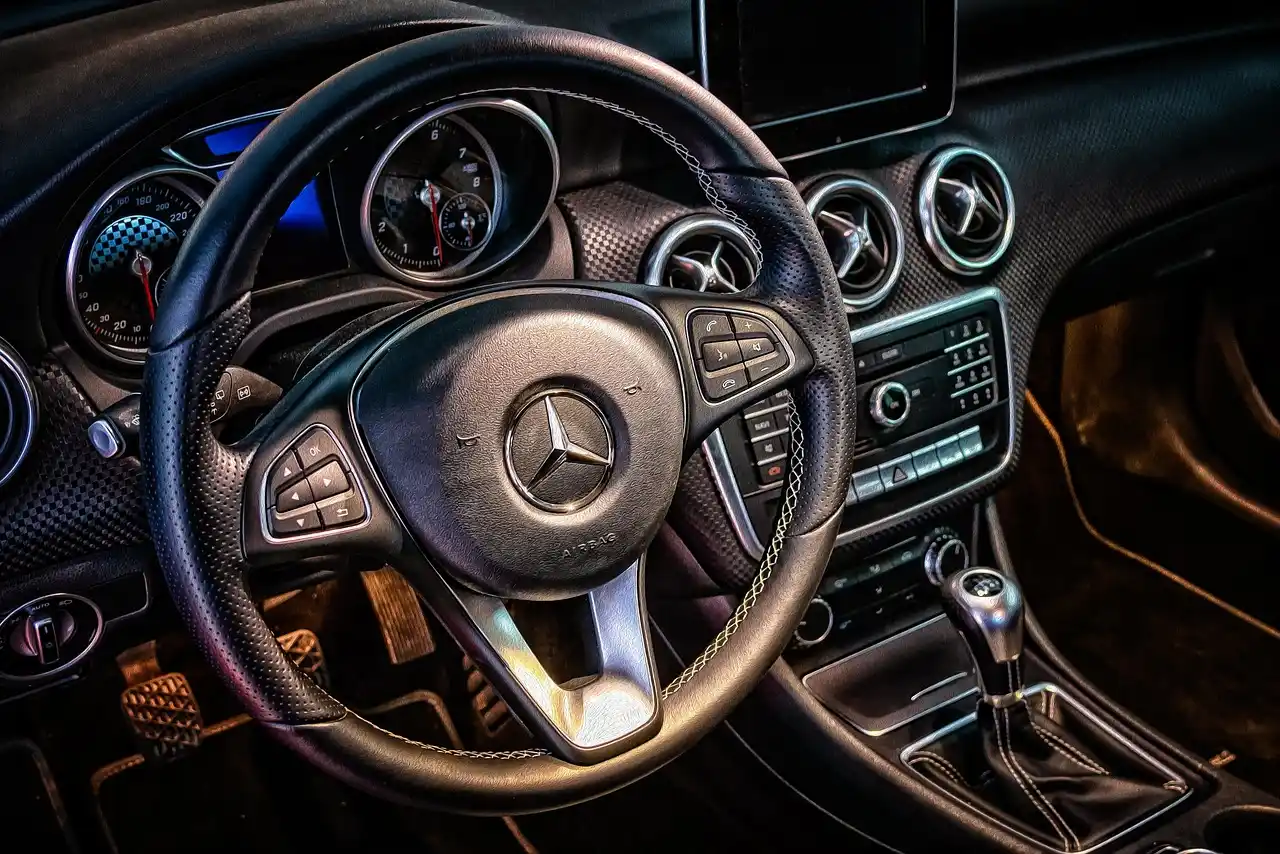


Most quotes come down to three things: how deep the damage goes, whether the leather is still structurally sound, and whether the work happens in a shop or at your location. A light surface repair can mean cleaning, exact color work, and a protective finish matched to the wheel. A deeper job may add leather filler, more prep time, or a full rewrap.
Steering wheel refinishing is the lower-cost option when the leather is worn, shiny, faded, or lightly cracked but still attached and stable. It can include color matching, sheen matching to the interior, and a protective top coat. Suitable repairs often take about 1–2 hours.
Rewrapping costs more because the labor is closer to replacement-level work. The old covering comes off, the wheel is recovered, and the finish is rebuilt instead of patched. That is the better spend when the leather is badly torn, loose, or too far gone for surface repair.
What a repair quote usually includes
A serious quote should account for labor, materials, and cure time. The material list often includes leather cleaner, degreaser, leather filler, colorant, and a top coat. Some services also include wheel cleaning, surface prep, dye application, and a protective finish sequence.
Ask for photos to be reviewed before the price is set. A quote should usually be based on the damage area, the full wheel, the vehicle’s make, model, and year, and, for mobile work, the postal code.
Why condition changes the price
Price rises when the damage moves from color loss into surface failure. A shiny rim can usually be cleaned and recolored. Cracks need more prep. Holes, punctures, and peeled sections often need filler, more color work, or a different service altogether.
Once the leather starts separating from the wheel or the covering is loose, refinishing stops being a clean fix. At that point, the quote should shift toward rewrapping or replacement rather than another coat of color.
Refinishing, rewrapping, and replacement at a glance
Refinishing is best for leather that is still sound underneath. Rewrapping is for leather that has failed as a covering. Replacement can make sense when the wheel structure is damaged, the trim is incompatible with a recover, or the total cost is close enough to a better used or new assembly.
What damage can refinishing fix?
Refinishing works best on worn or faded colour, peeling or flaking finish, and minor cracks. It can also improve scuffs, shine, and color loss from hand wear. If the leather is intact underneath, the process can often return a uniform surface without replacing the wheel.
Worn or shiny spots
Shiny patches usually mean the surface has been polished smooth by use, not destroyed. These areas are often the cheapest to repair because they need cleaning, preparation, color match, and top coat, not structural work.
Dark gloss along the 10 o’clock and 2 o’clock hand positions is common. If the leather is still attached and not split open, refinishing is usually the right tier.
Cracks, scuffs, and light peeling
Minor cracks and scuffs can often be fixed without replacing the wheel. Light peeling can also be repaired if the leather underneath is still sound. The technician may clean the surface, fill shallow damage, recolor the area, and seal it with a protective finish.
Picture a 2018 commuter sedan with a 2 cm scuff at the top of the rim and a few shallow cracks near the seam. That kind of damage usually stays in the refinishing lane if the rest of the wheel is solid.
Holes, punctures, and sun damage
Holes, punctures, and long sun-faded sections push the quote upward. The more the top layer has failed, the more filler, sanding, and color blending the job needs. If the rim has more than one failing area, the repair time and cost climb fast.
Sun fading and discoloration are still repairable in many cases, but they demand better color matching across the full visible section. A spot repair on an uneven wheel can leave the finish looking patchy.
How much leather steering table
| Repair tier | Typical symptoms | Likely service type | Price drivers | Likely turnaround | Do not repair threshold |
|---|---|---|---|---|---|
| Light wear / refinishing | Shiny rim, faded color, mild scuffs, small worn patches | Clean, prep, color match, protective top coat | Surface size, color match difficulty, workshop vs mobile | About 1–2 hours | If the leather is split open, loose, or peeling in broad strips |
| Moderate damage / refinishing plus filler | Cracks, deeper scuffs, peeling finish, small holes, visible wear lines | Cleaning, degreasing, leather filler, colorant, top coat | Extent of filler work, number of damaged zones, drying time | Often a same-day visit, with cure time before full use | If cracks run through wide sections or peeling covers more than a third of the rim |
| Severe damage / rewrapping or replacement | Loose covering, badly torn leather, large punctures, failed surface layers | Rewrap or full replacement-level work | Labor, recover material, trim removal, vehicle access, travel | Longer appointment and possible return visit | If the covering is separating from the wheel or the structure is damaged |
How much does mobile service cost?
Mobile repairs start from $250 CAD depending on location and work required. That starting point is higher than workshop pricing because the technician brings tools, materials, and time to you. The final quote also has to account for access, parking, lighting, and travel.
Why home or workplace service costs more
Mobile service is convenient, but it is not the cheapest format. The technician needs to work around your space, transport materials, and often finish in a tighter window. That overhead shows up in the quote.
Location can change the final number even for the same wheel condition. A downtown stop, a long drive, or difficult parking can cost more than a simple suburb visit.
When an indoor garage matters
Some mobile repairs may need a private indoor garage with good lighting, electricity, and water. That setup helps with prep, color application, and drying. Without it, the technician may not be able to complete the job on site.
If you only have curbside parking, ask before booking. Poor light can make color matching harder, and damp or windy conditions can affect finish quality.
How postcode and travel affect the quote
For mobile service, the estimate should ask for the vehicle’s make, model, and year, plus the postal code. That information helps the shop judge travel time, service area, and whether the job fits the mobile setup.
Suppose the damage is a small shiny patch on a family SUV, but the car is parked in an exposed lot with no indoor space. The price may rise or the booking may shift to workshop service because the site does not support the full repair process.
How much does workshop repair cost?
Workshop repairs start from $200 CAD. This option usually begins lower than mobile service because the shop controls the work area and does not need to build travel into the price. It is often the best fit for surface wear, color loss, and moderate cracking.
Why workshop pricing often starts lower
A shop can quote faster and more tightly when the wheel comes to them. Lighting, tools, and drying conditions are already in place. That makes the starting price lower for many surface repairs.
Workshop jobs are also easier to schedule around cure time. If the finish needs to set before the wheel goes back into use, the car can stay parked at the shop until the coating is ready.
Photo estimates and what shops need to quote
Photo-based estimates usually need a close shot of the damaged section and a full steering wheel photo. The shop also needs the make, model, and year so it can judge wheel shape, trim, and access.
The cleaner the photos, the better the estimate. Blurry shots hide the depth of the damage and often lead to wider price swings once the wheel is inspected in person.
Drying time, cure time, and pickup timing
Some repairs are usable the same day, but the finish may still need time to cure. Ask whether the wheel can be handled right away or whether it should sit before hard use. That matters if the car is needed the same evening.
Workshop curing time can also affect reuse. A quick price is not the same as a quick return to service.
When should you rewrap instead of refinish?
Rewrap when the leather is badly torn, loose, or so worn that the surface cannot hold a clean repair. Once cracking or peeling covers more than a third of the rim, refinishing usually stops being the better value. Rewrapping gives a cleaner result and avoids paying twice for failed surface work.
Loose, torn, or badly worn leather
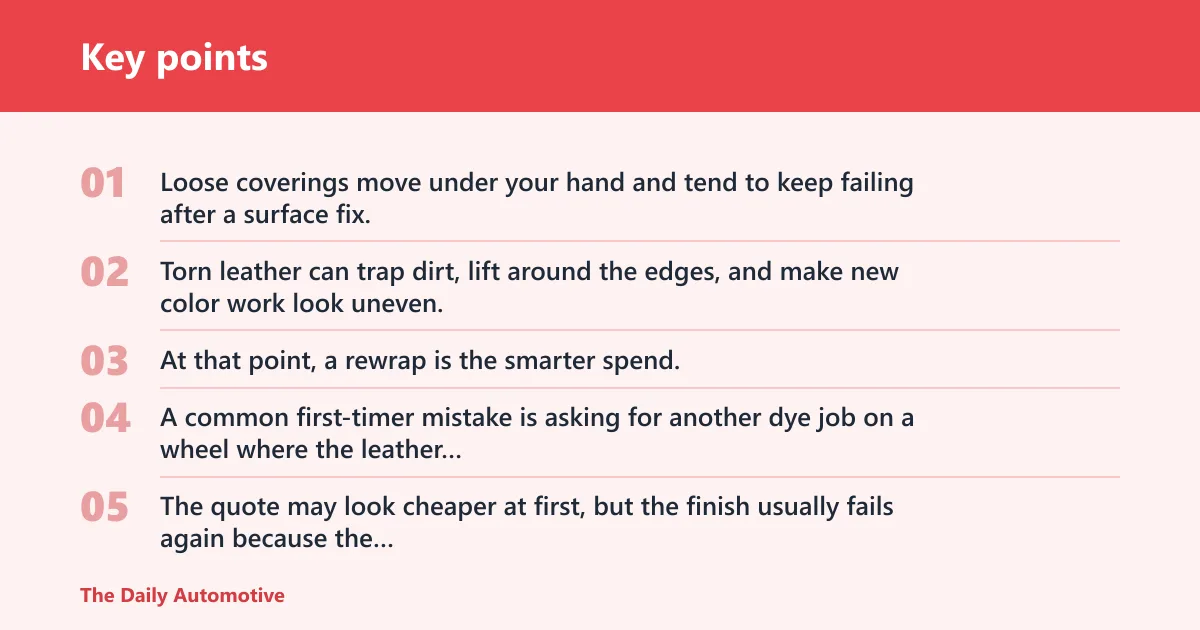
Loose coverings move under your hand and tend to keep failing after a surface fix. Torn leather can trap dirt, lift around the edges, and make new color work look uneven. At that point, a rewrap is the smarter spend.
A common first-timer mistake is asking for another dye job on a wheel where the leather has already separated at the seam. The quote may look cheaper at first, but the finish usually fails again because the material underneath is unstable.
Peeling coatings and failed surface layers
A peeling steering wheel can often be repaired if the leather underneath is still sound. The catch is that peeled synthetic coatings and deeply failed surface layers are not the same as light leather wear. If the covering is flaking because the top layer has broken down across a wide area, refinishing may not hold.
That is the point where a shop should stop selling spot repair and start talking about rewrapping or replacement.
The repair limit where rewrapping wins on value
The value shift usually happens when the damaged area is large enough that the labor, filler, and color blending start to approach the cost of a new cover. More than one-third of the rim is a useful warning line, especially if the damage is spreading around the hand positions and seams.
If the wheel needs repeated patching, rewrapping often costs less over time than chasing a finish that keeps breaking down.
What drives the final price?
The final bill reflects materials, labor, access, and how much color work is needed. Two wheels with the same size damage can still price differently if one needs only surface cleaning and the other needs filler, blending, and a careful sheen match to the cabin.
Materials used in the repair
A basic refinishing job may only need cleaner, degreaser, colorant, and top coat. A deeper repair can add leather filler and more prep time. The more products and steps involved, the higher the labor cost.
Color matching and top coat work
Matching the steering wheel to the interior is more than spraying a close color. The technician also has to match sheen so the repaired area does not stand out in daylight. That extra work can raise the quote even on a small repair.
The protective top coat matters too. It helps seal the finish and improve wear resistance, but it adds another step and another cure window.
Photo quality, wheel condition, and vehicle details
Good photos reduce estimate errors. A clear close-up of the damage and a full wheel photo help a shop judge whether the surface is still sound. Make, model, year, and postal code give the shop the rest of what it needs for a mobile or workshop quote.
Minor details change the answer. A wheel with one shallow crack may stay in the refinishing range. A wheel with loose leather, peeled sections, and a torn seam should move to rewrapping faster than most owners expect.
Frequently asked questions
How much does a leather steering wheel repair cost?
Leather steering wheel repair usually costs $75 to $250 for simple cleaning, dyeing, or seam fixes, but the starting point rises when the job is mobile or when the damage needs filler and more prep. Workshop repairs start from $200 CAD, and mobile repairs start from $250 CAD.
Is it cheaper to repair or replace a leather steering wheel?
Repair is usually cheaper if the leather is still sound and the damage is mostly cosmetic. Replacement starts to make sense when the covering is loose, badly torn, or failed over a large area, because repeated refinishing can cost nearly as much as a new recover or a different wheel assembly.
What affects the price of steering wheel leather repair?
Price depends on damage depth, repair method, and whether the job is done in a workshop or at your location. Photos, wheel size, color matching, filler use, travel distance, and the vehicle’s make, model, and year all influence the quote. Location can matter a lot for mobile service.
Can a peeling leather steering wheel be repaired?
Yes, if the leather underneath is still sound. Light peeling can often be cleaned, prepared, recolored, and sealed with a protective finish. If the surface layer is failing across a wide area, or the covering is loose, rewrapping is usually the better answer.
How long does steering wheel leather repair take?
Suitable repairs often take about 1–2 hours. That covers many refinishing jobs, including cleaning, preparation, color matching, and a top coat. Some jobs still need cure time before full use, so ask whether the wheel can be handled right away or should sit longer.
When do you need rewrapping instead of refinishing?
Choose rewrapping when the leather is badly torn, loose, or worn past the point where surface repair will last. More than a third of the rim damaged is a strong sign that refinishing is no longer the best value, especially if the covering has separated or peeled in large sections.
Products related to this article
Sponsored / affiliate links. As an Amazon Associate I earn from qualifying purchases. I may earn additional commission from eligible campaigns.