Ball Bearings for Cars: Types, Tools and Top Picks
The “ball bearing” in your car’s wheel is a sealed ring of steel balls that lets the wheel spin with almost no friction. Front hubs usually use a tapered or angular-contact bearing instead because they have to resist sideways load when the wheel turns, while many rear and non-driven wheels use a true ball bearing. Below, we cover the difference, the tools and grease you need to service one, and a real cross-referenced replacement bearing.
Ball Bearings vs. Tapered Roller Bearings: Which Does Your Car Use?
A ball bearing is built from four parts: an inner race that mounts on the spindle, an outer race pressed into the hub, a set of hardened steel balls between them, and a cage that keeps the balls evenly spaced. Because the balls only touch the races at a single point, ball bearings spin with very low friction and handle side-to-side (radial) load well, but they are not the best design for resisting the lengthwise thrust load created when a front wheel turns.
That is why most front-wheel-drive hubs use tapered roller bearings or an angular-contact ball bearing instead of a plain ball bearing – the cone-shaped rollers (or angled contact point) resist that sideways thrust. Many rear wheels and non-driven hubs, where thrust load is minor, still use straightforward ball bearings like the WJB RB6206 further down this page. The two designs are not interchangeable, so confirm which one your vehicle uses – through your owner’s manual or a parts-counter VIN lookup – before ordering a replacement.
If you have already noticed a grinding or humming noise, a wobble in the steering wheel, or uneven tire wear, that usually points to the bearing itself failing rather than the type it is. Our full guide to wheel bearing symptoms, diagnosis, and replacement cost walks through how to confirm it and what a shop should charge before you buy parts.
BEST FOR DIY BEARING REPLACEMENT
 |
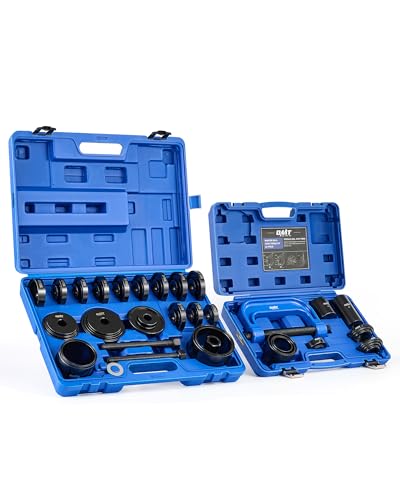
Orion Motor Tech 34pc Ball Joint & Wheel Bearing Press Kit – $118.99 A full set of cups and adapters that presses ball joints and wheel bearings in or out without a hydraulic shop press.
|
Orion Motor Tech 34pc Ball Joint & Wheel Bearing Press Kit
This 34-piece kit is built for DIYers and shops that need to press ball joints and wheel bearings in or out without a hydraulic press. Separate adapter sets for 2WD and 4WD hubs mean one case covers most common bore sizes instead of buying a new tool for every job.
Pros
- Covers ball joints, wheel bearings, and U-joints in one 34-piece set.
- Separate 2WD and 4WD adapters fit most common front-hub bore sizes.
- Sliding screw-and-sleeve design keeps the press square to the bore.
Cons
- Some prior wrenching experience helps – it is a press tool, not a one-click fix.
- Bulkier to store than a single-application puller.
- Costs more upfront than a bearing-specific-only tool.
The included sliding screws and sleeves keep the press aligned with the bearing bore as you turn the driver, which is what actually prevents cocking the bearing sideways and scoring the housing – the most common way a DIY bearing swap goes wrong. Because it presses in both directions, the same kit removes the old bearing and seats the new one.
To buy this product, click here.
GreaseCo Red and Tacky Lithium Grease Tube
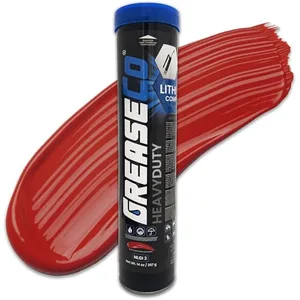
Any serviceable bearing you press in or repack still needs grease that will not melt or wash out at highway heat. This 14 oz cartridge is an NLGI 2 lithium complex grease rated for wheel bearings, axles, and ball joints, and it fits a standard grease gun.
Pros
- NLGI 2 lithium complex formula holds up under high heat and stays tacky on the balls or rollers.
- Rated for wheel bearings, axles, trailer hubs, and ball joints, so one tube covers several jobs.
- Fits a standard cartridge grease gun.
Cons
- A single 14 oz cartridge may not be enough for repacking bearings on more than one axle.
- You need a grease gun on hand – it is sold separately.
The NLGI 2 consistency grade is the standard automotive middle ground: firm enough to stay packed in the bearing instead of slinging out at speed, but soft enough to work all the way into the balls and races when you pack it by hand. That balance is exactly what wheel bearings and ball joints are designed around, which is why it is the grade most manufacturers spec.
To buy this product, click here.
WJB RB6206 Rear Wheel Bearing / Ball Bearing
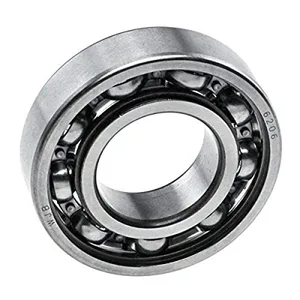
This is a real ball bearing – you can see the steel balls, cage, and both races in the photo above – sized and cross-referenced for rear-hub applications that call for a National 206, Timken 206, or SKF 6206-J.
Pros
- Cross-references directly to National 206, Timken 206, and SKF 6206-J part numbers.
- Compact single-row ball bearing design installs without extra machining.
- Sold individually, so you only buy the side you actually need to replace.
Cons
- Sold as a single bearing – order two if both sides need replacing.
- A plain ball bearing like this is only correct for the specific low-thrust applications it is designed for; do not substitute it for a tapered roller bearing.
Cross-referencing works because many wheel bearings are built to the same industry-standard bore, outside diameter, and width regardless of brand, so a National 206, a Timken 206, and this WJB RB6206 are the same physical part with different labels. Confirming the cross-reference number at checkout is the fastest way to make sure you are ordering the right bearing instead of guessing from a vehicle year and model alone.
To buy this product, click here.
Frequently Asked Questions
What Is a Ball Joint Press Kit?
A ball joint press kit is a set of cups, adapters, and a threaded driver that lets you press ball joints and wheel bearings in or out of a hub or control arm without a hydraulic shop press. The Orion Motor Tech kit below includes separate adapters sized for 2WD and 4WD hubs, so one kit covers most common front-wheel-drive and all-wheel-drive layouts.
How Do You Use a Wheel Bearing Puller?
You thread the puller’s frame around the bearing bore, position the correct-size cup or adapter against the bearing, then turn the center screw so it draws the bearing out of the hub in a straight line instead of prying or hammering it out at an angle. Working slowly and keeping the puller square to the bore prevents scoring the bearing bore or damaging the spindle.
Why Use High-Temp Lithium Grease?
Wheel bearing grease sits right next to the brakes and spins at highway speed, so it needs to resist melting, separating, or washing out under heat and water. A high-temperature lithium complex grease like Red and Tacky stays tacky on the rollers instead of flinging off, which keeps the bearing lubricated between services.
What Are the Benefits of NLGI 2 Grease?
NLGI 2 is the National Lubricating Grease Institute’s mid-range consistency grade, roughly the texture of peanut butter. It is firm enough to stay packed inside a bearing instead of running out, yet soft enough to flow into every ball and race when you pack it by hand or with a grease gun, which is why it is the standard grade for automotive wheel bearings and chassis points.
What Is Cross-Referencing for Wheel Bearings?
Cross-referencing matches one manufacturer’s part number to the equivalent bearing sold under other brand names, since many wheel bearings are built to the same industry-standard dimensions. The WJB RB6206 below is the same physical bearing as National 206, Timken 206, and SKF 6206-J, so any of those part numbers will fit the same application.
Are Wheel Bearings Ball Bearings or Roller Bearings?
It depends on the vehicle and wheel position. Ball bearings use round steel balls and handle side-to-side (radial) loads well, which is why they show up in many rear, non-driven hubs. Tapered roller bearings use cone-shaped rollers that also resist the sideways thrust load created when a front wheel turns, so most modern front-wheel-drive hubs use tapered or angular-contact designs instead. Check your owner’s manual or a parts-store lookup by VIN before buying a replacement, since the two types are not interchangeable.
How Often Should You Grease Serviceable Wheel Bearings?
Most modern cars use sealed, pre-packed hub bearing assemblies that are never regreased; when one wears out, you replace the whole sealed unit. Older serviceable tapered roller bearings, and bearings on utility or boat trailers, are the exception: axle makers generally recommend pulling the hub and repacking those bearings with fresh grease about every 12 months or 12,000 miles, sooner if you drive through water, salt, or heavy dust.
Conclusion
A ball bearing is a specific design – steel balls, a cage, and two races – not just another word for “wheel bearing,” and knowing which one your car actually uses keeps you from ordering the wrong part. The Orion Motor Tech press kit gets a bearing in or out without a shop press, GreaseCo’s Red and Tacky NLGI 2 grease keeps it lubricated at highway heat, and the WJB RB6206 gives you a cross-referenced, ready-to-install ball bearing for rear-hub applications. If the symptoms brought you here in the first place, our wheel bearing symptoms and replacement cost guide covers the diagnosis step in full.
Products related to this article
Sponsored / affiliate links. As an Amazon Associate I earn from qualifying purchases. I may earn additional commission from eligible campaigns.