Do Mice Chew Car Wires and How to Check for Damage?
Yes—mice can chew car wires, and you should stop driving if you find exposed copper, cut insulation, or warning lights tied to electrical faults. Ignoring it can lead to short circuits, no-starts, blown fuses, or fire risk. Here’s how to inspect the engine bay, cabin, and underbody for chew marks, droppings, nesting, and the first damage points to check.
What rodent damage does under the hood
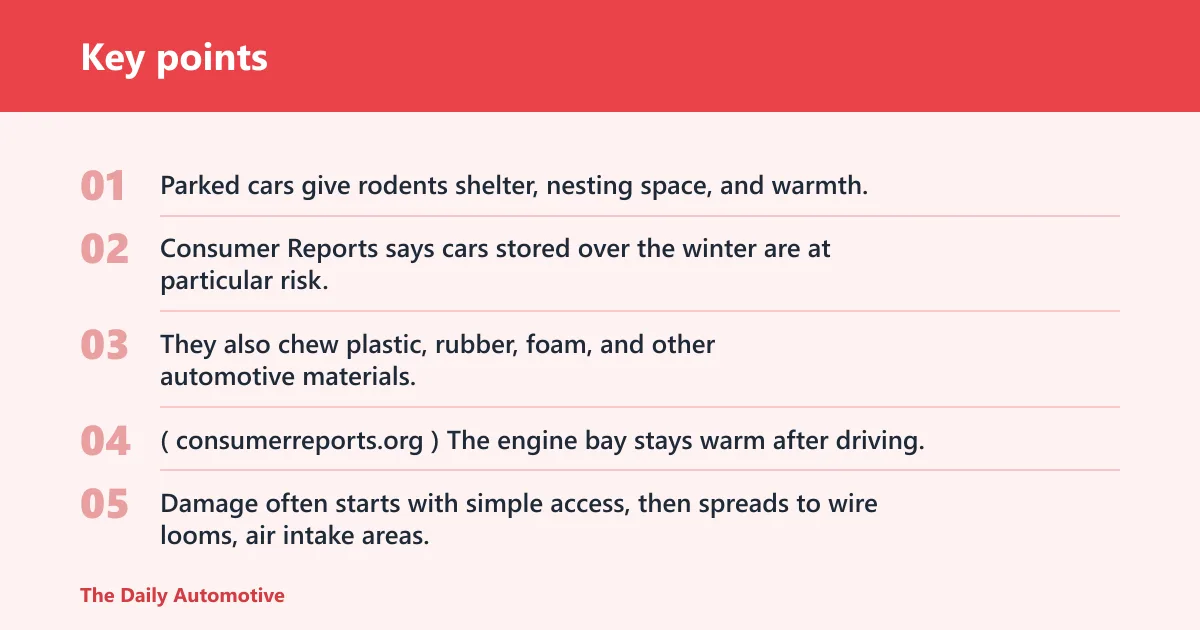


Yes. Parked cars give rodents shelter, nesting space, and warmth, especially in winter after the engine bay has cooled down. Consumer Reports says cars stored over the winter are at particular risk, and rodents can chew wiring, hoses, belts, and other critical car parts. They also chew plastic, rubber, foam, and other automotive materials. (Consumerreports)
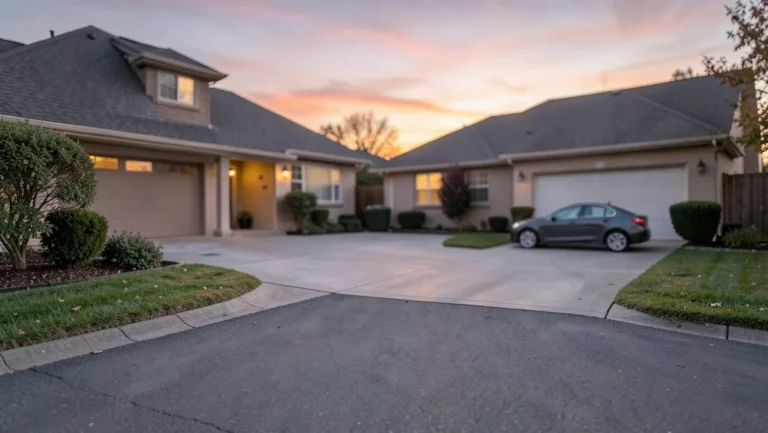
The engine bay stays warm after driving, and it has dark spots where nesting material can build up without notice. Damage often starts with simple access, then spreads to wire looms, air intake areas, and soft parts nearby. In garages and driveways, rodent activity can come from the broader property, not only the car itself.
What that damage can do
Chewed wires can cause warning lights, electrical failures, and starting problems. Consumer Reports also notes that exposed wire coatings can make a car unsafe to drive. The risk is not limited to wires; a rodent can damage belts, hoses, and insulation in the same visit.
What do chewed car wires look like?
True wire damage usually shows frayed insulation, missing jacket material, or exposed copper. Surface nibbling can leave scuffs or shallow bites on the outer wrap without cutting the conductor underneath. That difference matters, because a scratched loom may be ugly while a wire with exposed copper can create a fault or a short.
Surface marks versus real conductor damage
Look closely at the point where the outer coating changes from intact to broken. If the insulation is intact and the wire still feels round and sealed, the damage may be cosmetic. If you can see copper, loose strands, or daylight through a cut, treat it as active electrical damage.
Suppose a car starts normally but the engine warning light appears after a cold night in the driveway. A quick look finds tooth marks on a plastic cover and a single wire with a nicked jacket near the battery tray. That is different from a full cut. The first may call for a fast repair; the second can still leave the car undriveable if the wire feeds a critical circuit.
Warning lights and odd symptoms
Rodent damage often shows up as one or more warning lights, hard starting, intermittent power loss, dead accessories, or a no-start condition. If the problem began after the car sat parked for a stretch, treat that as a clue, not a coincidence. A damaged sensor line can also create strange drivability symptoms without obvious exterior damage.
How do you check for mouse damage?
Start with a safe first look before touching anything. Open the hood in daylight if possible, wear gloves, and avoid sweeping debris into the air. The same source recommends checking for urine, droppings, scratches, chewed-through wires, and exposed insulation, and it also notes that rodents may nest in ducts, intakes, and other spaces in the vehicle.
Start with a safe first look
If you smell a sharp ammonia-like odor, hear rustling, or see loose nesting material, pause before reaching deeper into the bay. Droppings are an infestation indicator and require careful cleanup because they may carry disease risk. Do not dry-sweep or shake debris off parts in a closed space.
Inspect the engine bay in order
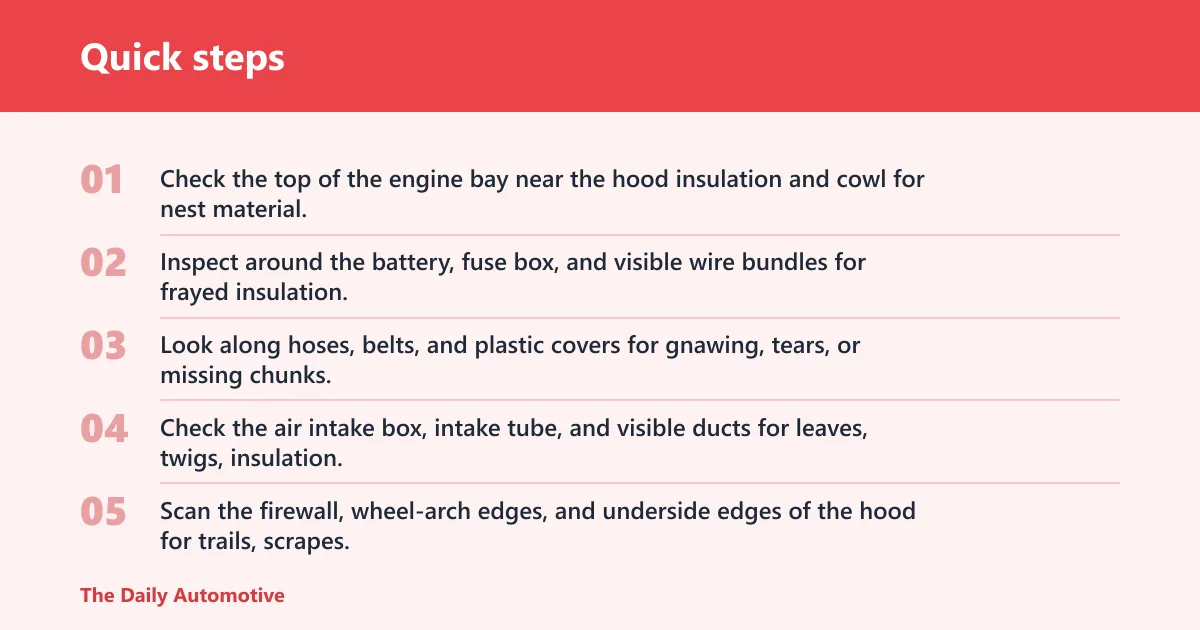
- Check the top of the engine bay near the hood insulation and cowl for nest material, droppings, and shredded paper or leaves.
- Inspect around the battery, fuse box, and visible wire bundles for frayed insulation, bite marks, and exposed copper.
- Look along hoses, belts, and plastic covers for gnawing, tears, or missing chunks.
- Check the air intake box, intake tube, and visible ducts for leaves, twigs, insulation, or blocked openings.
- Scan the firewall, wheel-arch edges, and underside edges of the hood for trails, scrapes, or packed debris.
Check intake, ducts, trunk, and cabin
The same source says rodents may nest in ducts and intakes, so do not stop at the engine bay. Check the cabin air intake area, glove box, footwells, under-seat space, and trunk. Nesting material can include leaves, twigs, paper, insulation, and cardboard. A mouse can stash that material in more than one place.
Look for shredded seat foam, chewed carpet edge trim, and debris near vents. If the cabin smells stale or musty after the car has been closed up, that odor can point to nesting or waste. A common first-timer mistake is checking only the visible top layer and missing the intake or trunk corner where the nest started.
Mouse damage check sheet
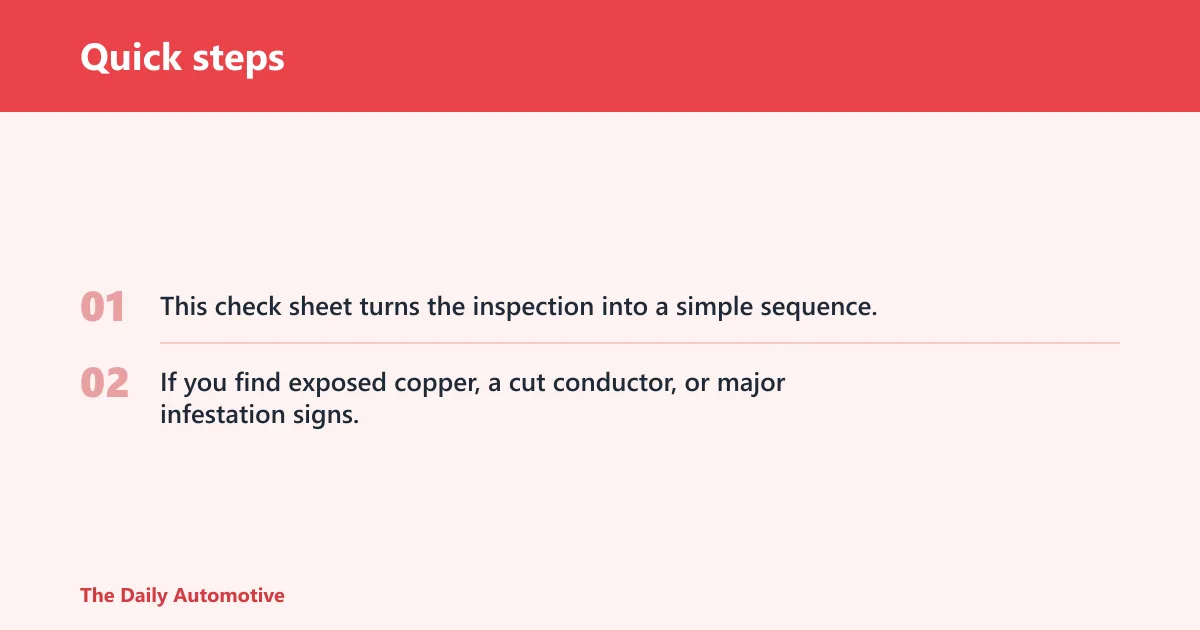
This check sheet turns the inspection into a simple sequence. Use it in order. If you find exposed copper, a cut conductor, or major infestation signs, it is generally safest to tow the vehicle rather than trying to see if it drives.
| Under-hood zone | What to inspect | What to look for first |
|---|---|---|
| Cowl and hood insulation | Top edge under the hood and near the windshield base | Leaves, twigs, shredded paper, droppings |
| Battery and fuse box area | Visible wire bundles, connectors, and covers | Frayed insulation, cut wrap, exposed copper |
| Air intake and air box | Fresh-air entry point and housing | Blocked openings, nesting material, chewed plastic |
| Hoses and belts | Rubber lines and nearby soft parts | Gnaw marks, tears, missing chunks |
| Firewall and lower edges | Rear engine-bay boundary and edge channels | Tracks, debris piles, hidden wire damage |
| Finding | Yes or no | Action |
|---|---|---|
| Only surface nibbling on a cover, no exposed copper, no warning lights | Yes | Drive short distance to a mechanic, then book repair soon |
| Frayed insulation or one damaged wire, but the car still starts and runs normally | Yes | Book mechanic soon; avoid long trips |
| Exposed copper, cut conductor, or multiple warning lights tied to electrical faults | Yes | Tow now |
| No-start, repeated stalling, or dead electrical systems after rodent signs | Yes | Tow now |
| Heavy droppings, a nest in ducts or intake, or widespread chew marks | Yes | Tow now |
| Parking location | Prevention follow-up | Priority |
|---|---|---|
| Garage | Seal gaps with steel wool, metal mesh, or caulk around wall openings, door edges, and utility penetrations; keep food and trash out | High |
| Driveway | Reduce brush and clutter near the car, clean the area around the vehicle, and inspect the engine bay more often | High |
| Long-term storage | Clean the car first, then use exclusion around the storage space and check the car on a schedule | Highest |
Can you drive with chewed wires?
Only limited driving may be acceptable if the damage is minor, the car starts normally, and there are no exposed wires or electrical symptoms. The same source notes that exposed wire coatings can make a car unsafe to drive, so any cut conductor, no-start, or serious warning-light pattern should move you to tow-now instead of testing your luck.
When short-distance driving may be acceptable
If you see only shallow nibbling on a noncritical cover, no copper is visible, and the vehicle behaves normally, a short trip to a repair shop may be reasonable. Keep the route brief and avoid highway speeds if electrical behavior changes. Do not treat that as a clean bill of health.
Findings that mean book a mechanic soon
Minor wiring damage, one damaged sensor line, or a small nest with no exposed conductors usually deserves a fast repair appointment. NG Pest estimates minor wiring damage at $200-$400. Labor and access drive the bill, so a hidden wire in a tight spot can cost more than the damaged part itself.
Findings that mean tow now
Exposed copper, cut wires, repeated stalling, multiple warning lights, or a no-start after rodent activity should not be treated as a drive-it-home issue. NG Pest estimates moderate damage at $400-$800 and extensive damage at $800-$1,200+. Once the infestation spreads through wire bundles or critical connectors, cleanup and repair time climb quickly.
How much can rodent wire repair cost?
Repair cost depends on the damage pattern, access, and whether the problem is limited to one wire or spread across a wiring bundle. A single wire repair is usually cheaper than replacing a wiring bundle or tracing a sensor line through multiple sections. Heavy infestation adds cleanup time, and that matters just as much as parts.
Single wire repair
A minor bite on one wire may stay in the $200-$400 range that NG Pest gives for minor wiring damage. That still can include diagnosis time, splice work, heat-shrink protection, and retesting. If the wire is buried under intake parts or covers, labor can climb even when the damaged section looks small.
Harness or sensor line damage
When a rodent chews through a bundle or sensor line, the job usually gets more complex. NG Pest estimates moderate damage at $400-$800. The cost rises when a technician must remove intake parts, trace intermittent faults, or replace connectors along with the wire itself.
Heavy infestation and cleanup costs
Extensive nesting, multiple cut wires, and contaminated cabin or engine-bay debris can push repairs into NG Pest’s $800-$1,200+ range. That is where cleanup, diagnosis, and parts replacement pile up. If the car has droppings in ducts or under trim, expect extra time for safe handling and reassembly.
How do you stop mice from coming back?
Start with exclusion and cleanup, then add deterrents. Steel wool, metal mesh, and caulk are commonly used first tools for reducing entry points around garages and vehicle-adjacent spaces, especially where there are gaps, vents, or utility openings. Rodent-deterrent tape can protect what it touches, but it only covers a small area and is not a full prevention plan.
Seal gaps first
Use steel wool or metal mesh for gaps that rodents can chew or squeeze through, then seal around those materials with caulk where appropriate. Focus on garage corners, door penetrations, vent edges, and cracks near stored items. If the parking area stays accessible, a car can keep attracting rodents even after a repair.
Use tape, repellers, and scent products only as add-ons
Rodent-deterrent tape is best as after-repair protection on exposed spots, not as the main fix. An ultrasonic repeller is an under-hood option when the same car keeps attracting rodents, but effectiveness varies. Peppermint spray or peppermint pouches can add a short-term scent layer, though they work better as part of a broader plan than on their own.
Clean the parking area, remove food sources, and avoid leaving pet food, trash, or seed nearby. If the vehicle sits for long stretches, open the hood and inspect it on a schedule. The same source says stored cars over winter are at particular risk, so a parked car needs more than one quick glance.
Frequently asked questions
Do mice chew car wires?
Yes. Rodents chew car wires because engine bays provide shelter, nesting space, and warmth. The problem shows up more often in parked or rarely driven cars, especially during colder months. If you find exposed copper, cut insulation, or warning lights tied to electrical faults, stop driving and inspect further.
How do I check my car for mouse damage?
Start under the hood with the cowl, battery area, fuse box, air intake, and nearby wire bundles. Then check ducts, the cabin, and the trunk for droppings, nesting material, and smell clues. Use gloves and do not dry-sweep droppings or debris before inspection.
Can I drive if mice chewed my car wires?
Maybe, but only when damage is minor and there are no exposed wires, warning lights, start problems, or heavy nesting. The same source says exposed wire coatings can make a car unsafe to drive. If the car has no-start symptoms or multiple electrical faults, tow it.
How much does rodent wire damage cost to fix?
The final bill depends on how hard the wire is to reach, how many parts must come off, and whether cleanup is needed after nesting.
How do I know if mice are living in my car?
Look for droppings, nesting material, urine smell, scratch marks, shredded insulation, and chewed-through wires. The same source notes that rodents may nest in ducts, intakes, and other spaces in the vehicle. A steady musty or ammonia-like odor is another clue that the car needs a careful inspection.
Products related to this article
Sponsored / affiliate links. As an Amazon Associate I earn from qualifying purchases. I may earn additional commission from eligible campaigns.