3 Best Belts for a Car Engine (2026): We Compared
The best belt for a car engine is the exact OEM-size serpentine belt with the right rib count and length; choose EPDM for most daily drivers, and a heavy-duty belt only if your accessory load is higher than stock. A wrong belt can squeal, track poorly, shred the ribs, or leave you stranded with no alternator or coolant circulation. This guide compares three belt types by fitment, load capacity, noise behavior, and the symptoms that point to each one.
Quick comparison
| Product | Badge | Best for | Price | ||
|---|---|---|---|---|---|
 |
Gates TCK226 PowerGrip Premium Timing Belt Component Kit |Gates | Our pick | Timing belt kit · Gates · TCK226 | $116.12
Price as of 23 Oct 2026
|
View |
 |
Bando USA 6PK1220 OEM Quality Serpentine Belt | ReplacesBando USA | Budget pick | 6PK1220 Serpentine · Bando · 6 Ribs | $14.04
Price as of 23 Oct 2026
|
View |
 |
Continental OE Technology Series 4060882 6-Rib, 88.2"Continental | Also great | 6-Rib Multi-V · Continental · 88.2 inch | $22.70
Price as of 23 Oct 2026
|
View |
 |
Gates Micro-V Serpentine Belt for Mitsubishi Lancer 2.0LSixity Auto | Also great | Micro-V Serpentine · Gates · Lancer Fit | $48.34
Price as of 23 Oct 2026
|
View |
 |
aremnry EN-48932 Belt Tension Compressor Toolaremnry | Our pick | $42.99
Price as of 7 Nov 2026
|
View |
Start with the pulley layout, then choose the belt compound that fits the job. Brand name matters less than rib count, exact length, OEM fitment, and the condition of the tensioner and idler pulleys.
How we chose
We compared the belts on fitment clarity, material choice, load-handling design, and noise behavior. We also gave extra weight to how well each option helps when the old belt failed with squeal, glazing, cracking, or slippage.
Three checks matter most before you buy: year, make, model, and engine; rib count; and belt length. Cross-referenced part numbers reduce guesswork, especially when the same vehicle can use a 6-rib or 7-rib belt depending on engine or accessory package.
We also looked at replacement risk beyond the belt itself. A weak automatic tensioner or worn idler pulley can make a fresh belt fail early, even if the belt part number is correct.
Bando USA 6PK1220: best for daily driving
This is the safest pick for a typical commuter when the fitment matches. Bando says this belt uses strong tensile cords, high-strength synthetic rubber, and Run Quiet technology, which makes it a sensible choice for owners who want a standard replacement with low noise risk.
It stands out because the materials line up with modern service needs: EPDM-style durability for heat and wear, plus construction meant to carry load without stretching. That matters on cars with the alternator, power steering, and A/C on one drive belt.
The drawback is obvious: this is not the answer if your vehicle needs a different rib count or exact OE length. Do not buy it for brand reputation alone. Confirm the vehicle fitment and part number first.
Continental OE Technology Series 4060882: best for OE replacement
Choose this when you want a closer OE-style replacement and the 6-rib, 88.2-inch fit matches your application. Continental describes this belt as a 6-Rib, 88.2″ Multi-V Belt with updated compounding for durability and quietness.
It is a good fit for owners who want factory-style replacement behavior without guessing at the spec sheet. That makes it useful when the old belt was original equipment and the vehicle has not been modified for extra accessory load.
The drawback is the same one that applies to all OE-style belts: it is only a good buy if the exact size matches. If your car calls for a different length, a correct-looking belt will still be wrong.
Gates Micro-V serpentine belt: best for vehicle-specific fit
This is the most focused fitment play in the group. It is listed as a Gates Micro-V serpentine belt for Mitsubishi Lancer 2.0L and 2.4L L4 models from 2008-17, so it makes sense when you want direct replacement compatibility rather than a generic size search.
Its main advantage is confidence in application matching. A vehicle-specific belt cuts down the odds of buying the wrong rib count or a length that is close but not correct.
The drawback is narrow use. If your car is not that Lancer application, this is not your pick. It also does not solve a worn tensioner or pulley problem, which can be the real cause of squeal.
How do I choose the right belt for my car?
Start with the vehicle’s year, make, model, and engine, then verify rib count and exact length against the owner manual or OEM part number. For most modern cars, EPDM is the better compound because it resists heat and cracking longer than older neoprene. If the accessory load is higher than stock, look for stronger tensile cords and heavy-duty construction.
Fitment comes first because a serpentine belt is not universal. The same basic drive belt format can run the alternator, power steering pump, air conditioning compressor, and sometimes the water pump, but the pulley path and belt dimensions still have to match the engine.
Say your commuter sedan uses a 6-rib belt and the old one is glazed but not broken. The right move is not to buy “a 6-rib belt” in general; it is to verify the exact length, such as 82.5 in, 87.4 in, 1140 mm, or 1392 mm, depending on the vehicle application.
Fitment-first checks
Use the OEM part number, then cross-reference it. If the catalog lists multiple options, compare the rib count and length before you order. A correct brand with the wrong spec is still the wrong belt.
Material and cord construction
Modern belts often use EPDM rubber because it lasts longer and resists cracking. Tensile cords matter when the belt must carry higher load without stretching. That matters more on higher horsepower setups or vehicles with heavier accessory demand.
Noise and load priorities
If the old belt squealed at idle, first inspect the tensioner and idler pulleys. A weak automatic tensioner can let the belt slip, chirp, or wear early. If the vehicle tows, idles in heat, or runs extra accessories, prioritize load capacity and temperature resistance over the lowest sticker price.
Replacement risk beyond the belt
A new belt can fail early if the pulley system is bad. Check for wobble, rough bearings, and weak spring pressure in the tensioner. Replacing the belt without checking those parts is one of the most common avoidable comebacks.
What belts are on an engine?
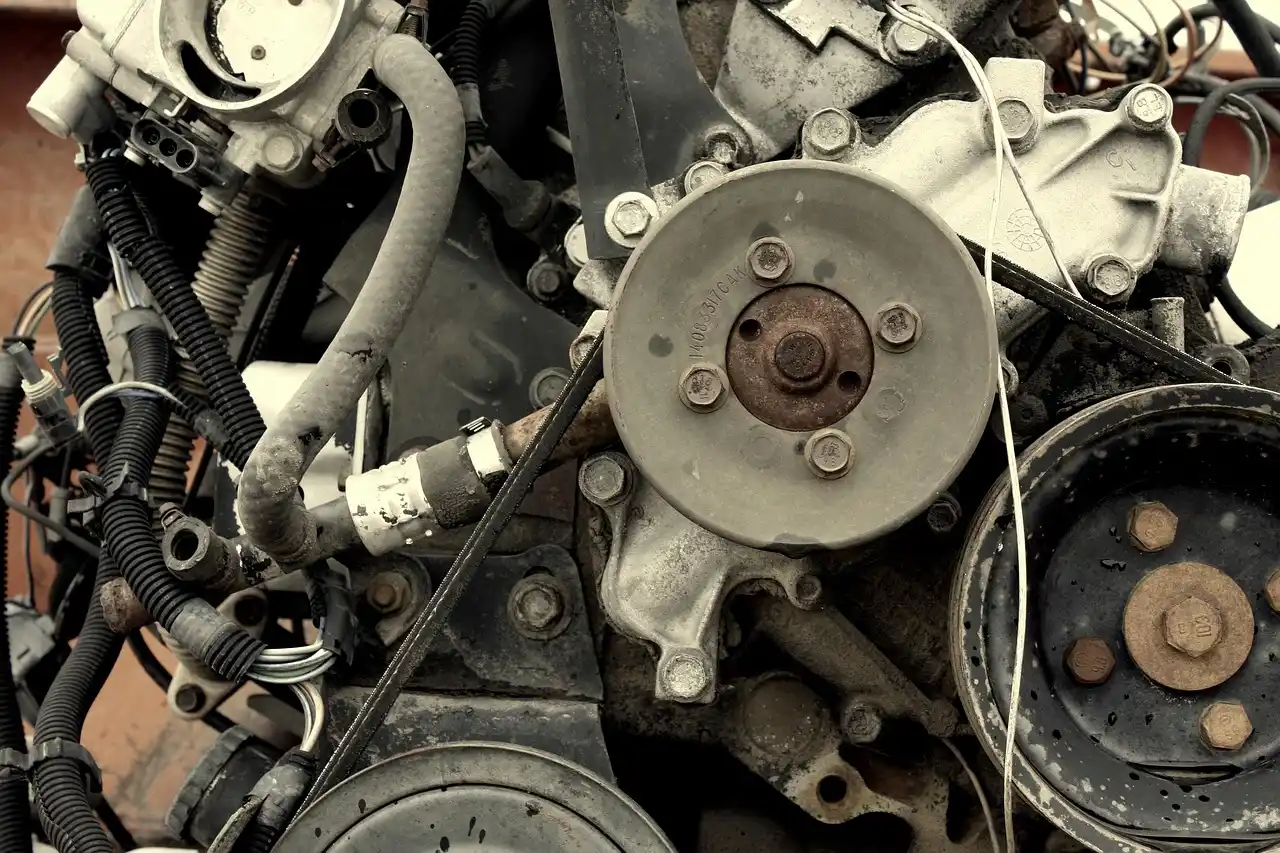
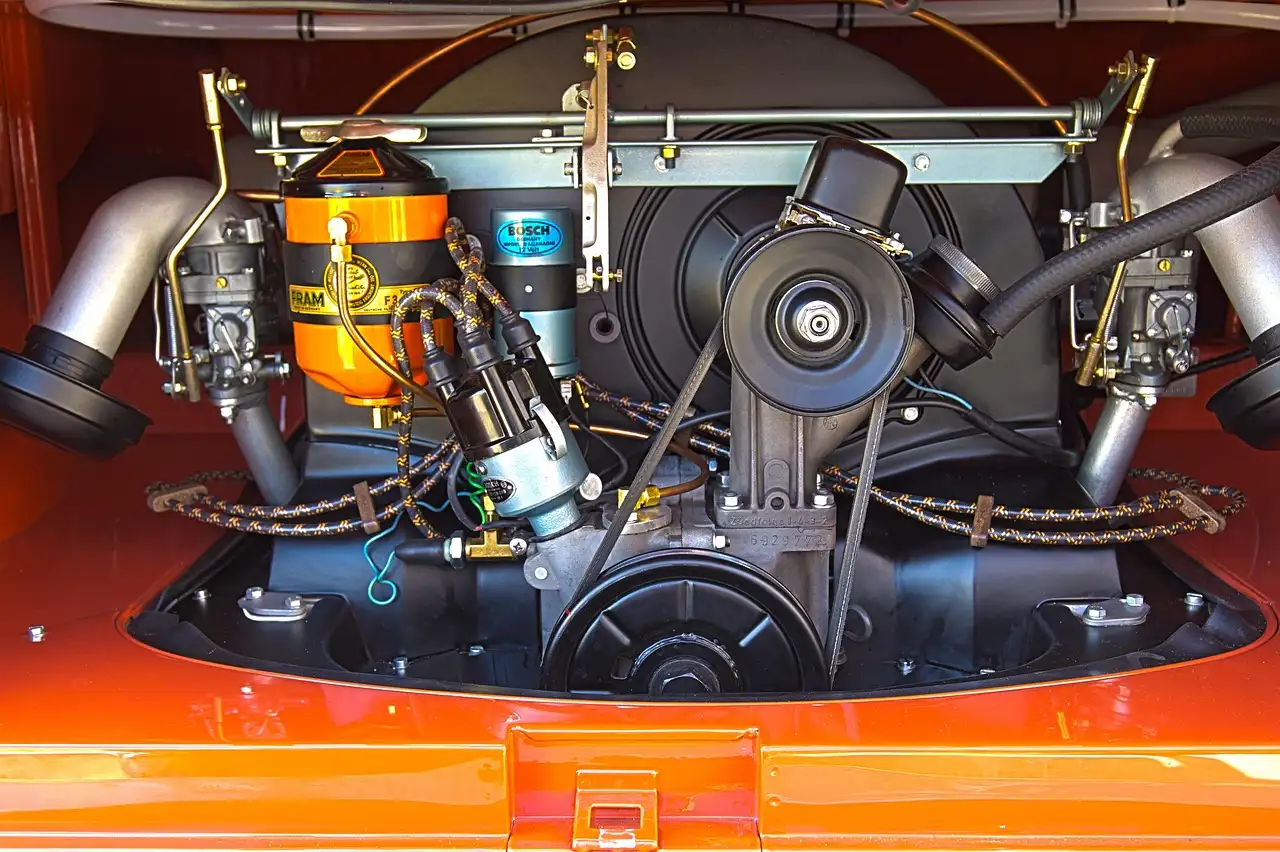
Most modern passenger cars use a serpentine belt, which is a single continuous belt that drives multiple accessories. It can power the alternator, power steering pump, A/C compressor, and water pump, depending on the engine layout. Older vehicles may also use separate V-belts for individual accessories.
A serpentine belt is usually the one you are replacing when you hear chirping, squealing, or see cracking and glazing on the ribs. A V-belt is narrower and works differently, with each belt usually serving one accessory instead of several.
Serpentine belt vs V-belts
The serpentine belt is one long belt that wraps around several pulleys. A V-belt is a separate belt with a different cross-section, usually found on older engines. For most current vehicles, the serpentine setup is the one to check.
Common wear signs
Look for rib loss, cracking, glazing, and slippage. A belt can look intact from the top while losing rib depth underneath. If the ribs are polished smooth or the belt has a shiny surface, it may be slipping even if it has not broken.
Why modern cars usually use EPDM
Modern belts often use EPDM rubber because it lasts longer and resists cracking. That makes it a better default choice for recent vehicles than older neoprene-style belts, especially in heat and ozone exposure.
Belt fitment decision table
Use this table when you know the vehicle but still need to match the belt to the job. It maps the most common use cases to the belt type, specs to verify, and the repair items that matter most.
| Use case | Rib count | Length verification | Compound to prioritize | Tensioner check | Common failure symptoms |
|---|---|---|---|---|---|
| Daily commuter | Match OE, often 6-rib | Verify exact OEM length in inches or millimeters | EPDM | Check for steady tension and smooth pulley tracking | Chirp at startup, glazing, mild cracking, occasional slip |
| Hot-climate driver | Match OE, often 6-rib or 7-rib | Confirm the exact application by year, make, model, engine | EPDM with heat-resistant focus | Inspect spring force and pulley bearings for heat wear | Hard cracking, noise after heat soak, rib wear, polish on ribs |
| Towing or fleet use | Match OE, verify if a heavier accessory package changes the layout | Use OEM part number cross-reference | Heavy-duty belt with stronger tensile cords | Replace if weak, noisy, or sticky | Squeal under load, slip at idle, rapid rib wear, fraying |
| High-mileage OEM replacement | Exactly match existing belt | Compare the old belt, label, and OE number | EPDM | Inspect tensioner and idler before reassembly | Cracks, glazing, hardened ribs, random squeal |
| Noise-sensitive vehicle | Match OE precisely | Do not guess from appearance alone | Quiet-running OE-style compound | Check for bearing noise and belt tracking errors | Chirp, squeal, flutter, visible rib polish |
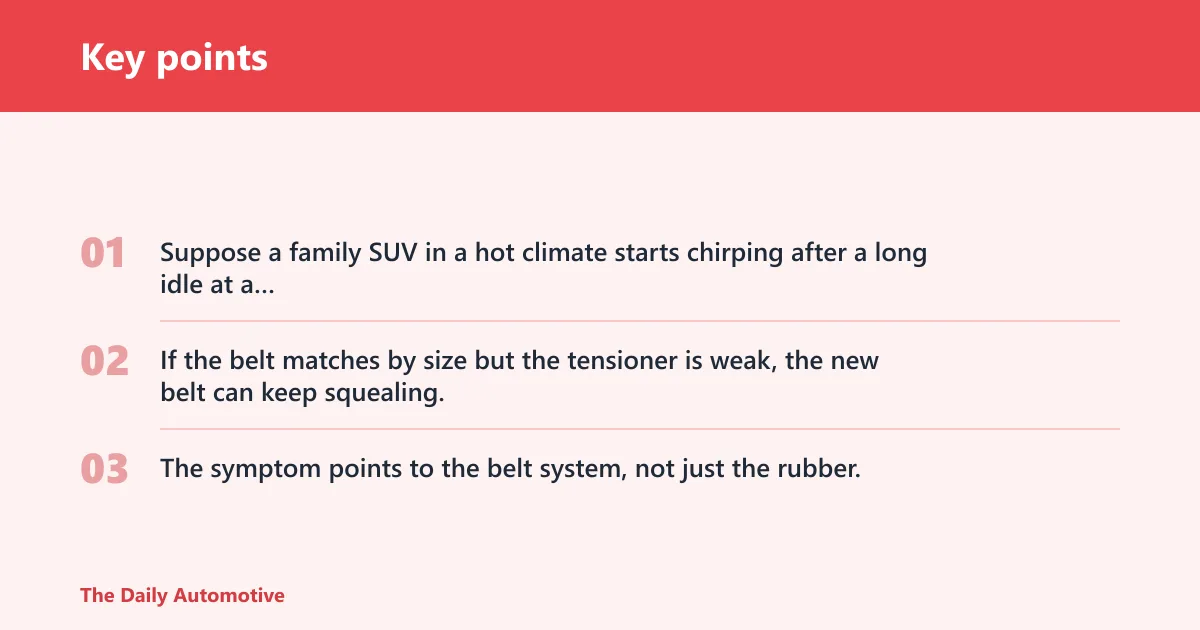
Suppose a family SUV in a hot climate starts chirping after a long idle at a drive-through. If the belt matches by size but the tensioner is weak, the new belt can keep squealing. The symptom points to the belt system, not just the rubber.
Which one should you buy?
If you want the safest everyday choice, start with the Bando USA belt, provided the exact size matches your engine. For an OE-style replacement, the Continental option is the cleaner choice when the 6-rib, 88.2-inch fit is correct. For a vehicle-specific direct replacement, the Gates Micro-V listing is the most targeted option here.
For budget-first shopping, do not buy on price alone. A cheaper belt with the wrong rib count or wrong length costs more once you factor in repeat labor.
For the quietest setup, favor a belt designed for low noise and check the tensioner, idler pulley, and pulley alignment at the same time. A new belt cannot cancel out a weak spring or a rough bearing.
For heavy accessory load, look for stronger tensile cords and a belt type meant for higher load. The Gates K080810HD FleetRunner is described as engineered for prolonged extreme operating temperatures, which points it toward tougher-duty use cases even though it is not one of the three pick cards here.
Replace the tensioner too if the old belt failed with chatter, slip, or edge wear. That extra part is often the difference between a one-time repair and a repeat job.
Choose Bando USA 6PK1220 if…
Choose it if your vehicle calls for a 6-rib belt and you want a balanced daily-driver replacement. Choose it if noise control matters and you want strong tensile cords without moving into a heavy-duty fleet part. Choose it only after verifying the exact fitment, because rib count and length still decide whether it works.
Choose continental OE technology Series 4060882 if…
Choose it if your application needs a 6-rib, 88.2-inch belt and you want an OE-style replacement. Choose it if you want a straightforward fit with durability-oriented compounding. Skip it if your engine uses a different length, because a near match is not enough.
Choose Gates Micro-V serpentine belt if…
Choose it if you drive the listed Mitsubishi Lancer application and want a direct replacement path. Choose it if the old belt’s fitment was already confirmed and you want to minimize guesswork. Skip it if your car is not that exact application, or if the tensioner and idler are worn and still need attention.
Frequently asked questions
What is the difference between serpentine and V-belts?
A serpentine belt is a single continuous belt that wraps around multiple pulleys. A V-belt is usually a separate belt for one accessory. Serpentine systems are common on modern cars because they are compact and can run more accessories with one belt.
How do I check belt length and rib count before buying?
Read the OEM part number, then confirm the belt size with the vehicle’s year, make, model, and engine. Rib count must match the pulley grooves, and length must match the exact application. Common examples include 6-rib and 7-rib belts, with length listed in inches or millimeters.
When should a serpentine belt be replaced?
Replace it when you see cracking, glazing, rib wear, slippage, or persistent noise. A common published service guide says belt inspection is recommended at 60,000 miles and replacement at 90,000 miles, but actual timing depends on heat, towing, short trips, and pulley condition.
What causes a serpentine belt to squeal or slip?
Squeal or slip usually points to belt wear, contamination, or a bad pulley system. A weak automatic tensioner, rough idler pulley, glazing, or accessory drag can all cause noise. If the belt is new and still squeals, inspect the tensioner and alignment first.
Products related to this article
Sponsored / affiliate links. As an Amazon Associate I earn from qualifying purchases. I may earn additional commission from eligible campaigns.