Best Auto Service McAllen: Smart Repairs
The best auto service in McAllen is the shop that gives you an itemized estimate, checks brakes, tires, battery, and cooling first, and documents ASE or dealer-specific training. Poor sorting can turn a small repair into a tow, a breakdown, or a bigger bill. This guide ranks fixes by urgency, gives cost bands for common repairs, and shows how to compare McAllen shops without overpaying.
How to sort repairs by urgency
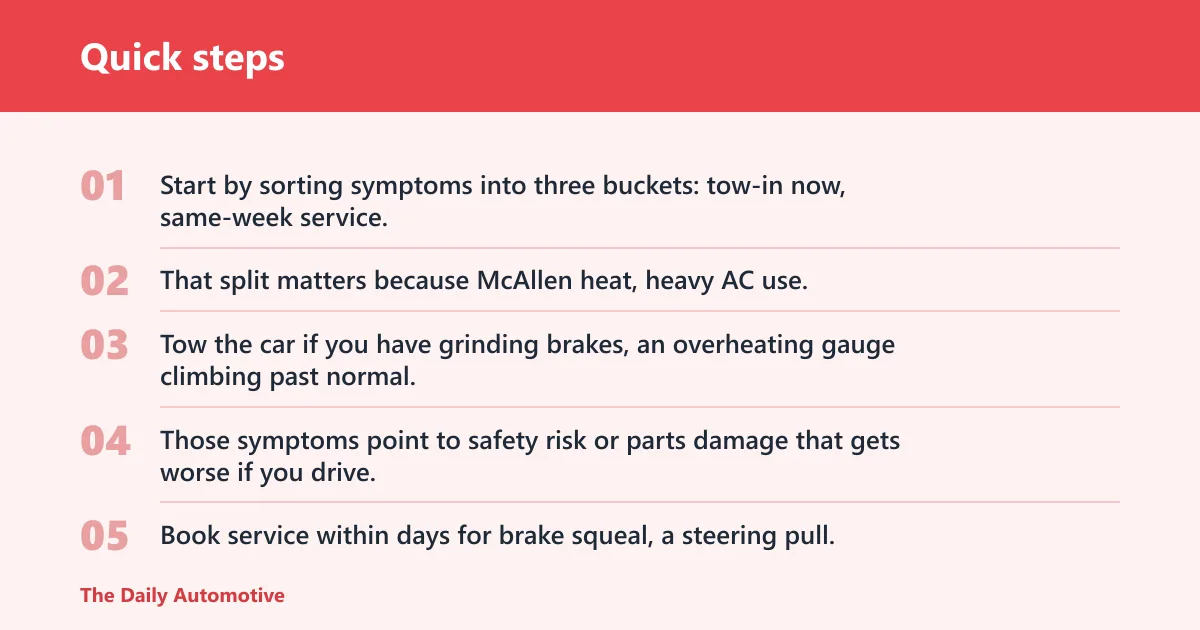



Start by sorting symptoms into three buckets: tow-in now, same-week service, and monitor with a plan. That split matters because McAllen heat, heavy AC use, and stop-and-go traffic can turn a weak battery, marginal cooling system, or worn brake part into a much costlier repair if you wait too long.
Tow-in now
Tow the car if you have grinding brakes, an overheating gauge climbing past normal, a transmission that slips badly, a fuel smell, or a no-start that comes with smoke, warning lamps, or electrical burning odors. Those symptoms point to safety risk or parts damage that gets worse if you drive.
Same-week service
Book service within days for brake squeal, a steering pull, an AC system that blows warm air, a battery that cranks slowly, or a check engine light that stays on but does not cause misfires or stalling. These problems may still be drivable, but McAllen conditions often speed up the failure.
Monitor with a plan
Watch for minor oil seepage, a single rattle over bumps, or light tire wear that has not yet changed vehicle handling. Get a quote soon, note mileage, and schedule the repair before another long commute, heat wave, or pothole strike turns a manageable issue into a larger one.
Repair priority matrix

This matrix separates common symptoms from the likely system involved, the urgency level, and the first question to ask. Use it to decide whether you need a tow, a quick appointment, or a quote you can plan around.
| Symptom | Likely system | Urgency level | What to ask the shop |
|---|---|---|---|
| Brake squeal | Brake pads, rotors, or wear indicators | Same-week service | How much pad material is left, and are the rotors still within spec? |
| Battery no-start | Battery, starter, alternator, or charging circuit | Tow-in now if it will not restart; otherwise same-day test | Is the battery failing a load test, and is charging voltage in range? |
| AC blowing warm | Refrigerant leak, compressor, condenser, or blend door issue | Same-week service | Is this a leak, an electrical fault, or a compressor problem? |
| Steering pull | Alignment, tire pressure, tire wear, or suspension damage | Same-week service | Do the tires show uneven wear or bent suspension parts? |
| Check engine light | Engine, emissions, ignition, or sensor fault | Monitor if steady and drivability is normal; same-day if flashing | What code or codes are stored, and what test confirms the cause? |
| Transmission slip | Transmission fluid, clutch packs, solenoids, or internal wear | Tow-in now if severe; otherwise same-week service | What does the fluid look like, and is the slip under load or at shifts? |
| Overheating gauge | Cooling system, thermostat, radiator, fan, water pump, or leak | Tow-in now | Where is coolant escaping, and did the fan come on at operating temp? |
| Vibration at speed | Tire balance, tire defect, wheel, or suspension wear | Same-week service | Are any tires out of round, damaged, or unevenly worn? |
| Grinding when braking | Brake pads worn to backing plate, rotor damage, or hardware failure | Tow-in now if severe; do not delay | Are the pads metal-to-metal, and are the rotors scored beyond reuse? |
| Oil leak under car | Seal, gasket, drain plug, filter, or cooler line | Monitor with a plan unless oil pressure drops or smoke appears | How fast is it leaking, and is the oil level falling between checks? |
What the right shop should inspect
The right shop starts with diagnosis, not guesses. ASE-certified technicians matter because the certification signals training in system testing, scan data, electrical checks, brake inspection, and other repair work that calls for methodical troubleshooting instead of parts swapping.
ASE certification and repair scope
ASE certification does not guarantee the lowest price, but it does tell you the technician has passed field-based testing in specific repair areas. For McAllen drivers, that matters on jobs such as engine diagnostics, brake service, charging-system tests, transmission complaints, and suspension checks after pothole damage.
Ask whether the person diagnosing your car is certified in the relevant area, not only whether the shop employs certified staff somewhere on site. A brake problem and an electrical fault need different skill sets, tools, and test plans.
Estimates, parts, and warranty terms
A trustworthy estimate lists parts, labor, shop fees, and whether the price assumes new, remanufactured, or used parts. Good shops also say what parts are covered and for how long, because warranty-backed repairs should include both parts and labor coverage in writing.
Return visit policy matters too. If a warning light comes back or a repaired brake makes noise again, ask how the shop handles comebacks, whether rechecks are free, and how soon a revisit can be scheduled. That policy is part of the repair value.
- Ask for the diagnosis before approving repairs.
- Request the estimate in writing.
- Confirm parts quality and labor time.
- Ask what is urgent now and what can wait.
- Get warranty terms and return-visit policy in plain language.
Routine maintenance costs in McAllen
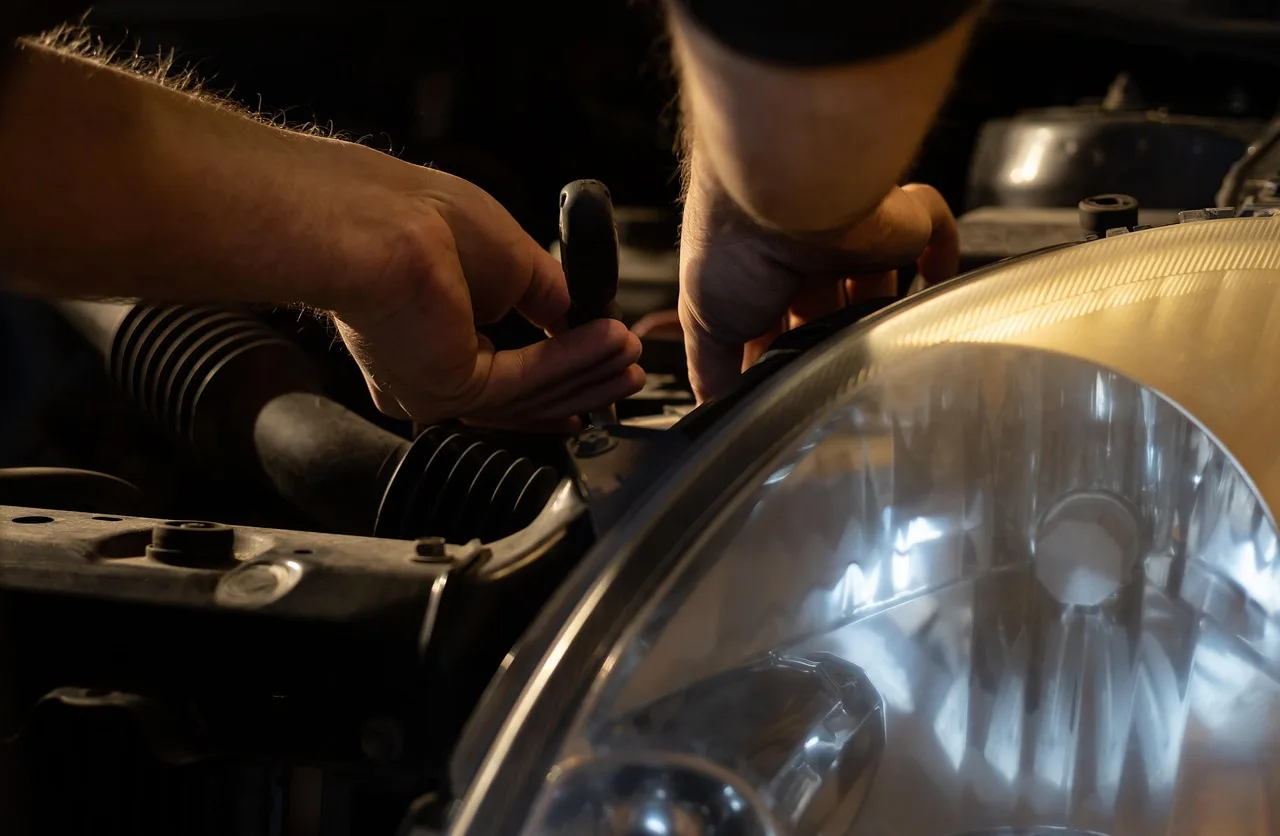
Routine maintenance is usually cheaper than major repairs because it catches wear before it damages larger systems. In McAllen, heat and traffic make oil, brakes, and batteries more sensitive to age and mileage, so staying ahead on these basics can save money and downtime.
Oil change service
Most manufacturers use mileage or time intervals, and many late-model cars on synthetic oil follow about 5,000 to 10,000 miles, depending on engine design, driving style, and oil spec. Conventional oil usually follows shorter intervals. Always check the owner’s manual rather than assuming all engines use the same schedule.
An oil change should also include a quick inspection of fluid levels, belts, hoses, leaks, tire condition, and visible brake wear. If a shop skips those basics, the service may be cheap up front but weak on prevention.
A common first-timer mistake is approving the lowest oil change price without asking what it includes. A synthetic oil service can cost more than a basic conventional change, but the real comparison is the oil spec, filter quality, drain-plug sealing, and inspection items bundled into the visit.
Brake service
Brake service cost depends on pad wear, rotor condition, hardware, and whether fluid is contaminated or overdue for exchange. Squeal usually points to wear indicators or thin pads. Grinding is worse. It often means the pad material is gone and the rotor may already be damaged.
Brake inspection should measure pad thickness, check rotor wear and scoring, inspect calipers and hardware, and look at brake fluid condition. If the pedal feels soft, the car pulls under braking, or the stopping distance changes, treat it as a safety issue rather than a later repair.
Battery testing
Battery testing should include a voltage check and a load test, not only a quick glance at age. A fully charged 12-volt battery often reads about 12.6 volts with the engine off, while charging voltage with the engine running is commonly around 13.7 to 14.7 volts, depending on the vehicle.
Slow cranking, dim lights, repeated jump-starts, or electrical glitches after short trips all point to battery or charging trouble. Heat shortens battery life, so McAllen drivers often see failures sooner than drivers in milder climates. Replace the battery when it fails load testing or can no longer hold charge reliably.
When warning lights need diagnostics
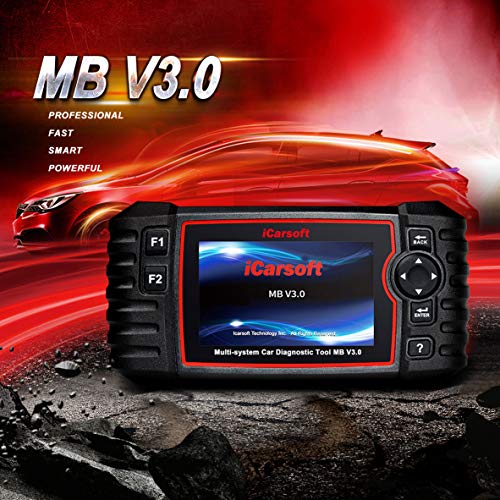
A check engine light is a starting point, not a diagnosis. A scan tool pulls codes that point toward a system or fault pattern, but the code alone does not tell you whether the problem is a loose gas cap, a failing sensor, a misfire, or a vacuum leak.
Common engine diagnostics cases
Common cases include oxygen sensor faults, evaporative emissions leaks, ignition misfires, airflow meter issues, and catalytic converter efficiency codes. Some are simple. Some are expensive. The point is to test the cause, confirm the code path, and avoid replacing parts that only look related.
Suppose the check engine light comes on with a rough idle and the car shakes at stoplights. That points more toward a misfire or air-fuel problem than a simple emissions code, and it deserves quicker attention than a steady light with normal drivability.
If the light flashes, shut the car off and arrange a tow or immediate inspection, since it can indicate a serious engine problem. A flashing light can mean active misfire severe enough to damage the catalytic converter, which is a far costlier part than most sensor repairs.
Alignment, suspension, and transmission costs
Tire wear clues, steering pull, and pothole-related suspension damage often start small but become expensive if ignored. McAllen roads and curb strikes can bend wheels, knock alignment out of spec, and wear tires unevenly. If the steering wheel sits off-center or the car drifts, get it checked soon.
Alignment and suspension
Uneven inner or outer tire wear, a new vibration, or a clunk over bumps can point to alignment or suspension wear. Common inspection points include tires, tie rods, ball joints, struts, control arm bushings, and wheel balance. If a pothole impact followed the symptom, mention that clearly when you book.
Transmission service
Transmission service becomes expensive when fluid is dark, smells burnt, or the car slips between gears. A healthy fluid check is part of the conversation, but fluid changes do not fix every transmission fault. Slipping, delayed engagement, and flare during shifts can point to internal wear that needs diagnosis first.
Picture a sedan that hesitates for two seconds before moving into drive after backing out of a space. That delay may be a fluid, valve body, or clutch issue, and a quick inspection is smarter than waiting for a hard failure on the road.
How to compare quotes without overpaying
Compare the diagnosis, not only the total price. A cheap quote that skips testing can cost more later if it replaces the wrong part. Ask what failed, how the shop confirmed it, and whether the repair fixes the cause or only the symptom.
What to compare
- Parts quality: OEM, aftermarket, remanufactured, or used.
- Labor time: whether the quote matches the actual job scope.
- Warranty: parts and labor coverage in writing.
- Urgency: what must be done now versus what can wait.
- Evidence: scan codes, measurements, photos, or worn parts.
Online reviews and ratings help, but they should not be the only filter. Look for patterns in communication, estimate clarity, and whether the shop explains why a repair is needed. The best local auto shop is the one that gives you enough information to make a clean decision.
Are dealership service centers better than local auto shops? Not always. Dealerships can be strong on brand-specific diagnostics, software updates, and warranty work. Independent shops can be stronger on price, speed, and broad repair experience. Choose by the job, the estimate, and the warranty terms.
Frequently asked questions
What is the best auto service in McAllen for routine maintenance?
The best routine maintenance shop is the one that checks the basics every visit: oil, filters, brakes, tires, battery condition, fluid levels, and visible leaks. For McAllen drivers, that matters because heat and traffic shorten the margin for neglected maintenance and can turn a small issue into a breakdown.
How much should an oil change cost in McAllen?
Oil change prices vary by oil type, vehicle size, filter quality, and how much inspection is included. Synthetic services usually cost more than conventional oil changes. Compare the full package, not only the sticker price, because the cheapest quote may omit the inspection items that catch bigger problems early.
How do I know if a mechanic in McAllen is trustworthy?
A trustworthy mechanic explains the diagnosis, shows the worn part or code data, and gives you a written estimate before work starts. Good communication matters. So does certification or relevant experience, especially on brakes, diagnostics, batteries, and transmission complaints that require testing instead of guessing.
What repairs should I fix now versus later?
Fix now: overheating, flashing check engine lights, grinding brakes, severe transmission slip, and anything that affects stopping or steering. Later or monitor: small oil seepage, minor trim noise, and wear that is visible but not yet affecting safety or drivability. When unsure, ask the shop to separate urgent items from planned ones.
Are dealership service centers better than local auto shops?
Dealerships are often better for brand-specific software work, warranty repairs, and some complex diagnostics on newer models. Local shops can be a better fit for routine maintenance, brakes, batteries, and general repair value. The smarter choice is the shop that can prove the diagnosis and stand behind the work.
What should I ask before approving auto repairs?
Ask what failed, how it was tested, what parts will be installed, how long labor will take, and what warranty covers the job. Also ask what is urgent now and what can wait. Those questions keep repair decisions focused on safety, cost, and timing instead of sales pressure.
Products related to this article
Sponsored / affiliate links. As an Amazon Associate I earn from qualifying purchases. I may earn additional commission from eligible campaigns.