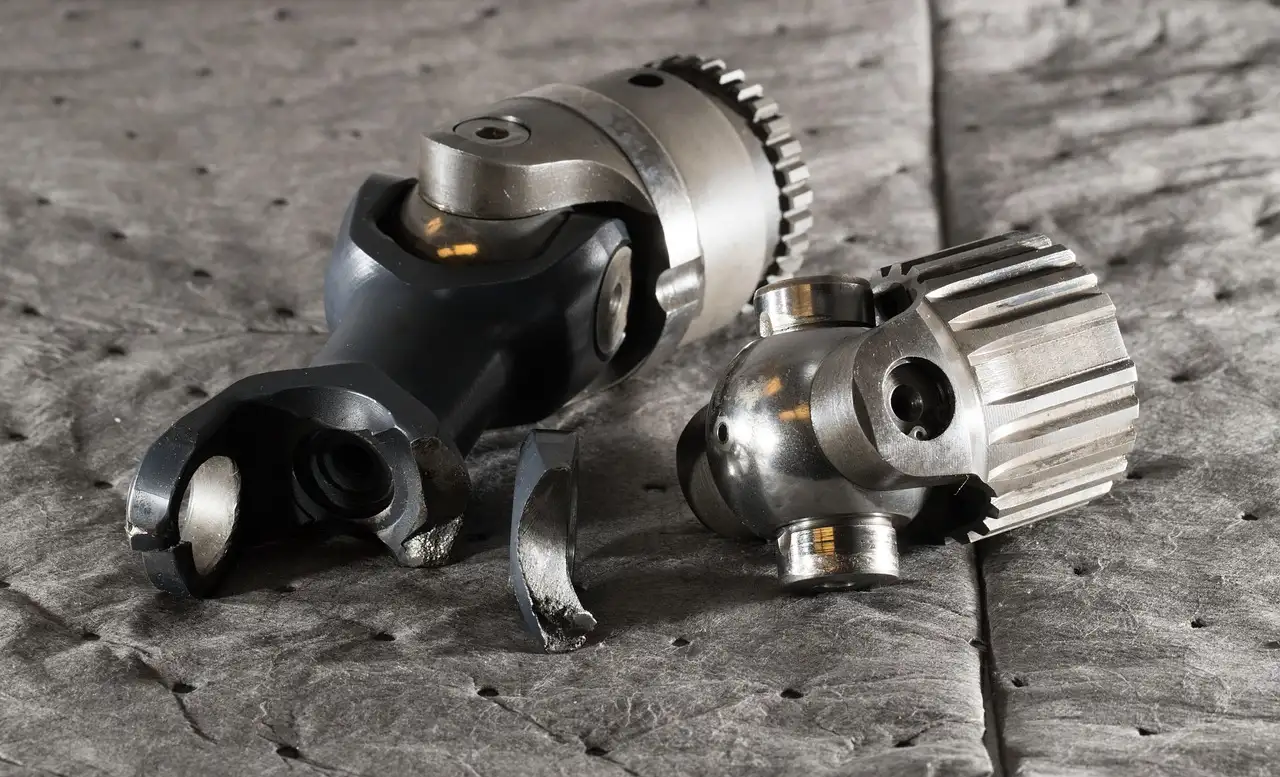
Driveshaft Replacement Cost: What You’ll Really Pay
Driveshaft replacement commonly costs about $600 to $2,000, and some trucks and AWD vehicles may cost more if the shaft is long, needs balancing, or is sold only as an assembly. Ignore the warning and a vibration or clunk can turn into a no-move breakdown. Here’s what the estimate usually includes, what it leaves out, and when a cheaper repair beats full replacement.
What a driveshaft does


A driveshaft sends torque from the transmission or transfer case to the differential. On rear-wheel-drive, all-wheel-drive, and four-wheel-drive vehicles, that shaft may be one piece or split into two sections with a center support bearing.
The quote problem starts here: “driveshaft replacement” can mean a single service part, a complete assembly, or more than one shaft on AWD and 4WD layouts. A front shaft on a 4WD truck is a separate part from the rear shaft.
Where it sits in the drivetrain
The shaft sits between the output end of the transmission or transfer case and the differential. It uses U-joints, yokes, flanges, splined sections, and sometimes a center support bearing to handle movement as the suspension travels.
That hardware matters because a bad U-joint or carrier bearing may be repaired without replacing the tube itself. A bent tube, missing balance weight, or out-of-spec runout usually changes the job into replacement territory.
One-piece versus two-piece shafts
One-piece steel shafts are common on simpler layouts. Two-piece aluminum shafts are more common on longer-wheelbase vehicles and can price hundreds apart from a one-piece design. Long shafts also need more balancing care, which can add labor.
How AWD and 4WD layouts change shaft count
AWD and 4WD vehicles may use more than one driveshaft. That configuration changes the quote because the front shaft, rear shaft, and center support hardware can all be separate line items. It also changes diagnosis, since a vibration may come from only one shaft.
Why quotes vary so much
There is no single driveshaft replacement number because the estimate depends on exact application, shaft length, material, and whether the shop can service individual parts or has to replace a complete assembly. Labor rates also change by city, shop type, and how much rust the technician has to fight.
Fitment is a big factor. An OEM replacement driveshaft is built for the original application and usually costs more. Aftermarket driveshafts may be less expensive and can be practical for shops and distributors, but dimensional accuracy, balance, and fitment have to be right.
Vehicle application and fitment
The exact vehicle matters because the same model line can use different shaft lengths, flange patterns, U-joint sizes, and bearing setups. That is why a quote for a Ford F-150 can look very different from one for a BMW, a Subaru Forester, or a Ford Transit.
Some suppliers list replacement driveshafts starting at $119.00, offer up to 36 months unlimited miles warranty, and say they use five shipping warehouses. They also say pricing can be as much as 70% lower than dealer prices. Those numbers do not mean every job will be cheap; they show how widely parts pricing can swing.
Labor rates, rust, and seized hardware
Rust and seized fasteners add time. A flange bolt that will not break loose, a pressed-in U-joint that takes extra disassembly, or hardware that needs heat and replacement can turn a straightforward swap into a longer job.
That matters on older trucks and in salt-belt regions. It also matters on vehicles that use staked-in U-joints, because some of those joints are not meant to come out. In those cases, the shaft may need to be replaced instead of repaired.
Long-wheelbase and balance-related labor
Long-wheelbase vehicles often use longer or two-piece shafts, which means more shop time for removal, installation, and balancing. Balance work is not optional when the shaft has been disturbed or rebuilt. A shaft that is out of balance can create vibration even if the new parts are correct.
Can a driveshaft be repaired instead of replaced?
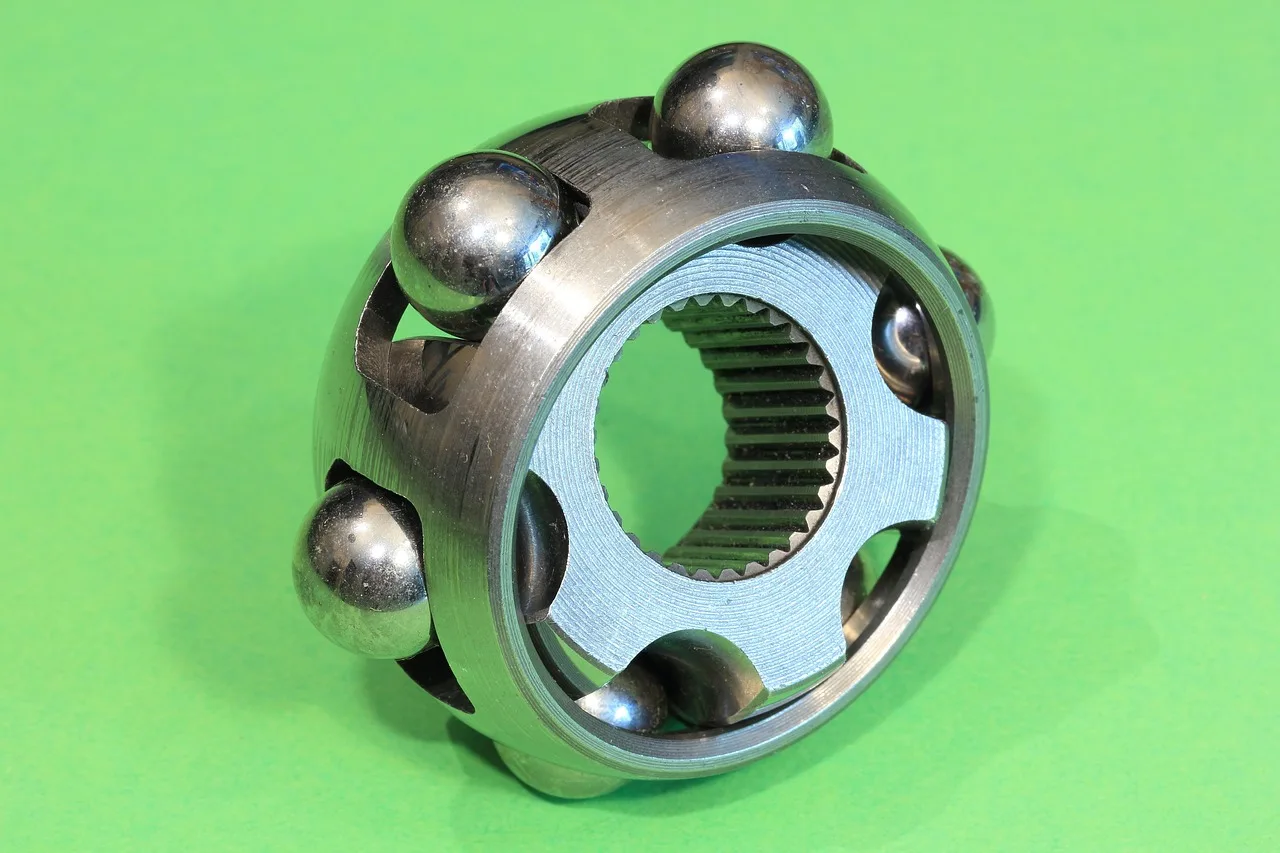
Yes, if the tube is straight, the shaft passes runout checks, and the damage is limited to serviceable parts such as a U-joint or center support bearing. If the shaft is bent, dented, missing a balance weight, or structurally damaged, replacement is usually the better fix.
Auto-driveshaft notes that OE service information uses runout measurement and physical damage inspection. Auto-driveshaft also says a one-bent shaft cannot be saved by new joints alone. That is the line between repair and replacement.
U-joint repair versus full shaft replacement
A U-joint is one of the most common service items on a driveshaft. Competitor content places U-joint replacement at about $331 to $406. That range is a useful anchor for a repair quote, but it is not the whole bill if the shaft also needs balancing, hardware, or additional inspection.
If the U-joint is staked in, the shaft may not be repairable in the usual way. A driveline shop can often press in serviceable joints, swap yokes, and rebalance the shaft when the tube is structurally sound.
Center support bearing repair
Center support bearing replacement is another common repair, especially on longer or two-piece shafts. Competitor content places that repair at about $395 to $517. A failed bearing can cause shaft whip, which may lead to secondary damage if you keep driving it.
That whip can also make the vibration seem like a bad transmission mount, wheel issue, or rear differential problem. If the bearing is the only failed part, replacing the whole shaft can be wasted money.
When staking or shaft damage forces replacement
Replace the shaft when inspection shows a bent tube, dents, damaged yokes, cracked welds, missing balance weights, or out-of-spec runout. Replacement also makes sense when the application uses non-serviceable parts or when the part is sold only as a complete assembly.
Picture a 2018 Ford Transit with a rear vibration that gets worse at highway speed. If the shaft is straight and the carrier bearing is noisy, a bearing repair may be enough. If the tube has a visible dent and the runout is out of spec, the estimate should shift to replacement.
How much does a driveshaft cost?
For budgeting, parts-only and labor-only need to be separated. A driveshaft estimate can be cheap in parts but expensive in labor, or the other way around if the shaft is sold as a complete OEM assembly. The most useful quote breaks out diagnosis, parts, labor, balancing, and hardware.
A full replacement varies much more because shaft count, length, material, and application-specific fitment change both parts price and labor.
Cost breakdown by failure type
| Failure type | Likely parts needed | Typical labor drivers | Quote red flags |
|---|---|---|---|
| U-joint repair | U-joint, clips or caps, grease if serviceable, possible flange hardware | Removal, press work, rusted fasteners, balancing if the shaft was disturbed | No mention of balancing, no hardware line, or a quote that assumes the joint can be removed when it is staked in |
| Center support bearing repair | Carrier bearing, support bracket or insulator, seals if needed, hardware | Two-piece shaft disassembly, bearing press work, alignment during reassembly | Missing note about shaft alignment, no post-install inspection, or no replacement bearing listed |
| Full assembly replacement | Complete driveshaft assembly, U-joints if not integrated, yoke or flange parts, seals | Removal and installation, driveline angle check, balancing, rusted bolts, long-wheelbase access | Quote excludes balance, seals, or flange hardware; part number does not match the vehicle application |
A $119 shaft can still become a much larger bill once balancing, seals, hardware, and labor are added. The reverse can happen too: a high parts price can still be the right call if it avoids repeat labor on a worn shaft.
Driveshaft quote decoder
This is the part of the estimate to read line by line. A good quote should tell you which failure was found, which parts are being replaced, what the labor covers, and whether the shop checked runout and driveline angle before ordering parts.
- Confirm the failure type on the invoice: U-joint, center support bearing, bent shaft, yoke damage, or complete assembly replacement.
- Look for the exact part number and whether it is OEM or aftermarket.
- Check whether balancing is listed as a separate line or included in labor.
- Look for seals, flange hardware, clips, or brackets.
- Ask whether the shop checked runout, dents, missing balance weights, and driveline angle.
- Verify whether the quote includes post-install inspection and road-test verification.
What a complete estimate should list
A complete estimate often lists diagnosis, parts, labor, balancing, seals, flange hardware, and post-install inspection. On some vehicles it should also note whether the shaft is one-piece or two-piece and whether the quote includes driveline angle checking during reinstallation.
Line items that should trigger follow-up questions
Ask questions if the quote says “driveshaft replacement” but does not identify the shaft location on an AWD or 4WD vehicle. Ask again if balancing is missing, if the repair assumes a staked-in U-joint will come out, or if the estimate does not mention seals and flange hardware.
Suppose your rear-wheel-drive pickup has a clunk on takeoff and a light vibration at 45 mph. If inspection shows a worn U-joint and a straight shaft, the cheaper repair can make sense. If inspection shows a dented tube with runout out of spec, the shaft itself needs replacement.
What makes the price go up?
Price climbs when the shaft needs more than basic removal and installation. Runout checks, balancing, seals, flange hardware, post-install inspection, rust cleanup, and driveline angle correction all add time and can change the final bill.
Runout checks and balance work
Runout tells the shop whether the shaft is straight enough to keep. If it is out of spec, the shaft should not be reused. Visual inspection for dents and missing balance weights matters just as much, because a straight-looking shaft can still be wrong.
Seals, flange hardware, and post-install inspection
Seals and flange hardware are easy to miss on a quote, but they are common line items when the shaft is removed. Post-install inspection matters because a vibration that remains after the repair can point to a different problem, such as a wheel issue, axle issue, CV axle issue, or transfer-case problem.
Driveline angle checks after installation
Driveline angle may need to be checked during reinstallation, especially after a shaft is removed on some trucks and SUVs. Wrong angle can create vibration and repeat failure. If the estimate never mentions it, ask whether the shop plans to check it before the vehicle leaves.
Frequently asked questions
How much does drive shaft replacement cost?
Most drivers should budget roughly $600 to $2,000 for driveshaft replacement, with some trucks and AWD vehicles going higher. The final number depends on shaft count, part type, balance work, labor rate, rust, and whether the vehicle needs an OEM assembly or a serviceable aftermarket part.
Is a drive shaft expensive to replace?
It can be. A simple U-joint repair may stay near the low end of a quote, but a long or two-piece shaft, AWD layout, seized hardware, or OEM-only fitment can push the bill up fast. The part itself is only one piece of the total cost.
How much does a new driveshaft cost?
A new driveshaft can start low enough to look inexpensive on its own, but the installed price is what matters. Some replacement shafts are listed starting at $119.00, yet balancing, seals, hardware, and labor can raise the total far above the part price.
What makes driveshaft replacement cost more on some cars?
Exact fitment, shaft length, labor time, rust, and balance work are the biggest drivers. AWD and 4WD vehicles may have more than one shaft. Long-wheelbase models often need more labor, and OEM assemblies usually cost more than aftermarket parts that fit the same application.
Do AWD and 4WD vehicles need more than one driveshaft?
Often yes. AWD and 4WD layouts may use a front shaft, a rear shaft, or both, depending on the vehicle. That changes the quote because each shaft can have its own U-joints, bearings, flanges, and labor requirements. The drivetrain layout matters a lot here.
Should I buy OEM or aftermarket driveshaft parts?
Choose based on fitment, balance, and how exact the application needs to be. OEM usually costs more but matches the original specification closely. Aftermarket can be the practical option if dimensions and balance are right. If the quote does not verify fitment, do not approve the part yet.
Products related to this article
Sponsored / affiliate links. As an Amazon Associate I earn from qualifying purchases. I may earn additional commission from eligible campaigns.