Best Car Dusters for a Spotless Shine (2026): We Compared
The best car duster is a soft waxed-cotton or microfiber model matched to your paint and climate: choose waxed cotton for light, dry dust on smooth clearcoat, and microfiber for finer control on softer finishes or interior trim. Use the wrong duster and you can drag grit across the paint, leaving swirls that cost time and money to correct. This guide ranks the top picks and explains how to choose by paint type, vehicle size, weather, and ownership cost.
Quick comparison
| Product | Badge | Best for | Price | ||
|---|---|---|---|---|---|
 |
California Car Duster Heritage Edition Wood Handle andCalifornia Car Duster | Our pick | Standard size · wax-treated cotton · wood handle | $36.95
Price as of 27 Oct 2026
|
View |
 |
California Car Duster 62447-8B Mini Duster | California CarCalifornia Car Duster | Budget pick | Mini size · wax-treated cotton · interior duster | $12.70
Price as of 27 Oct 2026
|
View |
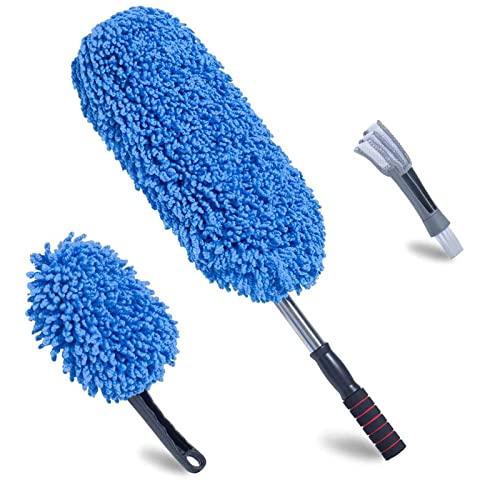 |
(3 Pack) Microfiber Car Duster Exterior Scratch Free,Loyakuu | Also great | 3-pack · microfiber · extendable handle | $20.59
Price as of 27 Oct 2026
|
View |
 |
Flash Dog Car Duster Exterior – Wax Treated Cotton &Flash Dog | Upgrade pick | Wax cotton · telescoping handle · swivel head | $28.99
Price as of 27 Oct 2026
|
View |
This quick view separates exterior dusters from interior tools before you compare features. The main choice is simple: waxed cotton for light, dry exterior dust, microfiber for broader compatibility and lower risk on dark paint and cabin surfaces.
How we chose
The picks below rely on published product details, common use cases, and the specific jobs each duster solves. The main filters were paint safety, reach, surface compatibility, maintenance burden, and long-term cost.
Two rules matter most. First, a duster is for dry, lightly soiled surfaces between washes. Second, the right material changes with the surface: waxed cotton for quick exterior touch-ups, microfiber for more forgiving daily use, and compact tools for cabins and tight trim.
California Car Duster Heritage Edition: best for light exterior dusting
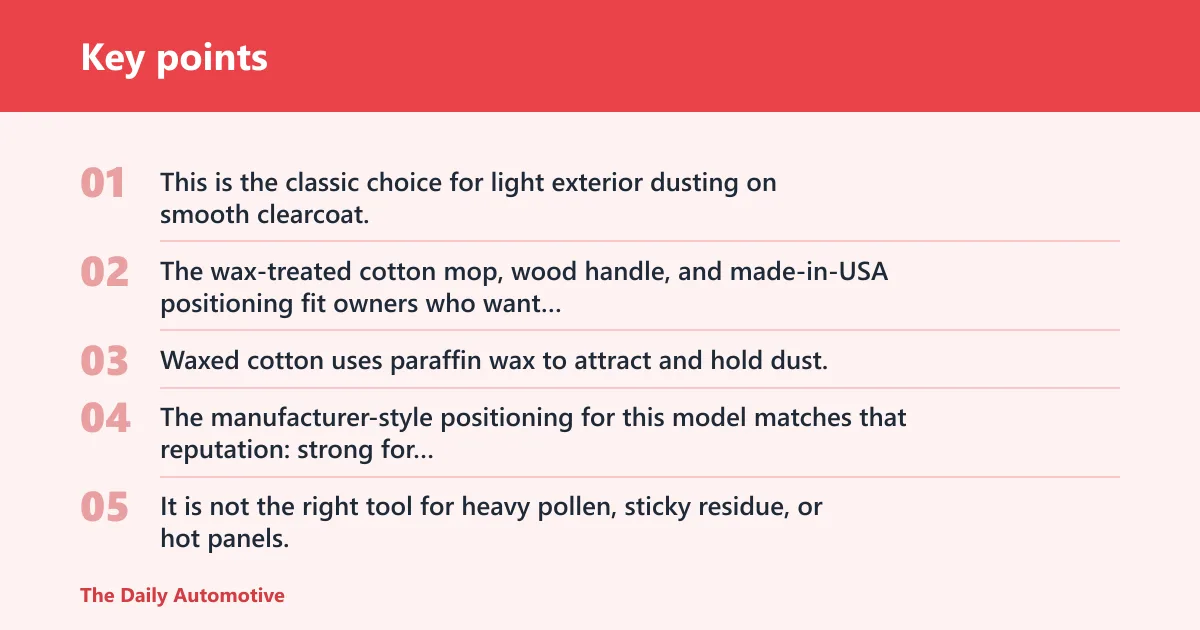
This is the classic choice for light exterior dusting on smooth clearcoat. The wax-treated cotton mop, wood handle, and made-in-USA positioning fit owners who want a fast touch-up tool for a garage-kept sedan or SUV that only collects a thin layer of dry dust.
Its strength is simple. Waxed cotton uses paraffin wax to attract and hold dust, which is why this style has stayed popular for quick touch-ups. The manufacturer-style positioning for this model matches that reputation: strong for quick touch-ups and best used before grime builds up.
The drawback is just as important. It is not the right tool for heavy pollen, sticky residue, or hot panels, and it is a poor match once grit starts sitting on the paint. On black paint, the margin for error is smaller, so the safest use case is light dust on a cool, dry surface.
Waxed cotton and clear coat safety
Waxed cotton can be safe on clear coat when the surface is dry, cool, and only lightly dusty. It is not a cleanup tool for road film or grit. If you see any sandy feel, the duster should stay in the trunk and the car should be washed instead.
Clear coat paint safety comes down to contact pressure and contamination. A dry, lightly loaded mop can lift surface dust. A loaded one can drag particles across the finish, and that risk rises on dark paint, hot hoods, and cars that sit under trees or near dusty roads.
Loyakuu microfiber car duster: best for dark paint
This microfiber option is the safer default for dark paint, ceramic-coated vehicles, and owners who want one tool for more than one job. It is washable and reusable, and the extendable handle adds reach for larger hoods and roof panels.
Microfiber is the better pick when you want lower visible risk on black cars. It is described as scratch-free for all paint finishes, but that should still be read with caution: no duster is a license to clean a gritty panel. Its real advantage is broader compatibility, especially when you want one reusable tool for exterior dust and some interior surfaces.
The tradeoff is that microfiber is usually less “grabby” than waxed cotton on the driest, lightest dust. It can also feel bulkier than a classic cotton mop, so if the goal is fast exterior touch-ups on a garage-kept car, the old-school cotton design still has an edge.
Why microfiber reduces dark-paint risk
Dark paint shows swirls quickly. Microfiber reduces that risk because it feels softer, is washable, and is easier to keep clean between uses. That matters when the car sits outside, picks up fine airborne dust, or needs more frequent maintenance than a waxed-cotton duster can safely handle.
Ceramic coating compatibility also favors microfiber. A wax-free, low-marring tool is the better choice for maintenance between washes because it reduces residue risk. Waxed cotton can leave transfer on some surfaces, while microfiber is generally the more neutral option for coated finishes and interior trim.
Flash Dog Car Duster: best for extended reach
This is the reach-focused pick for SUVs, trucks, and taller vehicles. The telescoping aluminum alloy handle, swivel head, and wax-infused cotton make it a good fit when you need roof and windshield access without climbing, stretching, or leaning over wide panels.
It stands out because it solves a geometry problem as much as a dust problem. Tall vehicles need coverage over the hood, roof, and upper glass, and a longer handle cuts down bending and strain. For owners who keep a truck outside, that practical reach matters every time the dust comes back.
The drawback is that telescoping convenience can tempt overuse. If the panel has heavy dust load or visible grit, an extendable duster does not make the job safe. It is still a light-dust tool, and the larger reach should not be confused with heavier cleaning ability.
What to look for in a telescoping duster
Look for three things: enough reach for the roof and hood, a handle that feels stable when extended, and a head that can still track the panel without catching. That matters on SUVs and trucks, where the real problem is access, not just dust pickup.
A telescoping handle also helps with ergonomics. Less bending means less strain on shoulders and lower back, and it makes the duster easier to use often enough that light dust does not turn into a wash-day chore.
Suppose a midsize SUV sits outside in a dry parking lot and collects a film of dust by Friday morning. A telescoping duster can handle the roof and windshield edge cleanly if the surface is cool and the dust is light. If the same SUV has road grit on the rear hatch, stop there and wash it.
California Car Duster 62447-8B Mini Duster: best for interiors
This mini duster is the interior specialist. It is meant for dashboards and center consoles, where compact size matters more than broad coverage and where wax-treated fibers can lift dust without harsh chemicals.
It earns its keep in tight zones: vents, seams, around the shifter, and storage cubbies. It also stores easily, which makes it a sensible glovebox tool for drivers who want to clean often but only in small areas.
The limitation is obvious. It is not a full-size exterior tool, and it should not be treated like one. If you try to use a mini duster on a full hood or a dusty tailgate, the small head will slow you down and offer no benefit over a larger option.
Interior zones and the right tool
A mini dash duster is best for dashboard texture, vent slats, center-stack buttons, and seams where dust collects in thin lines. It can also reach glass edges and tight console gaps where a larger mop would feel clumsy.
For soft contours and crevices, a chenille microfiber head is the better companion tool. Its noodle-like fibers flex around trim edges and curved surfaces, which makes it a better interior choice for piano-black trim, cupholder rims, and contoured door inserts.
Car duster decision matrix
This matrix compares four buyer scenarios on the factors that matter most: paint safety, dust pickup, reach, maintenance, and total ownership cost. Scores run from 1 to 5, where 5 is the strongest fit for that scenario.
| Buyer scenario | Paint safety | Dust pickup | Reach | Maintenance | Total ownership cost | Best-fit duster |
|---|---|---|---|---|---|---|
| Black ceramic-coated sedan | 5 | 4 | 3 | 4 | 4 | Microfiber car duster |
| Dusty driveway SUV | 3 | 4 | 5 | 3 | 4 | Telescoping duster |
| Interior-only commuter | 5 | 3 | 2 | 5 | 5 | Mini dash duster |
| Desert-dust truck | 2 | 3 | 5 | 2 | 3 | Telescoping microfiber or wash-first |
The table shows the main rule: the dirtier the environment, the less you should rely on a waxed-cotton duster alone. A garage-kept sedan can benefit from the classic cotton design, while a truck that lives in desert dust needs more reach and a lower-risk microfiber setup.
Cost over time
Total ownership cost is not just the sticker price. Waxed cotton can be inexpensive up front, but it needs careful shaking out, dry storage, and eventual replacement when the fibers lose effectiveness. Microfiber costs more in some cases, but it is washable and reusable, which spreads the cost across more uses.
That matters for frequent light dusting. If you clean often, a reusable microfiber duster can be the lower-cost option over time because washing is cheaper than replacing a worn cotton mop or re-waxing a tool that has picked up residue.
Which one should you buy?
Pick the California Car Duster Heritage Edition if you want the classic, quickest answer for light exterior dust on a cool, dry clearcoat. Pick microfiber if your car is black, ceramic-coated, or used in mixed conditions where a washable, lower-risk tool makes more sense.
Choose a telescoping model for SUVs, trucks, and tall hoods. Choose the mini duster for cabins, glovebox storage, and tight interior work. If you only want one tool and your car sits outside, microfiber is the safer default; if your car stays clean and dry in a garage, waxed cotton can be the faster exterior tool.
Say your sedan is black, ceramic-coated, and parked in a garage. The safer buy is a microfiber duster for routine maintenance, because it reduces residue concerns and gives more forgiveness on a finish that shows every swirl. Picture the opposite case: a white truck with a dusty roofline and tall cab. There, a telescoping handle earns its keep immediately.
Best pick by budget
The mini duster is the lowest-cost entry point, especially if your main goal is interior cleaning. For exterior use, the classic waxed-cotton heritage model is the straightforward budget choice when the car only sees light dust and you are willing to keep its use limited.
Best pick by paint type
For black paint and ceramic-coated finishes, microfiber is the better default. The safest rule is simple: the more sensitive the finish, the more you should favor washable microfiber over wax-treated cotton. That is especially true when the car is outside and picks up fine residue instead of showroom dust.
Best pick by vehicle size
Sedans can get by with standard-size tools. SUVs, trucks, and RV-height panels usually benefit from a telescoping handle, because it solves roof and hood access without turning a quick dust-off into a stretch session.
Best pick by maintenance tolerance
If you do not want to wash a tool, waxed cotton is convenient but limited. If you are fine with cleaning and reusing the duster, microfiber is the better long-term choice. That reusable path usually makes more sense for owners who dust often and want less residue risk.
Frequently asked questions
What is the best car duster for a black car?
A microfiber car duster is usually the best choice for black paint because it gives more forgiveness and lower visible risk on a finish that shows swirls easily. Waxed cotton can still work on a cool, lightly dusty panel, but microfiber is the safer default when the surface is dark and sensitive.
Are waxed cotton car dusters safe on clear coat?
Yes, but only under the right conditions. Waxed cotton dusters are best for dry, lightly soiled clear coat with no grit, pollen buildup, or heat on the panel. If the car feels sandy, if the hood is hot, or if dust is heavy, do not use one.
Which car duster works best for SUVs and trucks?
A telescoping duster works best for SUVs and trucks because reach matters as much as dust pickup. It helps you get to the roof, windshield, and hood without leaning over wide panels. A microfiber version is the better all-around choice if the vehicle often sits outside.
Can I use a car duster on the interior dashboard and vents?
Yes, but use an interior-specific tool. A mini dash duster is best for vents, seams, center consoles, and glovebox areas. A chenille microfiber head works better on contours and textured trim, while larger exterior dusters are too bulky for tight cabin spaces.
How do I know when a car duster will scratch paint?
Stop using it when the panel feels gritty, when dust is heavy enough to build a visible layer, or when pollen and debris are packed into the head. Hot panels increase smear risk too. A duster should glide over light dust, not fight through contamination.
How do I clean and maintain a reusable car duster?
Shake out loose dust after each use and store it so the fibers stay dry and uncontaminated. Washable microfiber can be cleaned and reused, which lowers long-term cost. Wax-treated cotton should not be washed like microfiber; it depends on dry handling and careful shake-out maintenance.
Products related to this article
Sponsored / affiliate links. As an Amazon Associate I earn from qualifying purchases. I may earn additional commission from eligible campaigns.