How Much Do Dash Cams Cost? Camera Prices and Fees
Most dash cams cost roughly $70 to $300 for the camera, but first-year ownership often lands around the low hundreds to the mid hundreds once you add a memory card, install, and any app subscription. Buy too cheap and you can end up with weak video, storage limits, or hidden fees that make the setup more expensive later. This guide breaks down camera, card, install, and recurring costs for commuters, rideshare drivers, and fleets.
This guide is part of our Car accessories guide series.
Consumer dash cams for cars cost around $50 to $200, while some models are as little as $20 and professional-grade units can run from $100 to $500. A decent dash cam costs between $50 and $150 for most drivers. The spread comes from camera count, resolution, night hardware, and whether the unit adds GPS, Wi-Fi, parking mode, or cloud access.
How much do dash cams cost?


What you get at each dash cam price tier
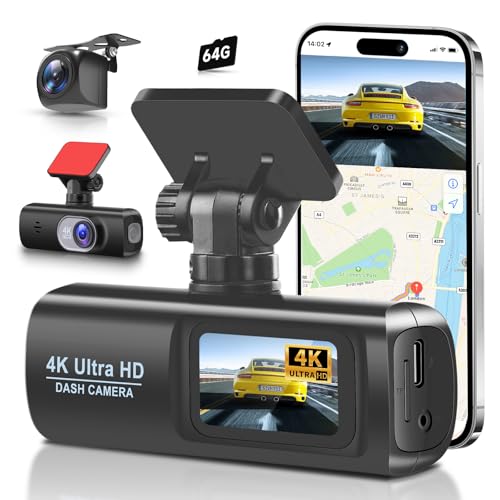
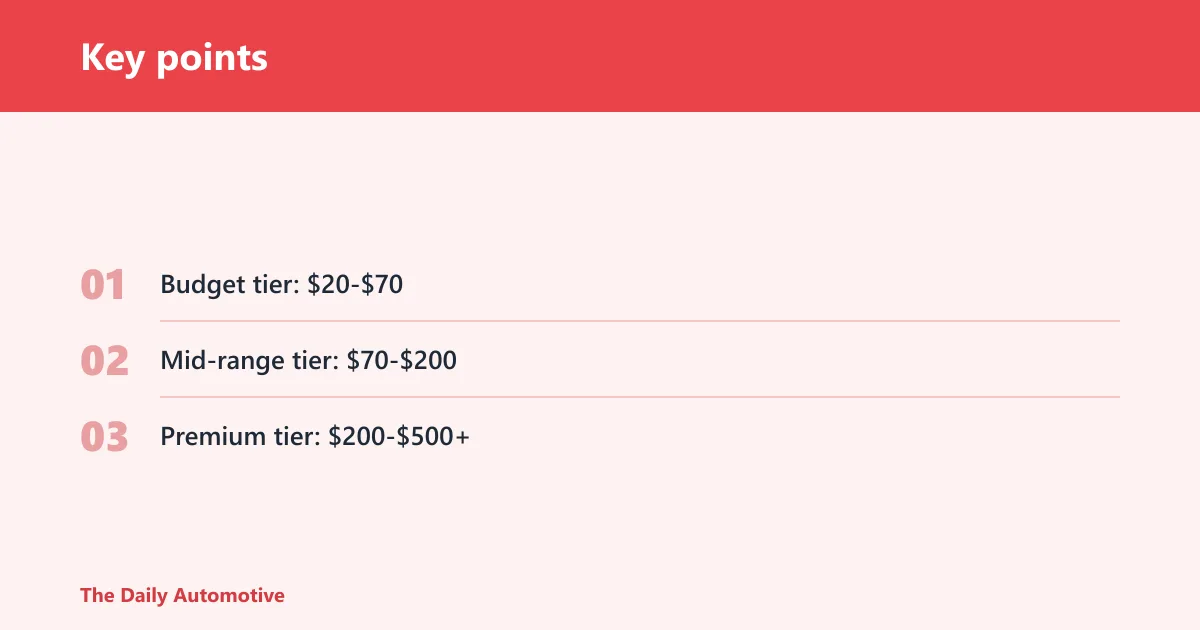
Price usually tracks what the system records and how much setup it needs. Front-only models sit at the lowest end, dual-channel units cost more, and 3- to 4-channel systems move into premium pricing because they record the road ahead, the rear view, and in-cabin or side coverage. Better low-light sensors and connectivity also push the number up.
- Budget tier: $20-$70 — usually front-only, basic loop recording, and fewer extras.
- Mid-range tier: $70-$200 — often dual-channel, with GPS and app transfer features.
- Premium tier: $200-$500+, commonly multi-channel systems with stronger sensors and fleet-focused tools.
Budget models: front-only basics
Front-only dash cams, also called single-channel units, are the lowest-cost entry point for simple commute use. They record the road ahead, which is enough for basic crash documentation and parking-lot incidents if you do not need rear or interior coverage. Budget models are priced at $30-$80, and some shopper-facing listings go lower.
Walmart lists an NEXPOW 2K front dash cam at $19.99, which fits the entry-level end of the market. That kind of price can work for a simple commute, but low-end cards and heat exposure can raise the real cost later if footage becomes corrupted or unreadable.
Mid-range models: the value tier
Mid-range models are priced at $80-$150, and that is where many buyers land because the feature set feels more complete without moving into fleet pricing. Dual dash cams are common here, with front-and-rear coverage, GPS speed and location stamping, and Wi-Fi app transfer for moving clips to a phone.
Walmart lists a Rexing dual dash cam at $99.88, which is a practical example of how the value tier often bundles more coverage without entering premium territory. Wi-Fi-only transfer is usually free after purchase, while LTE cloud services may cost extra.
Premium models: multi-channel and fleet use
Premium models are priced at $150-$400+, with many products stretching into the $200-$500+ band once you add multi-camera coverage and business features. A 3- to 4-channel dash cam records front, rear, and either side or cabin views, which is why rideshare and fleet buyers pay more. Those systems also tend to include better low-light hardware.
Walmart lists a Rexing 4-channel dash cam at $199.97 and a Vantrue N4 Pro at $429.99. Those prices illustrate the jump from a commuter setup to a system aimed at more coverage and more recording angles.
📊 Consumer dash cams for cars cost around $50 to $200. Source: Dash Cam Pricing: Discounts, Deals & Average Costs.
How much does dash cam installation cost?
Dash cam installation can cost nothing if you use a simple plug-in power cable, but professional hardwire installation often costs in the low hundreds and can rise for multi-camera setups. Parking mode usually pushes buyers toward hardwiring because the camera needs constant power when the car is off. More channels also mean more labor and routing time.
Plug-in install versus hardwire install
A plug-in install is the cheapest path. The camera draws power from a 12V outlet, so the buyer may only pay for the unit and the card. Hardwiring costs more because it taps into the vehicle’s fuse box and is usually done to support parking mode, cleaner wiring, or a power setup that does not occupy the accessory socket.
Professional hardwire installation often lands in the $100-$150 range for a single camera. Multi-camera systems can cost more because the installer has to route extra cables to the rear glass, cabin, or side coverage points.
Why parking mode raises the bill
Parking mode monitors the vehicle while it is parked. That feature often requires hardwiring, so the install becomes part of the purchase decision instead of an afterthought. If a buyer wants event recording in a lot or on the street, the camera cost is only one piece of the budget.
Say your car sits on a street overnight in a dense apartment area. A front-only plug-in cam may cover daytime driving, but it will not protect parked footage without the right power setup, so the “cheap” camera can become the more expensive option once install is added.
Why multi-camera systems cost more to install
Three- and four-channel systems take longer to install because each camera needs a route, a mount, and in many cases a cleaner cable path through trim or headliner areas. Fleet or rideshare rigs may also need a cabin-facing camera mounted and aimed with care. That extra labor is why total install cost climbs faster than the sticker price suggests.
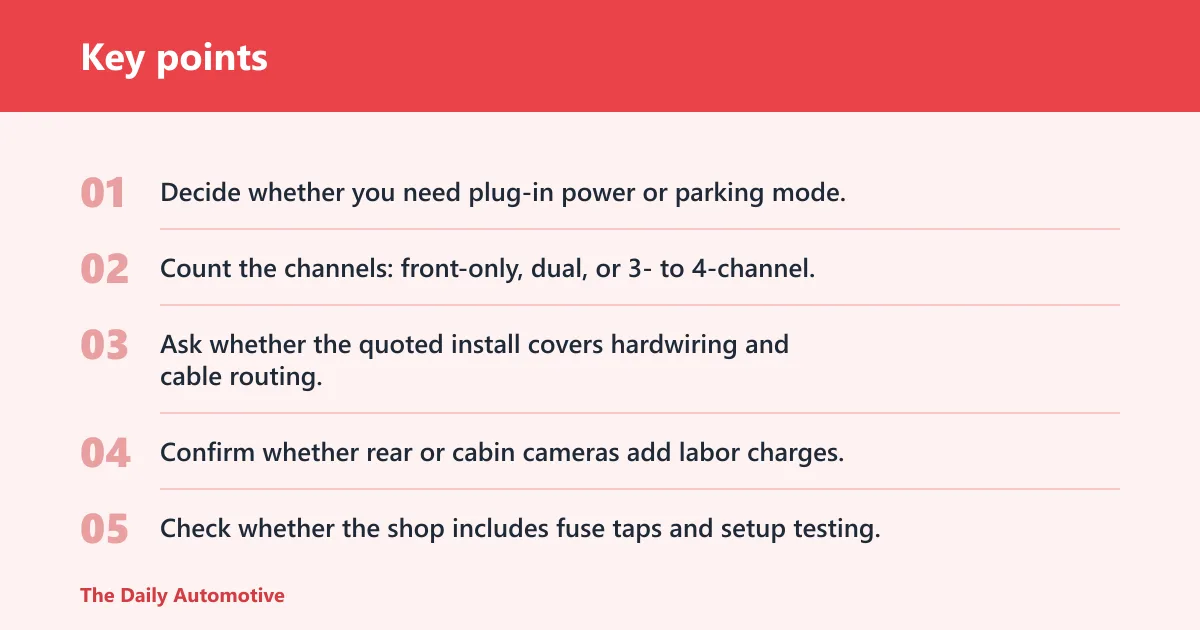
- Decide whether you need plug-in power or parking mode.
- Count the channels: front-only, dual, or 3- to 4-channel.
- Ask whether the quoted install covers hardwiring and cable routing.
- Confirm whether rear or cabin cameras add labor charges.
- Check whether the shop includes fuse taps and setup testing.
What hidden costs should you budget beyond the camera?
The camera is only the first line item. Most buyers also need a microSD card, and a high-endurance card is the safer choice because dash cams write video continuously. Add installation if you want hardwiring, and reserve room for subscriptions if the system uses LTE or cloud features. Those extras can shift a budget setup by more than expected.
MicroSD card costs and why high-endurance cards matter
A microSD card is usually a separate cost, and a high-endurance card is commonly recommended for dash cam use. Typical add-on pricing is around $10-$20 or more, though larger or higher-endurance cards can cost more. Cheap cards may fail sooner or lose footage under heat and heavy write cycles, which can make them a false economy.
For a commuter who records daily traffic, paying more for a card built for constant overwriting is usually the better budget choice than replacing a failed card and losing clips when they matter.
Possible replacement and failure costs
Low-cost storage is one of the most common hidden costs. A card that works in a phone may not hold up as well in a hot windshield environment where the camera records and rewrites files all day. If the card fails, the real cost is not just replacement; it is the footage that never gets saved.
Optional subscription fees for LTE or cloud-connected systems
Wi-Fi transfer usually does not require a monthly fee. LTE and cloud connectivity are different: they often come with subscription-based remote access and alerts, especially in fleet-grade systems. That makes LTE useful for business monitoring, but it should be budgeted as an ongoing cost rather than a one-time add-on.
A common first-timer mistake is buying a cloud-ready system for a personal car, then realizing the recurring fee makes the total cost far higher than a comparable Wi-Fi-only model. If all you want is phone transfer, Wi-Fi-only is the cheaper path.
Which dash cam setup fits your driving habits?
Choose the setup that matches your use case, not the longest feature list. Budget commuters usually need front-only recording and a card. Everyday commuters often get the best value from dual-channel coverage. Rideshare and fleet buyers are the ones who benefit most from 3- to 4-channel systems, parking mode, and cloud or LTE tools.
Budget commuter: front-only value pick
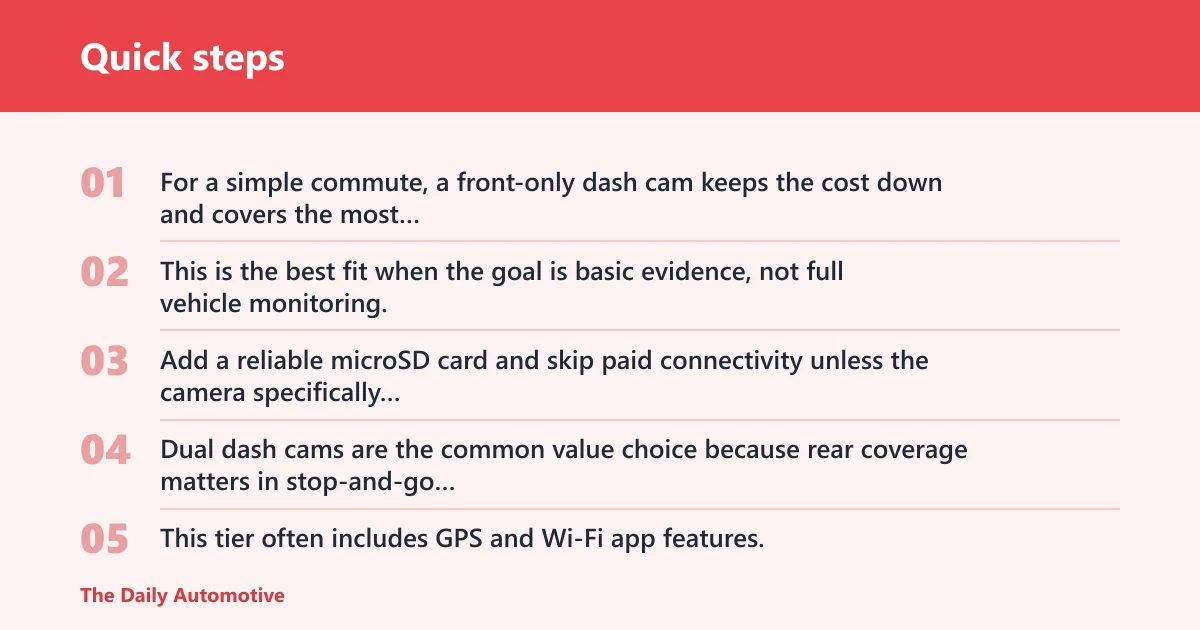
For a simple commute, a front-only dash cam keeps the cost down and covers the most likely impact point. This is the best fit when the goal is basic evidence, not full vehicle monitoring. Add a reliable microSD card and skip paid connectivity unless the camera specifically needs it for setup or storage.
Everyday commuter: dual-channel balance
Dual dash cams are the common value choice because rear coverage matters in stop-and-go traffic and parking incidents. This tier often includes GPS and Wi-Fi app features, so you gain more evidence detail without jumping to fleet pricing. For many drivers, this is the best compromise between cost and coverage.
Rideshare or fleet: 3- to 4-channel coverage
Rideshare and fleet use cases justify more channels because cabin, rear, and side views can matter in disputes. These buyers are also more likely to value cloud access, alerts, and parking coverage. That raises total ownership cost, but it also matches the higher exposure and higher documentation needs of commercial use.
What to pay extra for, and what to skip
Pay extra for parking mode, a quality sensor, and a good card. Skip paid features that do not change your actual use. For many drivers, GPS is worth the modest bump because it tags time, speed, and location. Wi-Fi app transfer is also worth paying for if it is included without a subscription.
Night vision sensor quality matters most when the car is driven or parked in low light. Premium sensors such as STARVIS are commonly highlighted for better dark-scene capture, which is one reason premium units cost more. If most driving happens in daylight, that upgrade may matter less than rear coverage or a better card.
Real-world ownership cost by driver type
These three scenarios show first-year ownership instead of sticker price alone. They include the camera, a microSD card, installation where needed, and an optional subscription where that setup makes sense. That makes the budget easier to compare across commuters, rideshare drivers, and fleets.
| Driver type | Camera price | microSD card | Installation | Optional subscription | First-year total |
|---|---|---|---|---|---|
| Budget commuter | $20-$70 | $15-$25 | $0-$50 plug-in or basic setup | $0 | $35-$145 |
| Everyday commuter | $80-$150 | $20-$35 | $100-$150 hardwire | $0-$10 | $200-$345 |
| Rideshare/fleet | $200-$500+ | $25-$50 | $150-$250 multi-cam install | $5-$25 per month | $405-$800+ before annual subscriptions |
These totals are practical budget ranges, not exact quotes. They show why two dash cams with similar sticker prices can cost very different amounts in the first year once storage, labor, and ongoing fees are included.
Frequently asked questions
How much do dashboard cameras cost?
Consumer dashboard cameras usually fall around $50 to $200, with budget models sometimes as little as $20 and professional-grade units reaching $500. The price changes most with camera count, resolution, night hardware, GPS, Wi-Fi, parking mode, and whether the model is aimed at consumer or truck use.
How much does a good dash cam cost?
A good dash cam costs between $50 and $150 for most drivers. That range usually covers a solid consumer model with useful features such as GPS, Wi-Fi app transfer, or dual-channel recording. Buyers who want better low-light sensors, more channels, or cloud access usually move above that range.
Are dash cams worth it?
Dash cams are worth it when you want video proof after a crash, parking incident, or insurance dispute. The value is strongest if the model fits the use case: a commuter may only need front recording, while rideshare and fleet users often benefit from more channels and parking mode. The right setup matters more than the highest price.
What’s a good dash cam for a decent price?
A decent-priced dash cam is often a dual-channel model in the $80-$150 range, because it balances front and rear coverage with useful extras like GPS and Wi-Fi. If the car parks on the street, hardwire support matters more than another spec bump, since parking mode is often the feature that adds real value.
How much is dash cam cost to install?
Dash cam install cost depends on whether the unit is plugged in or hardwired. Simple plug-in setups can cost nothing beyond the camera and card, while professional hardwiring often costs $100 to $150. If the system has multiple cameras or needs parking mode, the install cost usually rises further.
Products related to this article
Sponsored / affiliate links. As an Amazon Associate I earn from qualifying purchases. I may earn additional commission from eligible campaigns.