Best Sunroof Deflectors for Cars (2026): We Compared
The best sunroof deflector is the one that matches your roof opening within the maker’s fitment range, uses UV-stable acrylic or polycarbonate, and mounts with the adhesive or clamp style your roof allows. Choose wrong and you can add wind roar, trap water at the seal, or end up with a part that lifts at speed. This guide compares fitment, materials, adhesive choices, and no-drill installation options so you can buy the right deflector for your car and climate.
Quick comparison
| Product | Badge | Best for | Price | ||
|---|---|---|---|---|---|
 |
Tresvendu 38" 980mm Sunroof Window Visor, Universal TopTresvendu | Our pick | 38" · Gloss Black · Wind Deflector | $23.98
Price as of 18 Oct 2026
|
View |
 |
ICBEAMER 38.6" Sunroof Wind Deflector, Fits 33-36" Sunroof,ICBEAMER | Also great | 38.6" · Dark Smoke · Wind Deflector | $35.99
Price as of 18 Oct 2026
|
View |
 |
BSR632-1 Sunroof Panel Grille Vent Screen Cover SetBross | Also great | $17.10
Price as of 18 Oct 2026
|
View | |
 |
BGQG Car Sunroof Wind Deflector, Moonroof Vent Visor forBGQG | Also great | $57.99
Price as of 18 Oct 2026
|
View |
Start with fit, then material, then adhesive. The wrong length or poor surface prep can matter more than brand name.
How we chose
Fit range came first. A visor that misses the roof opening by even a little can whistle, buffet, or leave the rear edge unsupported.
Material mattered next, because acrylic and polycarbonate behave differently in sun, heat, and minor impact. Adhesive quality and install risk came after that, followed by how each design handles noise, rain, and opening clearance.
We compared published product details and buyer feedback only. That keeps the focus on what the listing actually says, not on wishful fitment claims.
Tresvendu 38" visor: best for easy universal fit
This Tresvendu universal visor suits buyers who want a straightforward tape-on option with a simple gloss-black finish. Based on the published specs, its 38-inch length and pre-installed automotive-grade tape make it a practical pick for owners who want a no-drill install and a broad fit target.
The main advantage is convenience. The acrylic construction is described as UV-stable, and the brand says it cuts wind roar while helping block rain that would otherwise enter the cracked opening. That makes it a solid all-around choice for drivers who want a cleaner roofline and do not need a vehicle-specific part.
The drawback is the same thing that makes it convenient: universal sizing. If your opening sits near the edge of the fitment range, a small mismatch can leave overhang or exposed gaps, and that can lead to noise or lift in heat. For a roof with unusual contouring, a model-specific visor is usually safer.
ICBEAMER 38.6" visor: best for smaller openings
This ICBEAMER visor is aimed at sunroofs 33 to 36 inches wide, so it is the better pick when the opening is smaller and you want a tighter stated fit. The dark smoke finish also helps cut glare while keeping the profile discreet.
Its strength is fit discipline. A visor that is sized for a narrower opening is less likely to overhang, and that can help reduce the kind of edge turbulence that creates buffeting. The listing also calls out an aerodynamic shape, which is the right direction for highway use.
The drawback is obvious: the fit range is narrower than some universal alternatives, so it is not the right answer for wider roofs. Buyers with panoramic or irregular openings should measure carefully before ordering, because width mismatch can reduce both sealing and stability.
Bross sunroof panel grille: best for specific vehicle coverage
This Bross part is not a general-purpose sunroof wind deflector. It is a model-specific sunroof panel grille vent screen cover set for selected Mercedes chassis, so it belongs in this article only as a fitment caution for buyers who confuse roof vent parts with wind deflectors.
Its value is specificity. If your car matches the listed application, a vehicle-specific part can fit more predictably than a universal visor because the shape, clips, and mounting points are designed for one platform. That precision is often the safer route on irregular roof openings.
The drawback is that it does not solve the same job as a wind deflector for most shoppers. It is also limited to certain model years and body styles, so it is useless for anyone outside that application. Do not buy it as a substitute for a true sunroof visor.
BGQG visor: best for buyers prioritizing a premium universal option
This BGQG universal moonroof visor is the option to look at if you want a broader premium-style accessory for a no-drill install. The listing positions it as a wind deflector with heat-insulation intent, which suggests a more comfort-focused approach than a bare-bones universal strip.
Its likely appeal is versatility. Universal fit can be useful when you want to keep the roof cracked open for ventilation without drilling into the car. For buyers who care about appearance as much as function, that can be enough to justify the higher asking price.
The drawback is that universal fit is still universal fit. Without a model-specific shape, the part may be more sensitive to roof curvature, rail placement, or partial overhang. At this price level, buyers should be especially careful with measurement and adhesive prep.
What size deflector do you need?
Measure the sunroof opening before you order. The best match is the one that fits your opening width and length without forcing the visor to hang over rails, spoilers, or a curved edge that changes the contact patch.
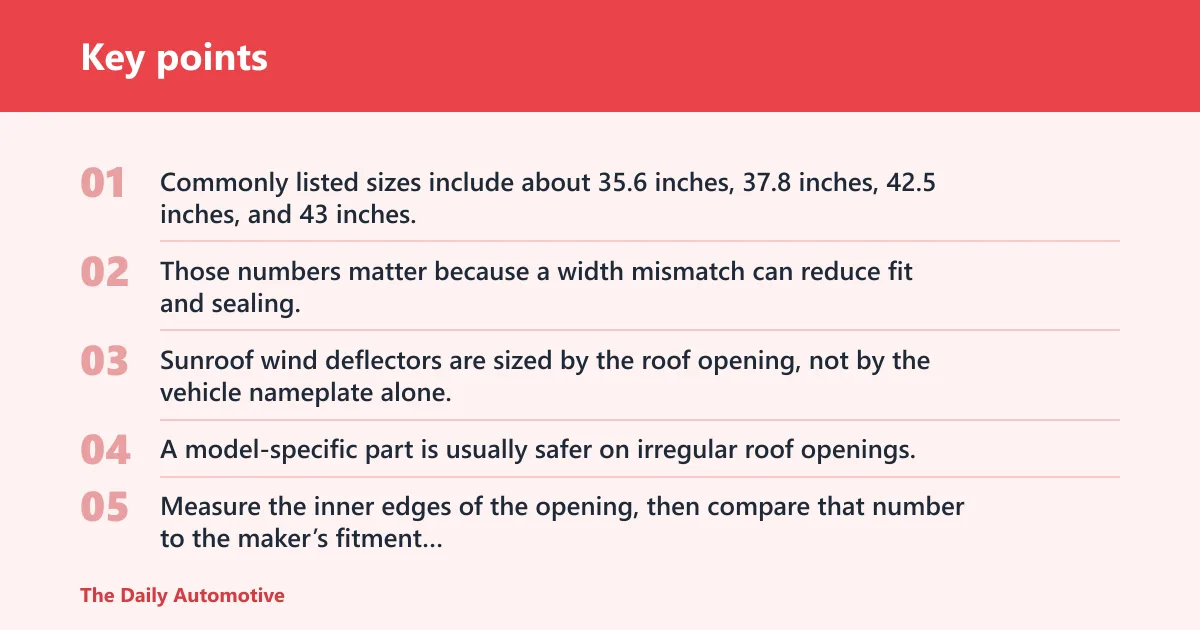
Commonly listed sizes include about 35.6 inches, 37.8 inches, 42.5 inches, and 43 inches. Those numbers matter because a width mismatch can reduce fit and sealing, while a too-short visor may leave the rear edge exposed to wind.
Sunroof wind deflectors are sized by the roof opening, not by the vehicle nameplate alone. A model-specific part is usually safer on irregular roof openings, especially if the car has a panoramic panel, raised rails, or a roof spoiler near the opening.
Measure width first
Measure the inner edges of the opening, then compare that number to the maker’s fitment range. The 43-inch BOOGADEE-style fit example is meant for 36.8-inch to 41.8-inch inner edges, while another listed visor is 38 inches long and intended for sunroofs not wider than 36.8 inches.
That spread shows why the same product family can fit very different roofs. A universal 980mm visor can suit wider openings, while a 35.6-inch or 37.8-inch variant is better for smaller roofs and tighter spans.
Match length to opening
Length matters because a visor that is too short leaves edge gaps, and one that is too long may hang into the airflow or interfere with the opening path. A common example is the ICBEAMER 37.8-inch, 980mm model for larger sunroofs, while the ICBEAMER 35.6-inch universal variant suits smaller openings.
Use length as a filter, then check width against the stated fit range. If the listing gives both inches and millimeters, keep them aligned before you place the order.
When universal sizing is too loose
Universal sizing becomes a problem when the opening is oddly shaped or the roof has a pronounced crown. That can create a distorted fit, which in turn can cause whistle, adhesive stress, or a rear edge that lifts in crosswinds.
Say your roof opening is close to 41 inches but the visor is meant for 36.8-inch to 41.8-inch inner edges only when installed on a flatter profile. Even a small shape mismatch can change how the tape line carries load once the car reaches highway speed.
Acrylic vs polycarbonate: which is better?
Neither material wins every time. Reinforced acrylic is common in universal visors because it is shatter-resistant, UV-stable, and easy to tint dark smoke, while polycarbonate is the more premium durability option when impact resistance matters most.
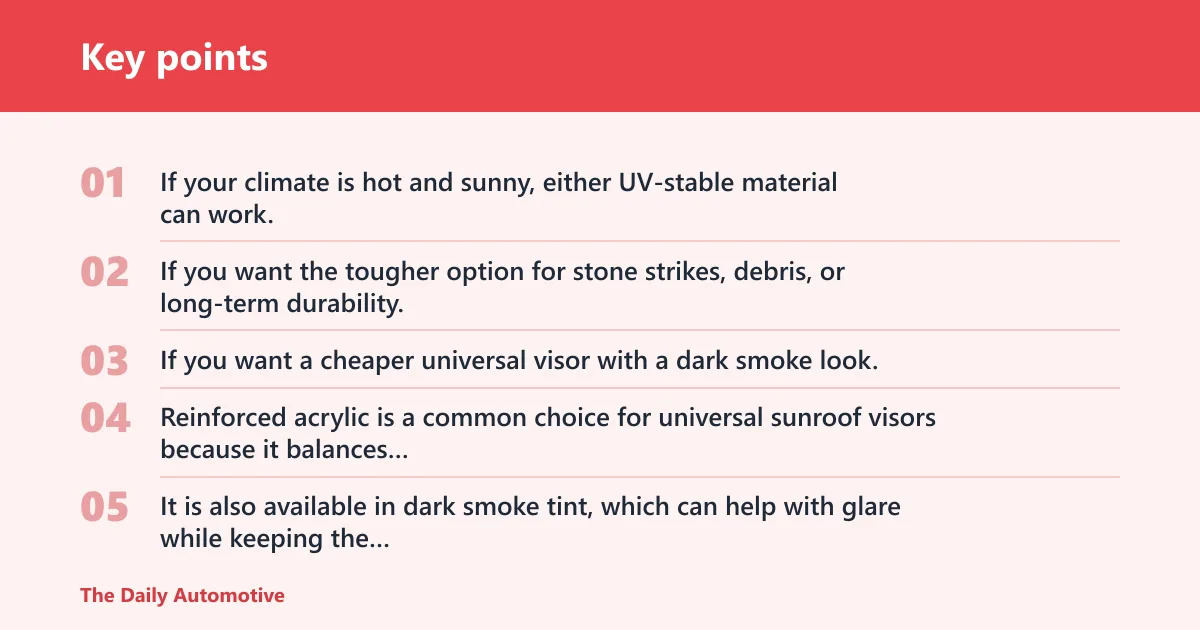
If your climate is hot and sunny, either UV-stable material can work. If you want the tougher option for stone strikes, debris, or long-term durability, polycarbonate has the edge. If you want a cheaper universal visor with a dark smoke look, reinforced acrylic is often the easier buy.
Reinforced acrylic
Reinforced acrylic is a common choice for universal sunroof visors because it balances clarity, appearance, and UV resistance. It is also available in dark smoke tint, which can help with glare while keeping the roofline visually clean.
The tradeoff is impact tolerance. Acrylic is shatter-resistant, but it is still less impact-tough than premium polycarbonate in harsh use. That matters if the visor sits where grit, ice, or branch strikes are likely.
Polycarbonate
Polycarbonate is the premium durability option. It is shatterproof in the way most product listings describe it, and that makes it attractive for owners who want a tougher visor for long-term use.
The drawback is cost and, sometimes, availability. Polycarbonate products are often tied to branded deflectors rather than inexpensive universal pieces, so you may pay more for better impact resistance and a cleaner fit.
Tint, glare, and heat
Dark smoke tint cuts glare and adds privacy. It can also hide the visor visually against a black roof or tinted glass, which is why it shows up so often on universal deflectors.
It does not make the visor invisible, though. A dark tint can still slightly affect visibility through the opening, especially at dusk or in heavy shade. If you drive with the roof cracked open at night, choose a tint level that does not distract you from mirrors or overhead signs.
Sunroof deflector fitment table
This table is the quickest way to avoid the most common fitment mistakes. Measure first, then match the opening to the visor size, material, adhesive sensitivity, and the kind of owner who should skip that setup.
| Opening width/length | Suggested visor size | Best material | Adhesive warning | Who should avoid it |
|---|---|---|---|---|
| About 33 to 36 inches wide | 35.6-inch or 38-inch class | Reinforced acrylic | Needs clean, dry paint and careful centering; heat can soften the bond | Owners with textured paint, old clear coat, or frequent automatic car washes |
| About 36.8 to 41.8 inches inner edge span | 43-inch class | Polycarbonate | Longer tape line must be pressed evenly; partial lift at the ends causes wind noise | Drivers with curved panoramic roofs or roof spoilers close to the opening |
| About 41 to 43 inches | 42.5-inch or 980mm class | Polycarbonate or reinforced acrylic | Temperature swings can stress the adhesive if the roof surface was not fully cleaned | Anyone who cannot park indoors during the first cure period |
| Width close to 36.8 inches or less | 38-inch class | Reinforced acrylic | Too much overhang can cause buffeting and clearance issues when the roof is opened | Vehicles with tight sunroof clearance or raised side rails near the opening |
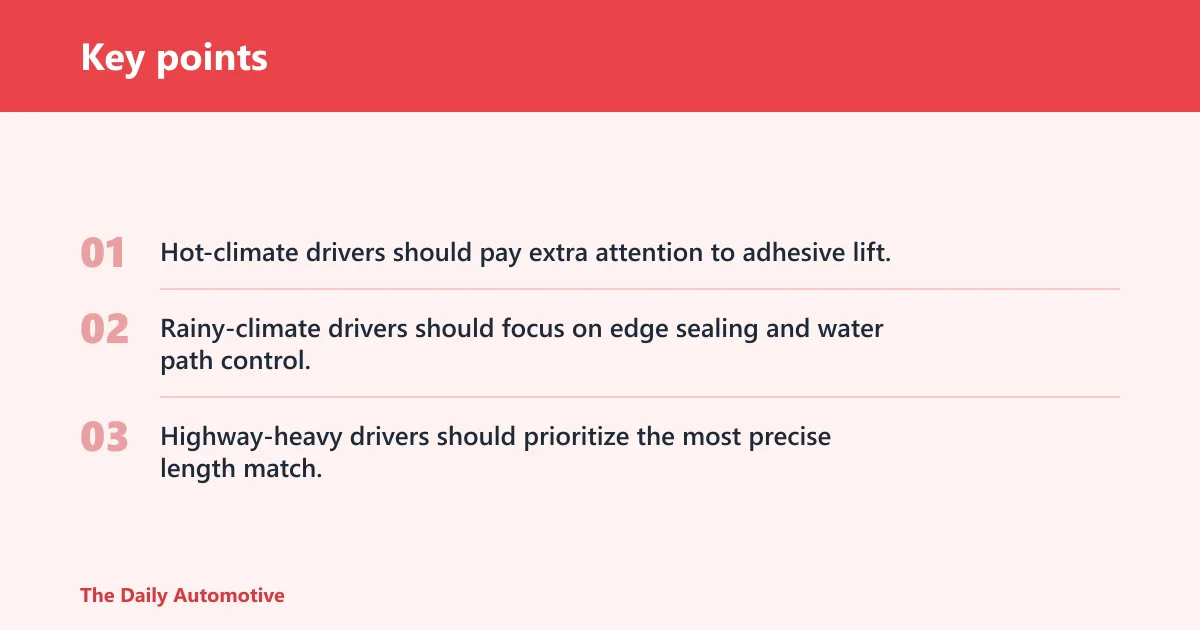
Hot-climate drivers should pay extra attention to adhesive lift. Rainy-climate drivers should focus on edge sealing and water path control. Highway-heavy drivers should prioritize the most precise length match, because wind buffeting and drag show up first at speed.
| Driver type | Best material | Best adhesive approach | Main risk |
|---|---|---|---|
| Hot-climate | Polycarbonate or UV-stable acrylic | High-bond tape on fully cleaned, cool paint | Adhesive softening in heat |
| Rainy-climate | Polycarbonate | Tape with strong edge contact and careful pressure | Water pooling at the rear edge in crosswinds |
| Highway-heavy | Polycarbonate | Tape only if the fit is exact and the roof is flat enough | Buffeting, rattles, and added drag from overhang |
How to install a sunroof wind deflector without drilling
Clean the surface, dry it fully, align the visor before the tape touches paint, and then press it down evenly. That is the core of a no-drill install, and it works only when the roof surface is smooth, the temperature is reasonable, and the adhesive is fresh.
Double-sided automotive adhesive is common on these products. It depends on a clean, dry surface for long-term hold, and many installers use gentle heat to soften the tape during removal or to improve bond consistency in cooler weather.
- Measure the opening and confirm the visor’s stated fit range.
- Wash the roof edge, then remove wax, residue, and road film.
- Dry the contact area completely.
- Test-fit the visor without removing the adhesive liner.
- Peel the backing, align once, and press firmly across the full length.
- Keep the car dry while the adhesive settles.
A common first-timer mistake is installing the visor on a warm panel after a wash, then assuming the bond is secure right away. If the paint still holds moisture or the adhesive is stretched into place, the ends can lift later and create a whistle at speed.
Which one should you buy?
Buy the Tresvendu if you want the simplest universal choice with a stated tape-on install and a basic all-around shape. Buy the ICBEAMER if your opening is smaller and you want a tighter stated fit. Buy the BGQG only if you want a premium-leaning universal visor and are prepared to verify fit carefully. Skip the Bross part unless your Mercedes application matches it exactly.
For budget buyers, the lower-priced universal acrylic pieces usually make more sense than paying extra for a premium visor that still needs exact measurement. For hot climates, choose UV-stable acrylic or polycarbonate and avoid any setup that depends on weak or aged adhesive. For rainy regions, prioritize a fit that follows the roof edge closely, because crosswinds and heavy rain can still push water inward even with a visor installed.
For long highway drives, the safest choice is the closest length match with the least overhang. That is where a model-specific visor often beats a universal one, especially on roofs with rails, spoilers, or a pronounced curve. Suppose your opening measures near 36 inches and the visor is sized for 43 inches. That is a mismatch you should not ignore, because excess length can create buffeting instead of reducing it.
Do not confuse a sunroof visor with an out-channel rain guard. Out-channel rain guards are for side windows, often sold in 4-piece sets, and they fit specific vehicle year ranges; they are not roof-opening parts.
Frequently asked questions
What size sunroof wind deflector do I need?
Use the opening’s width and length, not the vehicle name alone. Common listed sizes include 35.6 inches, 37.8 inches, 42.5 inches, and 43 inches, and the best match is the one that fits within the maker’s stated range without overhang or clearance problems.
Do sunroof deflectors really reduce wind noise?
Yes, but not to zero. They usually reduce wind roar and buffeting most clearly when the roof is cracked open at lower to moderate speeds. If the part is too long, too short, or poorly centered, the noise can return in the form of whistle or turbulence.
Will a sunroof deflector keep rain out when the roof is cracked open?
It helps, but it is not a full seal. A visor can block direct rain and snow, yet crosswinds, heavy rain, and drainage behavior around the opening can still let water reach the edge. A good fit reduces that risk, but it does not eliminate it.
Which is better: acrylic or polycarbonate sunroof deflectors?
Polycarbonate is the tougher material and is the better pick when impact resistance and long-term durability matter most. Reinforced acrylic is still a strong choice for universal visors because it is UV-stable, shatter-resistant, and often available with dark smoke tint at a lower cost.
Are tape-on sunroof deflectors safe at highway speeds?
They can be, if the fit is exact and the surface prep is done correctly. The risk rises when the visor is too long, the roof is curved, or the adhesive was applied to dirty, damp, or heat-softened paint. Fitment matters more than the label says.
How do I install a sunroof wind deflector without drilling?
Wash and dry the roof edge, remove wax or residue, test-fit the visor, then apply the double-sided automotive adhesive once the alignment is correct. Pressure matters, and so does temperature. A clean, dry surface is the difference between a stable bond and edge lift later.
Can a sunroof deflector fit multiple vehicle models?
Yes, universal visors can fit multiple models if the opening size matches the maker’s range. But the roof shape still matters. A part that fits the width may still struggle on a panoramic roof, a curved panel, or a car with rails or spoilers near the opening.
Will a dark smoke tint affect glare and visibility?
Dark smoke tint can cut glare and add privacy, especially in bright sun. It can also reduce how much you see through the opening at dusk or in shaded areas, so the right shade depends on how often you drive with the roof open in low light.
Products related to this article
Sponsored / affiliate links. As an Amazon Associate I earn from qualifying purchases. I may earn additional commission from eligible campaigns.