Best PCV Valves for High-Mileage Cars (2026): We Compared
For high-mileage cars, the best PCV valve is the exact OEM-spec or engine-specific replacement that matches your symptom and crankcase design. If the engine has oil consumption, lean codes, or sludge, avoid the cheapest universal valve. A wrong PCV choice can cause vacuum leaks, oil burning, rough idle, and repeat repairs. This guide explains how to match PCV parts to failure mode, engine layout, and mileage before you buy.
Quick comparison
| Product | Badge | Best for | Price | ||
|---|---|---|---|---|---|
 |
Motorcraft PCV Valve – EV-281Motorcraft | Our pick | PCV valve · OE replacement · Motorcraft | $26.66
Price as of 10 Nov 2026
|
View |
 |
ACDelco 12631624 GM Original Equipment Positive CrankACDelco | Budget pick | PCV valve · GM OE · ACDelco | $10.91
Price as of 10 Nov 2026
|
View |
 |
Dorman 911-115 PCV Diaphragm Repair Kit CompatibleDorman | Also great | PCV diaphragm kit · OE-grade · BMW fit | $33.78
Price as of 10 Nov 2026
|
View |
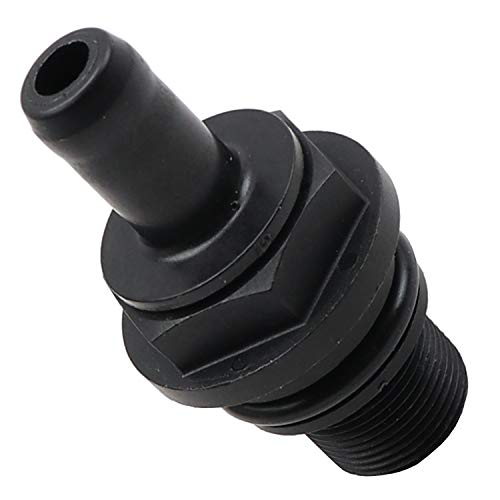 |
Beck/Arnley 0450439 PCV ValveBeck/Arnley | Pair with it | PCV valve · OE replacement · Beck/Arnley | $10.93
Price as of 10 Nov 2026
|
View |
 |
PCV Valve Engine Crankcase Vent Valve Oil SeparatorRBOKO | Upgrade pick | PCV oil separator · VW/Audi fit · RBOKO | $30.99
Price as of 10 Nov 2026
|
View |
Pick the repair path first, then the part. A classic valve, a restricted hose, and an integrated diaphragm module can create similar symptoms, but they do not call for the same replacement.
For older engines with a separate valve, a simple OE-spec valve is often enough. For many modern European and turbo engines, the correct fix may be the valve-cover or oil-separator assembly.
How we chose
This guide is based on manufacturer listing details, published buyer feedback, and symptom patterns that show up on high-mileage engines.
The main filters were engine design match, symptom fit, install complexity, and replacement scope. Cheapest did not rank first by default, because the least expensive part can be the wrong part for the job.
Motorcraft PCV Valve: best for older domestic OE-fit replacements
The Motorcraft EV-281 suits a straightforward, replaceable PCV valve setup where you want an OE-style part and a clean match to the factory design. The listing points to abrasion and corrosion resistance, plus durable materials, which makes sense for a worn engine that sees more blow-by and heat cycling.
Its drawback is the same one that applies to many classic valves: it only solves the problem if the engine actually uses a separate valve and not an integrated diaphragm system. Check the valve cover, hose routing, and intake connection before you buy.
ACDelco GM Original Equipment PCV valve: best for budget OE GM replacement
This ACDelco valve fits buyers who want a low-cost GM OE replacement for a simple PCV layout. The product data calls it GM-recommended, made to GM OE specification, and aimed at quality and durability, which is the right direction for a high-mileage engine with a standard valve-and-hose arrangement.
The honest drawback is scope: it is a valve, not a repair for a cracked hose, clogged inlet, or a valve-cover module. If the system has more than one fault, replacing only this part may leave the symptom untouched.
Dorman PCV diaphragm repair kit: best for select BMW diaphragm failures
This Dorman kit fits the kind of high-mileage engine where the PCV function is built into a diaphragm assembly rather than a simple removable valve. That matters on many modern European designs, because a torn diaphragm can trigger lean operation, idle problems, or crankcase pressure issues without any separate cheap valve to swap.
The drawback is fitment complexity. It is a repair kit for select BMW applications, not a universal answer, so you need the exact engine-specific listing before ordering.
Beck/Arnley PCV Valve: best for rough idle and whistle complaints
The Beck/Arnley valve is a good match when the engine still uses a serviceable valve and the complaint sounds like a stuck-open or noisy PCV issue. The product details point to OE form, fit, and function, and specifically mention rough idle, oil leaks, and whistle from a stuck valve.
The drawback is that those same symptoms can also come from a hose restriction or a diaphragm failure. If the engine has a sealed module, this valve is not the correct repair path.
RBOKO PCV oil separator: best for VW and Audi module replacement
This RBOKO oil-separator replacement targets VW and Audi 1.8T and 2.0T applications where the PCV function is built into a larger crankcase ventilation assembly. The listing says it helps relieve crankcase pressure and includes bolt nuts, which fits the kind of repair that replaces the whole unit rather than a tiny valve insert.
The drawback is obvious: it is application-specific and not a generic fix. If your car uses a separate valve, this part is the wrong purchase.
What is the best PCV valve for a high-mileage car?
The best PCV valve for a high-mileage car is the one that matches the engine’s PCV design and failure mode, not the lowest-priced universal part. On a classic setup, that may be a simple OE-spec valve and fresh hose. On an integrated design, the right fix may be a diaphragm, valve-cover, or oil-separator assembly.
When a basic valve is enough
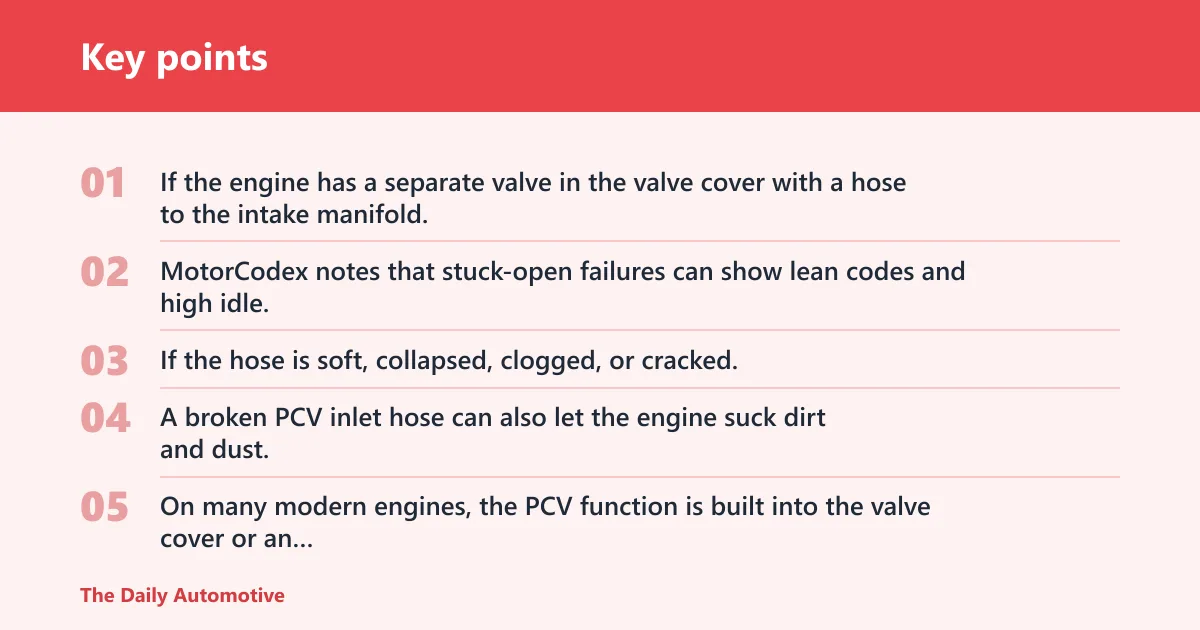
If the engine has a separate valve in the valve cover with a hose to the intake manifold, and the symptoms point to a stuck-open or stuck-closed valve, a direct replacement is often the right move. MotorCodex notes that stuck-open failures can show lean codes and high idle, while stuck-closed failures build crankcase pressure and push oil past gaskets.
When you need hoses, grommets, or the full module
If the hose is soft, collapsed, clogged, or cracked, the valve may be fine and the restriction may still create the fault. A broken PCV inlet hose can also let the engine suck dirt and dust. On many modern engines, the PCV function is built into the valve cover or an oil-separator module, so the repair scope expands beyond the valve itself.
A common first-timer mistake is buying the cheapest valve after seeing a rough idle and a lean code. Suppose a 160,000-mile sedan has a whistle at idle and a P0171 code, but the hose is hardened and the inlet passage is coated with sludge. A new valve alone may not fix the air leak or the flow restriction.
Classic PCV valve: best for older engines
Choose a classic replaceable valve when the engine uses a separate one-way metered valve that routes blow-by gases to the intake manifold. PCV valves appeared in the late 1950s and early 1960s, and many older domestic and import engines still use that simple service part.
Typical failure signs: stuck open or stuck closed
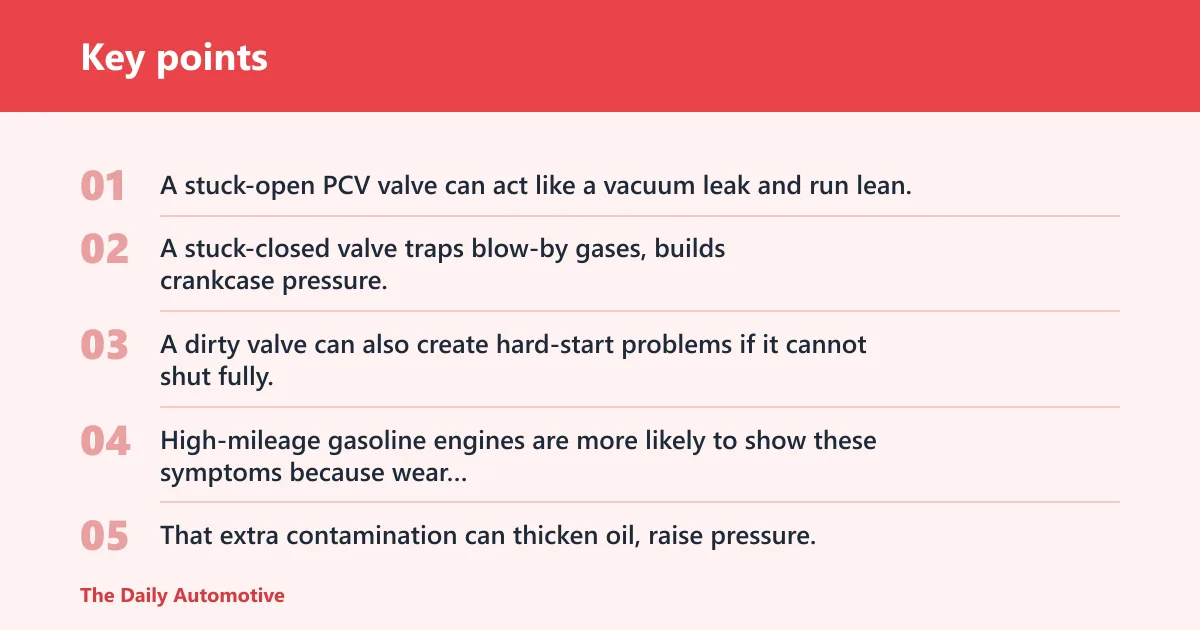
A stuck-open PCV valve can act like a vacuum leak and run lean. A stuck-closed valve traps blow-by gases, builds crankcase pressure, and can push oil past seals and gaskets. A dirty valve can also create hard-start problems if it cannot shut fully.
High-mileage gasoline engines are more likely to show these symptoms because wear increases blow-by gases, the combustion gases that slip past piston rings and into the crankcase. That extra contamination can thicken oil, raise pressure, and worsen seepage at aging gaskets.
What to replace besides the valve
Check the PCV hose, the fresh-air inlet, and the grommet or connector at the valve cover. A hose that is restricted, soft, or cracked can cause the same complaint as a bad valve. The fresh-air inlet must stay clear so the crankcase can breathe without pulling dirt into the engine.
For classic valves, preventive replacement is often discussed around 30,000 to 60,000 miles, with inspection at every oil change. That interval is a rule of thumb, not a guarantee, and a worn engine may need attention sooner if oil consumption or sludge has already started.
Integrated diaphragm module: best for modern engines
Choose the module, not a loose valve, when the crankcase ventilation system is built into the valve cover or an oil-separator assembly. The same source notes that many modern engines, especially European and turbo designs, use that layout. The part can look like a cover or separator, but it is doing the PCV job.
Common failure mode: torn diaphragm
Integrated systems often fail when the diaphragm tears. MotorCodex links torn diaphragms to P0171-family lean codes, which matters because the symptom can look like a generic vacuum leak even though the fault is inside the module.
That is why the cheapest replacement strategy fails here. If the diaphragm is built into the cover or separator, the correct repair is often the full assembly, not a standalone valve.
Why this is often a full assembly job
These systems can combine the valve, separator, and internal passages into one sealed unit. If the unit cracks, warps, or tears, you may not have a serviceable subcomponent. In that case, replacing the entire assembly is the reliable fix, even if the price is much higher than a classic valve.
PCV symptom matrix
| Engine design type | Symptom pattern | Likely failure | Quick test | Recommended part to replace | Urgency |
|---|---|---|---|---|---|
| Classic valve with hose to intake manifold | Whistling, hissing, rough or high idle, lean code, possible P0171/P0174 | Stuck-open PCV valve or vacuum leak at the hose/grommet | Shake the valve for a rattle; check for strong vacuum and inspect hose cracks | Replace the PCV valve first, then the hose or grommet if damaged | High if idle quality or lean codes are present |
| Classic valve with inlet restriction | Oil leaks, pressure at the dipstick, sludge, oil consumption, occasional rough idle | Stuck-closed valve or clogged hose/inlet passage | Check whether the oil cap is hard to lift at idle and inspect the fresh-air inlet for blockage | Replace the valve, clean or replace the hose, and clear the inlet passage | High if seals are leaking or oil is pushed out |
| Integrated diaphragm or oil-separator module | P0171-family lean code, whistle, unstable idle, oil consumption, crankcase pressure | Torn diaphragm or failed module seal | Listen for a whistle and check for abnormal vacuum at the oil cap or dipstick tube | Replace the valve-cover or oil-separator assembly | High, especially on turbo or European engines |
Can a bad PCV valve cause oil leaks?
Yes. A clogged PCV system can cause oil leakage by building crankcase pressure, and a stuck-closed valve can push oil past gaskets and seals. High-mileage engines show it first because worn rings, aging seals, and existing seepage make them less forgiving of extra pressure.
Crankcase pressure and gasket seepage
Blow-by gases contaminate the crankcase and raise pressure if they are not routed out correctly. That pressure looks for the weakest exit point, which is often a valve cover gasket, cam seal, or dipstick tube. If the engine already leaks a little, a PCV fault can turn seepage into a wet mess.
Oil cap and dipstick checks that point to pressure issues
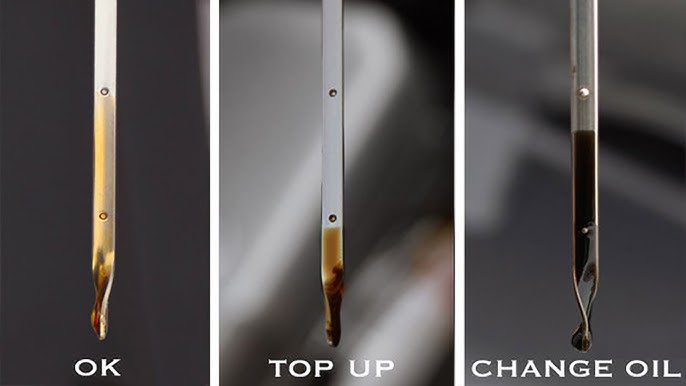
With the engine idling, an oil cap that lifts with unusual force, a dipstick that huffs pressure, or obvious pulsing from the fill hole points toward a ventilation problem. Those checks do not prove one exact failure, but they do separate pressure issues from a simple top-end noise complaint.
Picture a 14-year-old V6 with fresh oil but a damp valve cover and a dipstick that puffs at idle. If the hose is clear yet the cap still shows crankcase pressure, the problem is more likely the PCV valve or module than the gasket itself.
Do all cars have a PCV valve?
No. All gasoline engines need crankcase ventilation, but not all use a separate replaceable PCV valve. Some have a classic valve, while many modern engines use a diaphragm or separator module built into the valve cover or oil-separator housing.
Vehicles with a separate replaceable valve
Older engines and many simpler designs use a separate valve in the valve cover with a hose to the intake manifold. Those are usually the easiest to inspect, test, and replace. The same source says classic valves can be checked by shaking them and looking for a rattle.
Vehicles with a diaphragm or separator module
Modern European and turbo engines often hide the PCV function inside a larger assembly. In those cars, the right fix may be a module or cover, not a valve. That is why model-specific identification matters before you order parts.
Why the fresh-air inlet still matters
The system is not only the valve. It also needs a clean fresh-air inlet so the crankcase can breathe without pulling dirt and dust into the engine. If that inlet is blocked, the system can create vacuum problems even when the valve itself is fine.
Start with the design on the car, because the basic test depends on whether the engine has a classic valve or an integrated module. On a separate valve, a shake test and a vacuum check can point you in the right direction. On a diaphragm system, look for signs of a torn seal or abnormal crankcase vacuum.
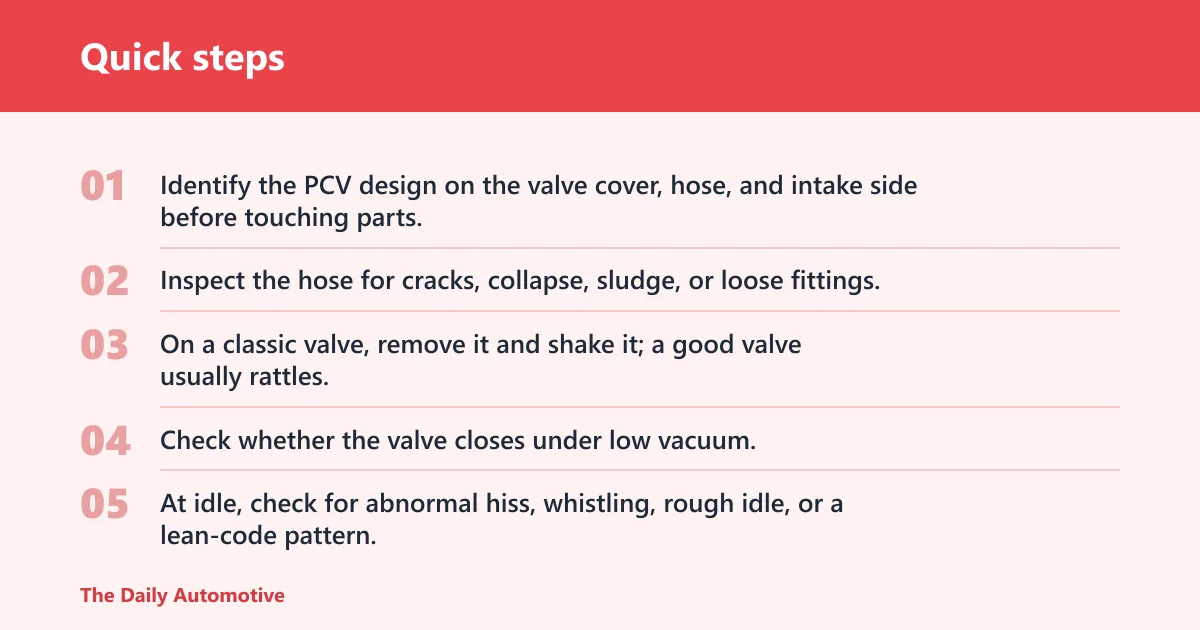
- Identify the PCV design on the valve cover, hose, and intake side before touching parts.
- Inspect the hose for cracks, collapse, sludge, or loose fittings.
- On a classic valve, remove it and shake it; a good valve usually rattles.
- Check whether the valve closes under low vacuum, including starting or low-vacuum conditions.
- At idle, check for abnormal hiss, whistling, rough idle, or a lean-code pattern.
- Inspect the fresh-air inlet so you do not miss a restriction or a dirty passage.
What the symptoms usually mean
Hissing or whistling often points to an air leak or a valve that is stuck open. Rough high idle and lean codes such as P0171 or P0174 fit that same pattern. P0507 can appear when idle speed rises above expected, and P0300 may show up if the mixture gets unstable enough to misfire.
Suppose a car idles fine cold but flares high once warm, then sets P0171. If the PCV hose is intact and the valve rattles freely, the fault may be a vacuum leak elsewhere or a failed diaphragm in an integrated system. That is why symptom pattern matters more than a parts-store guess.
Why to replace PCV valve
Replace the PCV valve to restore crankcase control before pressure or vacuum problems spread to seals, gaskets, idle quality, and emissions readiness. A dirty or stuck valve can cause rough idle, lean codes, hard starts, and oil leaks. In a high-mileage engine, waiting usually costs more than the valve.
Many valves are inexpensive and easy to replace, especially on classic systems. But the total repair may include the hose, inlet filter, grommet, or full module, depending on design.
Inspect the PCV system at every oil change. That is the safest routine because blow-by and sludge do not follow a fixed calendar.
Frequently asked questions
What is a PCV valve for?
A PCV valve routes blow-by gases from the crankcase back into the intake manifold in a controlled way. That reduces pressure, limits contamination of the oil, and helps the engine avoid seal damage. On a healthy system, it meters flow instead of letting the crankcase vent freely or seal itself off.
Can you run car without PCV valve?
You can make an engine run without the valve in some cases, but that does not mean it is safe or correct. Without proper ventilation, crankcase pressure can rise, oil leaks can worsen, and vacuum leaks can upset idle and fuel trims. Follow the vehicle and service manual.
Do I need a PCV valve?
If your engine uses a separate valve, yes, it needs the correct PCV part or an equivalent module to control crankcase flow. If the design uses an integrated separator or diaphragm, the system still needs that function even though there may be no standalone valve to buy. The layout decides the part.
Which PCV valve symptoms mean I need replacement now?
If the engine is building crankcase pressure or the oil cap test looks abnormal, do not keep driving it as-is.
Can a bad PCV valve cause oil leaks on an older engine?
Yes. A clogged or stuck-closed PCV system builds crankcase pressure and can push oil past old gaskets and seals. That is common on high-mileage gasoline engines because wear, blow-by, and aged rubber already reduce the margin. Fix the ventilation problem before resealing the same leak twice.
Do all vehicles have a pcv valve?
No. All gasoline engines need crankcase ventilation, but many modern engines use an integrated diaphragm, valve-cover, or oil-separator design instead of a separate valve. The fresh-air inlet still matters either way, because a blocked inlet can create vacuum problems and pull dirt into the engine.
How often should you replace a PCV valve?
Inspect it at oil changes and replace classic valves on a preventive basis around 30,000 to 60,000 miles if the design calls for a serviceable valve. Integrated units are usually replaced on failure, not on a simple mileage schedule. High-mileage engines need closer attention if oil consumption or sludge is already present.
Products related to this article
Sponsored / affiliate links. As an Amazon Associate I earn from qualifying purchases. I may earn additional commission from eligible campaigns.