How to Know If Your Car Is Low on Oil: 5 Warning Signs
Your car is low on oil if the dashboard oil pressure light turns on, the engine ticks or knocks, you smell burning oil, or the dipstick reads below the “MIN” mark — check the dipstick to confirm rather than waiting for a warning light. Driving even a short distance on critically low oil can let metal parts grind together, and a seized engine typically costs $2,000–$10,000 to replace. This guide covers the real warning signs, the correct way to check your oil (dipstick or electronic sensor), and what to do next.
Quick Answer
Low oil shows up as an oil pressure warning light (a red oil-can icon — different from the check engine light), a ticking or knocking noise, a burning smell, or blue-gray exhaust smoke. Confirm it by checking the dipstick when the engine is off and the car is on level ground: the oil should sit between the MIN and MAX marks. If it’s below MIN, add oil immediately and have the car inspected for a leak.
Signs Your Car Is Low on Oil
Oil is what keeps your engine’s moving metal parts from grinding against each other. When the level drops too far, you’ll usually get more than one warning sign at once — here’s what to actually watch for.
- The oil pressure warning light turns on. This is a red oil-can icon, not the check engine light, and it means oil pressure — not just level — has already dropped. Treat it as urgent: pull over and shut the engine off as soon as it’s safe.
- Knocking or ticking noises from the engine. Without enough oil, metal components rub and knock against each other instead of gliding on a lubricating film. The noise is usually most noticeable right after startup or under acceleration.
- A burning oil smell inside the cabin. Low oil lets the engine run hotter than it should, which can scorch oil residue on hot engine parts — you’ll often smell it before you see any other symptom.
- Blue or gray smoke from the exhaust. This usually points to oil burning inside the combustion chamber, which can happen once levels get low enough that oil is no longer sealing properly around worn parts.
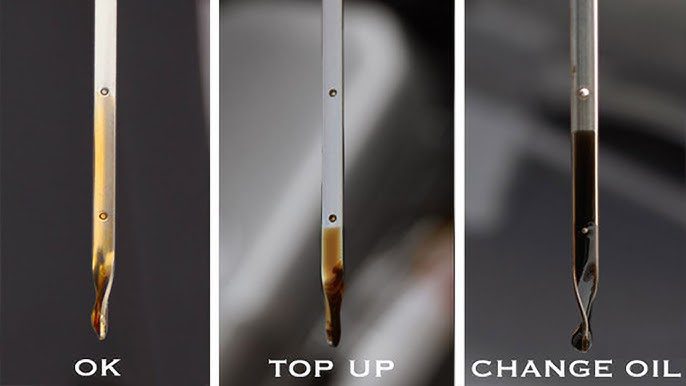
- The dipstick reads below the “MIN” or lower crosshatched mark. This is the only sign that tells you the actual level, rather than just hinting that something’s wrong — which is why checking it directly matters more than waiting on a light.
Any single one of these can have another cause, but two or more together — especially a warning light plus a noise or smell — is a strong signal to check your oil right now, not at your next service appointment. If you’re also noticing exhaust smoke specifically, it’s worth reading our guide on whether your car is burning oil for what to do about ongoing consumption, not just a one-time low reading.
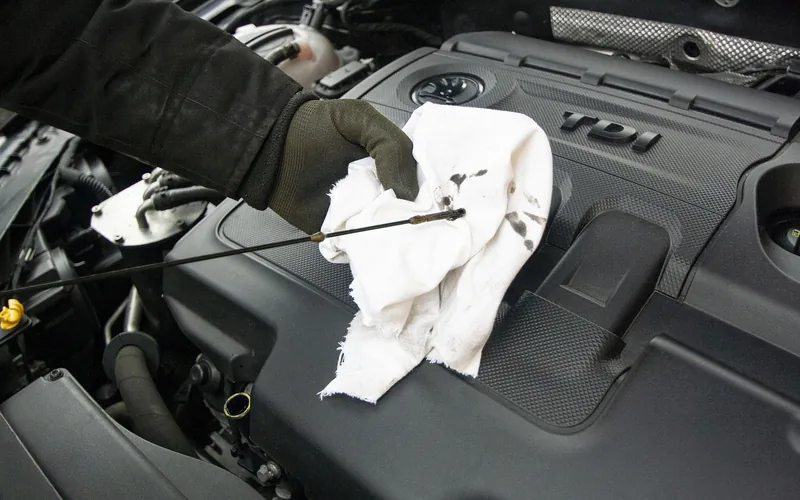
How to Check Your Car’s Oil Level the Right Way
According to Consumer Reports, the dipstick is still the most reliable way to check your oil, and it’s worth doing at every other gas fill-up rather than only when a light comes on.
- Park on level ground: An incline throws off the reading even if the oil level is actually fine.
- Turn off the engine: Most vehicles need a few minutes with the engine off and cool so oil can drain back into the pan — though some manufacturers specify checking with a warm engine instead, so confirm in your owner’s manual.
- Open the hood and find the dipstick: It usually has a bright yellow, orange, or red handle with an oil-can symbol.
- Pull it out and wipe it clean: Use a rag or paper towel to remove all the oil so your next reading is accurate.
- Reinsert it fully, then pull it out again: Push the dipstick all the way back into its tube before taking the real reading.
- Read the level and the color: Oil should sit between the MIN and MAX marks (or within the crosshatched zone) and look amber to brown. Milky or gray oil signals coolant contamination, not just a low level — that’s a separate mechanical problem.
Getting the engine temperature wrong is a common mistake, and it changes your reading more than most people expect — our guide on checking oil hot vs. cold breaks down exactly when each method applies. And if the oil itself looks off rather than just low, see what healthy engine oil should actually look like.
Do Newer Cars Still Have a Dipstick?
Not always. A growing number of newer vehicles use an electronic oil level sensor instead of — or in addition to — a physical dipstick. The sensor works like an electronic dipstick: it reports the level to the engine computer, which triggers a “low oil” warning on the dashboard or infotainment screen instead of asking you to pull a metal rod. If your owner’s manual doesn’t mention a dipstick location, check the vehicle settings menu or dashboard display for an oil level readout before assuming your car has none at all. These sensors can fail and give a false reading, so if the light contradicts what a physical dipstick shows (on cars that have both), trust the dipstick.
Best Oil Top-Off Kit Pick
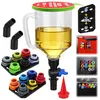
18-Piece Engine Oil Funnel Kit with Adapters
A flexible funnel with 12 adapters that fit most engine fill necks, so you can top off oil without spilling it down the block.
- Best for: topping off oil the moment you confirm the dipstick reads low
- Why we picked it: adapters cover most fill-neck shapes, so it works across different vehicles
- Main drawback: plastic adapters can crack if forced onto the wrong-size neck
Compare more oil-check tools
 Option 1 Replacement Engine Oil Dipstick
|
 Option 2 Oil Pressure Tester Gauge Kit
|
 Option 3 ANCEL AD310 OBD2 Scanner
|
As an Amazon Associate we earn from qualifying purchases.
What Happens If You Keep Driving on Low Oil?
Oil separates moving metal parts with a thin protective film. Once that film breaks down, parts rub directly against each other, generating friction and heat that the engine was never designed to handle. Left unaddressed, this can cause the engine to stall or fail to restart, and in more serious cases it can lead to a full engine seizure — a car overheating from low oil specifically is common enough that it’s worth knowing the exact signs to watch for.
📊 A seized engine caused by running too low on oil typically costs $2,000–$10,000 to replace, or $2,500–$8,000+ to rebuild — Source: Yahoo Autos, 2026
“If the oil light in your car is on, the best course of action would be to stop driving and check your vehicle’s oil level immediately.”
— CarParts.com, on the oil pressure warning light
That urgency is also why it matters that the oil pressure light and the check engine light are not the same thing. The check engine light can trigger for dozens of unrelated reasons — an oxygen sensor, an emissions issue, a loose gas cap — and doesn’t demand you pull over immediately. The oil pressure light (usually a small red oil-can icon) means oil pressure has already dropped below a safe threshold right now, and by the time it comes on, some wear may have already started. If both lights are on together, treat it as the more urgent case.
Low oil also makes the engine work harder to overcome added internal friction, which shows up as worse fuel economy long before a seizure ever happens — one more reason a quick dipstick check pays for itself.
How Often Should You Check Your Car’s Oil?
Consumer Reports recommends checking your oil at every other fill-up rather than waiting for a dashboard light. Your owner’s manual is still the final word on your specific vehicle — some newer engines go longer between checks, while older or high-mileage engines that burn oil need more frequent attention. Driving habits matter too: hard acceleration and towing burn through oil faster than steady highway miles, and older engines with worn seals typically consume more oil than newer ones.
Skipping this check is more common than most drivers realize. If you’re not sure exactly when to check — before a trip, after a long drive, or on a set schedule — our timing guide covers the specifics for different driving situations.
Choosing the Right Oil When You Top It Off
If your dipstick reads low, add oil that matches what your manual specifies — not just whatever’s on the shelf. Synthetic oil handles extreme temperatures better and is the standard recommendation for most modern engines. Conventional oil still works fine in many older, simpler engines. High-mileage oil (formulated for engines past roughly 75,000 miles) contains seal conditioners that can reduce minor leaks and oil burn. Synthetic blends split the difference in both performance and price.
Climate affects the right viscosity, too. The number before the “W” on the bottle (like the 5 in 5W-30) describes cold-flow performance, and the number after it describes how the oil behaves at operating temperature. Colder climates generally call for a lower first number; consistently hot climates can tolerate a higher one. Once you’re topped up, if you notice the oil itself looking milky, gritty, or unusually dark rather than just low, that’s a different problem — see whether topping off is enough or if a full change is overdue. And if you drive an EV, none of this applies the same way — electric motors have different lubrication needs entirely.
Frequently Asked Questions
How can I check my car’s oil level?
Park on level ground, then locate and pull out the dipstick (checking with the engine off and cooled a few minutes, unless your manual says otherwise). Wipe it clean, reinsert it fully, then pull it out again. The oil should sit between the MIN and MAX marks and look amber to brown.
What are the signs of low oil in a car?
The most common signs are an oil pressure warning light, knocking or ticking engine noises, a burning oil smell, and blue or gray exhaust smoke. Any of these on their own is worth checking; two or more together means check the dipstick right away.
Can low oil damage my engine?
Yes. Oil lubricates moving engine parts and carries heat away from them. Without enough of it, metal components can wear rapidly or fuse together in a seizure, and a seized engine typically costs $2,000–$10,000 to replace according to Yahoo Autos. Catching low oil early is far cheaper than repairing the damage afterward.
How often should I check my car’s oil?
Consumer Reports recommends checking at every other gas fill-up. Check your owner’s manual for your specific vehicle, and check more often if your car is older, has high mileage, or has a known oil-consumption issue.
Do all cars still have an oil dipstick?
No. Many newer vehicles use an electronic oil level sensor instead of, or alongside, a physical dipstick. It works like an electronic dipstick, reporting the level to a dashboard or infotainment display rather than requiring you to pull a rod. Check your owner’s manual or vehicle settings menu if you can’t find a dipstick.
Is the oil pressure light the same as the check engine light?
No, and the difference matters. The check engine light can mean dozens of things and usually isn’t an emergency. The oil pressure light is a distinct red oil-can icon that means oil pressure has already dropped dangerously low — treat it as urgent and stop driving as soon as it’s safe to check.
Regular oil checks are one of the cheapest habits you can build into your driving routine. A light, a noise, a smell, or a low dipstick reading are all your car telling you the same thing — check the oil before it becomes a repair bill instead of a top-off.
Products related to this article
Sponsored / affiliate links. As an Amazon Associate I earn from qualifying purchases. I may earn additional commission from eligible campaigns.