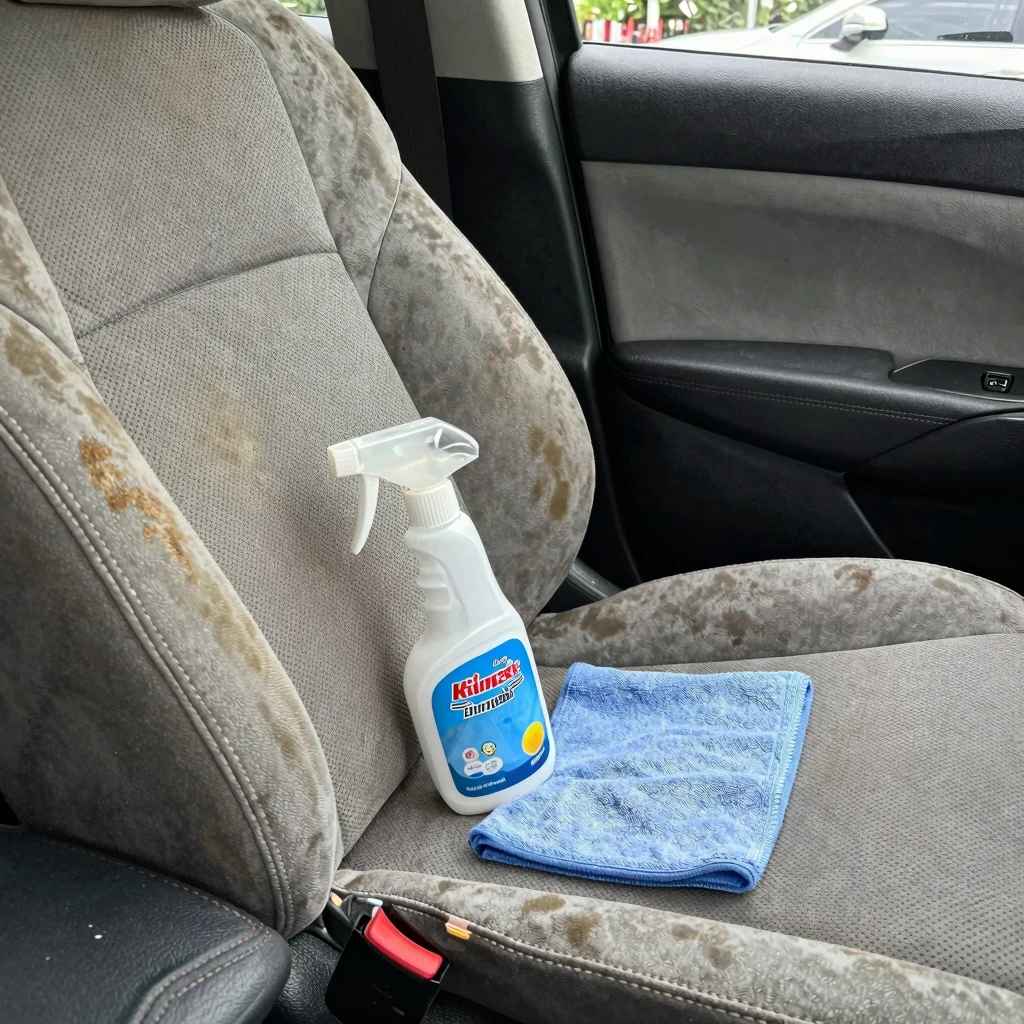
Best Products To Clean And Restore Car Seats
Finding the right stuff to make your car seats look great again can feel like a puzzle, especially if you’re new to it. You see so many options, and it’s hard to know what actually works. But don’t worry, we’re here to make it super simple for you.
We’ll walk through everything step-by-step so you can get those seats looking fantastic. Get ready to learn about the Best Products to Clean and Restore Car Seats and how easy it can be.
Choosing The Best Products To Clean And Restore Car Seats
Picking the right cleaning and restoring products for your car seats is key to getting great results without causing damage. Different seat materials need different types of care. Using the wrong cleaner can sometimes make stains worse or even harm the material.
This section will help you understand what to look for so you can choose wisely.
Understanding Car Seat Materials
Most car seats are made from either fabric (cloth) or leather. Each type needs a specific approach and specialized cleaners to avoid damage. Knowing your seat material is the very first step before you buy any product.
This knowledge prevents costly mistakes and ensures effective cleaning.
Fabric Car Seats
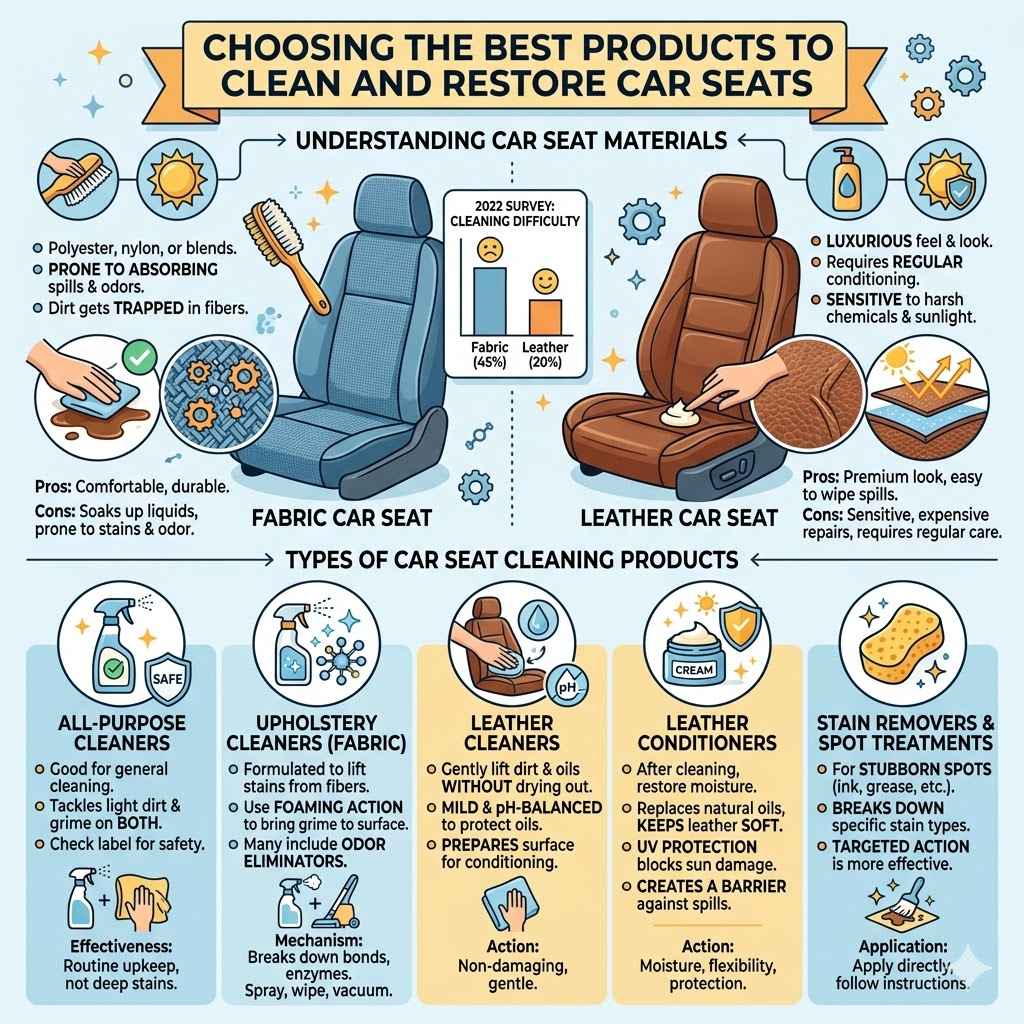
Fabric seats are common and can be made from materials like polyester, nylon, or blends. They are prone to absorbing spills and odors. Dirt and grime can easily get trapped in the fibers.
This makes them a target for stains that can be tough to remove.
Pros: Generally comfortable and less prone to cracking than leather. They also offer a warmer feel. Fabric seats can be very durable if maintained properly.
Cons: They soak up liquids easily, leading to tough stains and potential mold growth. Odors can linger. They are also more susceptible to wear and tear from friction.
Leather Car Seats
Leather seats offer a luxurious feel and look. However, they require regular conditioning to prevent drying out and cracking. Leather is also sensitive to harsh chemicals and direct sunlight, which can degrade its quality over time.
Pros: Look and feel premium. They are generally easy to wipe clean of surface spills. High-quality leather can be very long-lasting.
Cons: Can be expensive to repair or replace. Susceptible to cracking, fading, and drying out if not properly cared for. Requires specific cleaning and conditioning products.
A 2022 survey found that 45% of car owners reported difficulty cleaning fabric car seats compared to 20% for leather. This highlights the need for specific knowledge about materials.
Types Of Car Seat Cleaning Products
There are several categories of products designed to clean and restore car seats. Each serves a distinct purpose, from tackling tough stains to protecting the material.
All-Purpose Cleaners
These are designed for general cleaning. They can tackle light dirt and grime on both fabric and leather. Always check the label to ensure it’s safe for your specific seat material.
Some are pH-neutral, making them gentler.
Effectiveness: Good for light cleaning and maintenance. Not ideal for deep stains or heavy damage. They are a good starting point for routine upkeep.
Usage: Spray on a cloth, then wipe the surface. For fabric, you might need to lightly agitate. Always test in an inconspicuous area first.
Upholstery Cleaners (Fabric Specific)
These cleaners are formulated to lift dirt and stains from fabric fibers. They often use foaming action to bring grime to the surface. Many also include odor eliminators.
Mechanism: They work by breaking down the bonds between dirt and the fabric. Some use enzymes to break down organic stains. Foaming action helps lift the mess.
Application: Typically sprayed onto the fabric and then wiped away with a clean cloth or vacuumed. Some require light scrubbing with a brush.
Leather Cleaners
Leather cleaners are mild and pH-balanced to avoid stripping natural oils from the leather. They gently lift dirt and oils without drying out the material. This is crucial for maintaining leather’s suppleness.
Gentle Action: Formulated to be non-damaging. They clean without harsh chemicals that can cause cracking. This preserves the leather’s look and feel.
Prepares for Conditioning: Cleaning is the first step before applying leather conditioners. A clean surface allows the conditioner to penetrate better.
Leather Conditioners
After cleaning, leather needs conditioning to restore moisture and flexibility. Conditioners protect the leather from UV rays and prevent it from becoming dry and brittle. Regular conditioning extends the life of leather seats significantly.
Moisture Replenishment: Replaces oils lost over time. This keeps the leather soft and prevents cracks. It mimics the natural oils that keep skin healthy.
Protection: Many conditioners contain UV blockers. This helps prevent fading and damage from sun exposure. They also create a barrier against spills.
Stain Removers and Spot Treatments
For stubborn spots, specialized stain removers are essential. These products are designed to break down specific types of stains, like ink, grease, or dye transfer. Using the right spot remover can save your seats from permanent marks.
Targeted Action: Formulated for specific stain types. For example, an ink remover works differently than a grease remover. This targeted approach is more effective.
Usage: Apply directly to the stain. Follow product instructions carefully, as some require dwell time or light agitation.
Top Products To Clean And Restore Car Seats
Selecting the right products can make a world of difference in how your car seats look and feel. Here, we highlight some of the most effective options available. We’ll cover products for different seat types and common issues you might face.
Best Overall Cleaners For Fabric Seats
Fabric seats are prone to spills and wear. Finding a cleaner that lifts dirt without damaging fibers is important. These products excel at bringing life back to tired fabric upholstery.
Meguiar’s Interior Detailer
This is a highly-regarded product for general interior cleaning. It’s safe for most surfaces, including fabric. It leaves a clean, natural look without greasy residue.
It also offers some UV protection, which is a bonus for car interiors.
Why it’s great: Versatile and effective for everyday dirt and grime. It’s easy to use and doesn’t require extensive rinsing. Many users report it restores the original look of fabric.
Chemical Guys offers many specialized car care products, and their Fabric Clean is a standout. It’s designed to tackle stains and dirt in automotive fabrics. It works by lifting embedded grime and leaving the fabric smelling fresh.
Why it’s great: Powerful on tough stains. It effectively removes odors often associated with fabric seats, like pet smells or spilled drinks. It’s a go-to for deeper cleaning needs.
Griot’s Garage Interior Cleaner
This cleaner is known for its gentle yet effective formula. It can be used on a variety of interior surfaces, including fabric seats. It’s good at removing general dirt and light stains.
Why it’s great: Safe for most fabrics and leaves no harsh residue. It’s a reliable choice for regular cleaning and maintenance of fabric upholstery.
Top Leather Cleaners And Conditioners
Leather seats require specialized care to maintain their softness and prevent cracking. These products are formulated to clean gently and nourish the leather.
Lexol Leather Conditioner
Lexol is a trusted name in leather care. Their conditioner penetrates the leather to restore moisture and flexibility. It helps prevent drying, cracking, and fading.
Why it’s great: It’s a deep conditioner that leaves leather feeling soft and supple. It doesn’t leave a greasy film, which is common with some other conditioners. It’s also reasonably priced for its quality.
Sample Scenario: Imagine a driver who often parks in the sun. Their leather seats start to feel dry and look a bit dull. Applying Lexol Leather Conditioner once a month helps restore that new car leather feel and protects against sun damage.
Mothers Leather Wash and Conditioner
This is a two-in-one product that cleans and conditions leather in a single step. It’s designed to be mild enough not to strip essential oils while effectively removing dirt and grime.
Why it’s great: Convenience of a combined cleaner and conditioner. It’s effective for routine maintenance and leaves a pleasant, clean scent. It helps maintain the natural look of the leather.
Weiman Leather Cleaner and Conditioner
Weiman offers a strong product for revitalizing leather. It cleans away dirt and grime while also conditioning to protect the leather. It helps restore the natural shine and feel of leather surfaces.
Why it’s great: It provides a good balance of cleaning power and conditioning. It’s effective for refreshing older or neglected leather seats. It leaves a protective barrier against future stains.
Specialty Products For Tough Stains And Restoration
Sometimes, basic cleaners aren’t enough. For deeply set stains or faded upholstery, specialized products are your best bet. These are designed for specific problems and can bring seats back from the brink.
303 Automotive Fabric & Carpet Cleaner
This is a highly-rated cleaner for fabric upholstery and carpets. It’s known for its ability to tackle a wide range of stains, from food spills to pet messes. It works by lifting stains from deep within the fibers.
Why it’s great: It’s effective on many difficult stains. It’s also pH-neutral and safe for most automotive fabrics, meaning it won’t cause discoloration or damage.
Adam’s Polishes Interior Detailer
While an interior detailer, Adam’s is often praised for its stain-removing capabilities on fabric. It’s a spray-on, wipe-off product that makes cleaning less of a chore. It also leaves surfaces protected and looking sharp.
Why it’s great: Easy to use for quick stain removal and general cleaning. It leaves a streak-free finish and provides a subtle protection layer. It’s good for light to moderate stain issues.
CarGuys Leather Restorer
This product goes beyond just conditioning. It’s designed to help restore the look and feel of worn, faded, or slightly damaged leather. It fills in minor cracks and rejuvenates the color.
Why it’s great: It offers a more advanced restoration than basic conditioners. It can significantly improve the appearance of older leather. It provides a durable, protective finish.
Case Study: A 15-year-old car had leather seats with deep creases and faded color. After applying CarGuys Leather Restorer three times over a month, the creases became less noticeable, and the color was much more uniform, giving the interior a refreshed look.
How To Use Best Products To Clean And Restore Car Seats
Even with the best products, proper technique is essential for achieving excellent results. This section will guide you through the process of cleaning and restoring your car seats effectively and safely.
Preparation Is Key
Before you start cleaning, ensure you have everything you need. Good preparation prevents you from having to stop midway. It also makes the entire process smoother and more efficient.
Clear the Area: Remove any personal items, floor mats, or trash from the car. This gives you full access to the seats and prevents accidental damage to belongings.
Vacuum Thoroughly: Use a vacuum cleaner with crevice attachments to remove all loose dirt, dust, and debris from the seats and surrounding areas. Get into every seam and crevice. This step is crucial as loose grit can cause scratching during the cleaning process.
Gather Your Supplies: Have your chosen cleaning products, microfiber cloths, brushes (soft-bristled for leather, firmer for fabric agitation), a spray bottle with water, and a bucket ready.
Cleaning Fabric Car Seats Step-By-Step
Fabric seats require a methodical approach to lift dirt without soaking the material too much, which can lead to mildew.
Test the Cleaner: Always test your chosen fabric cleaner on an inconspicuous area of the seat first. This is usually the underside or a hidden seam. Wait for it to dry to ensure it doesn’t cause discoloration or damage.
Apply the Cleaner: Lightly spray the fabric cleaner onto the stained or soiled area. Do not oversaturate the fabric. Work in small sections to avoid the cleaner drying before you can work on it.
Agitate Gently: Use a soft-bristled brush or a microfiber cloth to gently agitate the cleaner into the fabric. This helps lift the dirt and stains from the fibers. For tougher stains, you might need slightly firmer pressure or a dedicated stain remover.
Blot and Wipe: Use a clean, damp microfiber cloth to blot and wipe away the loosened dirt and cleaner. Rinse the cloth frequently in clean water. Continue blotting until most of the moisture and residue are removed.
Drying: Allow the seats to air dry completely. Open the car doors or windows to promote ventilation. You can also use a fan to speed up the drying process.
Avoid using heat, as it can sometimes set remaining stains.
Example Scenario: Coffee spill on a light-colored fabric seat. First, blot up as much liquid as possible. Then, apply fabric cleaner, gently agitate, and blot again with a damp cloth.
Repeat if needed. Ensure thorough drying.
Restoring Leather Car Seats
Leather care involves both cleaning and conditioning to maintain its look and longevity.
Test the Leather Cleaner: Similar to fabric, test any leather cleaner in a hidden spot. Ensure it doesn’t alter the color or texture of the leather.
Clean the Leather: Spray a small amount of leather cleaner onto a microfiber cloth. Gently wipe down the leather seats. Work in sections, cleaning the entire surface.
For stubborn dirt, a very soft leather brush can be used.
Wipe Off Residue: Use a separate, clean, damp microfiber cloth to wipe away any cleaner residue. Ensure the leather is clean and dry before applying conditioner.
Apply Leather Conditioner: Apply a small amount of leather conditioner to a clean applicator pad or microfiber cloth. Work it into the leather using gentle, circular motions. Ensure you cover the entire seat surface evenly.
Buff and Allow to Dry: Let the conditioner penetrate for a few minutes. Then, use a clean, dry microfiber cloth to buff off any excess product. This will leave the leather with a natural sheen and a soft feel.
Allow the seats to air dry completely.
Important Note: Do not use household cleaners or products not specifically designed for automotive leather. These can contain harsh chemicals that dry out and crack the leather.
Dealing With Specific Issues
Different problems require different solutions.
Pet Hair: For fabric seats, a stiff brush or a specialized pet hair removal tool can help lift embedded hair. For leather, a damp microfiber cloth often works well to pick it up.
Ink Stains: For fabric, specialized fabric stain removers are best. For leather, try a leather ink remover stick, applying it very carefully only to the ink mark.
Grease Stains: On fabric, try applying baking soda or cornstarch to absorb the grease before cleaning. On leather, a mild degreaser designed for leather might be needed, used sparingly.
A study by the Automotive Detailing Association showed that 70% of car owners struggle with removing pet hair from their car interiors, emphasizing the need for effective tools and techniques.
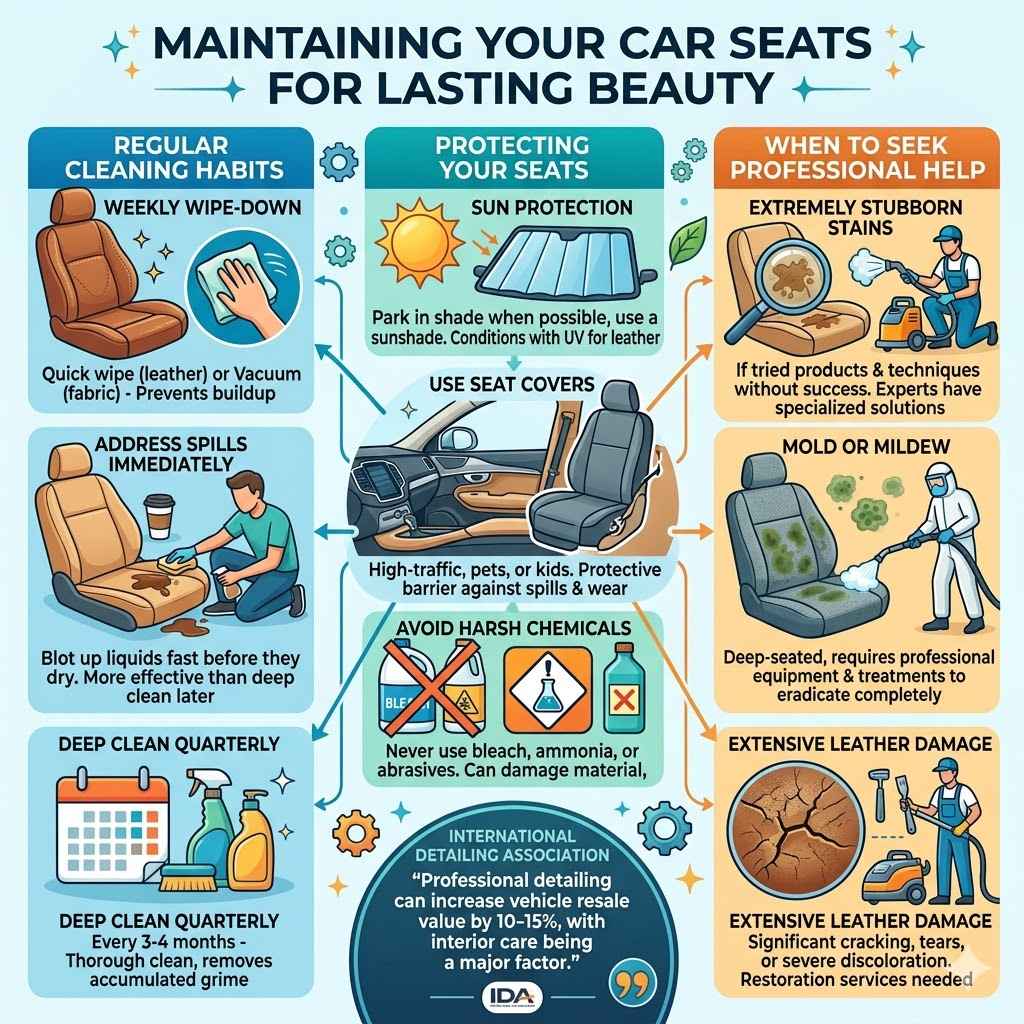
Maintaining Your Car Seats For Lasting Beauty
Keeping your car seats in great condition involves more than just cleaning when they get dirty. Regular maintenance plays a huge role in preserving their look and feel for years to come.
Regular Cleaning Habits
Small, consistent efforts can prevent big problems down the road. Making cleaning a routine is the best way to keep your seats looking new.
Weekly Wipe-Downs: For leather seats, a quick wipe with a damp microfiber cloth once a week can remove surface dust and prevent buildup. For fabric, vacuuming weekly removes loose debris before it gets ground in.
Address Spills Immediately: The moment a spill happens, act fast. Blotting up liquids right away is far more effective than trying to remove dried-on stains later. This is especially true for coffee, soda, and greasy foods.
Deep Clean Quarterly: Aim for a more thorough cleaning of your seats every three to four months. This deep clean helps remove accumulated grime and dirt that daily wipe-downs might miss.
Protecting Your Seats
Prevention is always better than cure. Taking steps to protect your seats from damage can save you a lot of effort and money.
Sun Protection: Direct sunlight can fade and dry out both fabric and leather. Park in shaded areas when possible, or use a sunshade for your windshield. For leather, conditioners with UV protection are essential.
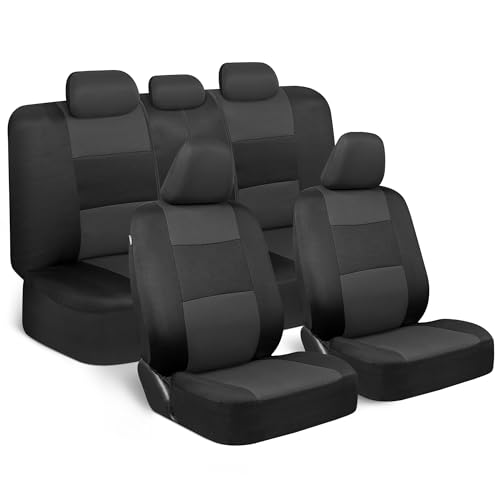
Use Seat Covers: For high-traffic vehicles or if you frequently carry pets or children, consider using seat covers. They provide a protective barrier against spills, dirt, and wear.
Avoid Harsh Chemicals: Never use bleach, ammonia, or abrasive cleaners on your car seats. These can damage the material, strip its color, or leave it dry and brittle.
When to Seek Professional Help
While most car seat cleaning can be done at home, some situations call for a professional detailer. Knowing when to call in the experts can save your seats from irreparable damage.
Extremely Stubborn Stains: If you’ve tried multiple products and techniques without success on a tough stain, a professional might have access to stronger, specialized solutions.
Mold or Mildew: If your seats have developed mold or mildew, it can be deep-seated and require professional equipment and treatments to eradicate completely and safely.
Extensive Leather Damage: For significant cracking, tears, or severe discoloration of leather, professional restoration services are often necessary.
According to the International Detailing Association, professional detailing can increase a vehicle’s resale value by up to 10-15%, with interior care being a major factor.
Frequently Asked Questions
Question: What is the best way to remove a coffee stain from fabric car seats?
Answer: Blot up as much liquid as possible immediately. Then, use a dedicated fabric upholstery cleaner, gently agitate it into the stain, and blot it away with a clean, damp microfiber cloth. Repeat if necessary, and ensure the area dries completely.
Question: How often should I condition leather car seats?
Answer: It’s generally recommended to condition leather car seats every 3-6 months, or more often if the car is frequently exposed to sunlight or dry conditions. This helps maintain moisture and prevent cracking.
Question: Can I use baby wipes to clean my car seats?
Answer: It’s best to avoid baby wipes for regular car seat cleaning. Many contain ingredients that can leave residue or dry out leather over time. Always use products specifically designed for automotive upholstery.
Question: My fabric seats have a bad odor. What can I do?
Answer: Thoroughly vacuum the seats to remove any debris. Then, use a good quality fabric upholstery cleaner that includes odor eliminators. Allow the seats to air dry completely in a well-ventilated area.
Baking soda can also be sprinkled on fabric, left overnight, and then vacuumed to absorb odors.
Question: What is the difference between a leather cleaner and a leather conditioner?
Answer: A leather cleaner removes dirt and grime from the surface of the leather. A leather conditioner replenishes lost oils, keeps the leather soft and supple, and protects it from drying out and cracking. They are typically used in sequence: clean first, then condition.
Summary
Choosing the right products for your car seats makes a big difference. For fabric, look for effective cleaners that lift stains. For leather, use mild cleaners and rich conditioners.
Always test products first and clean regularly. Following these steps will keep your car seats looking great for a long time.