Best Serpentine Belts for Budget Repairs (2026): we compared
The best cheap serpentine belt is the lowest-cost OE-size belt that matches your exact rib count, length, and tensioner type, with EPDM construction if daily driving matters. Buy the wrong one and you get squeal, charging loss, steering assist loss, or a shredded belt that can leave you stranded. I have seen all of those from one bad fit. This guide shows how to pick the cheapest belt that still fits, lasts, and survives real use.
Quick comparison
| Product | Badge | Best for | Price | ||
|---|---|---|---|---|---|
 |
Goodyear Belts 1060663 Serpentine Belt, 6-Rib, 66.3" LengthGoodyear | Budget pick | 6-Rib, 66.3" Length Serpentine Belt | $22.99
Price as of 29 Sep 2026
|
View |
 |
Top Drive, 6PK1195, Premium Engine EPDM Serpentine Belt,TOP DRIVE | Also great | 6PK1195, 47.60" Length Serpentine Belt | $23.88
Price as of 29 Sep 2026
|
View |
 |
Bando USA 6PK1220 OEM Quality Serpentine BeltBando USA | Our pick | 6 Ribs x 1220 mm Serpentine Belt | $14.06
Price as of 29 Sep 2026
|
View |
Use this as a fitment-first comparison, not a shopping list. The cheapest belt that matches the car’s rib count and effective length is usually the right buy; the wrong width or profile can cost more in noise and rework than the belt saved.
How we chose
The first filter is fitment: rib count, effective length, and whether the belt matches the OE or OE-style layout. After that comes material, with EPDM preferred over basic rubber for daily driving because it holds up better to heat and cracking. Noise, slip resistance, and contamination tolerance come next, especially on engines that run the belt near oil seals or splash zones.
The budget rule is simple. Choose the cheapest belt that still fits the real use case, then spend more only when the car is sensitive to squeal, heat, oil exposure, or long service intervals.
What is the best serpentine belt for a budget repair?
The safest budget answer is the cheapest OE-size belt that matches the exact rib count and effective length, with EPDM if the car sees daily commuting. For quiet, consistent service, Gates Micro-V is the cleanest low-risk pick on spec, while Dayco, Continental, Bando, Goodyear, and ACDelco all make sense when their fitment or material matches the job better.
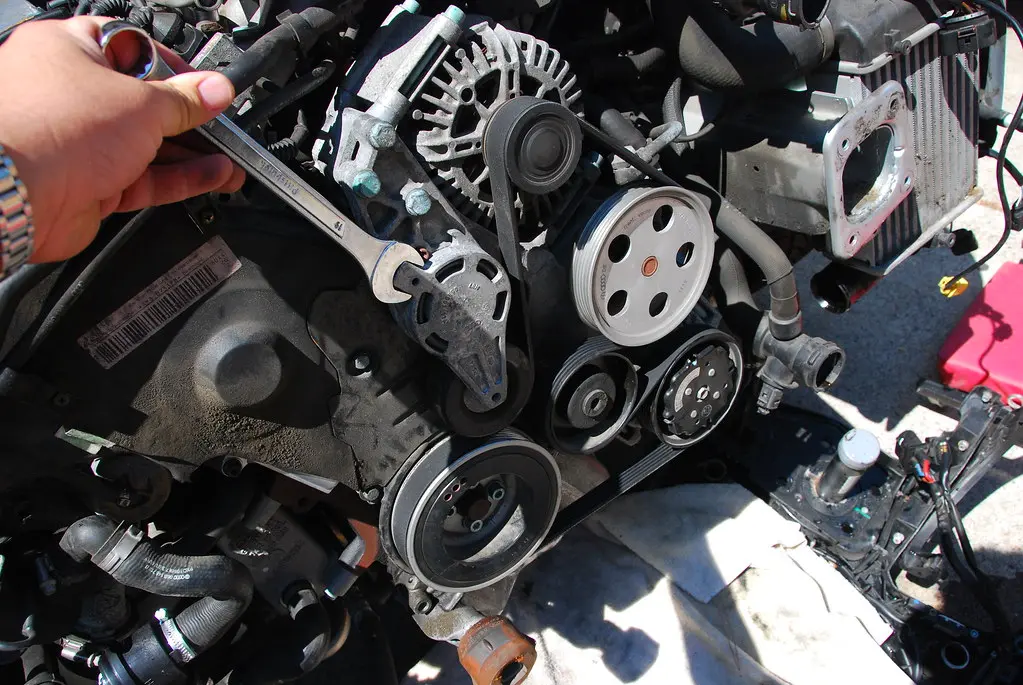
That matters because a serpentine belt powers the alternator, power steering pump, and air conditioning compressor, and some vehicles also use it to drive the water pump. It rotates constantly when the car is running, so slip, glazing, or rib wear can affect accessory operation quickly.
Gates Micro-V: best for quiet everyday driving
Gates Micro-V is a sensible pick for a daily driver when noise control matters and you want a belt that feels close to OE. Its multi-v groove construction and tight tolerances are the main draw, and that tighter fit can help reduce chatter, rib wander, and the low-grade squeal that cheap belts sometimes produce.
This is the belt to choose when the car is otherwise healthy and the old belt failed from age, not from oil soak or a bad pulley. The drawback is simple: good fit usually costs more than the bare-bones economy option, and a quiet belt will not fix a weak tensioner or a rough idler bearing.
Continental OE Technology Series: best for OE-style fit
Continental’s OE Technology Series is built around OE-style fit confidence, with a 6-rib design, 84.5-inch length, and straight-ribbed construction. That makes it a strong match for owners who want the closest feel to the original belt without jumping to dealer pricing.
It is a good choice when the vehicle’s routing is sensitive and the installer wants a belt that tracks cleanly across the pulleys. The drawback is that OE-style fit does not excuse worn hardware; if the tensioner is lazy or the pulley grooves are dirty, even a well-matched belt can squeal.
Dayco 5060840: best for exact-spec replacement
Dayco 5060840 is the straightforward replacement option when the label match is what matters most. It has 6 ribs, an 84-inch effective length, a top width of 0.82 inches, and a thickness of 0.17 inches, which gives a clear spec target for matching an existing belt.
That kind of dimensional clarity helps when the old belt is missing or unreadable and the route is already known. The drawback is that exact size alone does not guarantee the system is healthy, and a tight fit on worn pulleys can still create noise or edge wear.
Bando OEM quality: best for heat and oil exposure
Bando OEM quality belts are aimed at problem-prone engine bays, and Run Quiet technology is the headline feature. The brand also calls out heat- and oil-resistant backing plus high-strength synthetic rubber, which is useful where contamination risk is higher than average.
This is a smart move for cars that bake in traffic or see a little oil mist near the front cover. The drawback is that oil resistance is not the same as immunity; if a leak is active, no belt is cheap enough to justify ignoring it.
Goodyear Belts: best for long-life EPDM value
Goodyear’s serpentine belt uses a long-life EPDM rubber compound, synthetic tension members, and balanced twist cord. That combination is aimed at longer service life and stable tracking, which makes it a practical value play when the car is driven often.
EPDM is the right upgrade over basic rubber for most budget repairs because it handles heat and age better. The drawback is that long-life material is only worth paying for if the rest of the front-drive system is in decent shape; otherwise the weakest pulley still sets the repair cost.
Acdelco Professional 6K1005: best for longer service life
Acdelco Professional 6K1005 uses temperature- and crack-resistant EPDM rubber, and the line is positioned as 50% to 60% longer than retail belts. That longer-life claim is exactly what many budget buyers want: fewer repeat repairs over the next maintenance cycle.
It makes sense on a car you plan to keep, especially if you want to buy once and move on. The drawback is that longer life only pays off if the belt is matched correctly and the tensioner is not already at the end of its travel.
Quick picks
| Option | Material / construction | Rib count | Length | OE or OE-style claim | Best use case |
|---|---|---|---|---|---|
| Gates Micro-V | Multi-v groove, tight tolerances | Varies by application | Varies by application | OE-fit oriented | Quiet daily driving on a healthy front-drive system |
| Continental OE Technology Series | Straight-ribbed construction | 6-rib | 84.5-inch | OE-style fit confidence | Owners who want a close OE match |
| Dayco 5060840 | Standard replacement spec | 6-rib | 84-inch effective length | Exact-spec replacement focus | When the original size is known and needs matching |
| Bando OEM quality | Run Quiet, heat- and oil-resistant backing | Varies by application | Varies by application | OEM quality / OE-style | Heat, oil mist, and squeal-prone engines |
| Goodyear Belts | Long-life EPDM, synthetic tension members | Varies by application | Varies by application | OE-compatible value choice | Longer service intervals on a budget |
| ACDelco Professional 6K1005 | Temperature- and crack-resistant EPDM | Varies by application | Varies by application | Professional-grade OE-style | Buy once, keep the car running longer |
How do I know which serpentine belt fits my car?
Start with the part number if the old belt is still readable, because that is the fastest path to the right fit. If the number is gone, match rib count and effective length, then confirm whether your engine uses a 6-rib layout or something different before money changes hands.
Fitment errors are common because belts can look nearly identical while being wrong by a fraction of an inch. That is enough to create noise, weak alternator output, steering assist problems, or a belt that rides too high or too low in the pulley grooves.
Replacement checklist: tensioner, idler pulley, and contamination
- Check the tensioner arm for smooth movement and strong return pressure.
- Spin the idler pulley by hand and listen for roughness or side play.
- Look for oil, coolant, or power-steering fluid on the belt path.
- Inspect the old belt for cracking, glazing, rib wear, fraying, or missing chunks.
- Confirm the pulley grooves are clean before fitting the new belt.
A squeal is not always a bad belt. If the tensioner is weak or the idler bearing is rough, a new belt can sound bad the moment the engine starts. Oil and coolant are worse, because they shorten belt life and can make even a good EPDM belt slip.
Which one should you buy?
Choose Gates Micro-V if you want the lowest-risk cheap belt for quiet daily driving and the rest of the accessory drive is healthy. Choose Continental OE Technology Series or Dayco 5060840 when the car needs a close OE-style fit and the exact size is known. Choose Bando if heat or oil exposure is part of the problem.
Pick Goodyear or ACDelco if you are willing to spend a little more for EPDM and longer service life. That is where budget buying stops being false economy: a better belt is cheaper than doing the job twice because the first one glazed, squealed, or cracked early.
Are aftermarket serpentine belts good enough for daily driving?
Yes, good aftermarket belts are fine for daily driving when they match the exact fitment and use EPDM or OE-style construction. The belt does not need dealer branding to work well, but it does need the right rib count, the right effective length, and a healthy tensioner and pulley system.
Avoid the very cheapest option if the car runs hot, lives near oil leaks, or has a reputation for accessory-drive noise. In those cases, spending a bit more on EPDM, tighter tolerances, or OE-style construction usually buys better day-to-day behavior.
What’s the difference between OEM and OE-style serpentine belts?
OEM usually means the belt is built to the vehicle maker’s original spec, while OE-style means it is made to fit and perform like the original part without being the factory-branded piece. For budget repairs, OE-style is often the better value if the size and rib layout are correct.
That distinction matters because some belts are described as OE style and made to meet or exceed OEM specifications, while others are simply economical replacements. The job is the same either way: keep the alternator, steering, and A/C driven reliably without extra noise or slip.
How long does a serpentine belt usually last?
Service life depends on heat, routing, contamination, and tensioner condition more than on a single mileage number. EPDM belts often make more sense for long-term use because they tend to handle heat and cracking better than basic rubber, so many budget buyers may prefer them.
If the belt shows cracking, glazing, rib rounding, edge fray, or oil soak, it is past the point where a bargain matters. Replace it before it starts shedding material or slipping under load.
Can I replace a serpentine belt myself on a budget?
Yes, many DIY owners can replace one at home if the tensioner is accessible and the routing is documented. The real budget trap is assuming the belt is the only worn part, because a tired tensioner or noisy idler pulley can turn a cheap belt swap into a repeat repair.
Use a routing diagram, verify the belt size before removal, and inspect the pulleys while the belt is off. If the engine bay is contaminated with oil or coolant, fix the leak first or the new belt may fail early.
Which serpentine belt brands are the quietest?
For quiet operation, Gates Micro-V and Bando OEM quality are the names most often worth shortlisting. Gates leans on tight tolerances and multi-v groove construction, while Bando uses Run Quiet technology and a backing designed to handle heat and oil exposure.
Continental OE Technology Series is also a good choice when OE-style fit matters, because a belt that tracks correctly is usually quieter than one that wanders. Still, noise is often a system problem, not a brand problem alone.
Do I need a different belt for my Jeep Compass or other SUV?
Yes, many SUVs use a different belt length, rib count, or pulley layout than a sedan or compact car, even when the engine family looks similar. A Jeep Compass owner should verify the exact engine and belt number before buying, because the wrong size can fit poorly and fail quickly.
That same rule applies to other SUVs. Heavier accessory loads, tighter routing, and different tensioner geometry can change which belt is right, so match the exact application instead of buying by vehicle size alone.
Frequently asked questions
What is the best serpentine belt for a budget repair?
The best budget repair belt is the cheapest OE-size belt that matches the exact rib count and effective length, with EPDM if the car is driven every day. Gates Micro-V is the safest quiet-driver pick, while Continental, Dayco, Bando, Goodyear, and ACDelco all make sense when their specs better match the vehicle.
How do I know which serpentine belt fits my car?
Use the part number if you have it, then verify rib count and effective length against the engine’s accessory drive layout. If the old belt is missing or unreadable, confirm whether the engine uses a 6-rib pattern or another layout before ordering anything.
Are aftermarket serpentine belts good enough for daily driving?
Yes, when the belt is the right size and made from a decent material like EPDM or OE-style construction. The weak point is usually fitment or worn hardware, not the fact that the belt is aftermarket.
How long does a serpentine belt usually last?
That depends on heat, contamination, and pulley condition. EPDM belts usually make more sense for longer service because they resist cracking better than basic rubber, but any belt that is glazed, cracked, or oil-soaked should come off.
Can I replace a serpentine belt myself on a budget?
Yes, if the tensioner is accessible and the routing is easy to verify. Budget the job around the belt and the hardware check, because a bad tensioner or rough idler can ruin the repair if it is ignored.
Do I need a different belt for my Jeep Compass or other SUV?
Often, yes. SUV accessory drives can use different lengths, rib counts, or tensioner setups, so the exact application matters more than the badge on the tailgate. Match the OE part number whenever possible.
Products related to this article
Sponsored / affiliate links. As an Amazon Associate I earn from qualifying purchases. I may earn additional commission from eligible campaigns.