Brush Guard for Club Car DS: Black vs Stainless Steel
For a Club Car DS, choose black powder coat if you want a lower-contrast look and a lower price, or stainless steel if you want better corrosion resistance and fewer visible scuffs; fitment still depends on the exact year and front-end setup. Pick the wrong finish, and the guard can show chips early, clash with the cart, or demand more cleaning than you planned. This guide compares maintenance, scratch visibility, corrosion resistance, and the use cases each finish fits best.
| Decision factor | Black | Stainless Steel | Winner |
|---|---|---|---|
| Upfront price | $137.81 for one listed DS guard; another black DS option is $180.99, and a black built-in hitch version is $202.99 | $187.81 for the same listed guard; another stainless DS option is $210.99, and a wrap around stainless DS guard is $259.99 | Black |
| Scratch visibility | More likely to show chips, scuffs, and touch-up spots | Usually hides light marks better in day-to-day use | Stainless Steel |
| Rust risk | Depends on coating condition and exposed edges, especially at mounting points | Better corrosion resistance overall, though surface contamination still needs cleaning | Stainless Steel |
| Cleaning effort | Often easier to keep uniform if the finish stays intact | Usually tolerates frequent washing, but fingerprinting and water marks can stand out | Tie |
| Style match | Matches dark trim, lifted carts, and utility-focused builds | Fits a brighter, cleaner look and can suit more open front-end styling | Tie |
Black or stainless steel?
The trade-off is simple. Black usually costs less up front, while stainless steel usually costs more because it resists corrosion better and hides everyday scuffs when the cart sees mud, moisture, and repeated front-end contact. If your DS runs brushy paths or parks near lots of dust and grit, the finish matters nearly as much as the guard shape.
Cost is not the whole bill
Listed prices can vary by style and finish, so compare the exact product page before you buy. That gap is why black often wins on sticker price.
Finish changes how the guard ages
Black powder coat can look sharp at first, but chips and scuffs stand out once the coating breaks. Stainless steel usually hides that sort of wear better, though it can still show grime, surface marks, and discoloration around fasteners if it is not cleaned.
Use matters more than appearance alone
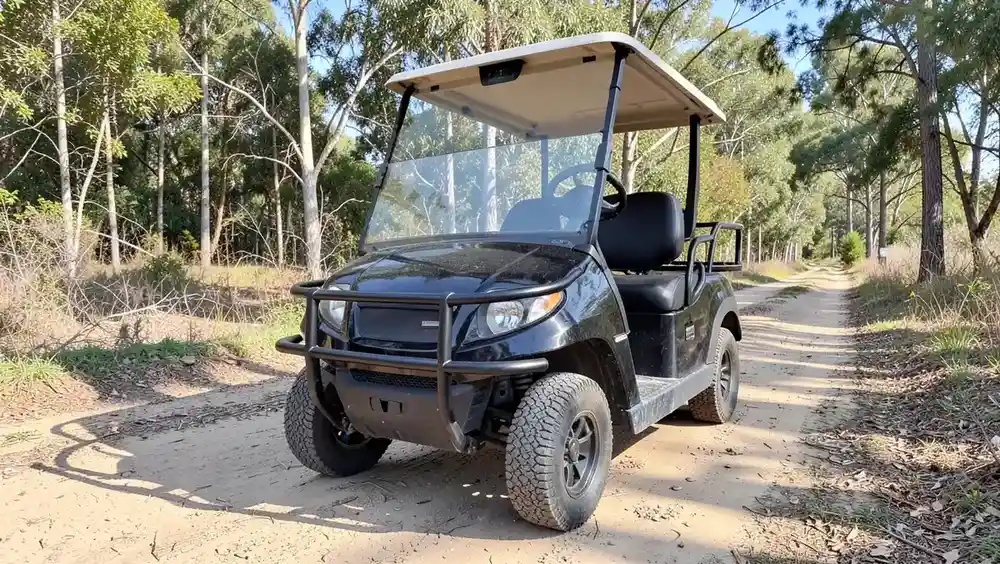
Say your DS is a lifted cart that sees gravel driveways and low branches every weekend. Black is often the practical pick because small finish marks may blend better with the rest of the build, especially if the cart already has dark trim. Stainless makes more sense when the cart lives in damp conditions or you want fewer visible scuffs over time.
Club Car DS fitment basics
Club Car DS brush guards are listed for 1982 and later DS models, but that does not mean every guard fits every setup without checking the details. You still need to verify your exact year, and whether the cart is gas or electric, before buying.
Why year range matters
A guard advertised for the DS line can still be tied to specific body shapes or accessory layouts. If your cart has been modified with a body kit, front accessories, or a nonstandard bumper setup, check the manufacturer’s listing for your model before you order.
Gas and electric DS fitment checks
Many DS brush guard listings mention gas and electric fitment, which is helpful, but that language should still be read as model-specific. If the listing does not spell out your drivetrain, treat that as a reason to verify before checkout.
Lifted carts and clearance
Lift height can affect how a brush guard sits relative to the front body and tires. A lifted DS often pairs well with a more substantial front profile, but the guard still has to clear the body kit and mount points without forcing the fit.
- Confirm the cart is a Club Car DS.
- Check the year range in the listing.
- Verify gas or electric fitment.
- Check for body kit, lift kit, or hitch conflicts.
- Confirm hardware and installation notes before ordering.
Brush guard finish table
Finish choice changes more than color. It changes how visible wear looks, how much cleanup you will do, and how quickly the guard starts to feel tired after repeated brush contact or parking-lot scrapes.
| Buying factor | Black | Stainless Steel | Winner |
|---|---|---|---|
| Upfront price | Lower on the listings provided | Higher on the listings provided | Black |
| Scratch visibility | Scuffs and chips stand out sooner | Light marks are less obvious | Stainless Steel |
| Rust risk | Depends on coating condition and exposed mounting areas | Better corrosion resistance | Stainless Steel |
| Cleaning effort | Usually straightforward, but chips may need touch-up | Usually simple, though water spots and grime can be visible | Tie |
| Best-use scenario | Casual-course carts, dark trim, value-first buyers | Wet climates, utility use, owners who want fewer visible marks | Depends on use |
Why black wins on price
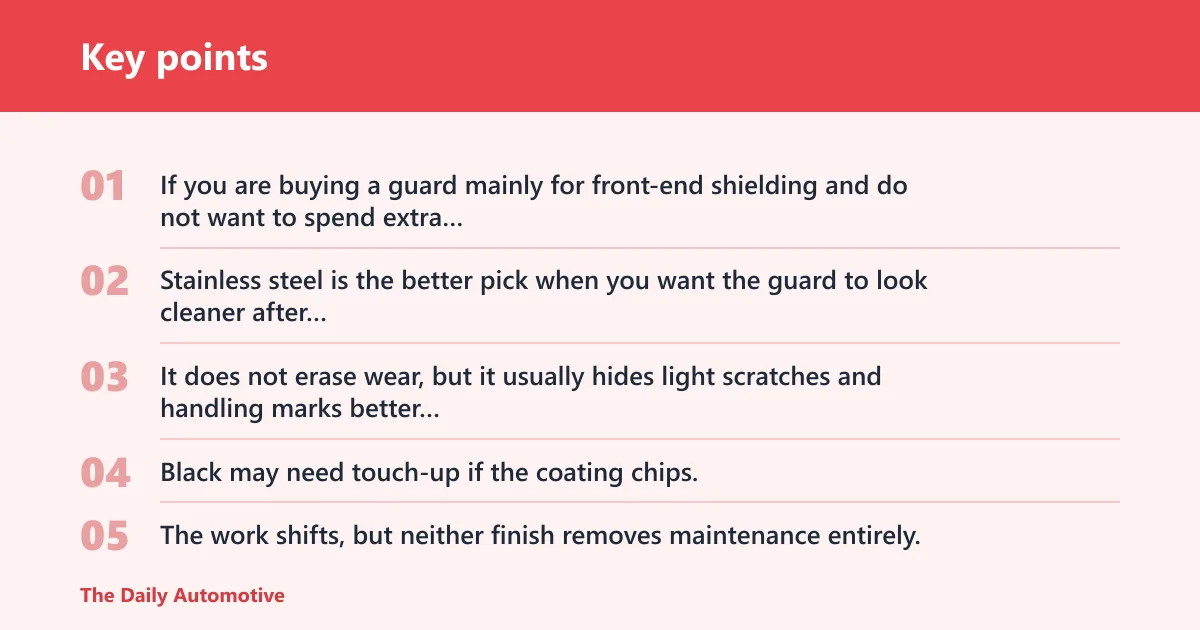
Black is often the lower-priced option. If you are buying a guard mainly for front-end shielding and do not want to spend extra for finish durability, black is the easier entry point.
Why stainless steel wins on wear visibility
Stainless steel is the better pick when you want the guard to look cleaner after repeated use. It does not erase wear, but it usually hides light scratches and handling marks better than a dark coated surface that has been nicked.
Why the cleaning row ends in a tie
Both finishes need basic cleaning. Black may need touch-up if the coating chips, while stainless may need more attention if you want to avoid visible water marks and grime. The work shifts, but neither finish removes maintenance entirely.
How each finish ages
After a season of brush contact and parking slips, black and stainless steel age in different ways. Black tends to reveal chips first. Stainless tends to keep its look longer, but it can still show surface contamination and wear around hardware.
Black powder coat and touch-up needs
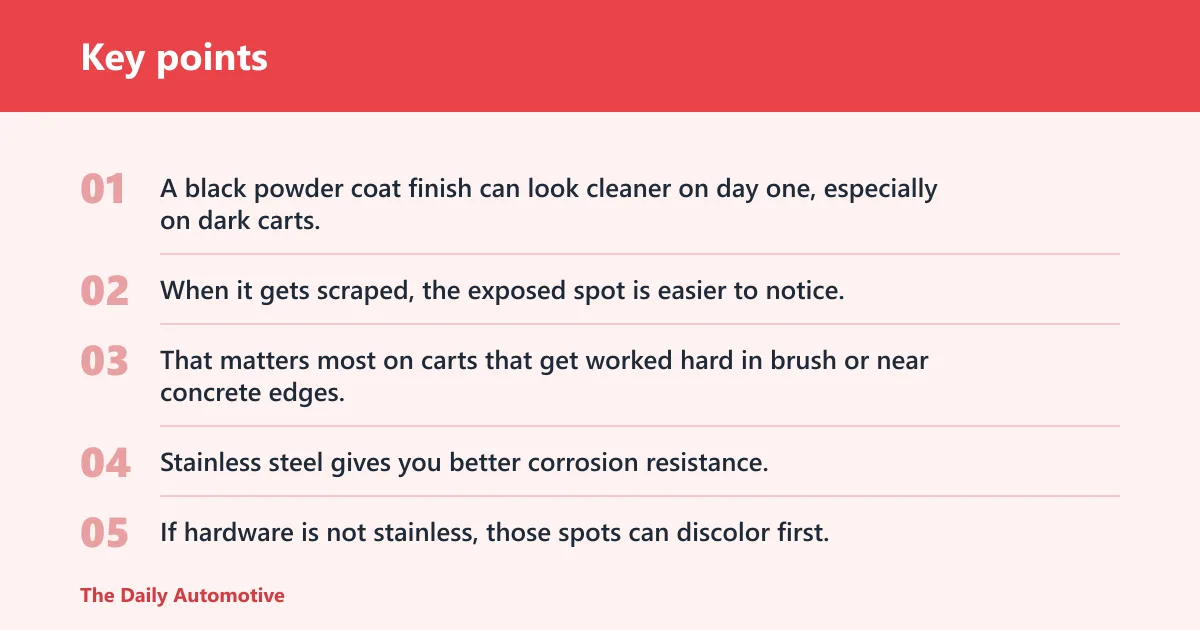
A black powder coat finish can look cleaner on day one, especially on dark carts. When it gets scraped, the exposed spot is easier to notice, so touch-up becomes part of ownership sooner if the guard sees repeated contact. That matters most on carts that get worked hard in brush or near concrete edges.
Stainless steel and mounting-point wear
Stainless steel gives you better corrosion resistance, but the finish around bolts and brackets still deserves attention. If hardware is not stainless, those spots can discolor first. Even with stainless hardware, mounting points should be checked for grime buildup and early wear.
Hardware matters more than many buyers expect
One listed guard includes stainless steel mounting hardware, which is worth noticing because fastener quality affects the areas most likely to show rust or staining. If a listing does not say what hardware is included, or does not mention stainless fasteners, check the manufacturer’s listing for your model before assuming the package is complete.
Picture a DS that gets parked outside three nights a week. A black guard can still be the smart buy if you are willing to wipe it down and touch up chips when they appear. Stainless steel becomes more attractive when the cart lives in damp weather and you would rather clean than repaint.
Which style fits your cart?
Finish is only half the decision. Standard, wrap around, mega, and built-in hitch versions change coverage, look, and utility in different ways, so the shape should match how you use the DS.
Standard brush guard
The standard brush guard is the cleanest entry point. It is used to provide front-end protection from brush, branches, scrapes, and minor impacts without adding much visual bulk. It suits owners who want protection without changing the cart’s profile too much.
Wrap around brush guard
A wrap around brush guard extends farther across the front, so it offers broader protection and a larger visual footprint. That makes it the more style-forward choice for carts that spend time off pavement or around tight obstacles.
Mega brush guard
The mega brush guard has the largest profile of the common styles, so it leans toward heavier-duty styling and broader coverage. That makes it a natural fit for lifted carts or utility builds where front-end presence matters more than keeping a slim look.
Built-in hitch variant
The built-in hitch version is for owners who want towing accessory integration in the same front assembly. That model-specific option is worth checking carefully because hitch integration can narrow fitment and trim choices.
Choose Black if… / Choose Stainless Steel if…
Choose Black if you want the lower purchase price, a darker visual match, or a guard on a lifted or utility-oriented DS where minor cosmetic wear is easier to accept. Choose Stainless Steel if you want better corrosion resistance, fewer visible scuffs, and a finish that stays presentable with less concern about chips showing through.
Best choice for lifted carts
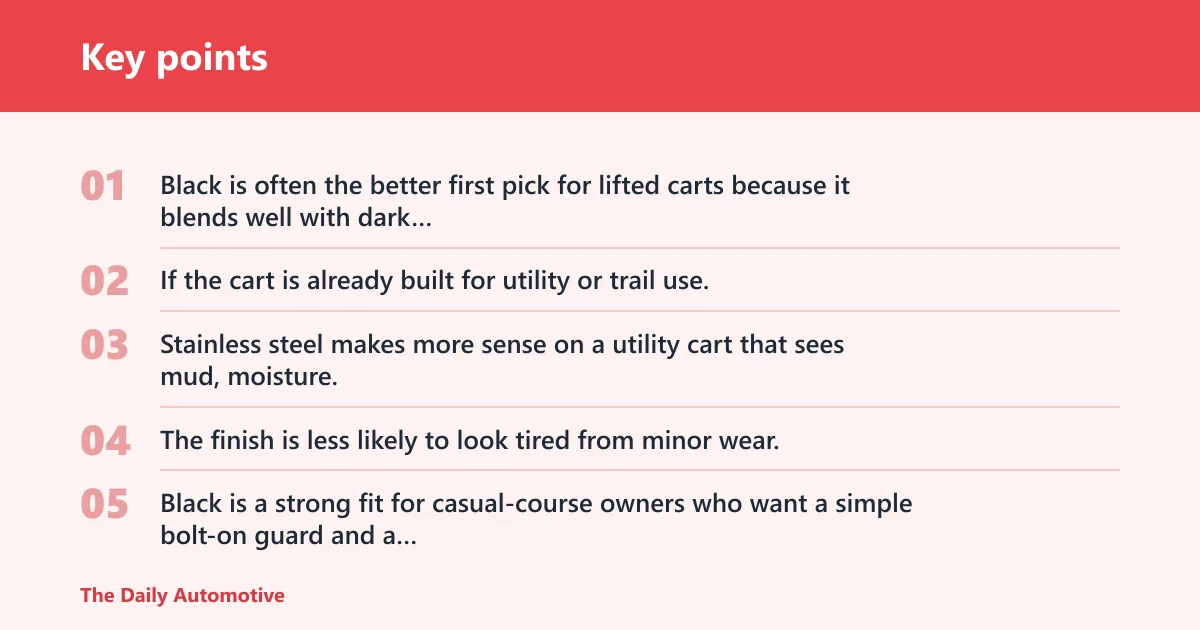
Black is often the better first pick for lifted carts because it blends well with dark wheels, tires, and trim. If the cart is already built for utility or trail use, the lower price also leaves more budget for accessories that affect function.
Best choice for utility carts
Stainless steel makes more sense on a utility cart that sees mud, moisture, and repeated front-end contact. The finish is less likely to look tired from minor wear, and that matters when the cart is used often rather than just cleaned for appearances.
Best choice for casual-course owners
Black is a strong fit for casual-course owners who want a simple bolt-on guard and a lower entry cost. If the cart spends most of its time on paved paths or manicured grounds, the finish difference matters more for appearance than for protection.


Mounting hardware and install
Most DS brush guard listings make installation sound straightforward, and the one listed guard that was supplied here advertises easy bolt-on installation. That means no welding when the listing says so, but you should still verify exactly which tools and brackets are included for your model.
What included hardware means
When a listing says included hardware, it usually means the bolts, washers, and brackets needed for the advertised fitment are in the box. One DS guard specifically includes stainless steel mounting hardware, which is useful if you want the fasteners to match the finish and reduce visible corrosion points.
What bolt-on installation really implies
Bolt-on installation normally means basic hand tools are enough for assembly and mounting. It does not mean every DS cart is identical, though, so any body kit, lift kit, or model-specific hitch bracket still needs a compatibility check before installation day.
Simple install checklist
A common first-timer mistake is assuming every DS guard uses the same front mounting points. Before starting, confirm the cart year, drivetrain, included hardware, and whether the guard is standard, wrap around, mega, or hitch-equipped. That keeps the install from stalling halfway through.
- Lay out all hardware and compare it with the listing.
- Check the front body for lift-kit or body-kit conflicts.
- Align the guard before tightening bolts fully.
- Verify clearance around the tires and accessories.
- Recheck fasteners after the first few uses.
Frequently asked questions
Should I choose a black or stainless steel brush guard for my Club Car DS?
Choose black if price and finish match matter most, especially on lifted or utility-focused carts. Choose stainless steel if you want better corrosion resistance and fewer visible scuffs. For a DS-specific guard, fit still depends on the exact listing, so the decision comes down to upkeep and appearance.
Will a Club Car DS brush guard fit 1982-present models?
Many DS brush guards are listed for 1982 and later DS models, but you should still verify the exact year in the product listing. Fit can also change with body kits, lift kits, or hitch accessories, so the year range is necessary but not always enough on its own.
How much does a Club Car DS brush guard cost in black vs stainless steel?
Prices vary by style, finish, and listing, so check the current product page before comparing options.
Is a powder-coated black brush guard more rust resistant than stainless steel?
No. Stainless steel is the better corrosion-resistant choice. Black powder coat can protect well when intact, but chips, scratches, and exposed edges can become weak points, especially around mounting hardware and front-end contact areas.
Do Club Car DS brush guards come with mounting hardware?
Some do, and some listings are more specific than others. One listed DS guard includes stainless steel mounting hardware, which is a useful sign that the package is ready for installation. If the listing is vague, check the manufacturer’s listing for your exact model.
Can I install a Club Car DS brush guard myself with basic tools?
Yes, if the listing says easy bolt-on installation. That language usually means basic tools and no welding. You still need to confirm fitment, hardware, and clearance for your year, drivetrain, and any lift or body kit before starting.
Products related to this article
Sponsored / affiliate links. As an Amazon Associate I earn from qualifying purchases. I may earn additional commission from eligible campaigns.