Can Car Glass Break On Its Own? Essential Facts
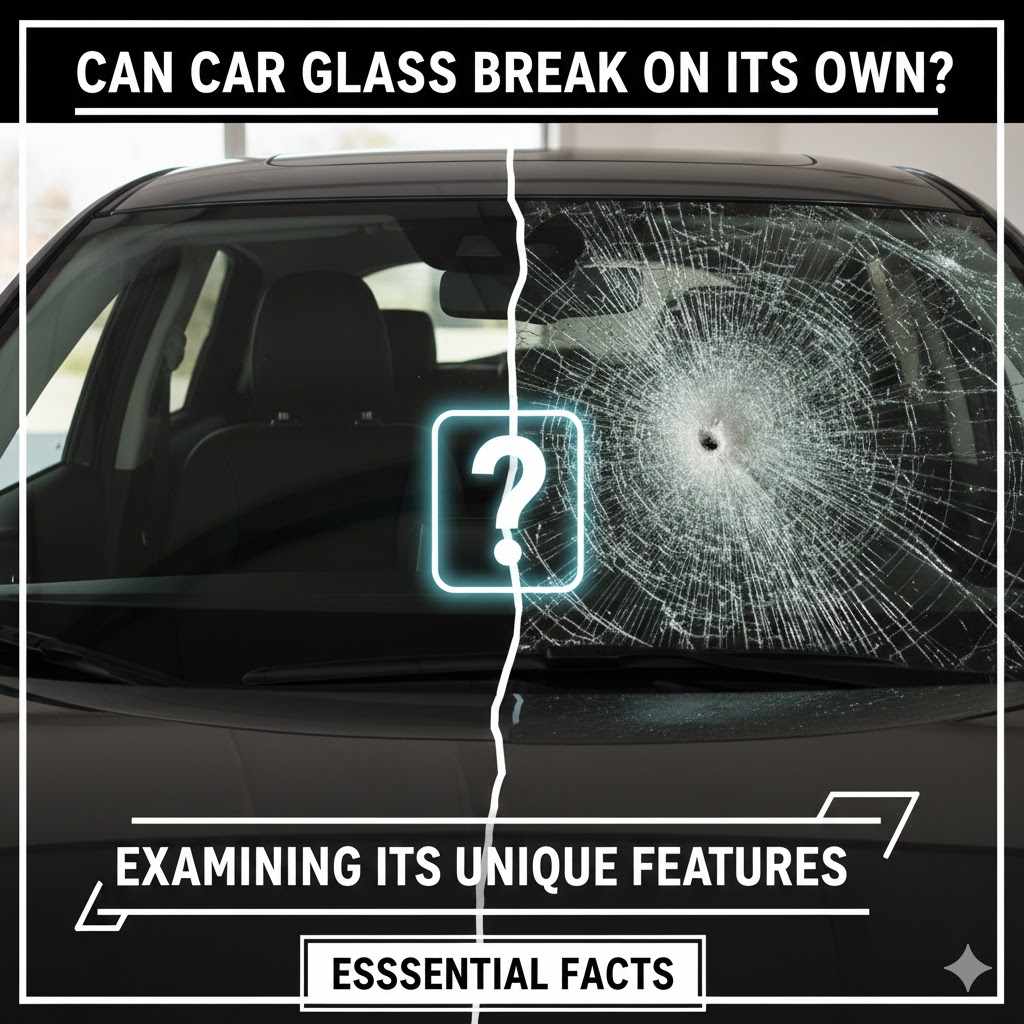
Yes, car glass can break on its own, though it’s rare. This usually happens due to extreme temperature shifts, internal stress from existing damage like small chips, or manufacturing defects. We will explore the common causes and what to look for so you can feel confident about your car’s safety.
It’s unsettling to walk out to your car and find a window or windshield already cracked, isn’t it? You know you didn’t hit anything, and no one else was around. This leaves many drivers asking: “Can car glass break on its own?” The short answer is yes, but it’s usually not random. Glass is strong, but it reacts to stress. Understanding these surprising causes helps you know when to worry and when it’s just a strange quirk of physics. We’ll walk through the real reasons this happens, keeping things simple and clear, so you can assess the damage confidently.
Decoding Spontaneous Glass Failure: The Essential Facts
When we talk about car glass breaking “on its own,” we are really talking about failure due to internal pressures or external factors that don’t involve a direct impact, like a baseball or a rock from the road. Modern automotive glass is incredibly tough. Windshields are made of laminated glass (two layers of glass with a plastic layer sandwiched in between), while side and rear windows use tempered glass (designed to shatter safely into small pieces). Both types can fail under specific, often slow-building, conditions.
The Main Culprits Behind Self-Breaking Glass
For the glass to shatter without a noticeable cause, one of these primary forces is usually at play. These forces build up over time until the glass reaches its breaking point.
1. Extreme Temperature Fluctuations (Thermal Shock)
This is perhaps the most common, non-impact reason glass cracks. Glass expands when hot and contracts when cold. When this happens very rapidly, the uneven stress can cause a break, especially if the glass is already weak.
Think about pouring boiling water into a cold glass cup—it shatters instantly. A similar, though slower, process happens in your car:
- Sudden Heat: On a very cold morning, you start your car and blast the defroster on high, aiming hot air directly at a tiny, almost invisible chip in the windshield. The immediate, localized heating creates stress, and the crack spreads rapidly.
- Sudden Cold: Conversely, if your car has been sitting in the hot sun all day, and a sudden, very cold rainstorm hits, the rapid cooling can cause the same effect.
2. Internal Stress from Existing Damage
The idea that glass breaks “on its own” often means it finally gave way from damage you couldn’t see or ignored. Chips and star breaks are stress points. They are essentially tiny fractures waiting for a trigger.
- The Trigger: Once a chip exists, normal road vibrations, the flexing of the car body when driving over bumps, or even the pressure change when you close a door too hard can be enough to make that small, weak spot spiderweb across the entire pane.
- Repair Matters: This is why chip repair kits are so important. Sealing a chip prevents these vibrations from turning a small annoyance into a full window replacement.
3. Manufacturing Defects and Installation Errors
While quality control is very high in the automotive industry, mistakes can happen. Defects in the glass itself, or issues during installation, create weak spots that might not show up for years.
- Glass Composition: Imperfections within the glass layer, such as microscopic bubbles or inclusions, can become stress risers over time.
- Improper Sealing: If a window was replaced and the sealant (the urethane holding the glass to the frame) was applied unevenly or cured incorrectly, the glass might not be held evenly. This creates tension points, often around the edges, leading to cracks that seem to appear from nowhere.
4. Stress from Vehicle Frame Flexing
Your car chassis is designed to be rigid, but driving over very rough terrain or hitting large potholes puts immense stress on the entire body structure, including where the glass mounts. If the vehicle body twists even slightly beyond its normal tolerance, the glass—which cannot flex much—can crack under the pressure.
| Cause Category | Mechanism Leading to Breakage | Typical Location |
|---|---|---|
| Temperature Change (Thermal Shock) | Rapid expansion or contraction causing uneven stress. | Windshield, usually near the edges or where sun hits directly. |
| Pre-existing Damage | Vibrations or slight impacts magnifying an existing chip. | Any window, often starting from a small ding. |
| Installation/Manufacturing Flaw | Uneven pressure from the frame or internal structural weakness. | Edges of fixed windows (back glass or windshield). |
How to Tell If Your Glass Broke “On Its Own”
When you find a crack, your first job is to determine the starting point. This helps you (and your insurance company) understand the cause. If it truly broke “on its own,” the fracture will look different than impact damage.
Identifying Impact vs. Spontaneous Breaks
Impact damage, caused by a rock or debris, almost always has a visible point of origin—a tiny pit or circular mark where the object hit. Spontaneous breaks look different.
- Look for the “Crack Origin”: If you can trace the crack back to a single, visible chip or ding, the glass didn’t break on its own; it finally failed due to that old damage.
- Examine the Edges: If the crack starts at the very edge of the glass (where it meets the rubber seal or metal frame) and spreads inward, it suggests stress from improper installation or frame flexing. This looks like the glass is being “pinched.”
- Observe the Pattern: A crack caused by severe thermal shock often looks like a long, clean line running straight across the glass, sometimes accompanied by smaller stress fractures branching off the main line. A sharp impact causes more star-shaped or circular patterns.
For more information on how glass is designed to perform and the standards it must meet, you can check resources from organizations like the National Highway Traffic Safety Administration (NHTSA) regarding vehicle safety glazing standards.
Tempered vs. Laminated Glass: Why They Break Differently
The type of glass your vehicle uses dramatically affects how it fails when stressed. Knowing the difference helps you understand what you are looking at.
Laminated Glass (Windshields)
Laminated glass is built for safety. It’s two layers of glass bonded to a layer of polyvinyl butyral (PVB) plastic.
- How it Breaks: When laminated glass cracks, it usually forms a network of cracks (crazing) radiating from the stress point. The PVB layer holds everything together, meaning the glass stays in place, even if shattered.
- “Self-Break” Signs: If a windshield breaks spontaneously, you’ll see a large network of cracks, but the entire piece of glass will remain stuck in the frame.
Tempered Glass (Side and Rear Windows)
Tempered glass is heated and cooled rapidly during manufacturing, making it much stronger than regular glass. However, when it breaks, it fails dramatically.
- How it Breaks: Because of the internal tension created during tempering, when tempered glass reaches its breaking point, it disintegrates instantly into thousands of small, relatively dull, pebble-like pieces.
- “Self-Break” Signs: If a side window shatters completely into the car while you are driving, it’s a strong indicator that a tiny imperfection or localized pressure finally caused a total, sudden failure of the tempered structure.
Preventative Steps: Protecting Your Car Glass
While you cannot prevent every random event, you can significantly reduce the risks that lead to spontaneous glass failure. Taking a few simple precautions can save you money and stress.
1. Address Chips Immediately
This is your number one defense against spontaneous cracking. A chip the size of a dime can turn into a foot-long crack in minutes when triggered by heat or vibration.
- Don’t Wait: Repair small chips right away. Most standard auto glass shops can repair chips the size of a quarter or smaller easily and affordably (often covered by insurance with no deductible).
- Keep it Clean: If you notice a chip, keep water and debris out of the crack until it can be repaired.
2. Manage Temperature Extremes Carefully
Be mindful when rapidly changing the temperature of your glass, especially during winter or intense summer heat.
- Slow Defrosting: If it’s freezing outside, turn your defroster on to a low or medium setting initially. Let the air gradually warm up the glass before cranking it to maximum heat. Never use boiling water or scrap ice aggressively.
- Shading in Summer: Use a sunshade when parking in direct sunlight, especially if you live in a very hot climate. This prevents the glass surface from reaching dangerously high temperatures.
3. Inspect the Seals and Edges
When you wash your car or notice moisture around the window seals, take a moment to check the integrity of the seal where the glass meets the car body. Cracked or loose seals can trap moisture, cause corrosion on the frame, and unevenly press against the glass edge, leading to stress cracks.
If you suspect your window was replaced poorly in the past, or if you notice small cracks originating from the edge that don’t seem related to chips, it might be worth having a professional check the urethane bond. A weak bond puts undue, continuous strain on the glass edge.
4. Be Mindful of Potholes and Curbs
While this isn’t strictly “self-breaking,” the residual stress from hard impacts can manifest later. If you know you hit a major pothole or jarred the car badly, pay extra attention to your glass for the next few weeks. The energy from that impact might cause a hairline fracture to finally propagate days later.
Insurance and Self-Breaking Glass: What to Know
If your glass breaks seemingly on its own, the next question is usually about coverage. Knowing how comprehensive and collision insurance handles these situations can save you a major headache.
Generally, damage caused by natural events, vandalism, or mysterious circumstances falls under your Comprehensive Coverage. Since a rock flying up from the road is considered an “act of nature” or external object (even if you didn’t see it happen), glass breakage usually falls here.
| Type of Damage | Typical Coverage | Deductible Application |
|---|---|---|
| Rock Chip (Repairable) | Comprehensive | Often waived (repair cost covered fully). |
| Spontaneous Crack (Replacement Needed) | Comprehensive | Your standard comprehensive deductible applies. |
| Collision Damage (Hitting another car/object) | Collision | Your standard collision deductible applies. |
It is always best to contact your specific insurance provider. Many policies offer “Full Glass Coverage” or waive the deductible specifically for windshield repairs or replacements, regardless of the cause, provided it isn’t a collision claim. Check your policy details, as these specifics can vary widely.
When to Call a Professional Immediately
While small chips can sometimes be addressed by a determined beginner with a good repair kit, a large crack that appears “on its own” requires professional attention immediately for safety reasons.
Safety Concerns
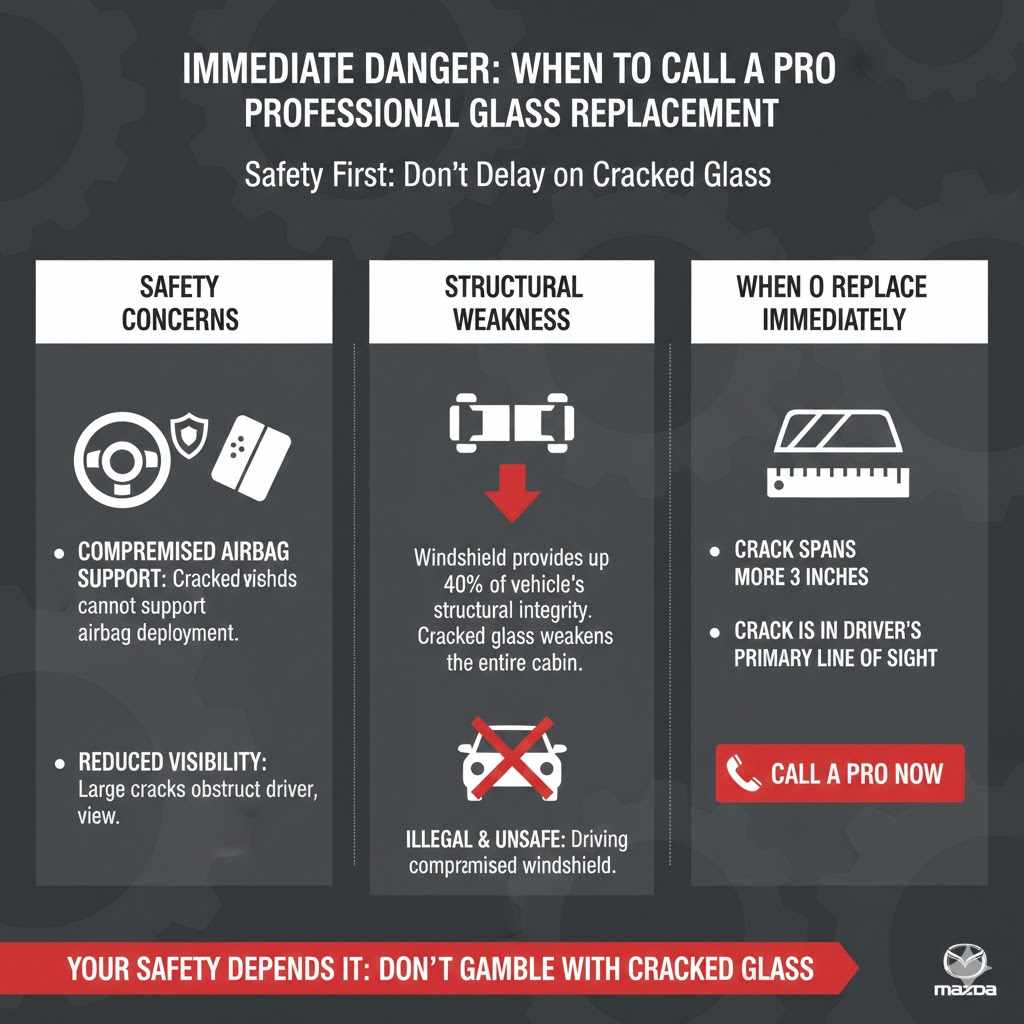
Your windshield is a crucial structural component of your vehicle, not just a window. It provides up to 40% of the structural integrity of your car’s cabin in a frontal crash, and it supports the passenger-side airbag if deployed.
- Compromised Airbag Support: A heavily cracked windshield cannot properly support the passenger airbag as it deploys forward, drastically reducing its effectiveness.
- Reduced Visibility: Large cracks obstruct your view, making driving hazardous, especially at night or in poor weather.
- Structural Weakness: If the glass is compromised, the entire vehicle structure is slightly weakened until the glass is replaced with the proper adhesive sealant.
If the crack spans more than three inches, or if it affects the driver’s primary line of sight, do not delay replacement. Your safety relies on the glass being sound.
FAQ: Beginner Questions About Car Glass Breaking
Q1: If my car glass breaks on its own, is my car unsafe to drive?
A: If only a side or rear window breaks, it is unsafe due to sharp edges and weather exposure. If the windshield has a long crack (more than a few inches or obscuring vision), you should limit driving immediately until it is repaired or replaced for structural integrity and visibility.
Q2: Can the sun cause my windshield to crack spontaneously?
A: The sun itself doesn’t usually cause the crack, but extreme, direct heat can. If the sun super-heats one area of glass that already has a tiny, nearly invisible flaw, the resulting thermal expansion can cause the crack to spread rapidly.
Q3: What is the difference between a stress crack and a rock chip?
A: A rock chip has a clear point of impact—a visible ding. A stress crack, or one caused by thermal shock, usually starts at an edge or radiates from an unseen flaw without a distinct impact point.
Q4: Will my insurance company believe me if I say it broke on its own?
A: Yes. Insurance adjusters are familiar with thermal shock and stress failures. They look for evidence of impact. If they cannot find a visible impact point, they usually process the claim under comprehensive coverage as an unexplained breakage.
Q5: Is it cheaper to repair a spontaneously formed crack or replace the whole windshield?
A: This depends entirely on the size and location. If the crack is small (under 6 inches) and hasn’t reached the edge, repair might still be possible, even if it appeared spontaneously. If the crack is extensive or has reached the edge, full replacement is necessary and generally more expensive.
Q6: Does vibration from loud bass music cause glass to break?
A: While extremely loud vibrations (like powerful subwoofers) can stress already damaged glass, it is very unlikely to cause a perfect, new piece of glass to shatter entirely on its own. It acts as a trigger for existing weakness, similar to driving over a pothole.
Conclusion: Confidence in Understanding Your Glass
Finding broken car glass is always frustrating, but understanding the science behind it should bring you some relief. When you ask, “Can car glass break on its own?” the answer is yes, usually because of stress—either from rapid temperature change, mounting pressure from an old, hidden chip, or a rare manufacturing issue. It’s rarely random chaos.
As a car owner, your best defense is proactive care. Address chips immediately, manage extreme temperature shifts gently, and always prioritize the structural integrity of your windshield. By recognizing the signs—especially the difference between edge stress and impact damage—you can make smart, informed decisions about repair or replacement, keeping your vehicle safe and sound for the road ahead.