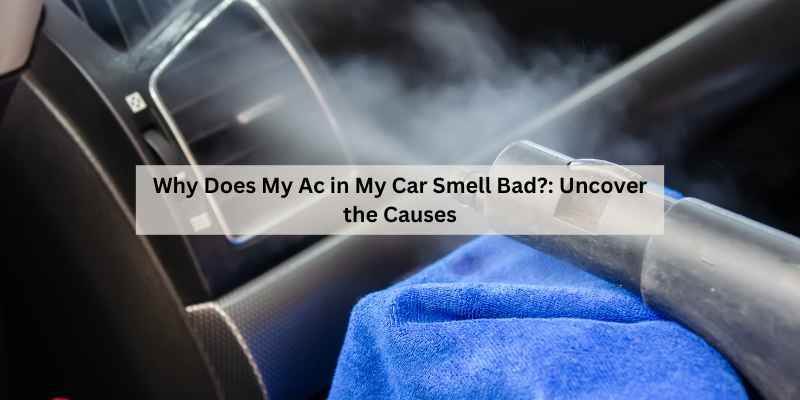
Why Does My Car AC Smell Bad? A Practical Fix-It Guide
You turn on the AC, expecting cold air. Instead, you get a blast of musty air that smells like a wet towel left in a gym bag. Or maybe it’s sour, like vinegar. Sometimes it’s worse—a sweet syrupy smell or something that smells like rotten eggs.
That smell isn’t coming from the outside. It’s coming from inside your car’s HVAC system, and it’s not going away on its own. The good news: most AC odors have a single root cause, and you can fix it yourself in under an hour for less than $40. The bad news: one or two of those smells indicate a real safety issue, and you need to know which ones.

featrity
featrity Odor Removal AC Coil Cleaner for…
- Source Odor Reduction for Stubborn Smells: Car Evaporator Cleaner generates dense foam that penetrates deep into evaporator fins t…
- No-Disassembly DIY Friendly Application: This AC Evaporator Cleaner includes a long, thin application tube for simple, direct use…
- Supports Improved AC Performance & Lower Energy Usage: Effectively clearing dust and buildup from clogged evaporator fins helps su…
This guide walks you through exactly that. You’ll learn what each smell means, how urgent it is, and the precise steps to eliminate it. You’ll also learn when to stop DIY and go straight to a mechanic.
For the most stubborn cases—especially mold and mildew that has colonized the evaporator coil—a dedicated foam cleaner is the fastest fix. The featrity AC coil cleaner is one option that generates dense foam to reach deep into the evaporator fins without disassembling the dashboard. It’s a solid tool to have on hand once you’ve confirmed the diagnosis below.
The Real Culprit: Why Your AC Smells (It’s Not the Air)
Your car’s AC system does three jobs: cool the air, remove humidity, and filter particulates. The cooling happens at the evaporator coil, a metal fin-and-tube assembly hidden behind the dashboard. As hot, humid air passes over that cold coil, moisture condenses on it—same as a glass of ice water on a humid day.
That condensation is the problem. The coil stays damp long after you shut off the engine. Dust, pollen, and skin cells that blow onto the wet coil become food for mold and bacteria. Within a season, you’ve got a thriving microbial colony growing in a dark, moist place.
Here’s the kicker: the cabin air filter catches a lot of that debris, but it can’t catch everything. And if the filter is clogged, airflow slows down, which makes the coil wetter and warmer—a perfect breeding ground. The result is the classic musty or sour smell you notice the moment you hit the AC button.
Less common but more serious smells come from leaks. A sweet smell can mean coolant (antifreeze) is leaking from the heater core into the cabin. A rotten egg smell can mean a failing catalytic converter or a battery issue. A burning smell can mean an electrical short or a slipping belt. Each has a different urgency level, and the chart below helps you sort them out.
Smell Diagnosis Chart: Match the Odor to the Problem
Use this table to identify the likely cause and decide whether you can handle it yourself or need a professional. The urgency column is your guide: Low means you can plan a fix this weekend. Medium means fix it within a week. High means stop driving and address it now.
| Smell | Most Likely Cause | Urgency | DIY or Mechanic? |
|---|---|---|---|
| Musty, damp, or mildew odor | Mold and bacteria on the evaporator coil or in the condensate drain | Low | DIY—clean the coil and drain line |
| Sour or vinegar-like | Bacterial buildup on the evaporator coil; sometimes a clogged cabin air filter | Low | DIY—replace filter and use a coil cleaner |
| Sweet, syrupy, or maple-like | Coolant leak from the heater core | High | Mechanic—can cause engine overheating and toxic fumes |
| Rotten eggs or sulfur | Battery overcharging, failing catalytic converter, or contaminated fuel | Medium to High | Mechanic—diagnostic testing required |
| Burning or acrid chemical | Electrical short, overheated wiring, or oil dripping on hot exhaust | High | Mechanic—potential fire hazard |
| Exhaust or diesel-like | Exhaust leak allowing fumes into the cabin | High | Mechanic—carbon monoxide risk |
Musty or Vinegar Smell
This is the most common complaint, and it’s almost always biological. The vinegar smell is acetic acid, a byproduct of certain bacteria that thrive in damp environments. The musty smell is mold. Both live on the evaporator coil or in the condensate drain pan.
You can confirm it: turn the AC to max cold, let it run for a few minutes, then shut it off. Wait 30 seconds and turn the fan back on without the compressor. If you get a burst of musty air, the coil is the source.
Sweet or Syrupy Smell
This one is not biological. Coolant (antifreeze) has a distinct sweet smell because it contains ethylene glycol. If you smell it inside the cabin, the heater core—a small radiator under the dashboard—is leaking. Coolant can also leave a sticky residue on the windshield that fogs up from the inside.
Do not ignore this. Ethylene glycol is toxic, and a leaking heater core can also cause the engine to overheat if coolant levels drop. This is a mechanic job, not a DIY one. The dashboard has to come apart to replace the heater core, and it’s not a beginner project.
Rotten Eggs or Exhaust Smell
Rotten eggs almost always points to the battery. When a battery overcharges, it releases hydrogen sulfide gas—the same stuff that makes rotten eggs smell. Check the battery for swelling, cracks, or corrosion on the terminals. If it’s hot to the touch, that’s a bad sign.
If the battery checks out fine, the smell could come from a failing catalytic converter, which can also produce a sulfur-like odor. Either way, you’ll need a multimeter and some diagnostic skill. If you’re not comfortable testing charging voltage, take it to a shop.
Exhaust smell is a separate, more urgent issue. It means exhaust gases are entering the cabin, which carries carbon monoxide. That’s odorless and deadly. If you smell exhaust while driving, roll the windows down and get the car checked immediately. This is not something to wait on.
Burning or Chemical Smell
A burning smell from the vents is rarely the AC itself. It’s usually an electrical issue—worn wiring, a failing blower motor resistor, or debris like leaves caught on the blower motor. Sometimes it’s also a slipping serpentine belt that’s heating up and burning rubber.
If the smell is accompanied by the AC blowing weak or not at all, the blower motor may be overheating. Turn the system off and have it inspected. Electrical fires in cars are rare but not impossible, and the smell is the warning sign.
The 3-Step DIY Fix: How to Eliminate the Smell Fast
If your diagnosis points to mold or bacteria, here’s the fix. It takes about 45 minutes, and you’ll need a screwdriver, a new cabin air filter, and a can of evaporator coil cleaner. The featrity cleaner mentioned earlier works well for this because the foam expands to fill the coil area and doesn’t require any dashboard disassembly.
Step 1: Replace the Cabin Air Filter
The cabin air filter is usually behind the glove box, but the exact location varies. On most Hondas and Toyotas, it’s behind the glove box—you push the sides inward and drop it down. On many Fords and GM trucks, it’s under the dashboard on the passenger side. On some European cars, it’s accessible from the engine bay near the windshield.
Look for a rectangular plastic cover with a tab or two screws. Slide the old filter out. If it’s gray, clogged, or smells like mildew, that’s your problem. Note the airflow direction arrow printed on the side of the filter—it should point toward the cabin. Install the new filter the same way.
Pro tip: if you can’t find the filter, search your car model plus “cabin air filter location” on YouTube. A 2-minute video beats guessing and breaking a trim clip.
Step 2: Clean the Evaporator Coil and Drain Line
The coil sits deep behind the dashboard, so you can’t reach it by hand. You have two options: spray cleaner through the vents, or access the drain line under the car. The vent method is easier and works for most people.
Locate the cabin air intake—usually a vent at the base of the windshield on the passenger side. Remove the plastic cowl cover if you can. With the AC system off, spray the coil cleaner foam directly into the intake or into the vent that leads to the evaporator. Let it sit for 10–15 minutes so the foam can penetrate the fins and dissolve the microbial film. Then run the fan on high with the AC off for a few minutes to push the residue out through the condensate drain.
The drain line itself can clog with algae and debris. It’s a small rubber hose that exits under the car near the passenger floorboard. If you see water pooling under the car after running the AC, the drain is clear. If not, it may be blocked. A stiff piece of wire or a pipe cleaner can clear it, but be gentle—the drain tube is fragile.
Step 3: Kill Bacteria with a Professional-Grade Cleaner
After cleaning the coil, you need to kill whatever bacteria survived. The featrity odor remover does both steps in one: the foam cleans and the formula targets odor-causing bacteria at the source. It’s rated for use on most metal, rubber, and plastic components, so you don’t have to worry about corrosion.
Follow the instructions on the can. Most foam cleaners require you to shake well, attach the long tube, and spray into the vent or intake. After application, run the AC on high for 10 minutes with the windows down. The smell should be noticeably better immediately, and fully gone within a day or two as the residue dries.
Pro tip: do this on a warm day when you can leave the windows open. The smell of the cleaner itself can be strong for a few hours.
When to See a Mechanic: Safety Hazards You Can’t Ignore
The DIY fix works for mold and bacteria. It doesn’t work for coolant leaks, electrical shorts, or exhaust intrusions. Here’s how to tell the difference.
If the smell is sweet, burning, or exhaust-like, skip the DIY route. A coolant leak can strand you with an overheated engine, and an exhaust leak is a direct carbon monoxide risk. Both are cheap to diagnose and expensive to ignore. A mechanic can pressure-test the cooling system to find the heater core leak, or use a smoke machine to locate the exhaust leak.
Also, if you’ve cleaned the coil, replaced the filter, and the musty smell returns within a week, the problem is deeper. The evaporator case may be contaminated, or the drain line may be permanently clogged. That requires disassembling the dashboard, which is a multi-hour job best left to a shop.
One more thing: if the AC blows warm air in addition to smelling bad, you may have a refrigerant leak or a failing compressor. That’s a separate issue from odor, and it needs professional diagnosis with gauges and a leak detector.
How to Prevent Future Odors (Pro Habits)
Prevention is easier than cleaning. Adopt these habits and you’ll rarely deal with AC smell again.
- Run the AC in recirculation mode for the last 5 minutes of every drive. This pulls already-cooled cabin air across the coil, which warms it up and evaporates the condensation. Dry coils don’t grow mold.
- Turn off the compressor but keep the fan on high for the final minute. Same idea—it dries the coil without cooling it.
- Replace the cabin air filter every 12,000 miles or once a year, whichever comes first. A dirty filter restricts airflow and traps moisture. If you drive in dusty areas or have allergies, cut that interval in half.
- Before summer starts, run a coil cleaner as a preventive treatment. One can per year, in early spring, keeps the microbial population in check. It’s the same cost as one detailing appointment.
- Check the condensate drain periodically. If you see water dripping under the car after using the AC, the drain is clear. If not, clear it before it clogs completely.
- Avoid parking under trees. Leaf debris and sap find their way into the cowl intake and feed the mold. A quick leaf sweep before driving helps.
That last habit is the one most people skip, and it’s the one that causes the most repeat problems. Leaves and pine needles decompose into a slimy film that coats the coil. Once that film is there, no amount of fan-drying will prevent the smell.
Frequently Asked Questions
Why does my car AC smell bad only when I first turn it on?
That’s the classic sign of mold on the evaporator coil. When the system sits idle, moisture and mold spores accumulate. The first burst of air pushes them into the cabin. After a few minutes, the smell fades because the airflow dilutes it. The fix is the same: clean the coil and dry the system before shutdown.
Can I use a home air freshener to cover the AC smell?
You can, but it won’t fix anything. Air fresheners mask the odor for a few minutes, then the musty smell comes back. Worse, some air fresheners contain oils that coat the evaporator coil and make the mold problem worse. Use a proper AC coil cleaner that targets the source.
How often should I replace the cabin air filter?
Every 12,000 miles or 12 months is the standard interval. If you drive in heavy traffic, dusty rural roads, or areas with high pollen, replace it every 6,000 miles. The filter is cheap—usually $15 to $30—and takes five minutes to swap. It’s the single most effective preventive measure.
Is a musty AC smell dangerous to my health?
For most people, no. Mold spores can trigger allergies, asthma, or sinus irritation, but they’re not acutely toxic. The bigger risk is if you have a compromised immune system or chronic respiratory condition. If that’s you, don’t drive with a moldy AC—get it cleaned promptly. The dangerous smells are the sweet coolant and exhaust fumes, which are toxic regardless of your health.
Why does my car AC smell like vinegar but not musty?
Vinegar smell is acetic acid, produced by certain bacteria that thrive in warm, damp environments. It’s the same bacteria that cause body odor. The fix is identical to musty smell: clean the evaporator coil and drain line, replace the filter, and dry the system before shutdown. If the vinegar smell persists after cleaning, check for a coolant leak—some coolants have a slightly sweet-vinegary odor.
What to Do Next (The Short Version)
- Diagnose the smell using the chart above before buying anything.
- Musty or vinegar? Replace the cabin air filter and clean the evaporator coil with a foam cleaner like the featrity AC cleaner.
- Sweet, burning, or exhaust? Skip the DIY and see a mechanic this week.
- Prevent recurrence by running the fan dry for the last minute of every drive.
- Replace the cabin air filter every 12,000 miles without exception.
- If the smell returns within a week after cleaning, the coil case is contaminated—get professional help.
- Check the condensate drain twice a year to keep algae from blocking it.
One last thing: if you’re dealing with a smell that isn’t from the AC at all, like a persistent rotten egg odor from under the hood, see our guide on why your car smells like farts. And if the smell shows up when you run the heater instead of the AC, the cause is often the same—check our breakdown of heater smells to compare. Most HVAC odors share the same root causes, but the fix differs based on whether the source is the coil, the filter, or a leak.
Products related to this article
Sponsored / affiliate links. As an Amazon Associate I earn from qualifying purchases. I may earn additional commission from eligible campaigns.