Can Dealerships Find Cars For You: Proven Success
Yes, dealerships can absolutely find cars for you! With their extensive networks and resources, they can locate specific makes, models, and even trim levels you’re looking for, often leading to a successful car search.
Are you on the hunt for a new car but feeling overwhelmed by the choices? Maybe you have a specific make and model in mind, or perhaps a particular set of features that’s hard to find. You’re not alone! Many drivers find the car-buying process stressful, especially when the exact vehicle they want seems to be in short supply. The good news is, you don’t have to do all the heavy lifting yourself. Dealerships have systems in place that can help them locate the perfect car for you, even if it’s not sitting on their lot right now. Let’s explore just how they do it and how you can benefit from their expertise.
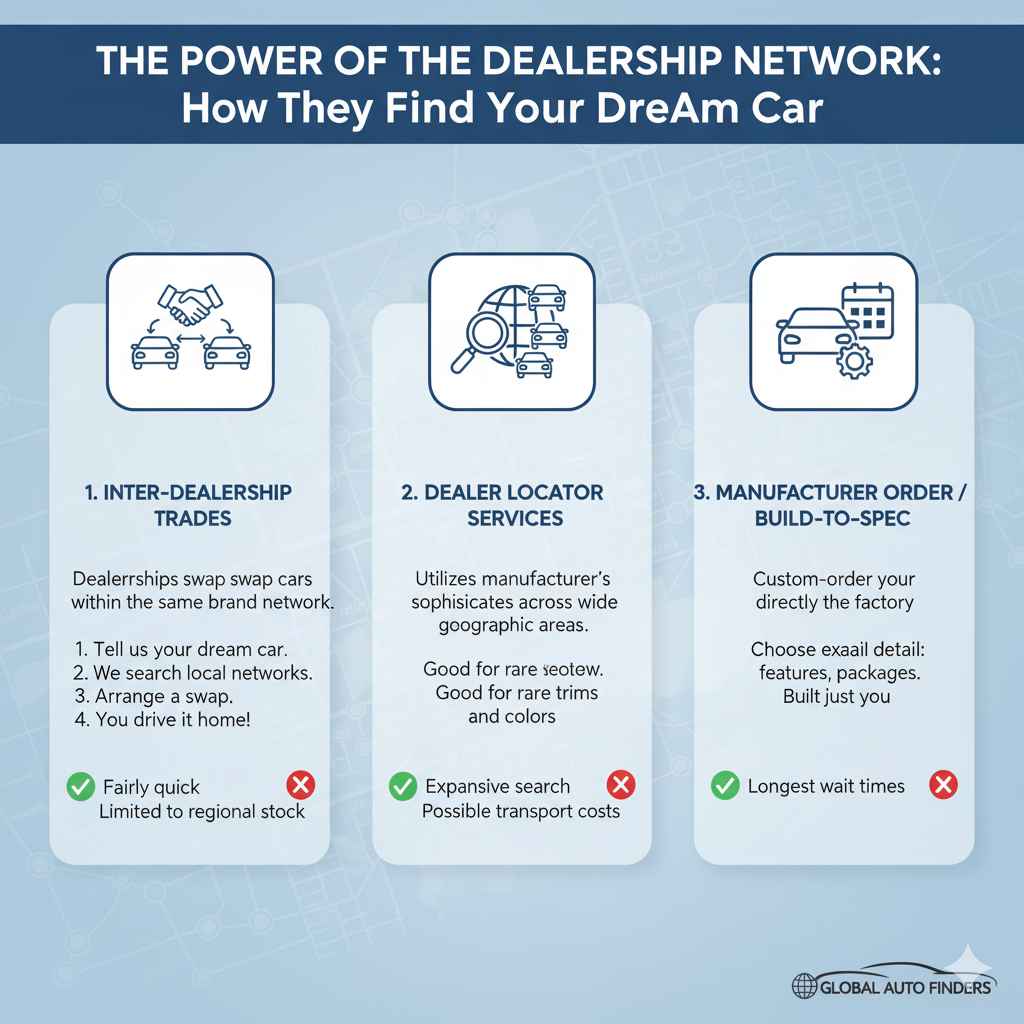
The Power of the Dealership Network: How They Find Your Dream Car
When you think about buying a car, you probably picture walking onto a dealership lot and picking from the vehicles on display. But what if the car you truly want isn’t there? That’s where the broader dealership network and their dedicated search capabilities come into play. Dealerships are far more than just showrooms; they are hubs with access to vast resources that can help them track down a specific vehicle for you. This process is often referred to as a “dealer trade” or using a “dealer locator service.”
Imagine you’ve fallen in love with a very specific configuration of a car – perhaps a vibrant blue SUV with a sunroof, heated seats, and an advanced safety package. If the dealership you’re visiting doesn’t have that exact car, they won’t just tell you to look elsewhere (usually!). Instead, they have tools at their disposal to search the inventory of other dealerships, often across a wide geographic area. This can include other dealerships within the same brand family or even dealerships of different brands if they have a robust wholesale or trade network.
1. Inter-Dealership Trades: A Common Solution
This is perhaps the most straightforward and common way dealerships can find a car for you. If one dealership within a brand’s network has the car you desire, and another dealership (where you are) doesn’t, they can arrange a trade. This often involves a simple exchange of vehicles between the two dealerships. The dealership where you’re working will then sell you the car they acquired through the trade.
How it works:
- You tell the salesperson exactly what you’re looking for.
- They search their internal system for that exact vehicle at other dealerships in their group or region.
- If found, they contact the other dealership to arrange a swap.
- Once the car arrives at their location, you can complete your purchase.
This method is efficient because both dealerships benefit. The dealership trading away the car gets inventory they need or want, and the dealership you’re working with secures a sale by fulfilling your specific request. It’s a win-win scenario that highlights the collaborative nature of the automotive sales world.
2. Dealer Locator Services and Inventory Systems
Major automotive brands equip their dealerships with sophisticated inventory management systems. These systems allow dealerships to see what other affiliated dealerships have in stock. This isn’t just a quick look; it’s a comprehensive database that can often pinpoint the exact trim, color, and options you’re after. Many manufacturers also offer dedicated dealer locator services, which can be leveraged by your local dealership to find specific vehicles across a broader market.
These systems are designed to help dealerships cater to customer needs efficiently. They understand that sometimes a customer has a very precise idea of what they want, and it’s better to find that car than to try and sell them something they’re less enthusiastic about. The investment in these advanced systems demonstrates a commitment to customer satisfaction and efficient sales processes.
3. Manufacturer Order or “Build-to-Spec” Possibilities
In some cases, especially for brand-new models or when specific configurations are rare, dealerships might be able to place a factory order for you. This is more common when purchasing a new vehicle that hasn’t been built yet or when your desired specifications are not readily available in current dealer stock or upcoming shipments. While this process can take longer, it guarantees you get precisely the car you want, built to your exact specifications.
This option is fantastic for those who are not in a rush and want every detail to be perfect. It’s like ordering a custom suit – you get exactly what you envision. The dealership acts as the intermediary, relaying your order to the manufacturer and keeping you updated on its progress through the production line and shipping schedules. You can often track the status of your custom-ordered vehicle, adding to the excitement of the purchase.
The ability to place a factory order depends heavily on the vehicle manufacturer and the model’s production flexibility. Some brands are more accommodating than others. It’s always worth asking your salesperson if this is an option for the car you’re interested in.
What You Need to Provide for a Successful Search
For a dealership to effectively find the car you’re looking for, clarity and detail are key. The more specific you can be, the higher the chance they’ll pinpoint the exact vehicle you desire. Vague requests often lead to generalized solutions or frustration for both parties.
Be Crystal Clear About Your Desired Vehicle
When you speak with a salesperson, don’t hold back on the details. Provide as much of the following information as possible:
- Make and Model: The brand (e.g., Toyota, Ford, Honda) and the specific model (e.g., Camry, F-150, CR-V).
- Year: If you have a specific model year in mind (e.g., 2023, 2024).
- Trim Level: This is crucial! Examples include LE, SE, XLE for Toyota, or STX, XLT, Lariat for Ford trucks. Each trim level signifies different feature packages and levels of luxury or capability.
- Engine and Drivetrain: Specify if you need a particular engine (e.g., V6, turbocharged 4-cylinder) or drivetrain (e.g., Front-Wheel Drive (FWD), All-Wheel Drive (AWD), 4×4).
- Color: Both exterior and interior color preferences can significantly narrow down the search. Be open to alternatives if your first choice is rare.
- Specific Options/Packages: This is where you list must-have features like a sunroof, navigation system, premium sound system, advanced safety features (like adaptive cruise control or blind-spot monitoring), leather seats, towing package, etc.
- Mileage Preferences (for Used Cars): If you’re searching for a pre-owned vehicle, specify your acceptable mileage range (e.g., under 50,000 miles, or less than 3 years old with low mileage).
Providing this level of detail helps the dealership’s search system filter through thousands of vehicles to find potential matches promptly. It saves everyone time and increases the likelihood of a successful outcome.
Be Realistic About Availability
While dealerships have great networks, some vehicles are simply rarer than others. Certain colors, specific option packages, or high-demand models might be difficult to find immediately. It’s important to remain flexible and open to alternatives.
Consider these points:
- High-Demand Models: Popular SUVs, trucks, or newly released performance vehicles can be in short supply at any given time.
- Niche Configurations: A specific color combined with a rare option package can make a vehicle genuinely scarce.
- Discontinued Options: Sometimes, a desired feature or color was only available for a limited run or a previous model year.
Having a second or third choice in mind can be very helpful. For example, if you absolutely want a car in “Electric Blue,” but “Oceanic Blue” is available and very similar, being open to that alternative might expedite your search.
The Benefits of Letting Dealerships Hunt for Your Car
Entrusting a dealership with the task of finding your car offers several advantages that can simplify your buying journey and potentially save you money.
1. Access to a Wider Inventory
Dealerships have access to inventory beyond what’s physically on their lot. Through manufacturer systems and inter-dealership networks, they can tap into a vast pool of vehicles. This is particularly useful if you’re looking for a specific, hard-to-find configuration.
Pro Tip: Some dealerships even have agreements with dealerships in other states. While this might involve transportation costs, it significantly expands the search radius.
2. Time Savings and Convenience
Searching for a car can be incredibly time-consuming. Browsing multiple dealership websites, making calls, and visiting lots can eat up a lot of your free time. Letting a dealership find the car for you shifts this burden to them. They have the tools and the personnel dedicated to inventory management and vehicle sourcing.
Imagine the hours saved by only having to visit one dealership, knowing that they are actively working to get you the car you want. This convenience is invaluable, especially for busy individuals.
3. Potential for Better Deals
Dealerships often have established relationships with other dealerships and manufacturers. This can sometimes translate into better pricing or negotiation leverage when they’re locating a vehicle through a trade or special order. If a dealership needs to make room for a car that’s been sitting on another lot, they might offer a compelling price to facilitate the inter-dealership transfer and your purchase.
Moreover, when a dealership finds a car that isn’t selling quickly on another lot, they might be able to negotiate a better price for it on your behalf. This is because they are essentially helping another dealer move stagnant inventory.
4. Expert Guidance
Sales professionals are trained to understand vehicle specifications, options, and availability. They can guide you on which features are truly valuable, which packages offer the best bang for your buck, and what the realistic availability might be for your desired vehicle. They can also advise on potential alternatives if your primary choice is proving elusive.
Consider this: A good salesperson will act as your advocate, using their knowledge and network to serve your best interests, rather than just trying to sell you what’s on the lot.
Potential Downsides and How to Mitigate Them
While dealerships are effective at finding cars, it’s wise to be aware of potential drawbacks and how to navigate them to ensure a positive experience.
1. Longer Wait Times
If the car isn’t readily available at a nearby dealership, it might need to be transported from a distant location or ordered directly from the factory. This can add weeks or even months to your waiting period. For those needing a vehicle immediately, this could be a significant drawback.
- Mitigation: Always ask for an estimated timeline upfront. If the wait is too long, discuss alternative vehicles they might have in stock or can locate more quickly. Be clear about your urgency.
2. Added Costs for Transportation
When a car is brought in from another dealership, especially one that’s far away, there might be transportation fees. These costs are usually factored into the purchase price or added as a separate line item. While the dealership might absorb some of this cost to secure a sale, it’s not always guaranteed.
- Mitigation: Inquire about any potential transportation fees early in the process. You can sometimes negotiate these fees to be included in the car’s sticker price or have them waived, especially if you’re purchasing a higher-value vehicle.
3. Less Room for Negotiation on Specific Vehicles
Once a dealership has gone through the effort of locating a specific car for you, especially if it involved a dealer trade, they might have less flexibility on the final price. They’ve incurred costs and efforts to bring that exact vehicle to you.
- Mitigation: Do your research on the fair market value of the car you want. Be prepared to negotiate, but understand that the deal structure might be different compared to buying a vehicle that was already on their lot. Focus on the overall value and convenience if the price is slightly firmer.
4. Risk of Unforeseen Issues with “Found” Cars
While dealerships perform inspections, a car brought in from another location might have been driven harder or maintained differently than anticipated, especially for used vehicles. Minor cosmetic issues or less-than-perfect maintenance history could be present.
- Mitigation: Always insist on a thorough inspection report. If it’s a used car, ask for its vehicle history report (like CarFax or AutoCheck) and consider getting an independent pre-purchase inspection from a trusted mechanic, even if the dealership has its own inspection. For new cars, check for any minor paint imperfections or interior wear before finalizing the deal. Per the National Highway Traffic Safety Administration (NHTSA), understanding used vehicle history is critical for informed purchasing.
Steps to Take When Asking a Dealership to Find Your Car
To make the process as smooth and successful as possible, follow these steps:
- Do Your Homework on the Car: Before you even visit a dealership, research the exact make, model, year, trim, and options you desire. Understand its features, typical pricing, and any known issues. Websites like Edmunds or Kelley Blue Book are great resources.
- Choose the Right Dealership: Opt for a dealership that is reputable and has positive customer reviews. A dealership with good relationships within the brand’s network is also a plus.
- Clearly State Your Needs: When you meet with a salesperson, present your request with all the specific details compiled in the earlier section. Be precise about what you want and what you’re willing to be flexible on.
- Ask About Their Process: Inquire about how they typically locate vehicles. Will they check other dealerships? Can they place a factory order? What are the associated timelines and costs?
- Get Everything in Writing: Once a specific vehicle is identified or a factory order is placed, ensure all the terms, including price, options, estimated delivery date, and any fees, are documented in writing. This protects both you and the dealership.
- Be Patient and Polite: The search and acquisition process can take time. Maintaining a positive and patient attitude will foster a better working relationship with the dealership staff.
- Final Inspection is Key: Before signing any final paperwork, thoroughly inspect the vehicle to ensure it matches your specifications and is in satisfactory condition.
By following these steps, you empower yourself and make it easier for the dealership to meet your expectations. Success is often a partnership.
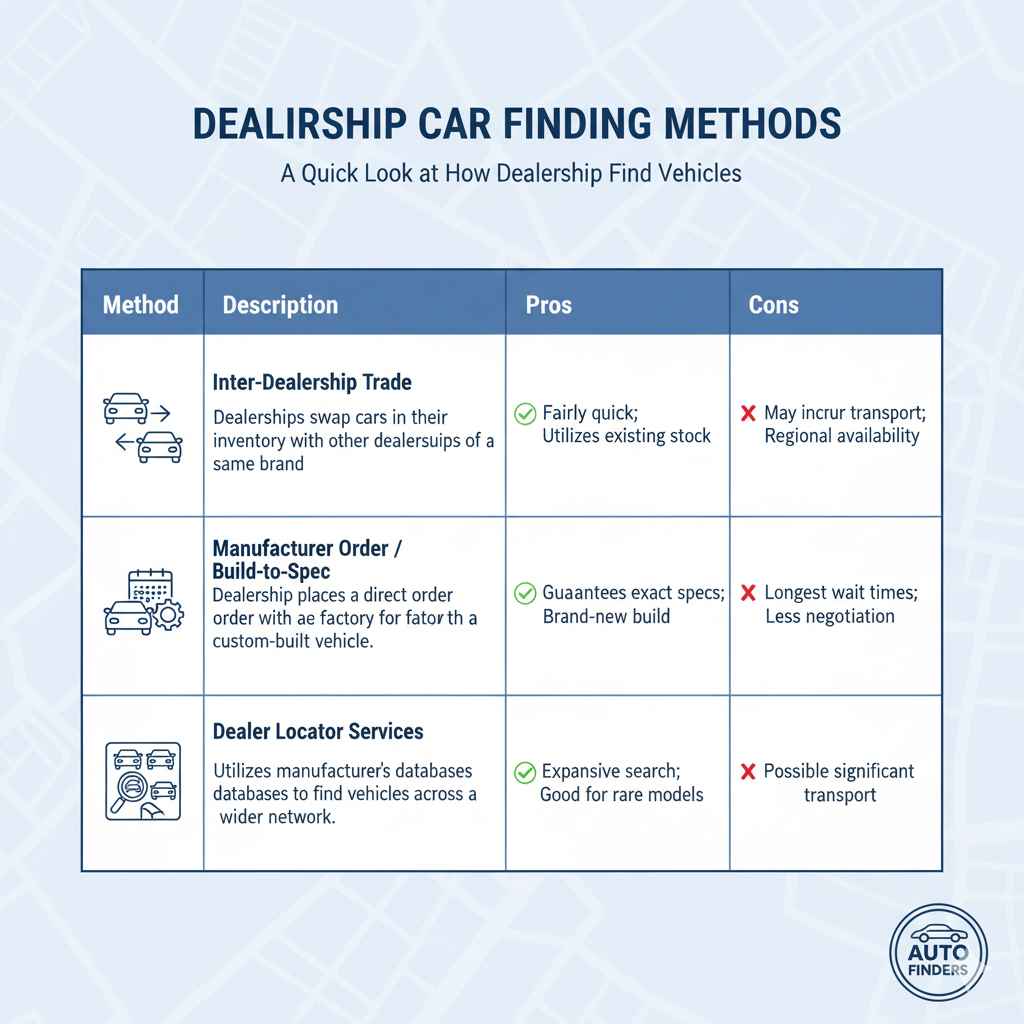
Table: Dealership Car Finding Methods
Here’s a quick look at the primary ways dealerships help you find vehicles:
| Method | Description | Pros | Cons |
|---|---|---|---|
| Inter-Dealership Trade | Dealerships swap vehicles in their inventory with other dealerships of the same brand. | Fairly quick, utilizes existing dealer stock. | May incur transportation costs, specific vehicle might not be available in the region. |
| Manufacturer Order / Build-to-Spec | Dealership places a direct order with the factory for a custom-built vehicle. | Guarantees exact specifications, brand-new build. | Longest wait times, less room for price negotiation. |
| Dealer Locator Services | Utilizes manufacturer’s databases to find vehicles across a wider network or even other brands. | Expands search immensely, good for rare models. | Can sometimes involve significant travel or transport costs. |
Frequently Asked Questions (FAQ)
Q1: Can any dealership find any car for me?
A1: Generally, yes, within the brand they represent and often through established networks. They can typically find any model or trim that the manufacturer produces. However, availability of specific configurations (color, options) depends on current production and inventory across dealerships.
Q2: How long does it usually take for a dealership to find a car?
A2: This varies greatly. If the car is at a nearby dealership and a trade is arranged, it could be a few days. If it needs to be shipped from a distant state or ordered from the factory, it can take weeks or even months for delivery.
Q3: Will I pay more for a car that the dealership has to find for me?
A3: Possibly, but not always. While some transportation costs might be passed on, dealerships may also offer competitive pricing to move inventory or secure a sale. It’s crucial to negotiate the final price and compare it to market value.
Q4: What if the dealership can’t find the exact car I want?
A4: If the exact car isn’t available, the salesperson should discuss alternatives with you. This could include slightly different trim levels, colors, or option packages that are available. They might also suggest ordering the vehicle if it’s a long-term search.